Best Practices for Research and Analysis of Hypercasual Game Trends with AZUR Games and FreePlay
Together with AZUR Games and FreePlay we're outlining the best practices for research and analysis of hypercasual game trends, discussing how and where to look for them, and how to choose which mechanics to actually implement.
— by Diana Levintova

In our series of articles on games inspired by social trends, including the latest one, we touched upon the subject of searching for and identifying those trends, as well as their analysis and any subsequent implementation. In response to feedback from our readers, we decided to delve deeper into the matter and share a few best practices for discovering social media trends. To provide insights and practical advice, we interviewed AZUR Games and FreePlay, two major players in the gaming industry.
How do you track mobile market trends?
Both studios say they regularly analyze game dynamics, including downloads and revenue. They also track new game releases that perform above average (which can easily be done with one of our instruments—the Advanced Search) and deconstruct their gameplay and creatives. This approach helps better understand the audience's interests and identify trends within a given genre.
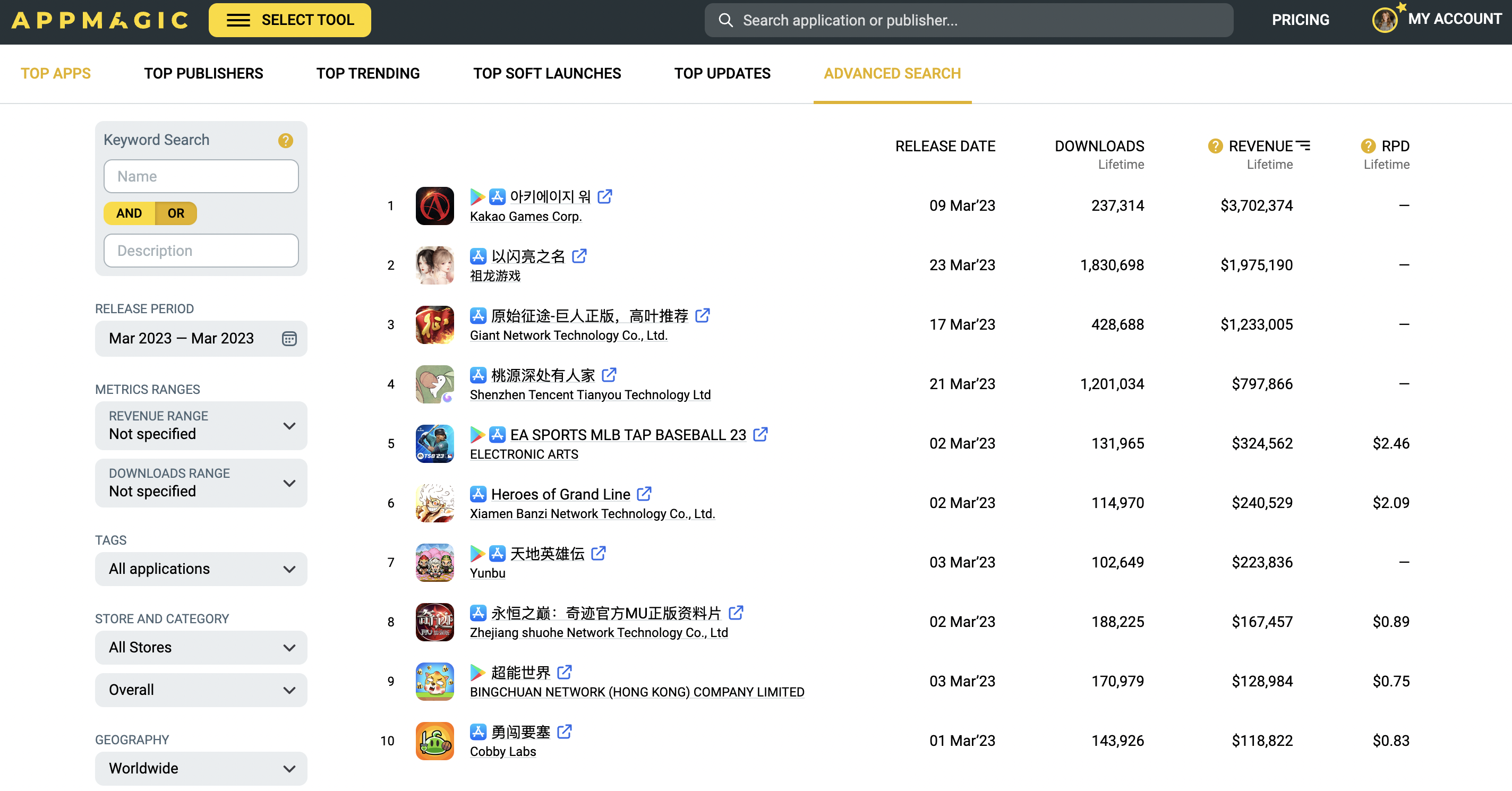
AZUR have provided extended commentary on the matter: “We rely on internal analytics, test hypotheses across thousands of prototypes, and monitor various ongoing projects. If we notice that ad creatives showing hordes of red stickmen work very well for one game, we test the same idea in other projects. Also, if a game mechanic has high retention, but other metrics are not as promising (e.g., the CPI is high), we still attempt to apply it, but in other settings.”
Another key aspect to keep in mind is the frequency with which developers conduct market analysis. For example, FreePlay shared with us that they evaluated the market in terms of downloads and revenue monthly and checked the performance of new game releases weekly.
Which channels do you mostly use to look for and identify social trends—and why?
Together with our partners for this article, we came to the conclusion that the most insightful sources of information are Google Trends and TikTok. For example, AZUR Games was able to identify the Squid Game and Huggy Wuggy trends at the right time using these two channels exactly. By the way, we have also analyzed and deconstructed those trends. If you'd like to refresh your memory, we have included links to the two corresponding articles: simply click on their titles below.
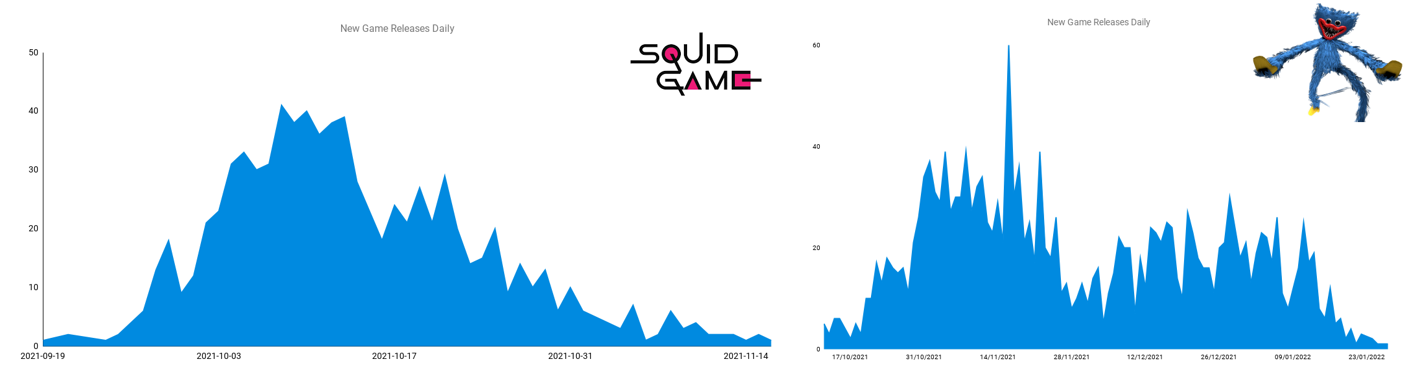
Now that the hype around those trends has subsided, AZUR Games are able to better understand their actual popularity. With this information, they can compare high-profile events, such as the release of The Last Of Us series, to the acquired statistics and see which trends are more effective and how they're evolving in terms of popularity. This data can be easily tracked using Google Trends.
In terms of TikTok, our late series of articles on games inspired by social media trends revealed that the majority of hyped games used trends with over 1 billion views. However, it's also possible to focus on trends with a narrower audience and a smaller number of query views (between 200K and 400K), but doing so requires a deep understanding of the interests and characteristics of the target audience to succeed.
Apart from those two sources, studios are also paying close attention to the newly released games to understand where the market is going.
When it comes to other platforms, FreePlay told us that they kept track of Reddit and Imgur, too (where TikTok content is often reposted, providing valuable insights into viral video trends). Additionally, they keep a close eye on gaming websites, social media statistics, and predictions—all to stay up to date with the latest trends and developments.
Which social media platforms do you mostly use to search for trends—and why?
AZUR Games and FreePlay agreed that TikTok is the to-go place when it comes to discovering trends. Remember how many trends we found for our articles for just the past couple of years? And we didn't even cover all of them! Plus, TikTok has a handy Creative Centre that lets studios track trends directly in the app, making the process much easier.
Other platforms mentioned by our partners include Instagram, where trends quickly gain popularity similar to TikTok, and YouTube, whose feed has recently been enhanced by the addition of Shorts.
How do you choose which trend mechanics to use as a part of the game and which to skip?
Since we have some major experts here, we can simply quote their best practices, which are “rely heavily on expertise, experience and good judgment”.
Here’s what AZUR Games are saying: “With experience, we can quickly tell which mechanics will work well in games and which won’t. Sometimes, something as trivial as technical limitations may also impact the decision-making process.”
FreePlay have also shed some light on their internal practices: “First of all, we use our expertise to evaluate every trendy new mechanic by its LTV or Marketability potential. After we identify ideas that we see as potent, it is time for development estimation and further prioritization along with the rest of the planned features. We always A/B-test our features, so as soon as it is ready, we put it to the test to ensure it helps our KPI’s.”
Do you do any testing of the new mechanics before creating a game prototype?
The responses we received from developers were divided. AZUR Games opt to create prototypes from the outset and test all aspects, including mechanics, visuals, and CPI. FreePlay takes the opposite approach by always testing new mechanics first and measuring their performance through a 50/50 A/B test or their A/B testing system before creating a prototype.
Do you test ad creatives before creating a prototype?
What we found out is that it’s not a very popular practice. Here’s what AZUR Games told us: “We test creatives very rarely. Most of the time, we make a prototype and gather all the metrics at once.”
FreePlay is also not a common user of this practice: “We do it rather rarely. We usually leverage our expertise to eliminate ideas with the lowest marketability, but for the rest, we aim to test both marketability and project metrics. With the market shift towards complex games, game KPI’s are a much bigger factor, while CPI is much easier to iterate.”
While testing the prototype might not be the most common practice, analyzing what performs best for competitors and what the trends are in the ad creatives industry is a crucial routine. For this, AppMagic’s Ad Intelligence may come in handy.
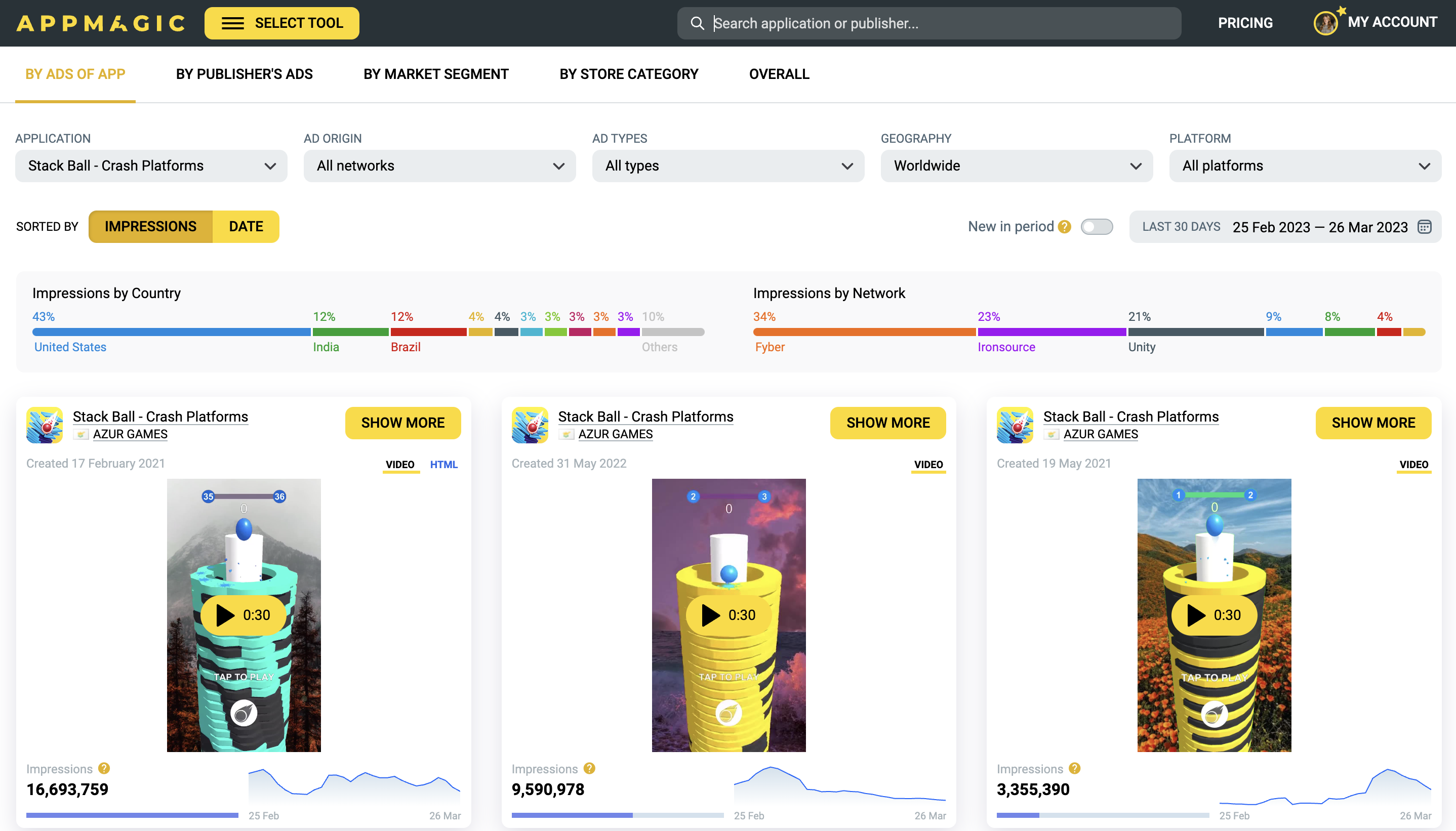
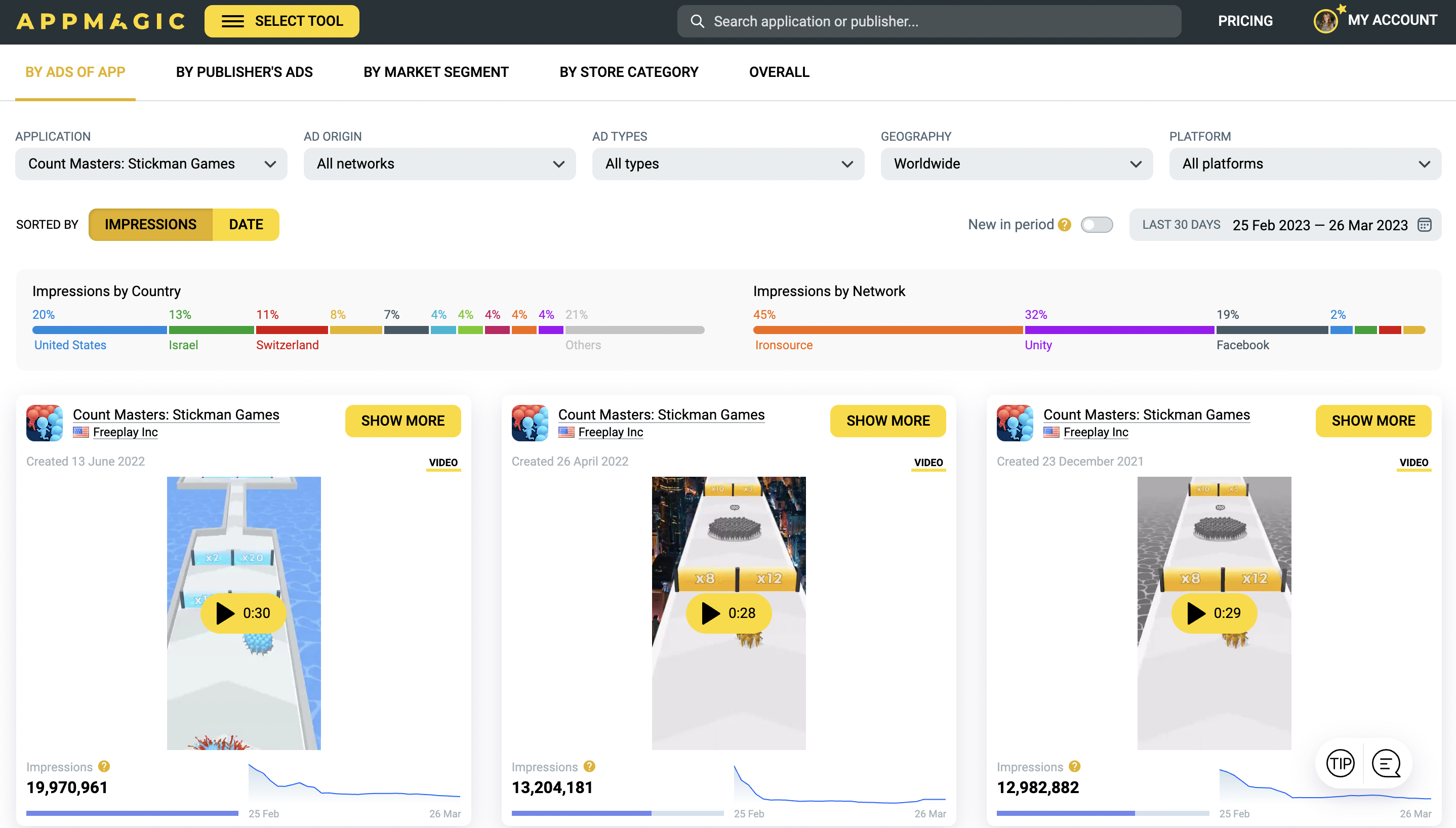
Do you have any special practices of searching for new trends? (E.g. “treasure hunt” weekly meetings, where you identify patterns, predict virality and choose trends for the future games.)
Our partners shared a variety of approaches to staying on top of the trends. One method is to generate internal weekly reports on TikTok and Instagram trends. Another is to schedule regular brainstorming sessions to identify creative ideas, discuss trends, and analyze test results in detail. In addition, our partners suggested two other useful practices: 1. Staying highly engaged with the gaming community, playing games of different genres, and keeping up to date with new releases can provide valuable insights into emerging trends. 2. Sharing trend information across various teams, including product, user acquisition, app store optimization, and production, can help team members share their insights on a trend's potential fit for a specific project and where and how it might be worth testing the idea.
Conclusion
In this article produced with contributions by leading industry players AZUR Games and FreePlay, we tried to provide some actionable insights into the best practices for discovering and analyzing trends in hypercasual games. We also hope that we gave you some inspiration to incorporate special approaches used by our partners into your own work processes.