Fallout TV Series: How Game Revenues Grow and Fall Out
The Fallout show came back, and so did the buzz around the games. Season 2 did not hit the same high notes as the first, but it still made waves across both mobile and Steam platforms. We looked at what changed this time and how things played out while the show was on air.
— by Maria Bolshman and Andrei Zubov

We already know how Amazon Prime’s Fallout TV show can spark players' interest. When the first season launched in April 2024, the reaction was immediate: Fallout Shelter made 10x in daily revenue, while bigger entries climbed the Steam and console charts, which we covered in our blog at the time.
However, soon after the hype ended, the games went back to normal, Fallout Shelter lost all the Xs, and the charts fell out of love with the titles. And now that Season 2 has fully aired, we decided to see how this transmedia trick will play out the second time around.
Season 2 kicked off in mid-December 2025 on Prime Video and ran through February 4, giving Fallout a full seven-week window to play out its impact. Over that stretch, Fallout Shelter rose from around $15K–25K a day to $50K–$80K a day in IAP revenue.
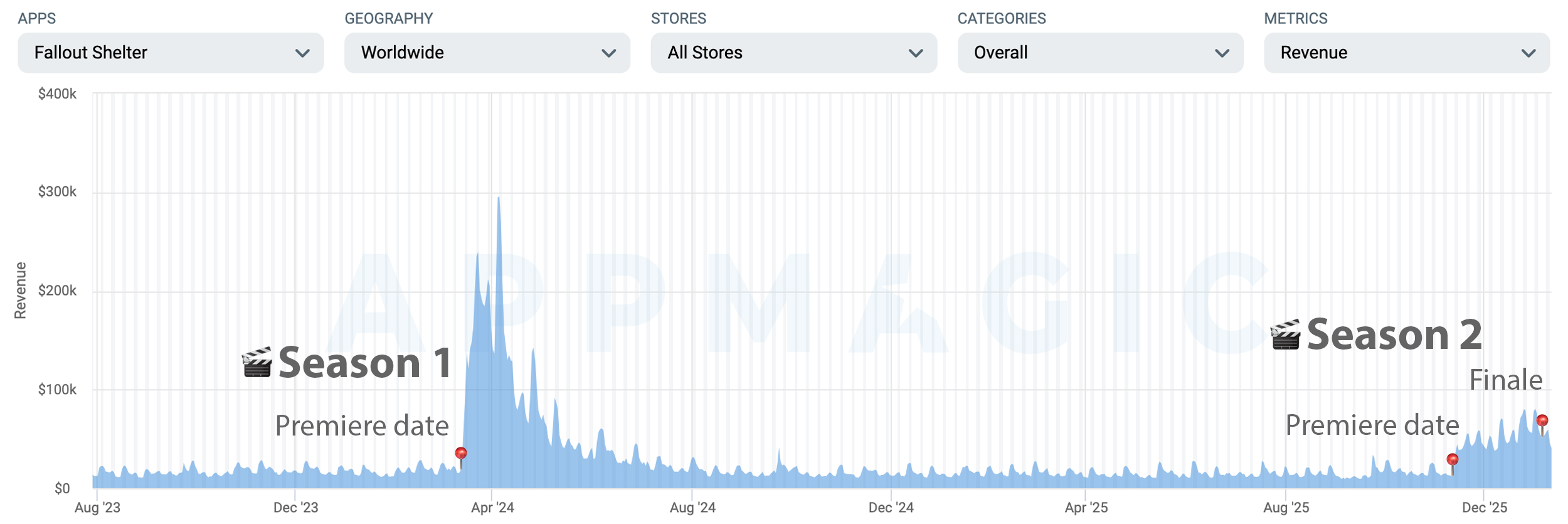
Fallout Shelter: daily IAP revenue across both TV seasons
The uplift was there, but it wasn’t another “10x” moment, and revenue didn’t reach the heights it had during Season 1. And with our Steam analytics, we observe a similar picture across platforms, as well as across multiple titles, including Fallout 4, Fallout 76, and Fallout: New Vegas—something we’ll come back to later.
In this piece, we revisit the key spike moments with more context and more data. We use Fallout Shelter as a reference point, compare cross-platform reactions, and try to understand how Bethesda adapted their LiveOps and marketing strategies to avoid a similar revenue drop after the season ended.
Ultimately, we try to answer The Question behind the transmedia bet: Is it actually worth it? Spoiler: it sure is… but probably not for you.
Fallout Shelter: The Easiest Way into the Wasteland
By the time the second season of the series fully wrapped, one thing was obvious: it had not recreated the explosive opening of the first season. Early Nielsen estimates put its debut week at roughly 794M viewing minutes, versus nearly 2.9B for Season 1.
That gap looks huge at first glance. However, the release format certainly played a role here: while Season 1 dropped all the episodes at once, Season 2 rolled out weekly. The difference might not look that big, true, but it should certainly be factored in when analyzing Bethesda’s strategy.
The best way to illustrate the impact of this tactical decision would be Fallout Shelter. First, it is the quickest and easiest way to jump from the show into the Wasteland of Fallout, which allows tracking interest in the IP very quickly. Second, its free-to-play nature lets us see how the game performs daily both in terms of revenue and downloads.
Fallout Shelter. Image source: Bethesda.net
Fallout Shelter started as a side project. A mobile spin-off released alongside Fallout 4 in 2015, it was designed to be simple, accessible, and likely experimental. It was never meant to carry the franchise; it was built to complement it. Nevertheless, like most Fallout releases, the launch didn’t go unnoticed.
The Fallout hype was at its peak, and the game climbed the charts almost instantly. Strong brand recognition and a smart release strategy did most of the work. Simple, accessible gameplay did the rest. August 2015 alone brought in over $10M in IAP revenue.
For a brief moment, the game looked like a genuine breakout. And then came the drop. By the end of 2015, monthly IAP revenue had fallen to roughly $3M, more than three times lower than its peak. Why? The core loop was solid, but it didn’t really grow with its audience over time. Once players had built their vaults and cleared the main challenges, there was little left to pull them back. Sessions burned fast, long-term goals were limited, and social hooks were almost nonexistent.
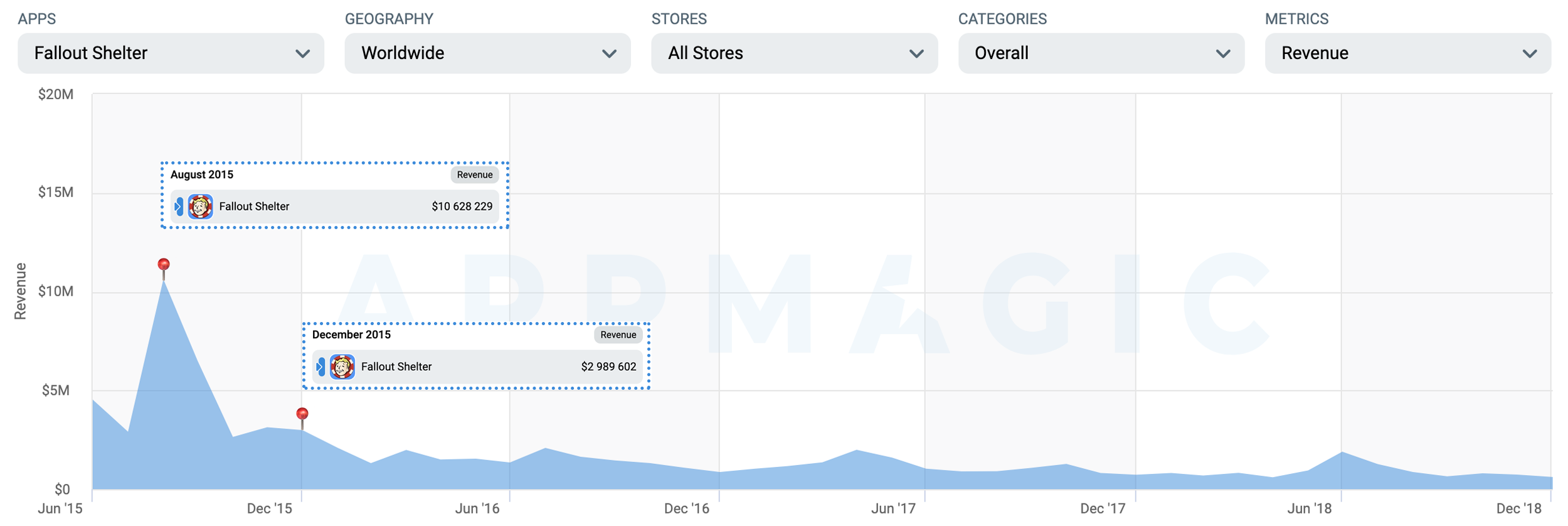
Fallout Shelter: strong launch hype in 2015
Yes, the formula can work and still bring in money, but it seems no one was able to apply it just right and challenge authentic industry leaders with mobile gamedev origins. We know that because *Fallout Shelter*’s launch was followed by a wave of games with similar core gameplay, but other IPs behind them.
Titles like Hustle Castle and Assassin’s Creed Rebellion borrowed the same mix of base management, character collection, and simulation mechanics. Unfortunately, they ran into the same limits as Fallout Shelter: early installs and a brief IAP uplift came easily, but sustained growth didn’t. Assassin’s Creed Rebellion was eventually shut down, while Hustle Castle managed to stay on with an average of around $430K in monthly IAP revenue.

Image source: Assassin’s Creed Rebellion and Hustle Castle
Fallout Shelter also survived, but survival here is not synonymous with success. The game settled into a predictable baseline, and by March 2024, its average monthly IAP revenue hovered around $560K. Downloads stayed flat, too, rarely breaking 450K per month after 2020.
In today’s mobile market, that’s a long, quiet plateau, with the IP waiting for something external to give it a push. And that push finally arrived.
Season 1: Fallout on Prime
Along with returning fans, Season 1 also pulled in a lot of new players. Installs jumped as the show went live, peaking in April at around 1.7M. Which makes sense: Fallout Shelter is free, mobile, and quick to start. No hardware upgrades, no long commitment, just download and play. IAP revenue climbed along and hit nearly $4M in May 2024.
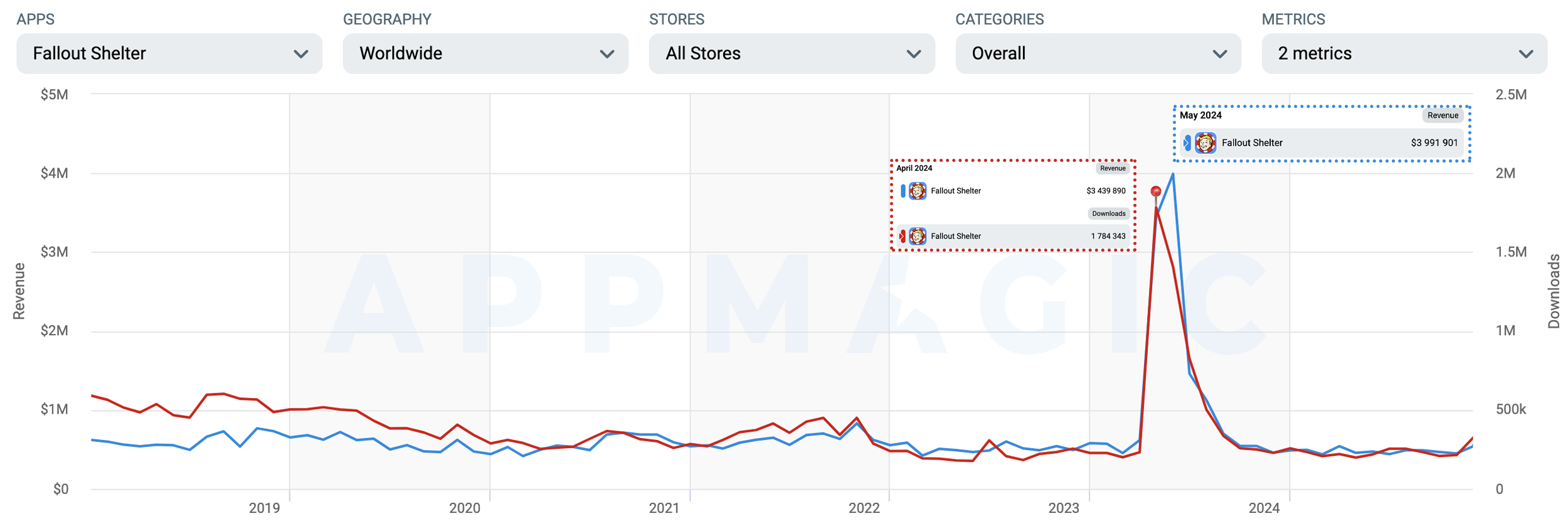
Downloads and IAP revenue during the show’s launch
What kept the spike alive, even briefly, was the support beyond the show itself. Bethesda added limited-time, show-themed content to catch the TV-driven traffic. New characters and items weren’t sold directly but unlocked through themed quests, pulling players deeper into the core loop. The App Store page was also spruced up with references to the series, making the game hard to miss for TV viewers.
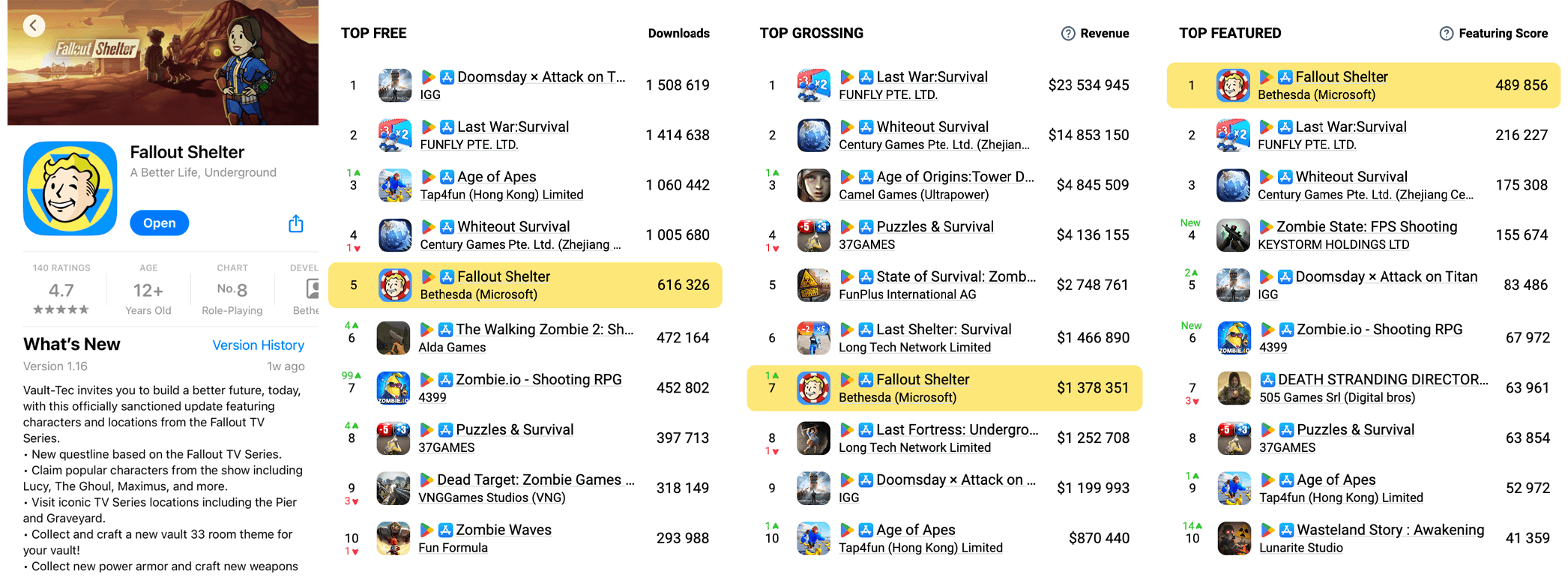
Fallout Shelter during Season 1 of the TV show
Once the themed content wrapped up, performance settled back down. By June, monthly revenue had already dropped to around $1.4M. By September, it was back to nearly pre-show levels, at roughly $540K per month.
The show clearly put the game back in the spotlight. And Fallout Shelter caught that wave—but couldn’t ride it for long. Now that we have the full context, let’s take a look at how Fallout returned for Season 2.
Another Season, Another Strategy, Another Fallout
The next and most recent spike for Fallout Shelter came with Season 2 of the TV series. As we already know, the show landed on Amazon Prime in mid-December, right before the holidays. As the story unfolded, both downloads and earnings rose steadily, peaking around $50K–$80K a day in IAP revenue.
For context, that’s well above *Fallout Shelter*’s typical stagnation at $15–$25K per day. For yet more perspective, the game averaged around $500K in revenue and roughly 250K in downloads per month for most of 2025. In December, as the first episodes aired, IAP revenue pushed past $1M, with over $725K generated in the final two weeks of the month. January carried most of the uplift, with more than $1.7M in IAP revenue.
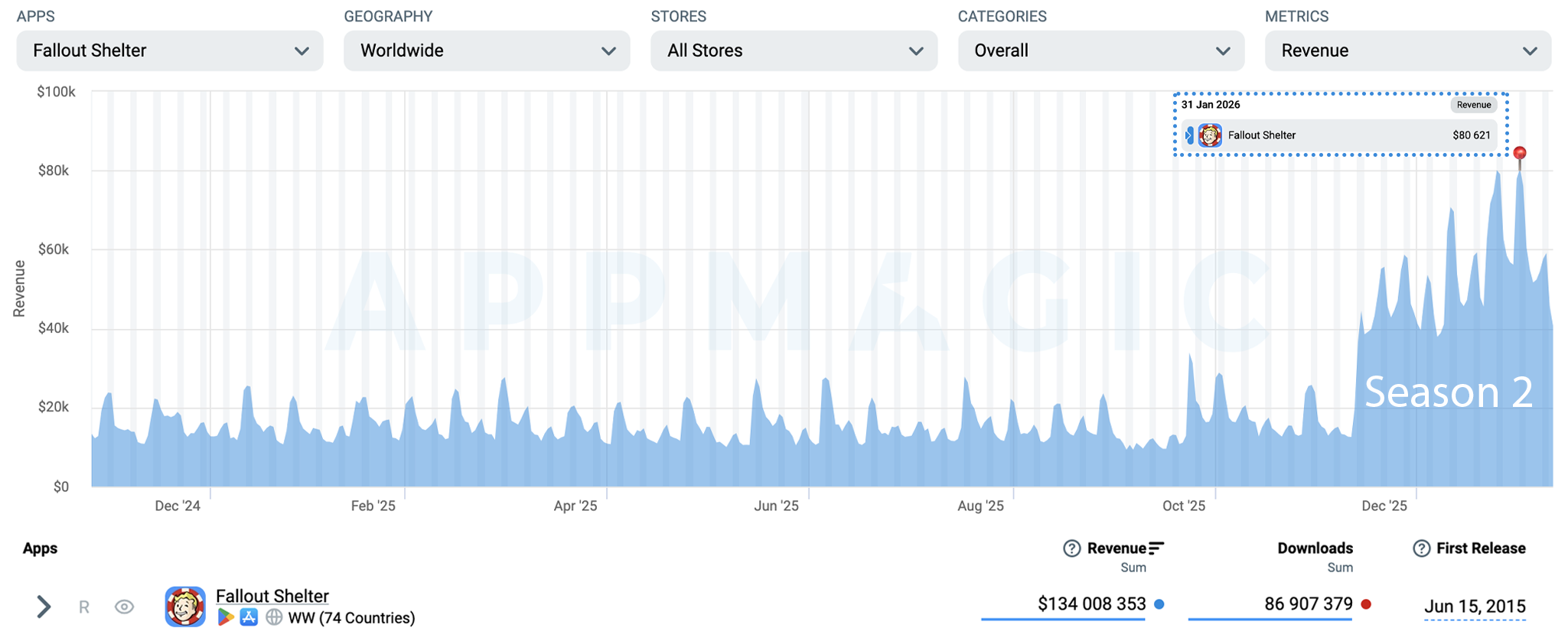
Fallout Shelter during Season 2 versus the 2025 average
Just like the first time, Fallout Shelter lined up show-linked content while the buzz was still there. The game met players with Viva New Vegas, a limited-time season with its own progression path. The update ran as a separate vault, sending players back to the Mojave with quests built around Novac and familiar faces from the show: Lucy, Maximus, and the Ghoul.
This time, however, the game added more LiveOps, which was neatly tied to New Vegas' main theme: the casino. Short-term retention was boosted not only with season passes and quests, but with Lucky Spins and Poker Chips as well. Rewards came fast and, importantly, were permanent. The idea was simple: onboard the show viewers—and make them stay.
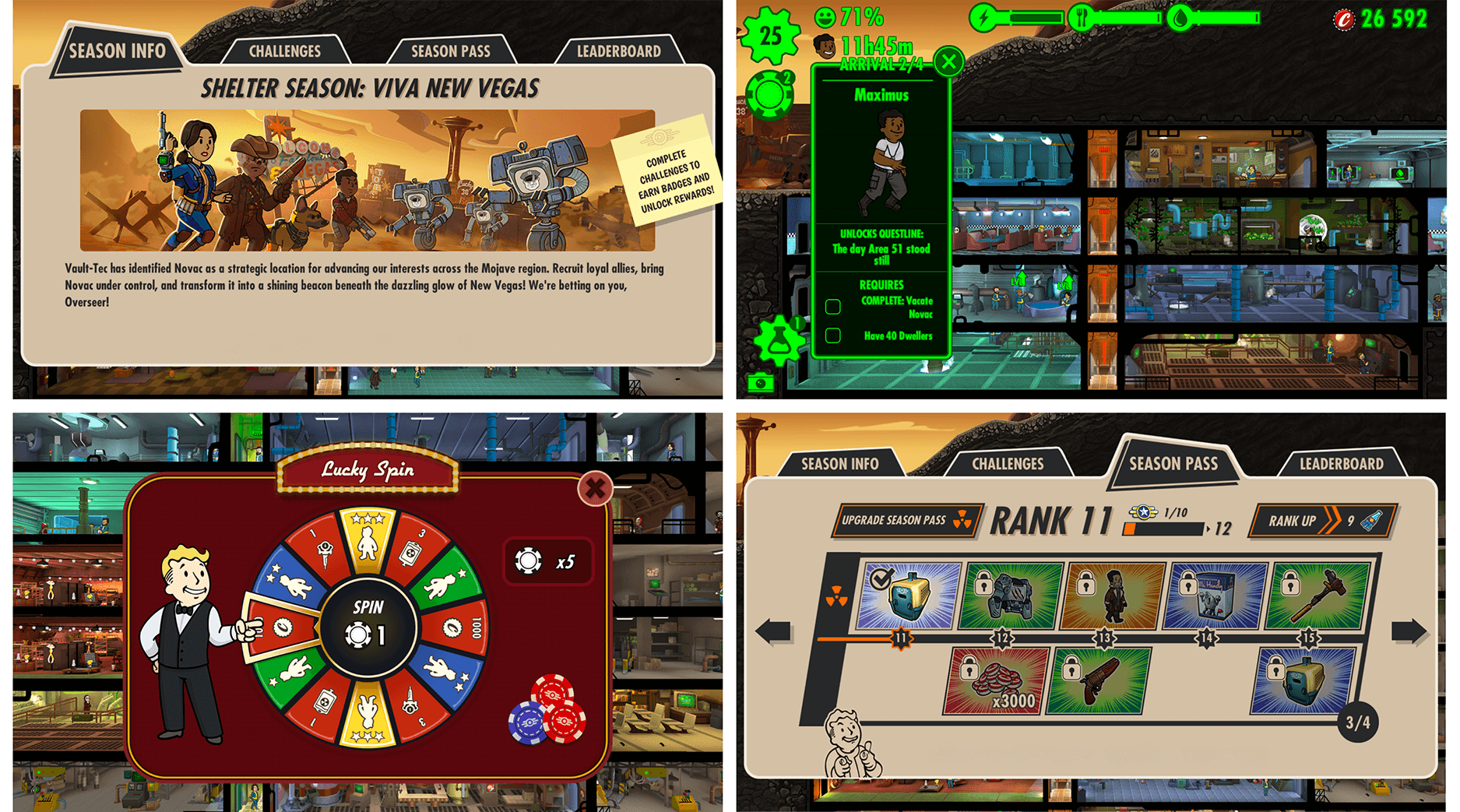
Viva New Vegas. Image source: Bethesda.net
Viva New Vegas turned out to be a great in-game season—but not the only one. A few days after it ended around mid-January, the second season, House Always Wins, followed suit and ran through the finale window. The update introduced another limited vault, along with new quests and rewards tied to the show.
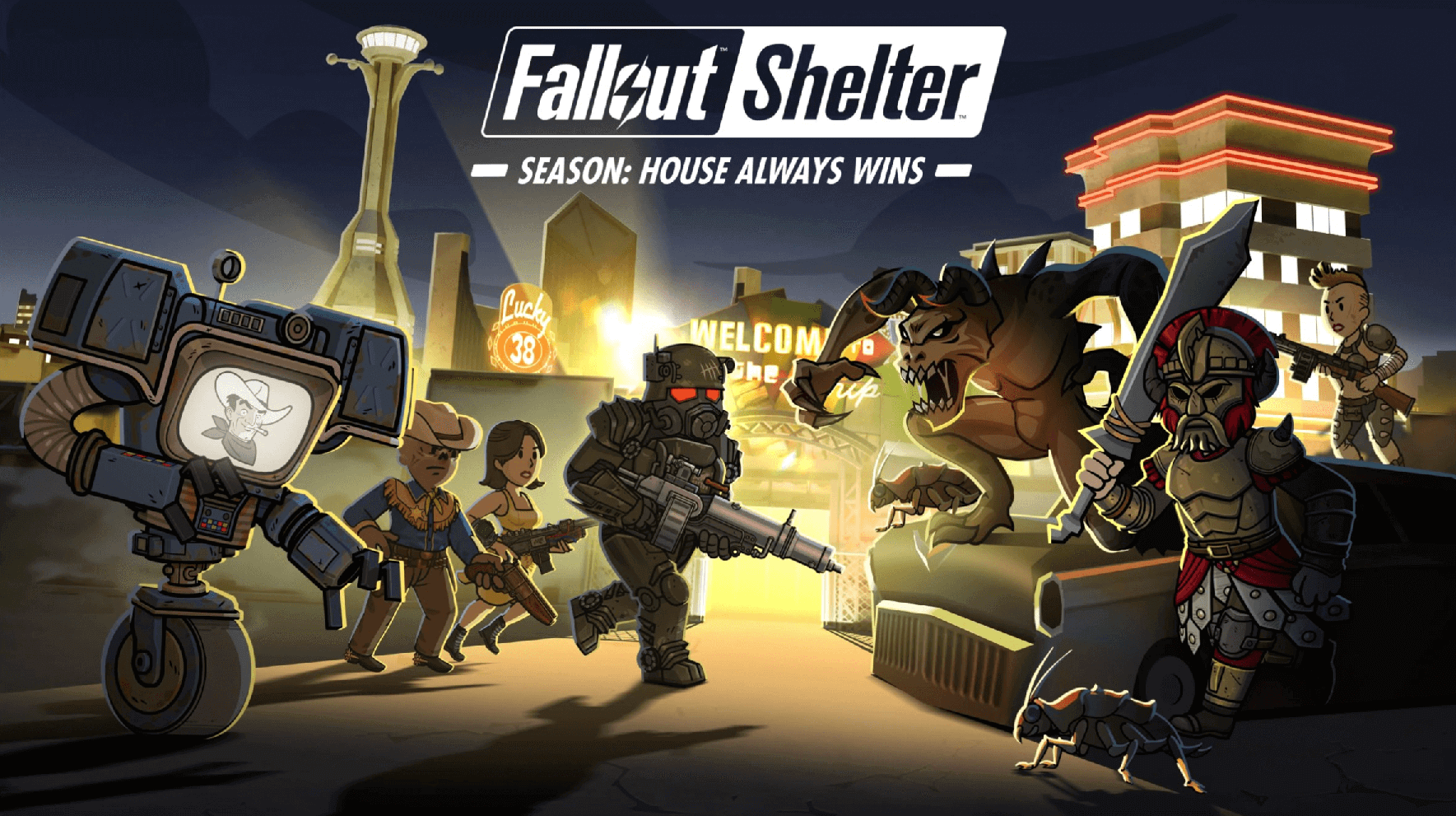
This structure, with two events going back-to-back as the series aired, reveals that Bethesda actually took some effort to avoid early churn. After the first TV season, the uplift was sharp but short. This time, it was more stretched out, which seems to be one of the reasons for changes to the series rollout strategy. And the games’ performance on Steam only proves it.
Fallout on Steam: In and Out of the Charts
When the first season launched in 2024, we’d already seen how Fallout games reacted to the show and how PC and console titles climbed the charts. We wrote about that back then, but not in much detail, as AppMagic's Steam analytics simply wasn’t there yet. But now we can fill in some gaps!
So, back in 2024, the show pushed several Fallout instalments back into the charts, especially Fallout 4, Fallout 76, and Fallout: New Vegas, which are among the more recent entries in the series (even though they were all released before the 2020s…). During the week of April 15–21, all three appeared on Steam’s Top 20 by downloads, with Fallout 4 staying in the Top 10 well into May.
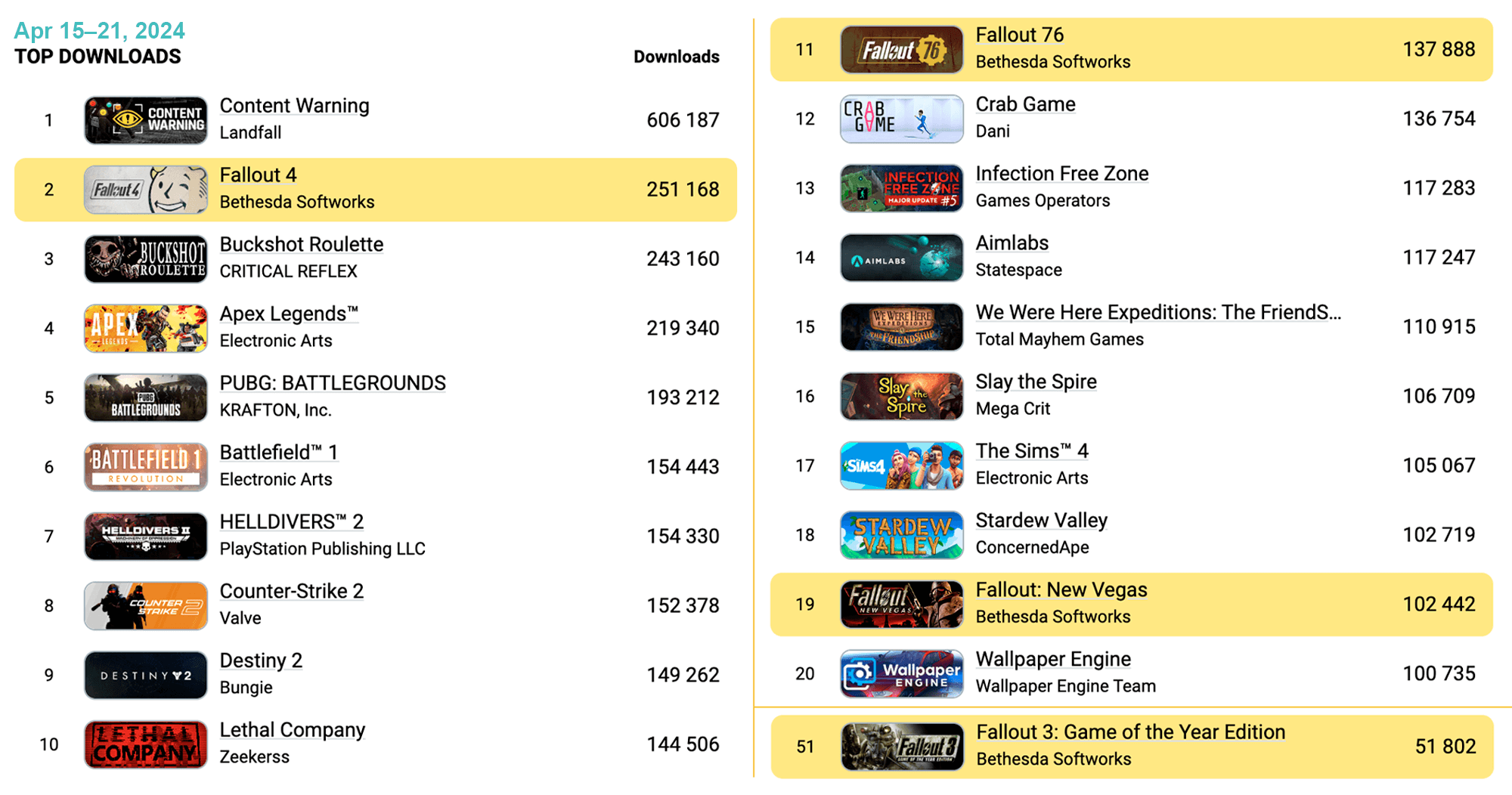
Steam’s Top 20: Fallout titles during Season 1
April 2024 was the high point, especially for Fallout 4, which sold nearly 900K copies as opposed to the mere 130K one month prior. Other games also did well: Fallout 76 sold over 320K copies (up from 57K in March) and Fallout: New Vegas landed just above 270K (compared to 65K in March). The three games moved at once, powered by the same wave of TV-driven attention.
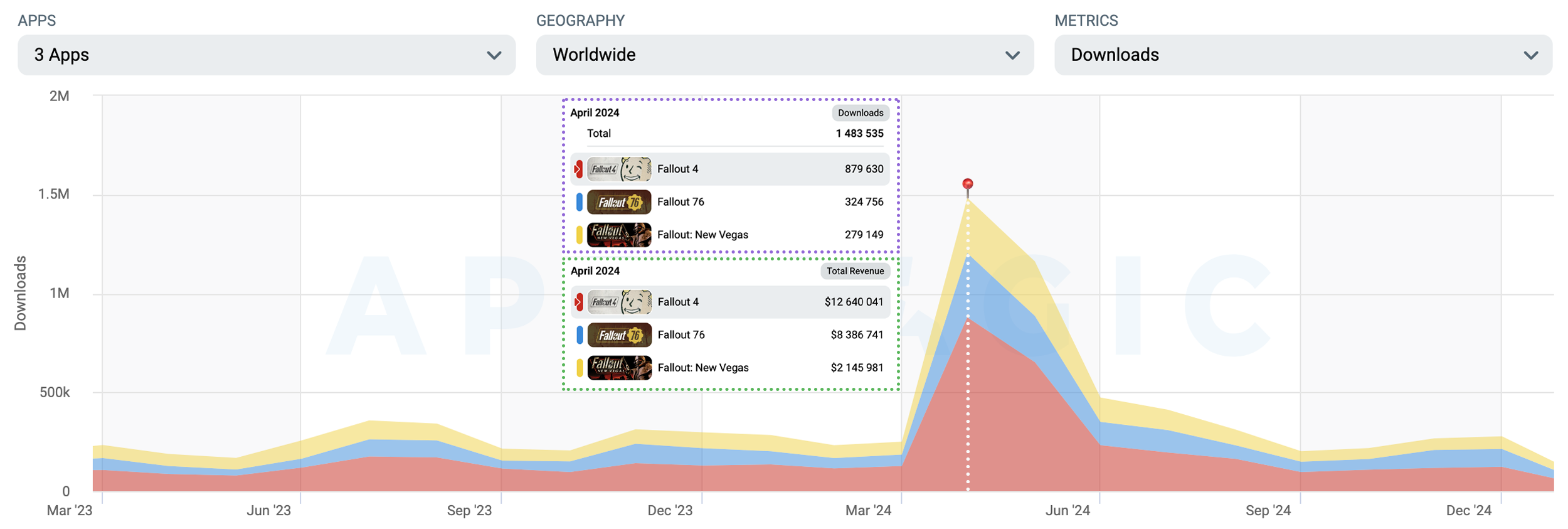
Season 1 spike across Fallout downloads and revenue
Revenue peaked alongside downloads. In April, the three games generated over $23M combined. By Q4, both metrics had cooled back to pre-show levels, with December landing closer to $4M in total. This kind of post-spike drop is normal for premium games. Unlike free-to-play, it simply reflects how premium distribution works.
Season 2 moved things on Steam again, but this time, it was a little different. Fallout 76 probably outperformed Fallout 4 because of the record discounts the game saw during the TV series' airings: –90% and –80%, respectively. As a result, during the show, Fallout 76 sold for its lowest ever price of $3.99, while Fallout 4 clocked in at $4.99. This is close, but we know how much pricing matters!
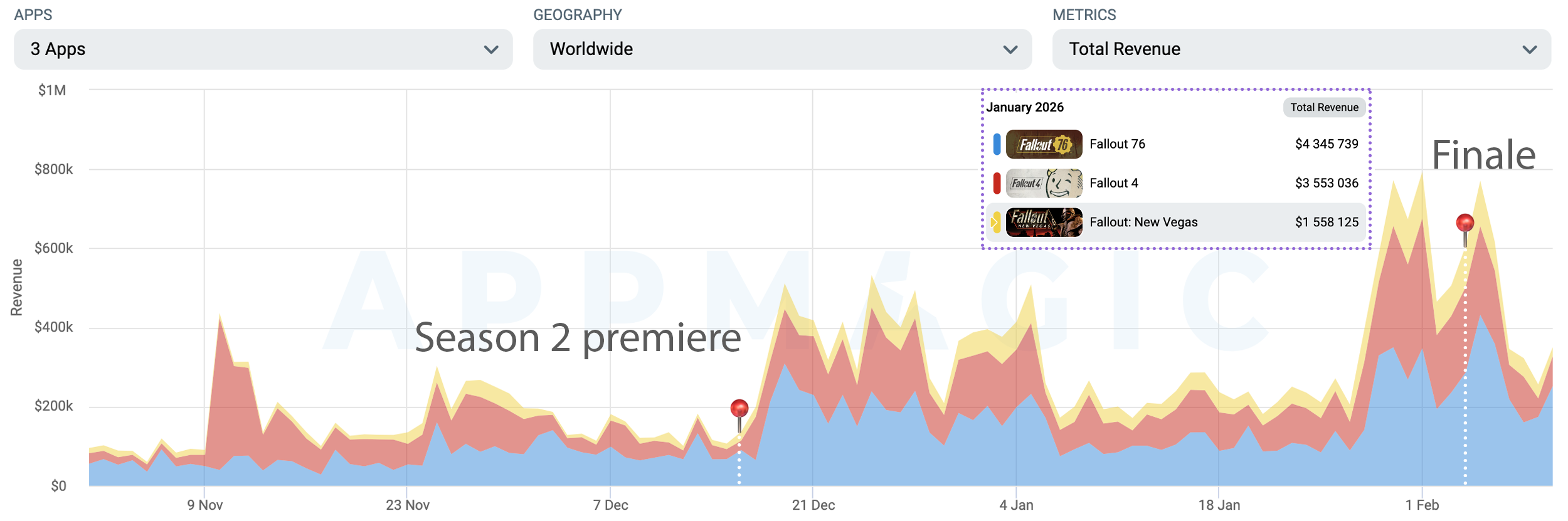
The Season 2 uplift across Fallout revenue
What's more, Fallout 76 had special expansion with new territories, quests and an Ghoul NPC. As a result, in December 2025, Fallout 76 led the pack with more than 406К downloads. Fallout 4 followed with over 246К, while Fallout: New Vegas added another 152К. Together, the three titles generated nearly $8M in total revenue, even though the season had just started. Roughly half of that came from the final two weeks of the year.
January 2026 picked up from there. That month alone, the three titles generated more than $9.4M. Downloads also saw a late-month push: in the first 10 days of February, five Fallout titles landed in Steam’s Top 100 by copies sold, with two breaking into the Top 10.
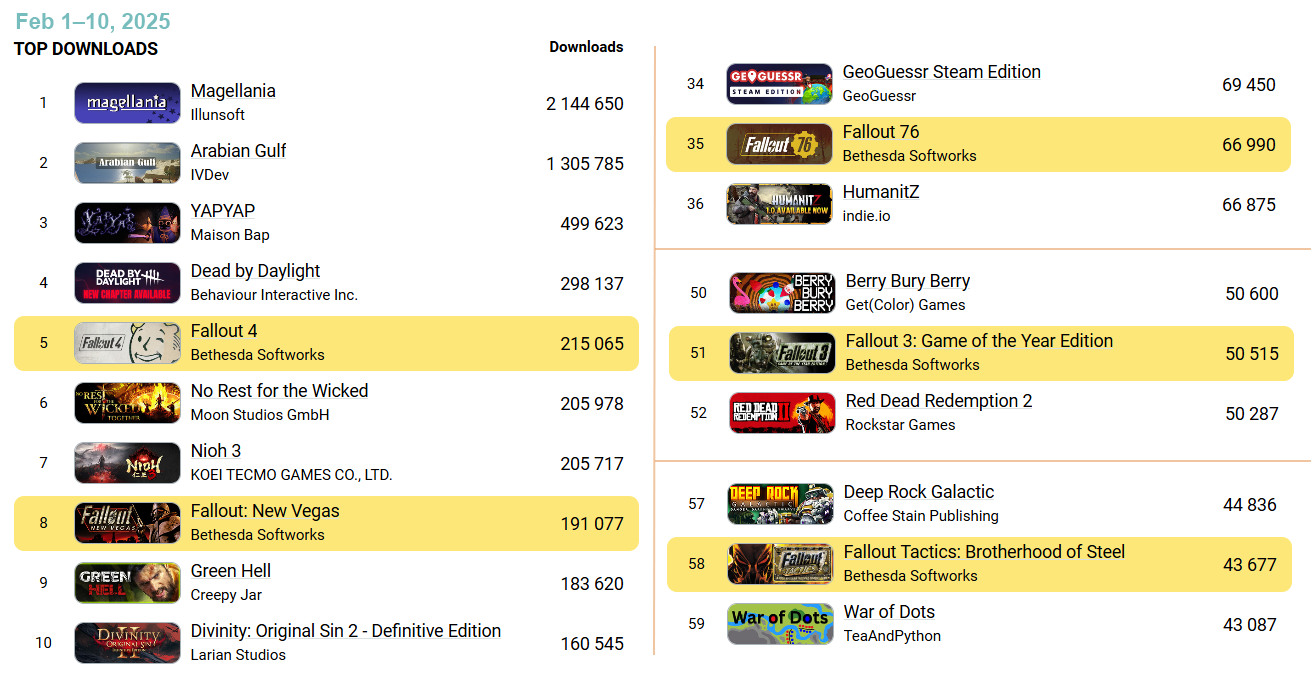
Steam’s Top 100: Fallout titles during Season 2
Over the full seven-week run of Season 2, the three games amassed about 1.8M downloads and brought in roughly $17.4M in total revenue. And some sales are still coming in now that the season is over, since many viewers chose to wait for all the episodes to come out before bingeing the entire season at once.

Full Season 2 window: Dec 17, 2025 – Feb 4, 2026
This is slightly lower than the first season saw. However, the comparison is actually pretty hard to calculate. Season 1 was about Bethesda going all-in from day one, while Season 2 shows a more strategic approach to prolong the interest in the franchise.
As a result, we saw sales increase both during the run of the season and after the final episode. Even after the finale, Bethesda keeps making more noise. Thus, on February 24, Fallout 4 will launch on Nintendo Switch 2, introducing the series to a new audience and fueling the post-season hype once more.
Clearly, that was the intentional strategy, and it's time to sum up how it played out!
Fallout Transmedia Effect: The Privilege of the Big IP
When the TV series first came out, the Fallout franchise had a great moment in the spotlight, and the best part was that Bethesda was ready for it: the content was scoped, the timing was right, and everything fit the moment. All the effort paid off with a huge revenue spike and renewed interest in the franchise. However, soon after the release, the hype was over, and everything went back to pre-series levels.
That is why it seems like the main goal of Season 2 was to prolong interest in the series at all costs. The show rolled out weekly, Fallout Shelter lined up two in-game seasons, and promos hit around the premiere, the finale, and even after. Instead of one big push at the start, Fallout stayed active throughout the whole run.
The only thing that went wrong was that the same strategy affected viewer ratings and likely had a negative impact on Season 2's reception. This makes it harder to determine whether the strategy was successful. One thing is clear, though: the whole transmedia story clearly pays off… But only because of how massive *Fallout*’s legacy is!
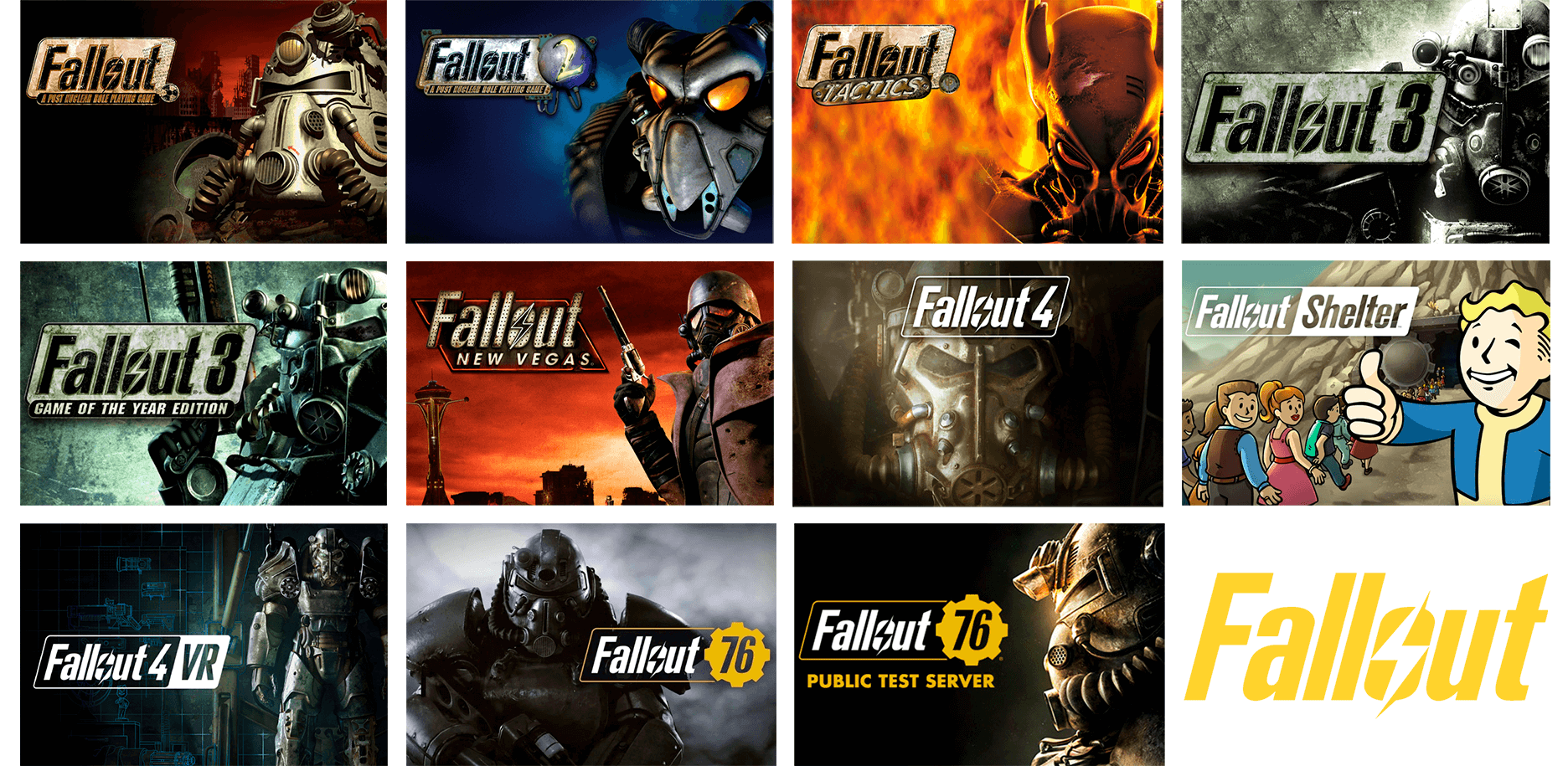
Would this level of impact be possible without a hefty catalog of eight games on Steam, multiple titles on PlayStation and Xbox, a mobile game, and an upcoming Nintendo Switch 2 port? Who knows.
Transmedia is an exclusive tool that requires both resources and IP, and if there’s anyone who can afford it, it’s Bethesda. Not only did they create a huge transmedia blast, but they also made sure it didn’t go to waste… land.