Five UA Trends: From AI to Fake Influencers
We explore five key trends in UA strategies that redefine how mobile games attract players: from AI and TikTok-inspired content to LiveOps integration and celebrity-led campaigns.
— by Lera Kalashnikova, Anya Zelenina
User acquisition has always been one of the most dynamic aspects of mobile gaming, but today, it’s evolving faster than ever. Powered by AI, TikTok-like skits, and bold experimentation, ad creatives become more than just marketing assets: they’re turning into entertainment in their own right, blending seamlessly into the content players consume every day.
In this landscape, staying ahead of these shifts in UA strategies isn’t just a competitive advantage, but a genuine survival strategy. That’s why we constantly monitor top-performing creatives in our Ad Intelligence to spot opportunities early and help studios avoid wasting resources on outdated tactics.
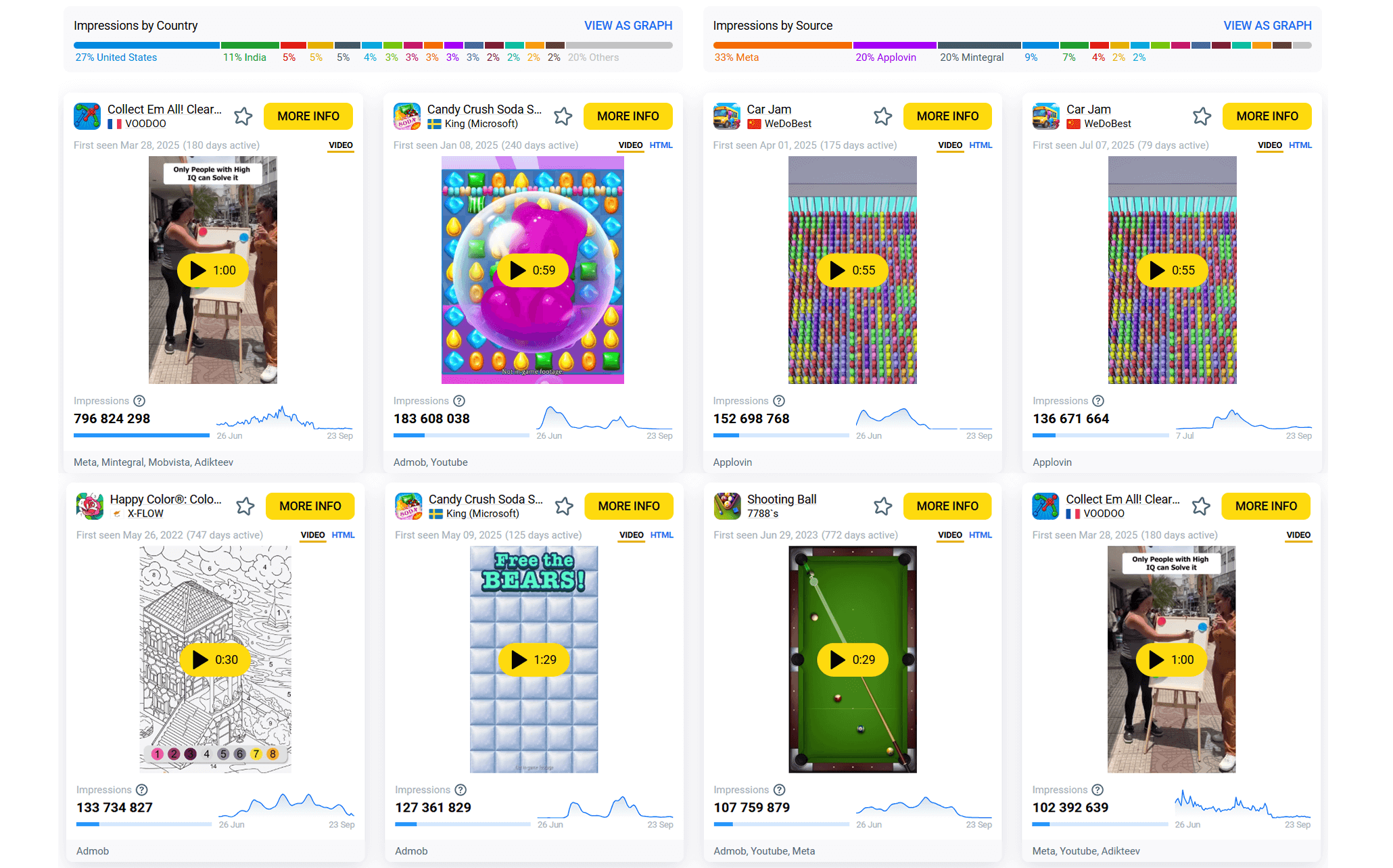 Gaming ad creatives in our Ad Intelligence
In this article, we’ll unpack a few key forces pushing UA forward right now: 1. AI-generated content reshaping UA strategies across genres 1. Reusing LiveOps visuals and mechanics to freshen up campaigns 1. Creatives disguised as Reels or TikTok videos 1. Niche hooks driving innovative UA approaches 1. Celebrity collaborations as community fan service
With something new happening in UA every day, we’ve got plenty to unpack—so let’s jump right in!
AI Is Everywhere
AI-generated content is no longer a novelty, but a go-to tool for game advertising. From weirdly funny visuals to surprisingly realistic fakes, it gives studios new ways to capture attention instantly.
The real advantage lies in efficiency. AI brings production costs down and the speed of iteration cycles up, making it nearly twice as fast as manual teams, according to Appsflyer’s case study. Generating a wide range of variations in a short time, it also allows studios to test more creatives at a faster pace. As a result, they can quickly pinpoint which content resonates most.
And when it comes to performance, AI visuals prove effective as attention hooks. Many titles now test multiple versions of the same ad, identifying winning concepts at scale. For example, in August, we spotted creatives from Idle Lumber Empire featuring different kinds of animated, human-like trees in their intros, resembling the Tung-Tung-Tung Sahur character from viral Italian AI Brainrot memes.
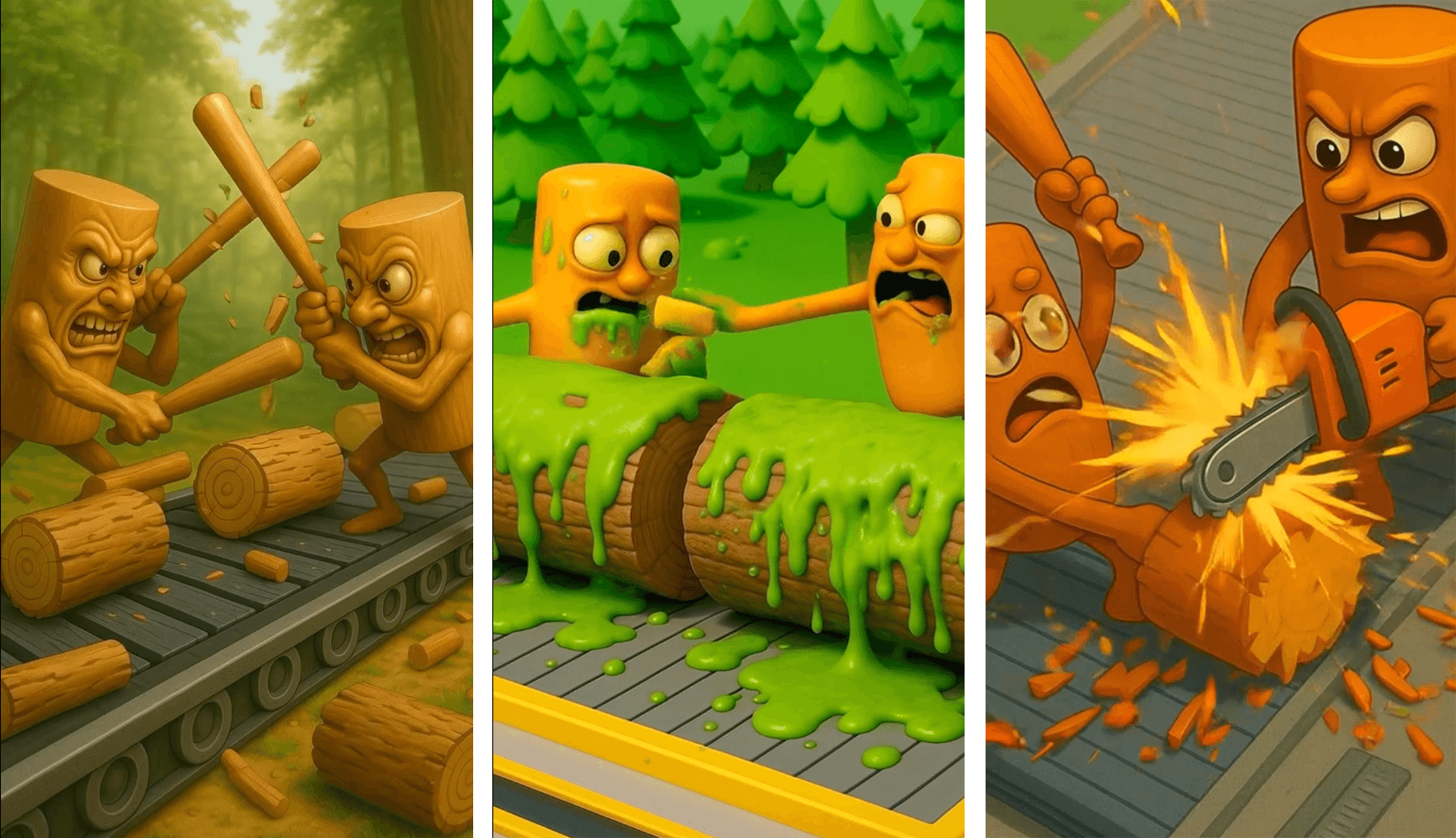 Idle Lumber Empire AI-generated ad creatives
This isn’t entirely new for AppQuantum, the studio behind both games. Back in July, they already used AI-generated assets for Idle Outpost’s creatives, and now it is clear this wasn’t just a one-off. Like many other publishers, they seem to systematically test AI-produced ads across various games to determine which variations perform best.
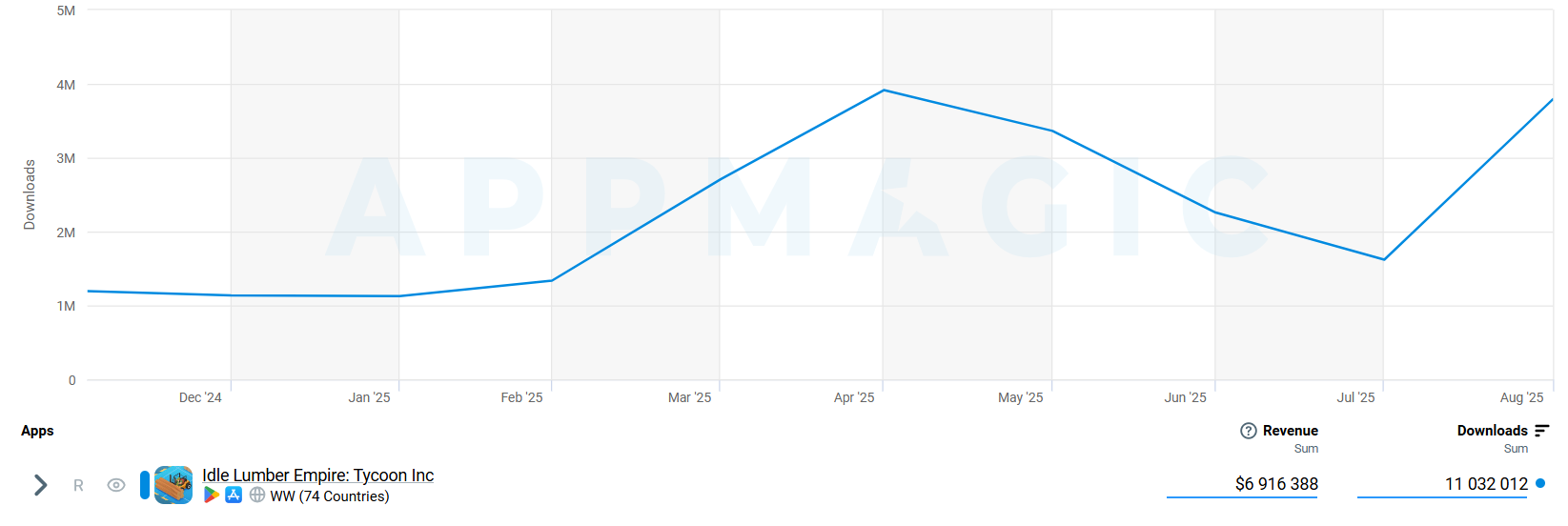
And what about the results? After a strong performance in April 2025, installs for Idle Lumber Empire began to decline. However, once the team rolled out the AI-generated intros in August, the game rebounded, bouncing from 1.6M installs to over 3.7M.
Not every studio ties AI visuals to the core loop or even the game’s concept. For example, Match Factory! drops AI visuals at the very beginning of the video just to spark curiosity—before switching viewers over to straight gameplay or the classic “save the king”-style bait.
Match Factory!’s AI-generated ad creative
Both small teams and industry leaders are now leaning on AI to test bold, funny, or visually striking creatives, driving cost efficiency and rapid creative iteration. Take HABBY’s Capybara GO! as an example: in one of its recent creatives, the AI-generated “realistic” capybara gives an interview. And once those out-of-ordinary visuals capture the viewer, the ad smoothly shifts to gameplay. In this creative, the studio also disguises the ad as social media content, which is actually a whole other trend we’ll explore in the next section.
Capybara Go!’s AI-generated creative
Yes, AI creatives are everywhere now, which remains a hot topic. The buzz might wear off as audiences get used to them, but here’s something we can’t deny: AI has reshaped UA strategies in the industry, and evolved from just a passing trend into a must-have tool for many mobile publishers.
Showing off the LiveOps
Another force taking over mobile gaming is LiveOps. From fueling long-term retention in Casual and Midcore titles to powering the growth of Hybridcasual hits, it has eventually found its way into UA strategies. Titles like Toy Blast, Angry Birds Dream Blast, and Merge Restyle now highlight new events and seasonal updates right in their ad creatives.
Why does it work? Instead of showing the same familiar gameplay we’ve all seen before, players are teased with fresh mechanics and visuals. With no need to create brand new content, this trick reduces costs, shortens the production cycle, and drives engagement thanks to familiar mechanics presented with a fresh twist.
Merge Restyle ad creative with LiveOps
In a way, this is just another form of misleading creatives that does not present the actual core gameplay—except this time, there’s more truth to it. Events are already a core part of modern games, so showing them in ads feels closer to the real experience.
And it makes sense: events require time, money, and creativity to build, so why not use them to attract new players, too? This trick also serves another purpose by giving potential players a glimpse of the evolving content they can expect, not mere repetitive core loops they've seen a hundred times before.
Blending Ads with Social Feeds
Many ads mimic TikTok videos or viral Reels, featuring short skits and emotional clips that resemble regular content rather than yet another intrusive ad. This stops users from immediately scrolling away and reduces frustration to seamlessly blend ads into the social feeds, efficiently blurring the line between them.
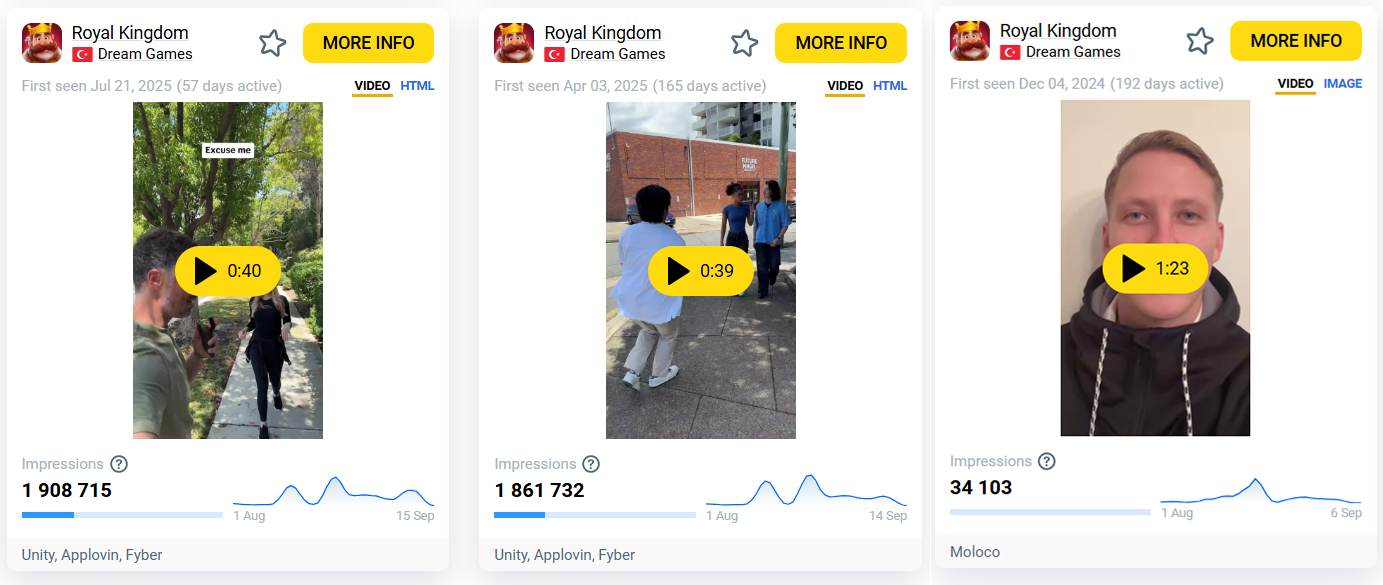 Royal Kingdom’s TikTok-style ad creatives
In the crowded Casual market, one trend continues to define UA strategies: developers are moving away from direct “download now” calls-to-action and instead producing content designed to entertain first, even if it somewhat bends the truth. Inspired by TikTok and the Reels format, these creatives feature fake influencers and focus on emotional connection with the audience.
This summer, the Hybridcasual hit Color Block Jam took a different approach, starting with a TikTok-style skit unrelated to the game and then showing the actual gameplay alongside the clip. This tactic echoes viral trends such as “Subway Surfers gameplay under random clips” used to maintain viewer attention.
Color Block Jam’s TikTok-style creative
When games slip into the entertainment feed, they’re not just fighting other games for attention— but every piece of content in a social feed, bypassing both banner blindness and ad aversion. And here’s the obvious flip side: content must feel authentic and timely, but trends move quickly, and long production and approval cycles can leave studios chasing a wave that’s already passed.
Innovating with Niche Hooks
When it comes to grabbing attention, small creative twists often make the difference. One way to make ads more engaging is to lean on visual themes that resonate with the targeted audiences. Even if they’re unrelated to gameplay and yet align well with player preferences or concept.
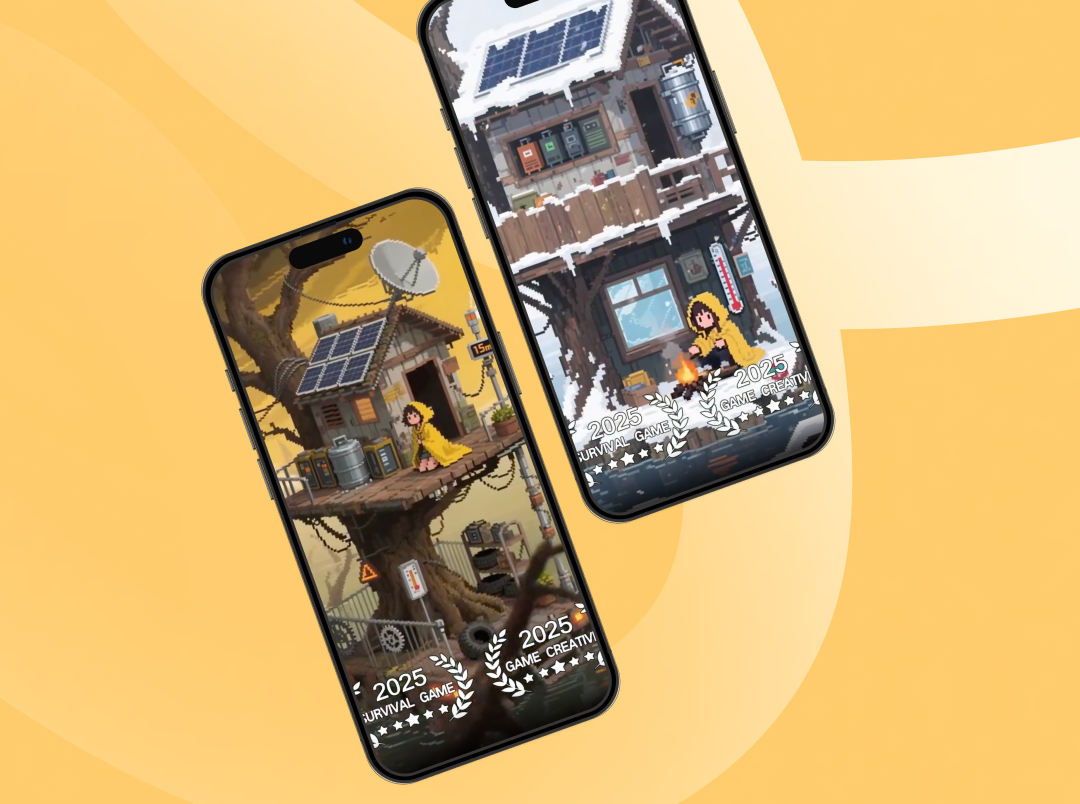
A good example comes from Dark War Survival, which ramped up its testing of AI-generated “turn-around” transitions. Back in July, the studio experimented with pixel-art style creatives, and in August, they decided to follow a popular trend with a Miyazaki-inspired aesthetic. Some creatives also layer in bold statements along the lines of “Best Survival Game” or “Best Game Creative,” making the game appear more prestigious.
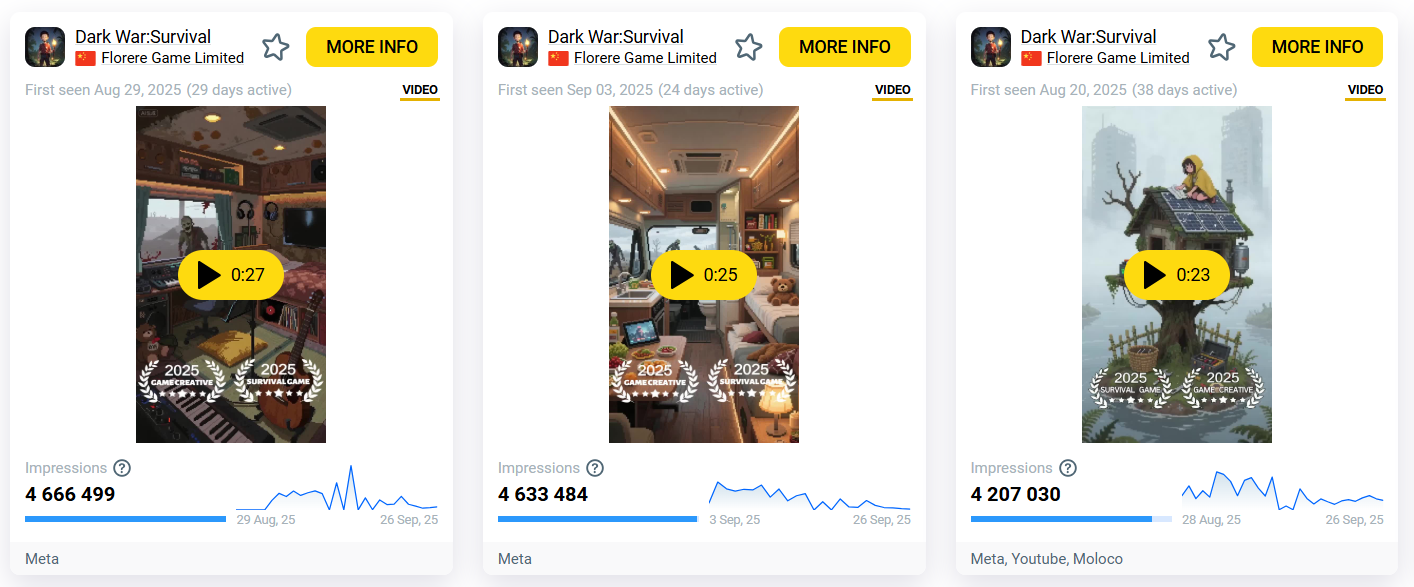 Dark War Survival’s ad creatives in Ad Intelligence (and a YouTube version)
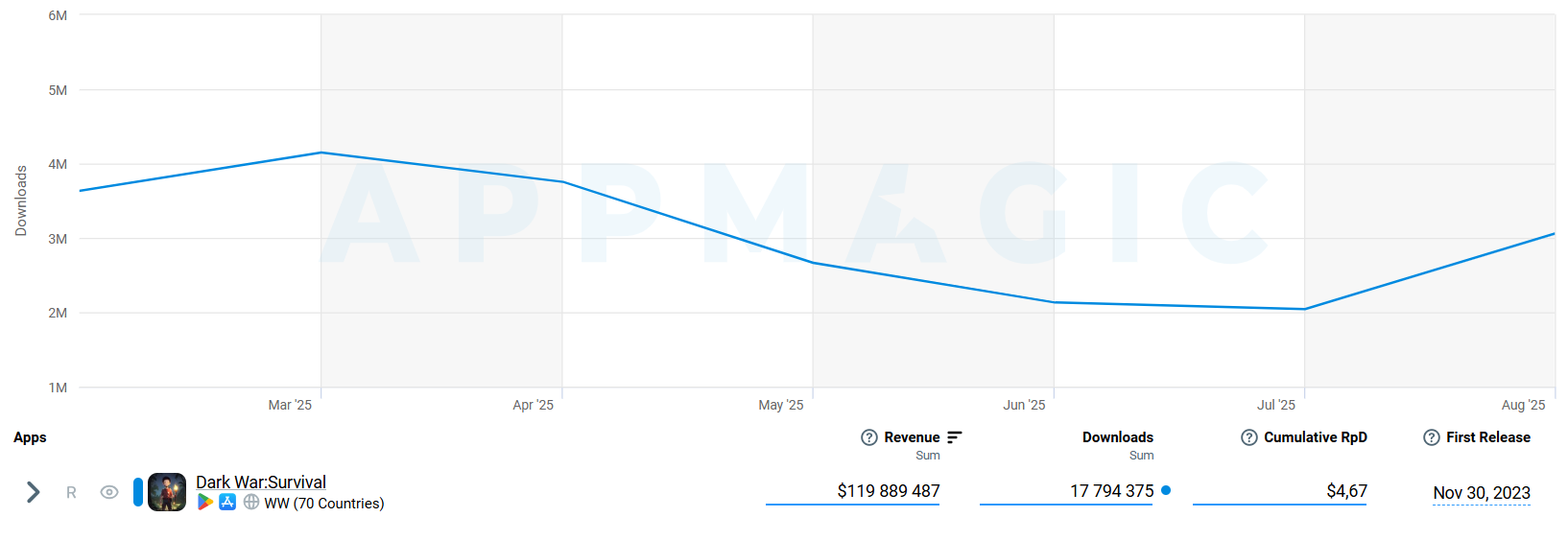
These creatives continue to perform well, amassing more than 4M impressions per month. The game’s installs are rising again thanks to a refined UA strategy, and after a few slow months, the titles finally reached 3M downloads in August. It’s a clear reminder that fresh creative concepts, when aligned with smart UA tactics, can quickly reignite growth.
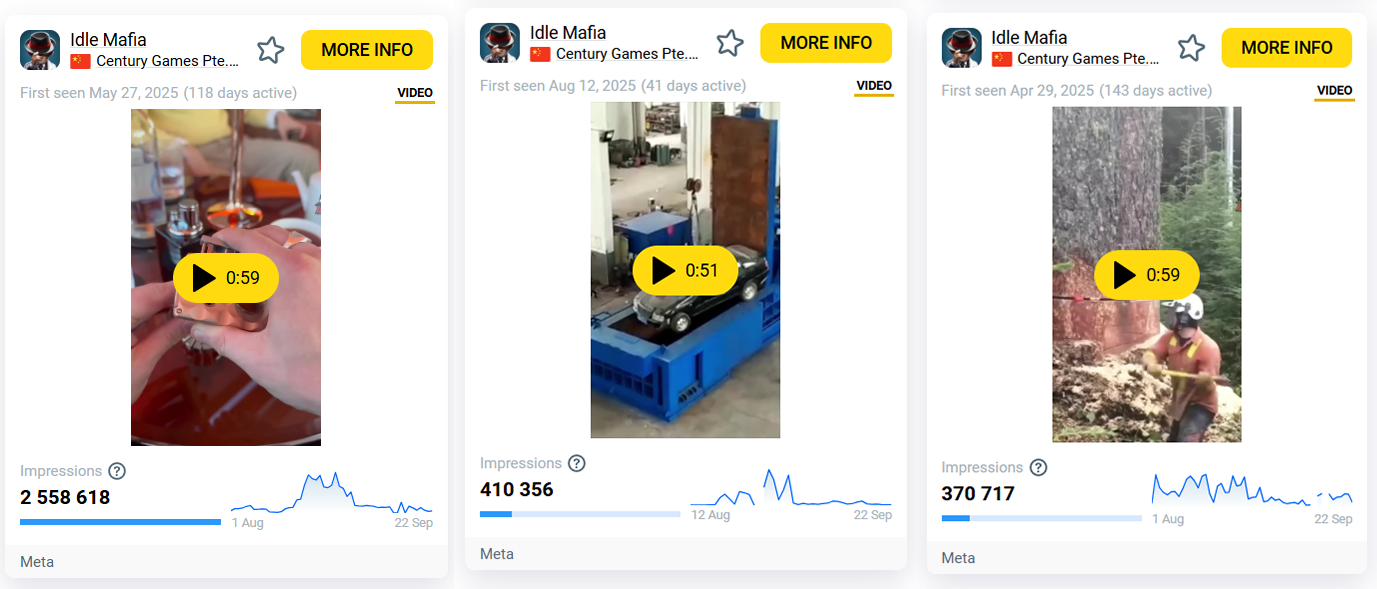
Some titles drive their UA by using real-life intros, masking ads as non-promoting content, and engaging users before presenting the actual game. Idle Mafia shows how it works: the creative starts with authentic, real-life footage to hook the viewer, and then it seamlessly transitions to gameplay. The studio achieves this by creating a visual bridge, showing one visual element in both the live-action video and the following gameplay clip to make the shift smooth.
The next approach isn’t groundbreaking, but it still works well—when done right. Memes and fan service remain a powerful way to connect with players, and it’s crucial to know your community and the recent trends to leverage them without looking too weird or outdated.
Even top studios like HABBY rely on this tried-and-proven strategy for Capybara GO!, producing cozy, emotionally engaging ads that resonate with a broad Casual audience. By using cute animal memes that perfectly match the game’s cozy vibe, these ads focus on maximizing organic virality and often don’t show the gameplay at all.
Innovations often set the tone for UA, giving ads a fresh appeal and standing out from familiar formats. One recent example is AR-like graphics, merging gameplay with real life. Royal Match leaned into this idea, using visual effects that make it look as though the game is unfolding right inside the real world, creating eye-catching visuals.
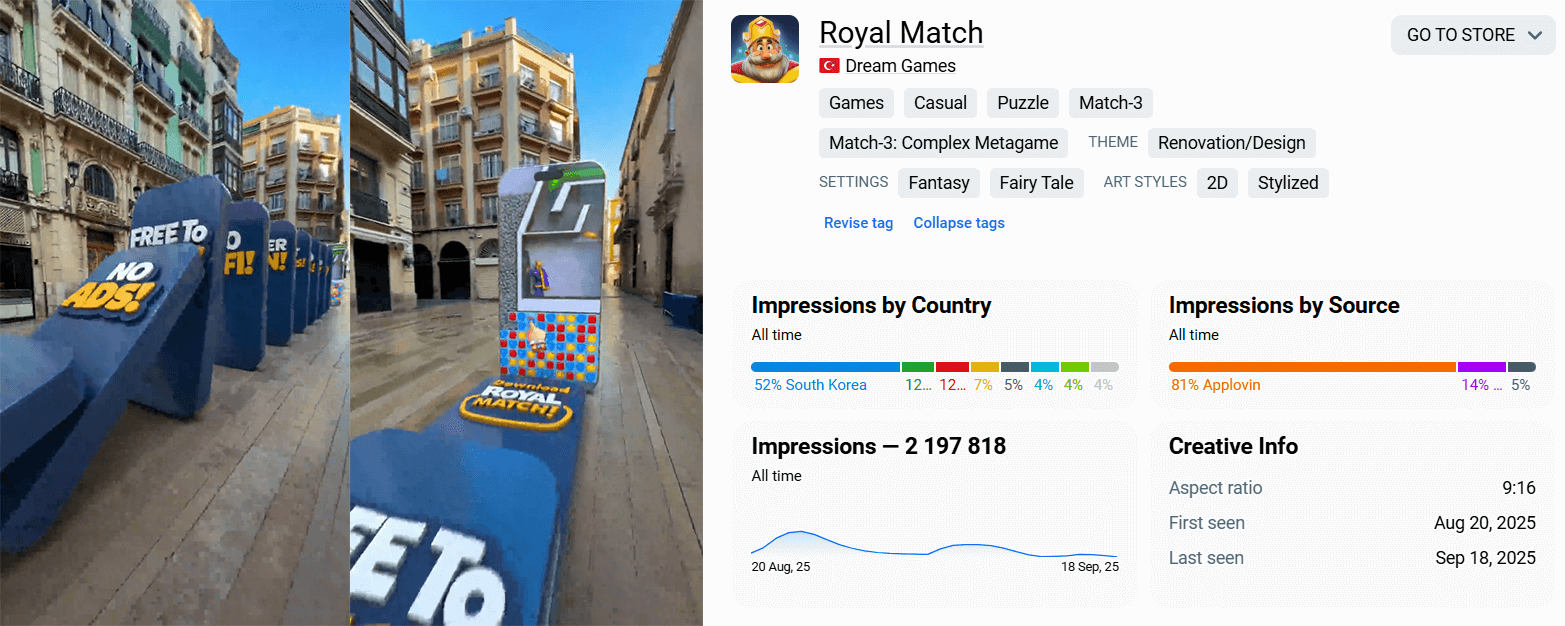
Studios are constantly on the hunt for effective hooks to maximize their UA performance. Sometimes, the answer lies on the surface with viral memes driving organic growth and spreading naturally; alternatively, it’s about adopting visual themes that may not directly relate to the gameplay but strike an emotional chord with the target audience. In UA, small touches like these can set one campaign apart from a sea of lookalikes.
Flexing Big Budgets
UA campaigns come in all shapes and sizes, but let’s be real: top publishers play on a different level with their budgets. Not so long ago, we covered *Royal Kingdom*’s celebrity-packed campaign and its impact in our Casual Games Report H1 2025. Not every studio can line up multiple A-list celebrities, but many flex their budgets with bold collaborations to get noticed.
By late summer, Kingshot rolled out new creatives featuring Kristian Nairn, best known for playing Hodor in Game of Thrones. This collaboration strategically targeted the show’s global fan base, and it seems like a clever bet: fans of a show built around diplomacy and power struggles might feel right at home in a 4X Strategy centered on alliances and conquest.
Measuring the exact impact of this campaign is a bit tricky, but the game’s UA strategy as a whole seems to have performed well. The title has been steadily scaling downloads, paying a lot of attention to UA. Since May, Kingshot has consistently generated over 7M monthly installs, and this new campaign didn’t spark any major spikes after its launch in August. Yet RpD is steadily growing, which is a sign of effective UA targeting paired with thoughtful monetization.
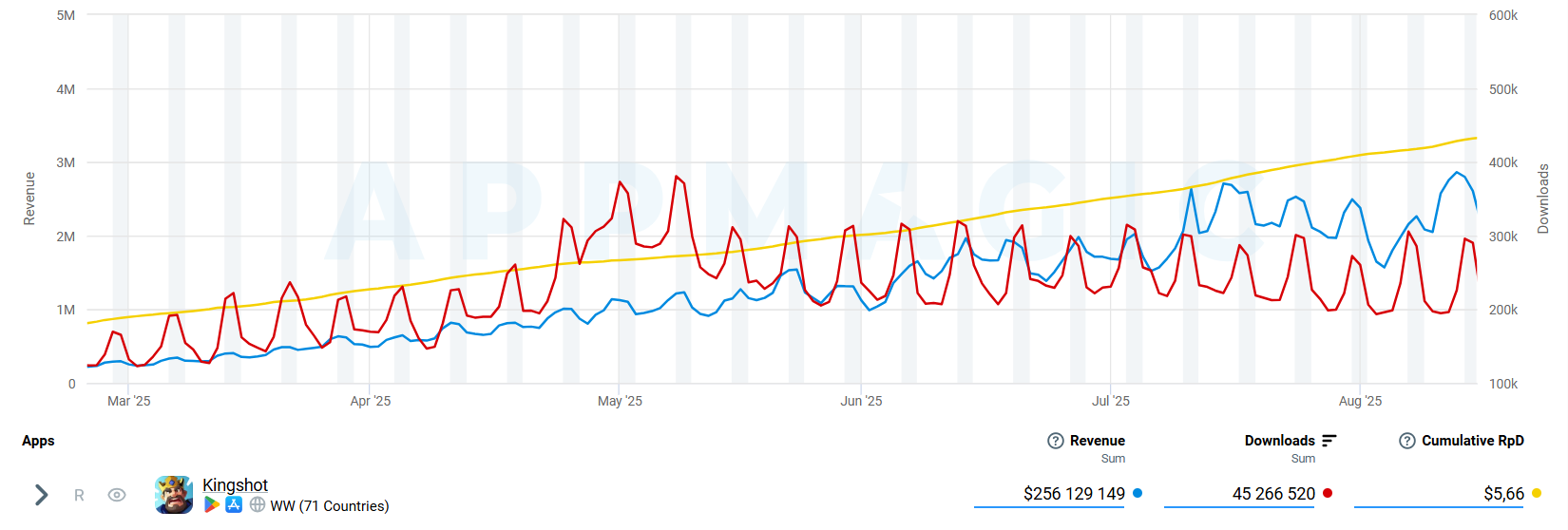 Kingshot’s revenue & downloads
Big budgets and big names don’t always guarantee great payoff. When done right, though, these collaborations also act as fan service for the community, which midcore players especially value. And, of course, they also give the industry plenty to talk and write about, so we won’t be the ones to complain.
Key Takeaways
UA remains a moving target today, constantly reshaped by shifting player expectations. So, if you’re looking for inspiration, here are five key trends you might benefit from:
- AI-made content for rapid iteration
- LiveOps integration for smart reuse of existing assets
- Social-inspired formats for authenticity and maximized organic virality
- Niche hooks for innovative and engaging ads
- Big collaborations paired with smart targeting for a wider reach.
All these emerging trends push advertisers to think less like marketers and more like entertainers, and point to one truth: only teams that stay agile will continue to thrive. UA strategies have become less about brute force and more about sharp, adaptive thinking, and the studios we see scaling are those willing to test fast, fail, and reinvest in what resonates.