Idle Games in 2026: Home, Steam Home
Idle games have been around for years. Now they’re all over Steam, from simple clickers and desktop companions to more complex systems. We broke down how the format is evolving, what’s working now, and what developers can learn from the games that are getting it right.
— by Maria Bolshman and Evgeny Kolodyazhny
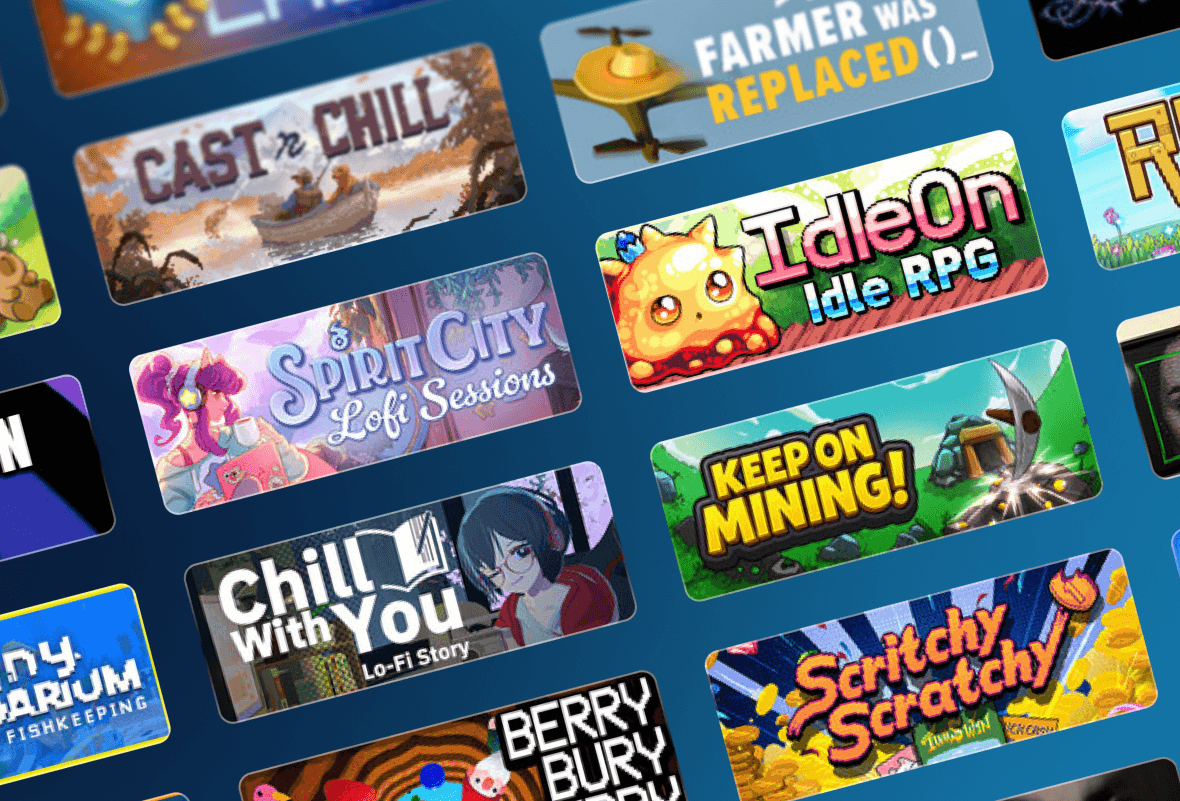
Steam is full of demanding games: complex RPGs, competitive shooters, deep strategy titles… and lately, games that barely ask for input at all. The recipe is borderline absurd: launch the game, leave it running, check in occasionally. Meanwhile, progress keeps ticking in the background, resources stack up, and rewards unlock. The system does most of the work on its own.
These are Idle games. The concept has been around for years, from early browser experiments to mobile hits. They’ve been on Steam for a while, too, but lately, they’ve become a lot more visible.
To see how far this has gone, we pulled together the top 50 Idle games on Steam by revenue from 2024 to 2026. We have curated this list carefully, including different types of Idle titles based on how developers tag their own projects on Steam.
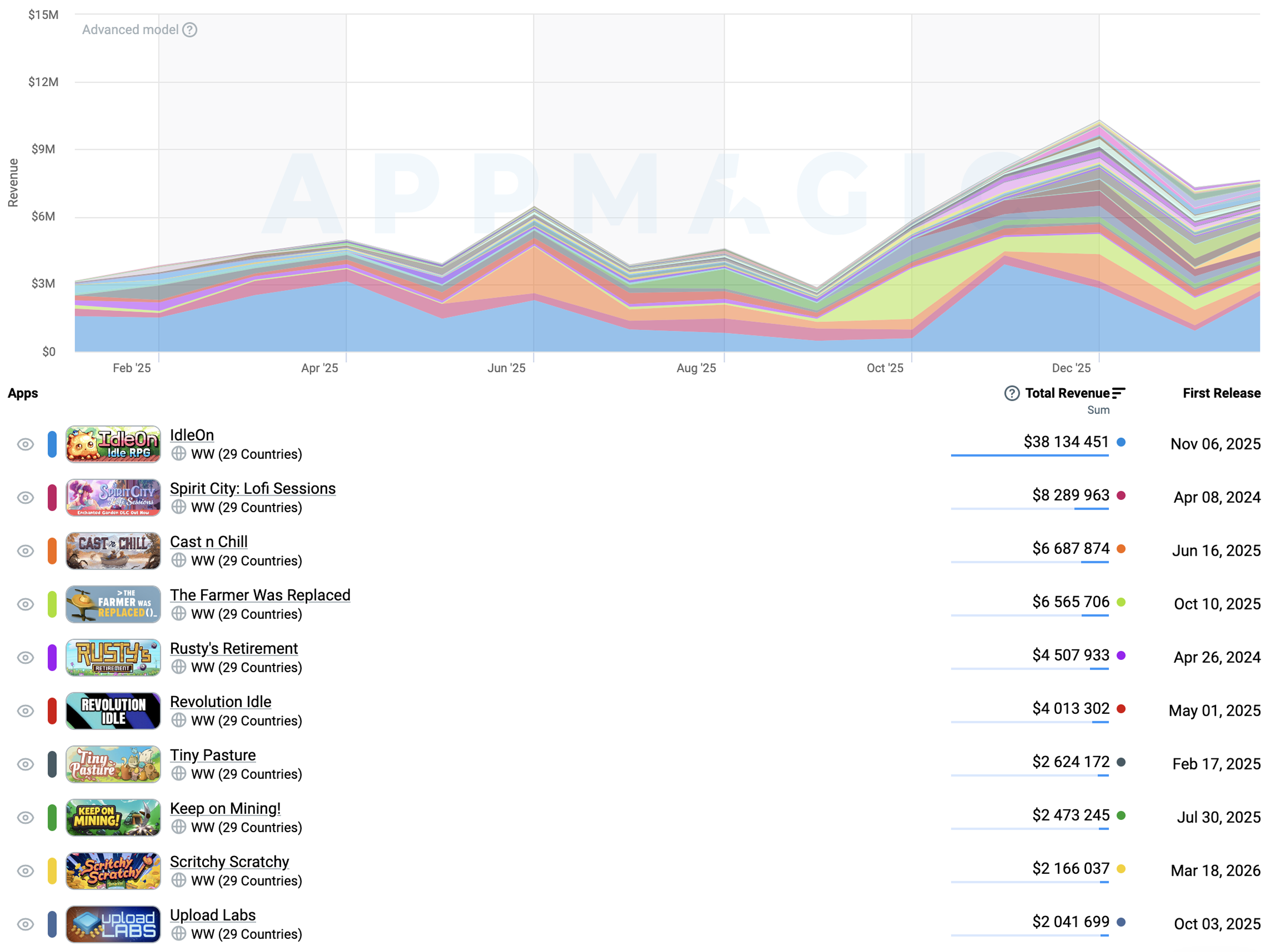
Top 50 Idle games on Steam by revenue, 2024–2026
Even a quick look at the list shows how the space has grown. Quite a bit, that is. Steam hosts dozens of idle and incremental games, from viral clickers and simple experiments to more complex, system-driven experiences. Some come and go, while others stay and keep a small but steady audience over time.
We checked a handful of recent releases: Cast n Chill, The Farmer Was Replaced, Tiny Pasture, Scritchy Scratchy, and Berry Bury Berry. Different concepts, but the retention curves end up looking pretty close. They typically start with strong D1 numbers, usually in the 40% to 70% range, followed by a predictable drop.
Most of these games do fine in the short term. Where things start to differ is in the long run. Some manage to keep players engaged much longer, like The Farmer Was Replaced, with its D30 retention above 10%, which is unusually high for the genre.
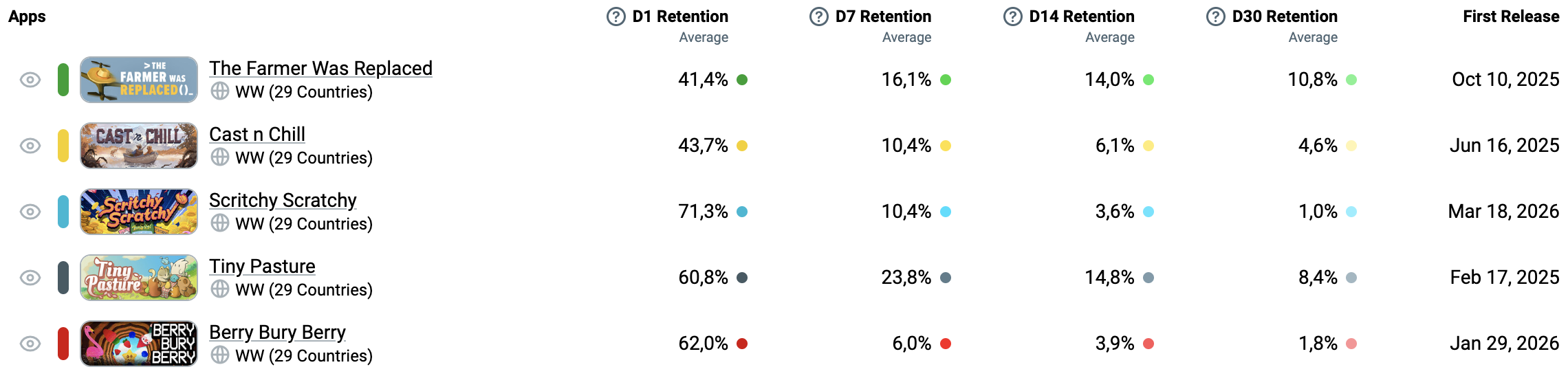
D1–D30 retention across selected Idle titles
And what’s happening on the pricing side? Most Idle titles are priced between $3 and $15, often dipping even lower during sales. Сheap enough to feel like an easy pick-up, especially when you grab a few at once! But some Idles don’t charge upfront at all. They go free-to-play and monetize over time, more in line with the mobile scene. IdleOn, for example, generated over $22M in 2025 alone using this model.
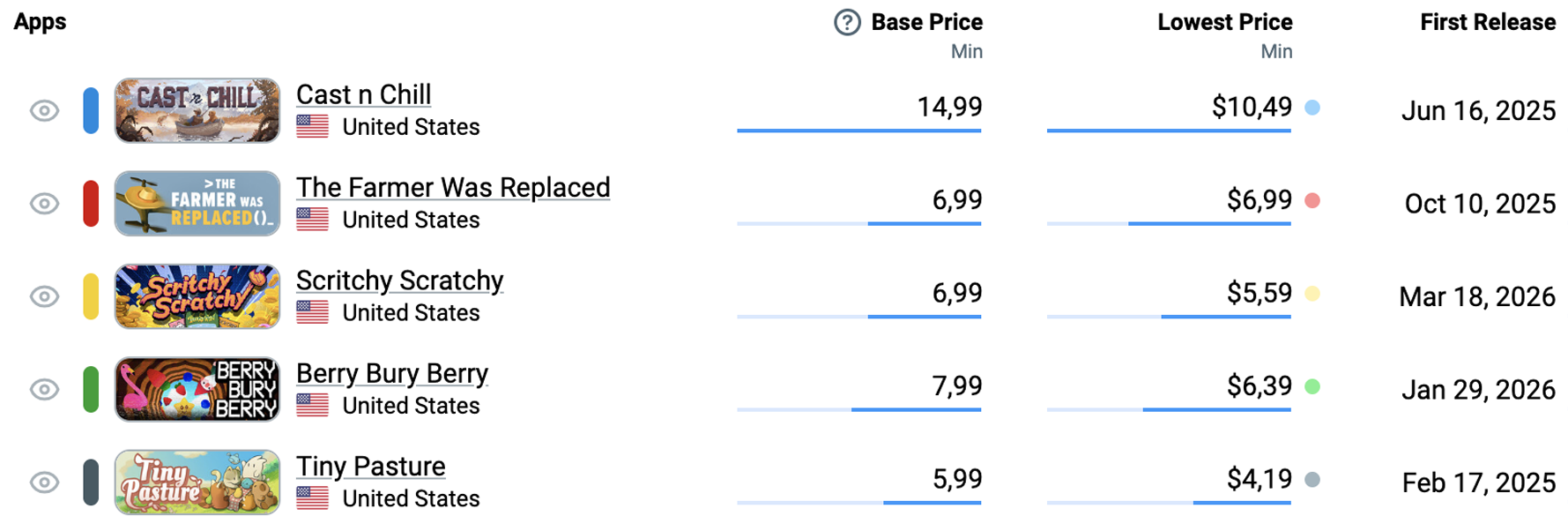
Base and lowest prices across selected Idle titles
Pricing on Steam is subtle and highly psychological. We covered it in detail in our recent research, and with Idle titles now firmly on the radar for both players and developers, they seem to hit that balance especially well. We’ll get back to all of this later, but even at a glance, Idle games don’t just keep running; they keep earning.
So what else is making this space so attractive right now? Let’s find out.
Games That Mostly Play Themselves
When you think about it, Idle games are what people go for when “playing” isn’t really the priority. You start a session, leave it running, check in from time to time, and it keeps going either way.
The model is simple:
- minimal interaction
- long-running sessions
- passive progression
- small but constant rewards
Basically, most of the time, the game doesn’t really need a player. It keeps progressing on its own, stacking resources, unlocking new layers, and moving things forward. Players only step in occasionally to adjust something, then leave again. It doesn’t take much, but it always feels like progress is happening, and that adds up.
And boy, does this model hold up…! Look at the top Idle games on Steam in 2025. Across metrics such as copies sold, revenue, and wishlists, the scale is hard to miss.
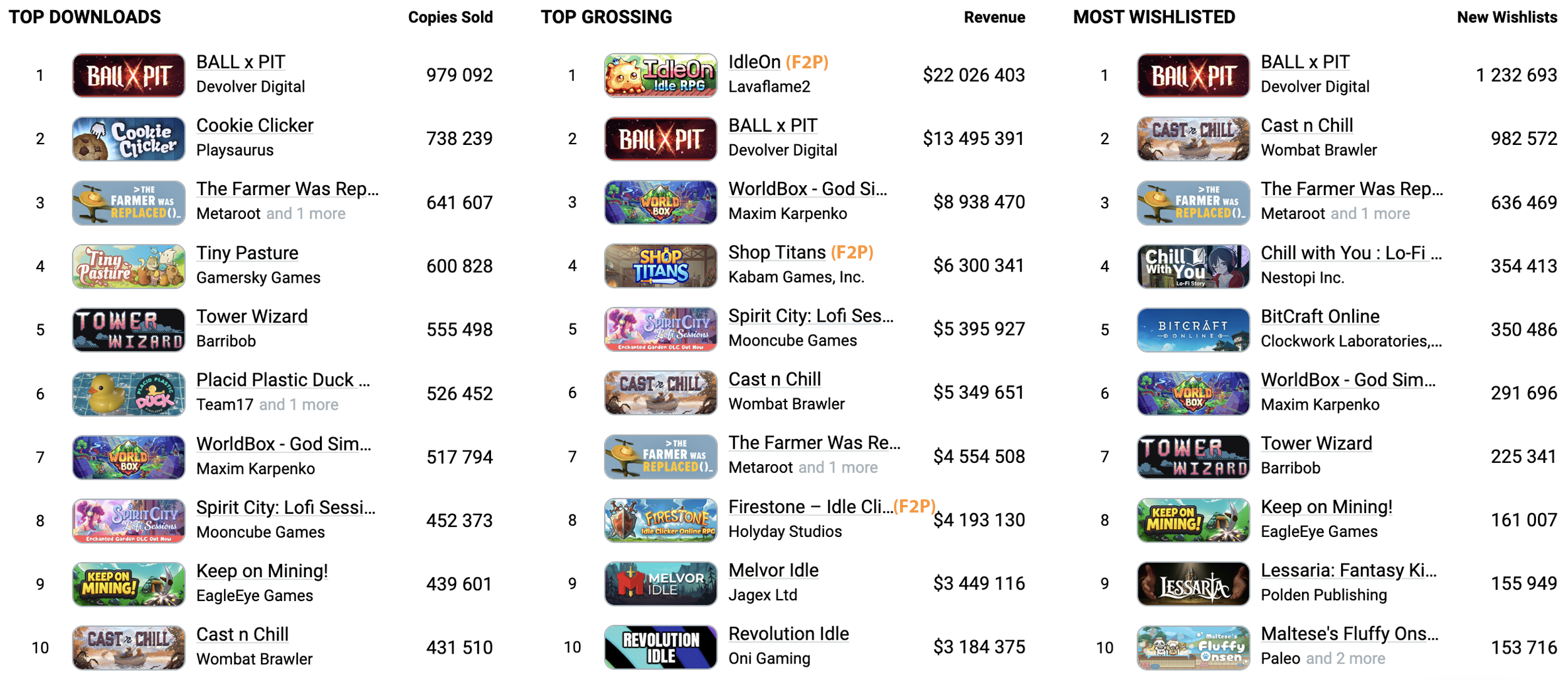
Games tagged as Idle on Steam in 2025
On the revenue side, IdleOn is way ahead at over $22M, with its MMO-like structure and long-term progression. But it doesn’t stop there. The rest of the top is filled with newer Idle titles that are already doing well.
Spirit City: Lofi Sessions, a cozy productivity companion, and Cast n Chill, a relaxed fishing Idle, are both past $5.3M. The Farmer Was Replaced, built around automation and scripting, is over $4.5M. Even Revolution Idle, a more traditional take on the genre, is at $3.1M and makes the top 10.
The Copies Sold charts hold up just as well if you look at premium titles. Cookie Clicker, a classic dating back to 2013, came to Steam in 2021 and has so far sold a solid 720K copies. Yet there are younger titles that end up closing!
The Farmer Was Replaced shows up again, passing 640K. Cozy desktop Idle Tiny Pasture reaches 600K, and the more traditional Incremental called Tower Wizard lands at around 555K. Spirit City, focused on lo-fi sessions, has sold over 450K copies.
And then there’s Ball x Pit… It ranks #1 by copies sold, #2 by revenue, and tops the most wishlisted Idle games chart on Steam in 2025. Which is a bit surprising, because it’s clearly not an Idle game. It’s fast, chaotic, and far more active than you’d expect from the genre.
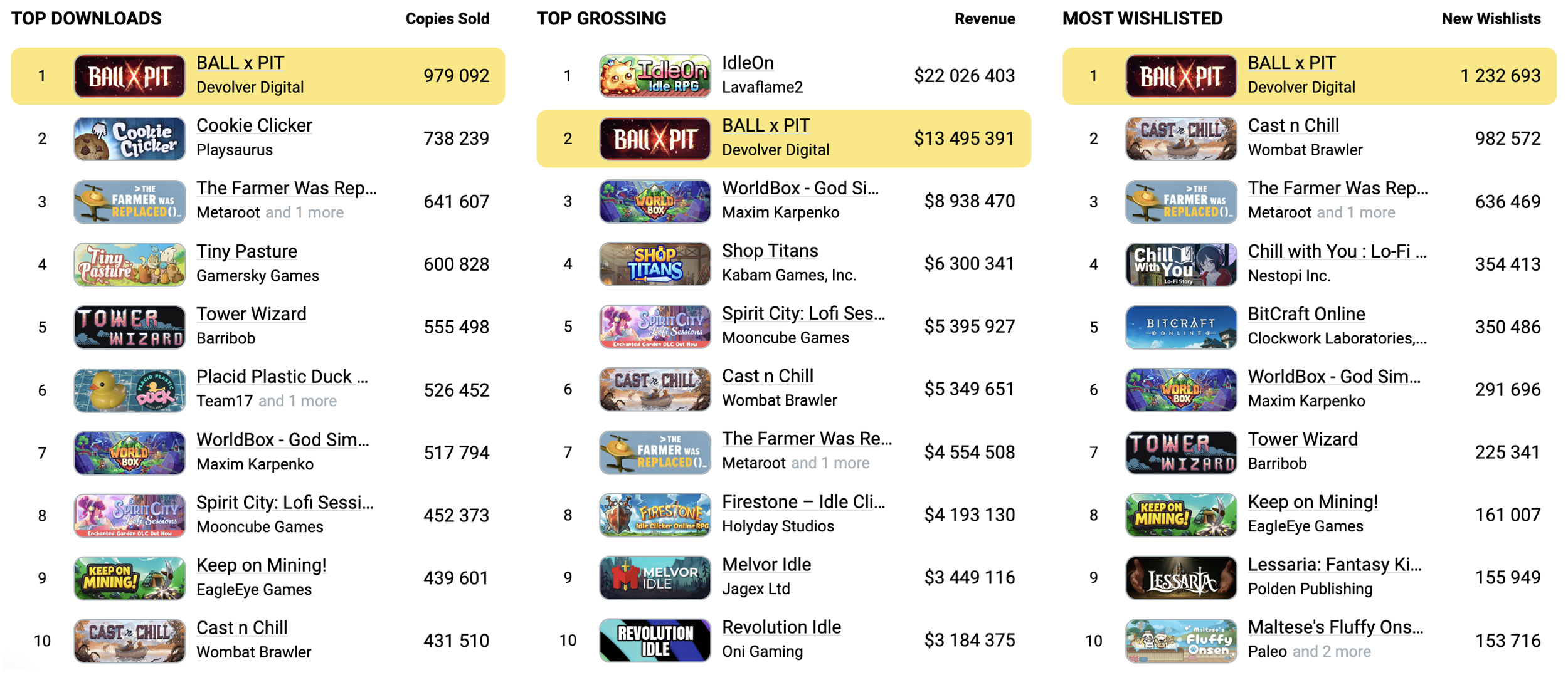
But the Idle elements are still there. Resources keep accumulating between the runs, and a lot of progress and upgrades happen outside of active play. Here’s a full breakdown of Ball x Pit on our blog if you want to dig deeper.
And then there’s the tag. The game is labeled as “Idle” on Steam, just like many others whose cores are far from the genre. Tags are partly set by developers, and “Idle” has become a popular one, so the category ends up covering a much wider range of games.
Once you look past the numbers (and, apparently, the tags), the category starts to blur. At this point, “Idle” reads less like a genre and more like a way to play. But it wasn’t always this way. And to see how the genre evolved, we need to go back to its origins.
From Web to Mobile to Steam
Instead of going all the way back to the earliest experiments, it makes more sense to start with the game that took Idle to the mainstream.
Cookie Clicker came out in 2013 as a browser game. It was created by Julien “Orteil” Thiennot at DashNet and set the template. The idea couldn’t be simpler: click a cookie, earn points, buy upgrades, and eventually stop clicking because the game keeps going on its own. That loop still defines Idle games today: click, upgrade, automate.
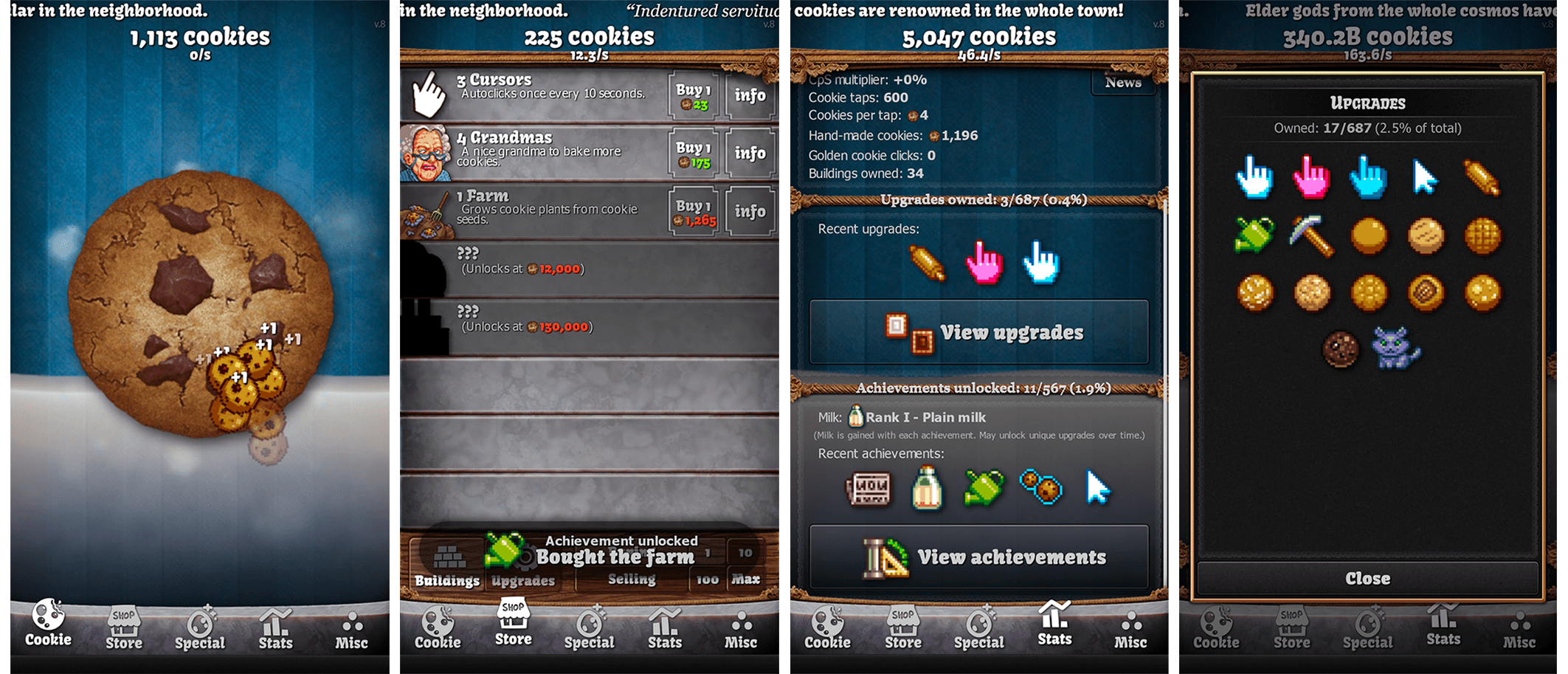
Cookie Clicker on mobile: in-game view
The official Cookie Clicker app only arrived in 2020, long after the genre had already taken off on mobile. Since then, the mobile version has sold over 5M copies, which is still on the lower end for the genre. By the time it arrived, mobile Idle games had already shifted toward deeper systems and stronger monetization.
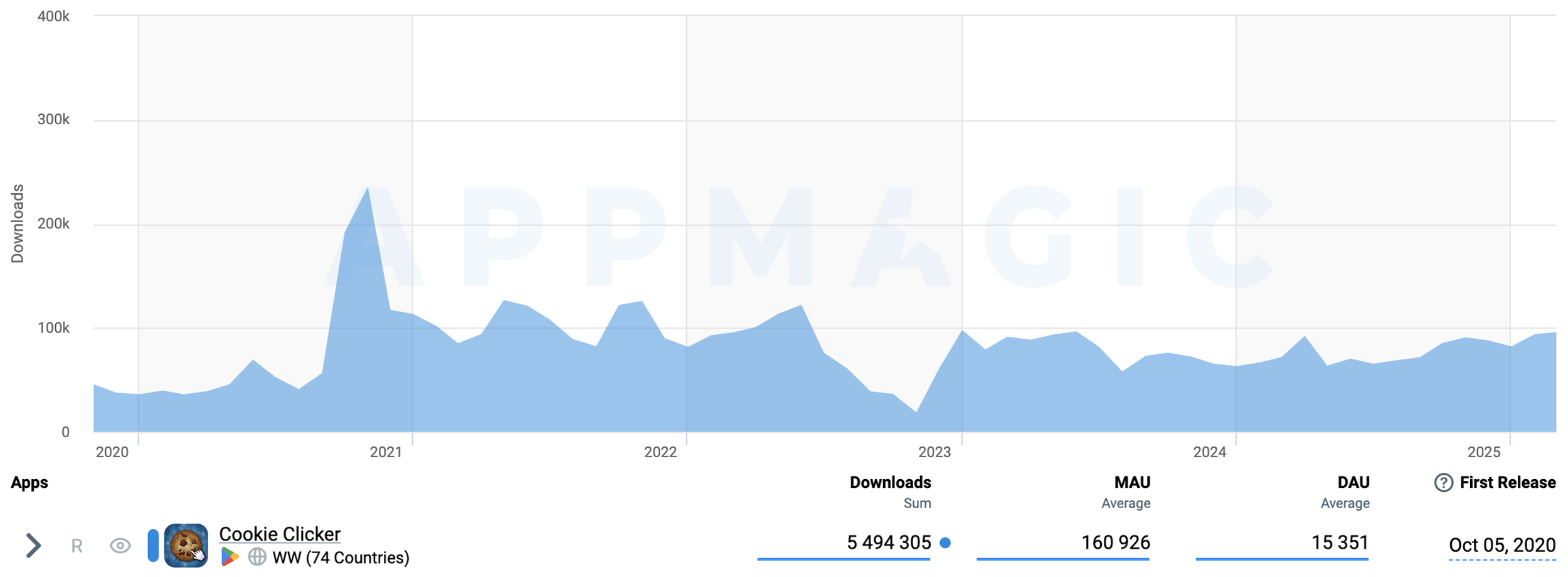
Cookie Clicker on mobile: copies sold over time
Take Gold and Goblins: Mining Games. It launched in late 2020, around the same time Cookie Clicker was making its way to mobile. Since then, it has reaped over 69M downloads, with IAP revenue past $163M. It comes from AppQuantum, the publisher behind Idle Lumber Empire, and it sure is another major hit in the genre, with roughly twice the installs and over $113M in IAP revenue.
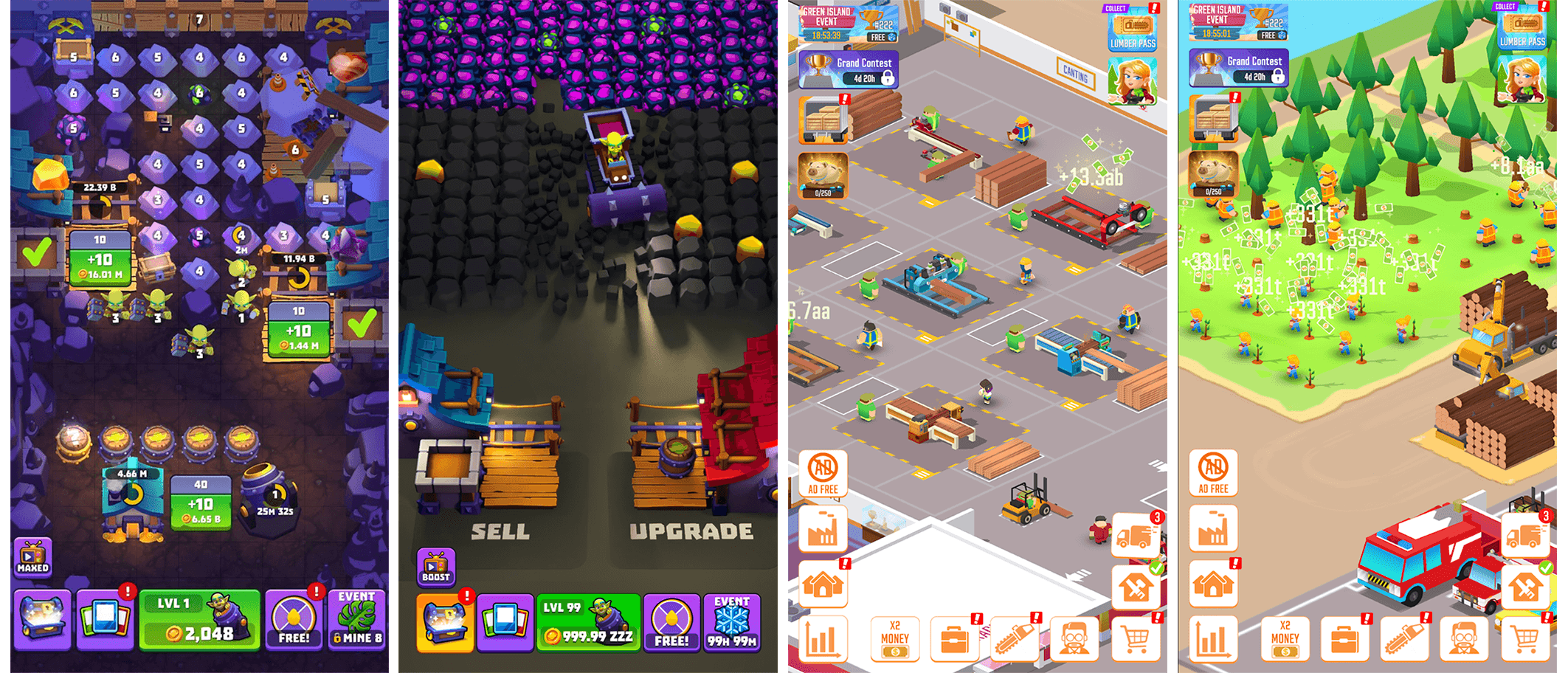
Gold and Goblins and Idle Lumber Empire gameplay samples
And it isn’t just one studio. Century Games pushed the genre even further with titles like Idle Mafia and Frozen City. By 2022, it felt like Idle games had everything going for them. Revenues were at their peak, the audience was there, and the format was considered to be one of the most promising on mobile.
But that didn’t last. By mid-2023, growth had slowed down. Revenues dropped back to 2022 levels, and the genre lost some of its spotlight.
Here’s what the top Idle games on mobile look like today:
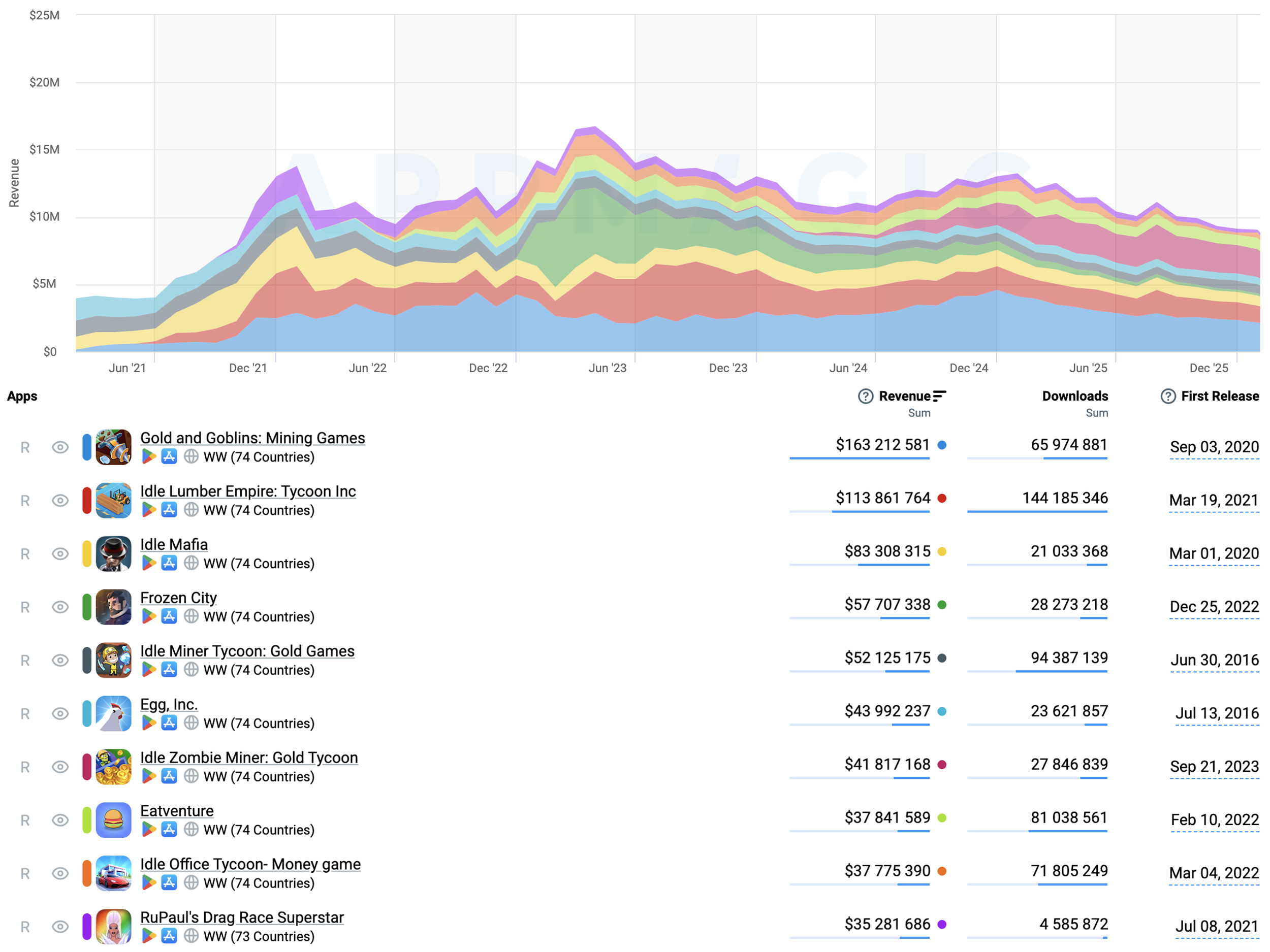
Mobile Idle leaders by IAP revenue
The ideas didn’t disappear, though; they just found a new place. Many similar concepts started to surface in other genres, where they could go further. A good example is Whiteout Survival from Century Games. It takes a very similar setting, tone, and visual style to Frozen City, and builds on it with a deeper 4X setup and a touch more Strategy. Here’s how the two compare in performance—the gap is obvious.
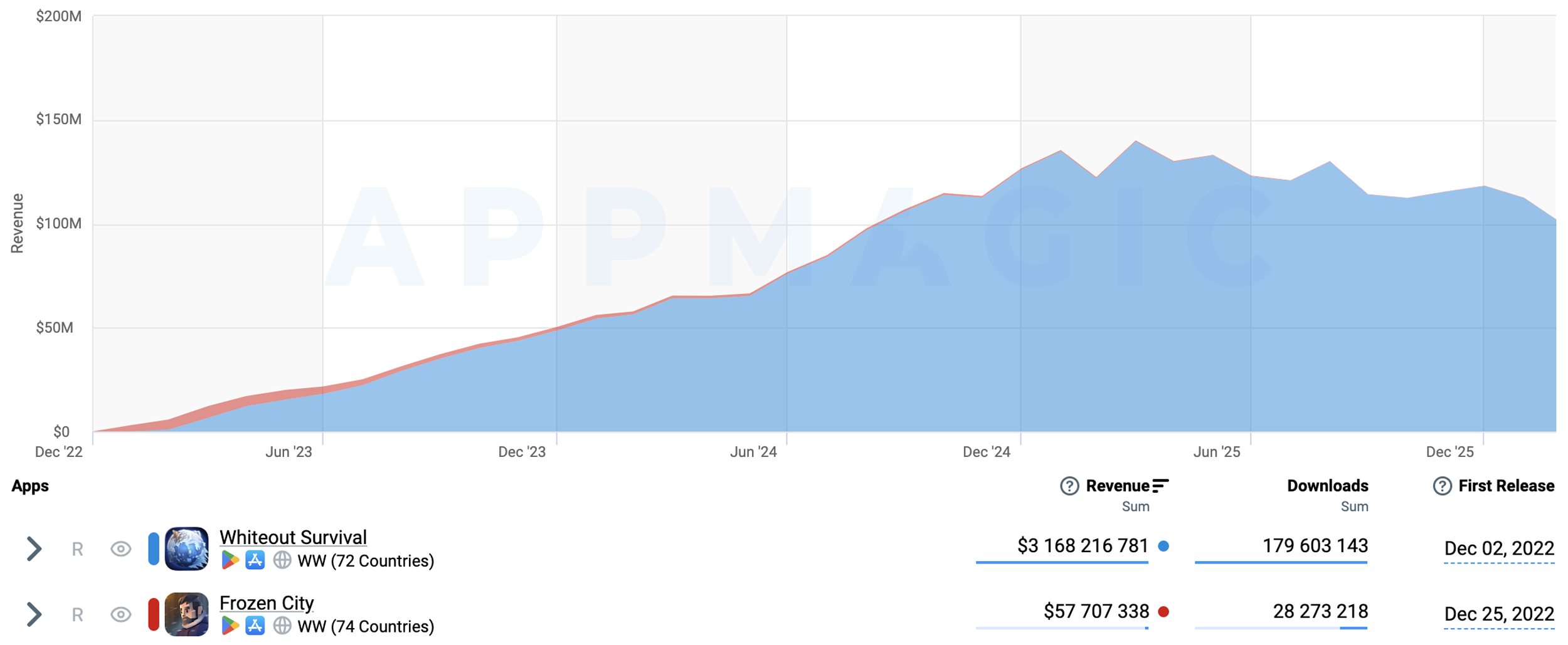
Whiteout Survival vs Frozen City
By then, Idle on its own started to feel a bit limited. The core loop still worked, but it wasn’t enough anymore. As UA got more expensive after the IDFA changes and the market filled up, those same ideas started moving into bigger, more complex games that could carry higher monetization. And just as things on mobile began to cool down and the genre slipped out of focus, Idle started to show up again on Steam in very different forms.
The Many Flavors of Idle on Steam
The categories we’re about to go through aren’t meant to be strict—it’s just our way of grouping things so it’s easier to follow.
Idle games on Steam don’t really fit into boxes anymore, and they don’t need to. They don’t rely on a single model either. On mobile, Idle games are mostly free-to-play. On Steam, they are a mix of paid and free-to-play titles.
And no, you won’t find the “classics” like Cookie Clicker or Clicker Heroes here. Not because they’re irrelevant, but because we’re looking at a more recent wave that’s shaping what Idle games on Steam look like today.
Good Old Clickers
These games look familiar at first: you click, the game reacts, and progress goes up. But on Steam, Clickers don’t quite behave the same way. Let’s take a look at a few titles below.
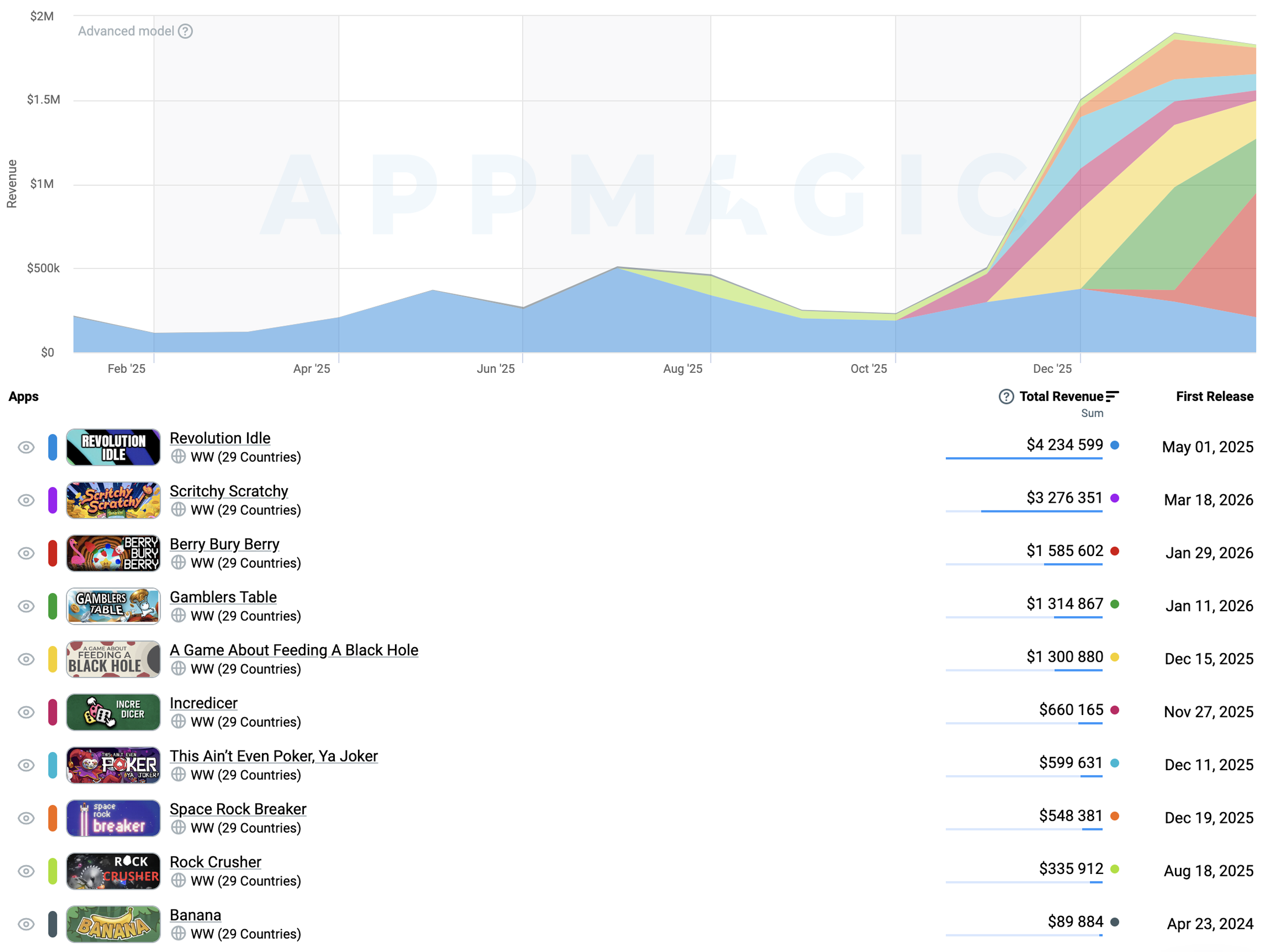
Click-driven Idle games on Steam
Not all of these games are “Clickers” in the traditional sense. However, they share the same core: extremely simple interaction, quick feedback, and a loop you can come back to at any time. On Steam, they tend to go viral in two ways:
- Content-driven. People share them because they’re funny, weird, or just look good onscreen.
- Economy-driven. People jump in because there’s a chance something valuable might drop.
As a result, Clickers on Steam are no longer just about clicking for progress. In some cases, the click itself is optional. What matters is the loop around it: the meme, the presence, or the potential payoff. Now, let’s get into some examples.
Scritchy Scratchy
Looking for a Clicker that sticks to the basics? Well, Scritchy Scratchy does exactly that. It came out in March 2026 courtesy of Funday Games and picked up fast, already past $3M in revenue with over 650K copies sold.
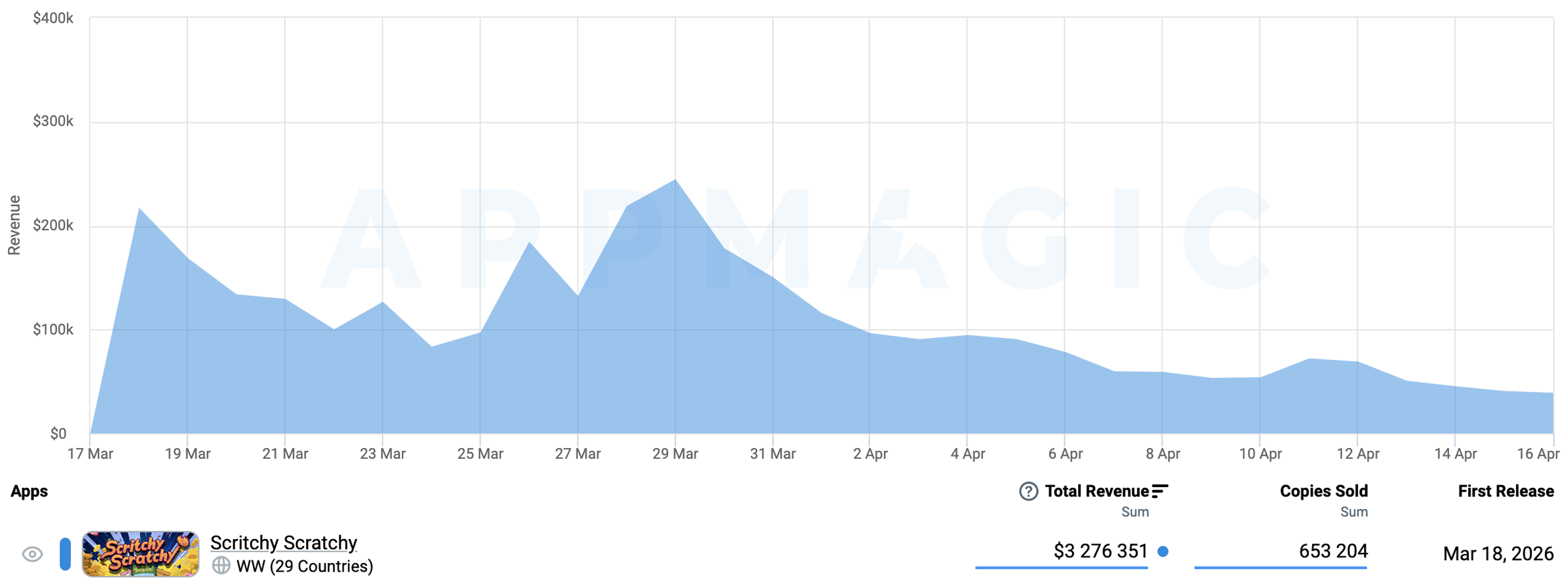
Scritchy Scratchy: total revenue to date
Scratch a card, see what you got, and go at it again—that’s the loop. But the game moves fast: progress builds quickly, feedback is instant, and every action feels rewarding.
There’s still a full Incremental layer underneath. Players unlock the Scratch Bot to automate runs, pick up upgrades that mess with odds and payouts, and eventually reset everything through prestige to push further next time. None of this is new, but the pacing is what makes it stand out.
In some ways, it’s very close to the good old mobile Coin Looter genre in how it drives engagement: small bets, quick wins, occasional spikes. That low-stakes tension keeps the loop engaging, even when the actions stay simple. It also leans into gambling logic. Some cards play it safe, others push toward bigger payouts. The trade-off adds a layer of risk that carries things over longer sessions.


What really drives its popularity, though, is how easy it is to pick up and share. The game is easy to understand, satisfying to watch, and built around constant small wins. It fits naturally into short sessions and streams. For developers, the takeaway is straightforward: you don’t need to reinvent the Clicker. The core loop doesn’t need to change, but the pacing can.
At the same time, this space still feels underrepresented on Steam, especially in terms of style and setting. When games like this do show up, they can do well. CloverPit by Future Friends Games is a recent example, already past $15.5M since May 2025.
While Scritchy Scratchy is easy to like and quick to explain, the next example is not… quite the same. But it ended up in the spotlight anyway.
Banana
Banana, a free-to-play title from Sky, is built around drops. So what’s going on here? Every few hours, a new item appears: some are common, some are extremely rare. And that’s it: that’s the whole “game”.
The game itself acts mostly as a wrapper for item generation and collection. The real interaction happens outside of it. Items can be listed and traded on the Steam marketplace, so the whole thing quickly turns into a hunt for something that might sell.


Banana is more like a simplified NFT-style system, just without the NFT part. Rare drops are the whole point—players chase them in the hope of making something back. Some run multiple accounts, others automate the process. In the end, it’s less about playing and more about waiting for the right drop.
That’s why Banana got so much attention right after its release in April 2024. A wave of similar projects followed, all built on the same idea: minimal interaction, timed drops, and a direct link to Steam’s economy. Meanwhile, YouTube quickly filled up with guides on how to “make money” from it…
The game spread fast, but not because of gameplay. People weren’t there to play; they were chasing outcomes they could sell. As a result, Banana has generated around $90K so far.
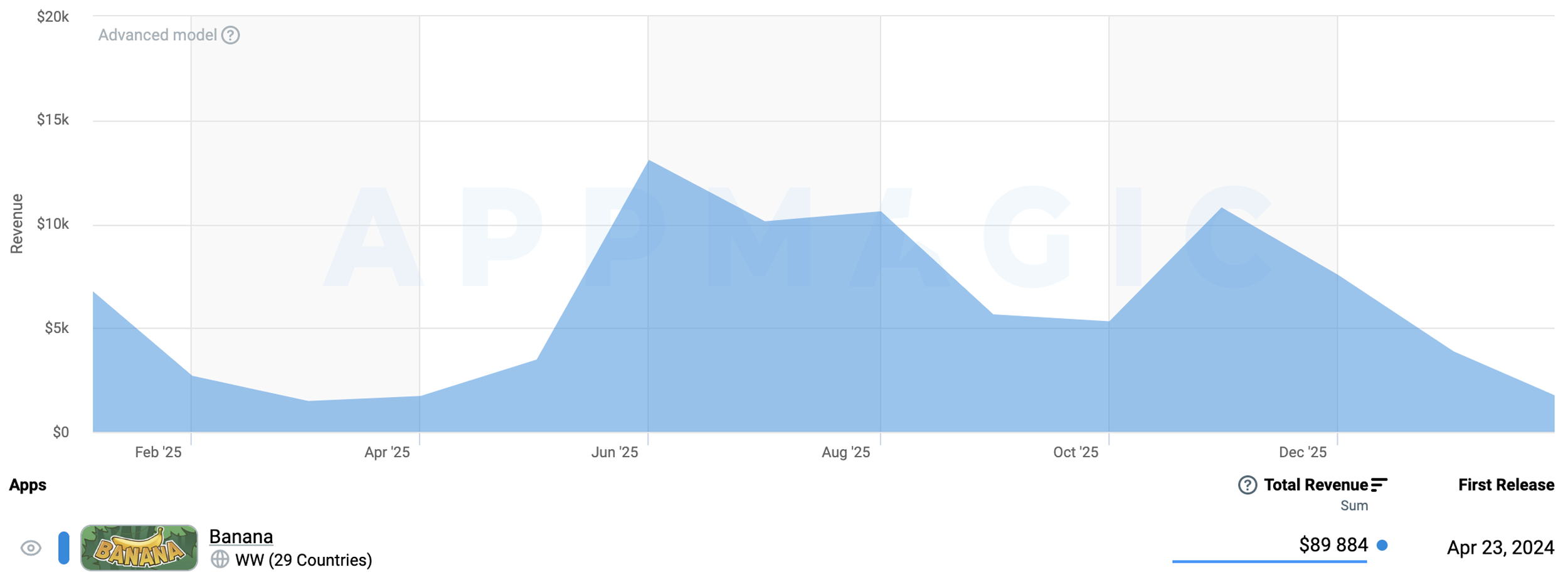
This article focuses on gameplay-first Idle games, so Banana is slightly outside our own definition of the scope. Still, it’s hard to ignore. If anything, it shows just how flexible the format can be. And that’s where the next group comes in.
Desktop Companion Games
If Clickers still expect at least some clicking, these games do the opposite. They’re closer to digital desk companions than traditional games, designed to stay in the background. Perfect for “multitasking”, or whatever you call it…
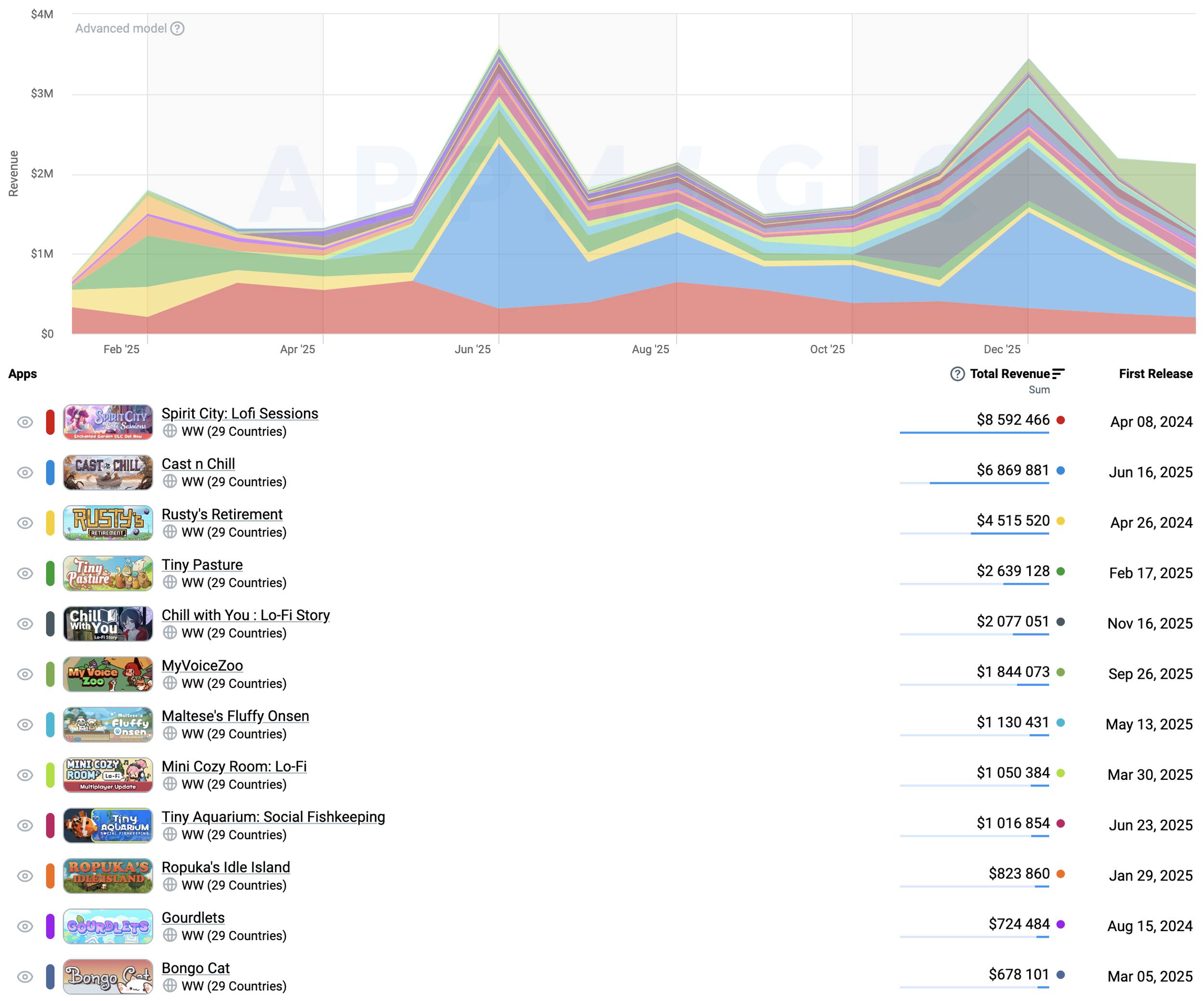
Companion-style Idle games on Steam
People don’t really “play” desktop Idle games. They open them, leave them running somewhere in the background, and check in whenever they feel like it. A lot of them share the same vibe: calm visuals, simple systems, slow progress. Players aren’t really trying to “win” anything either. Most of the time, it’s just about collecting stuff, watching something grow, and giving things a little push now and then.
It makes more sense once you look at a couple of popular titles.
Rusty’s Retirement
Since its release in April 2024, Rusty’s Retirement from Mister Morris Games has brought in over $4.5M, with over 880K copies sold. It climbed as high as #2 by copies sold early on, and even in 2025, it’s still sitting in the top 15.
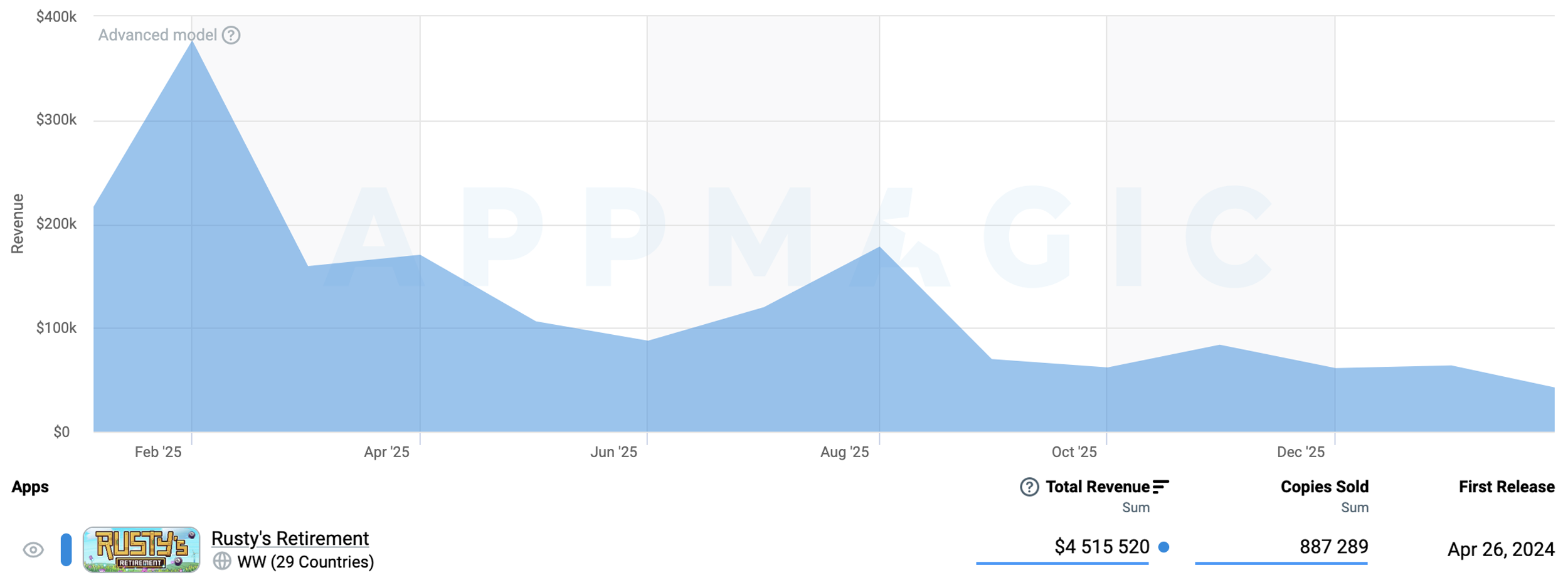
Rusty’s Retirement: total revenue to date
The game runs along the bottom of the screen. Rusty plants crops, waters them, harvests them, and slowly grows the farm on his own. There are occasional check-ins to expand the farm, unlock new crops, or adjust things. As the game progresses, small helper robots take over most of the routine.
Rusty doesn’t rely on deeper systems. Everything is designed to stay out of the way, to fit into the day rather than interrupt it. A small change here and there, and then it’s left to its own devices. The game gives a small reason to come back every so often, and that’s enough.


The next title picks up a similar idea, but takes it a bit further.
Cast n Chill
Cast n Chill from Wombat Brawler launched in June 2025 and didn’t take long to find its audience, bringing in close to $6.8M and selling over 550K copies. It also ranked #2 among the most wishlisted games under the Idle tag on Steam.
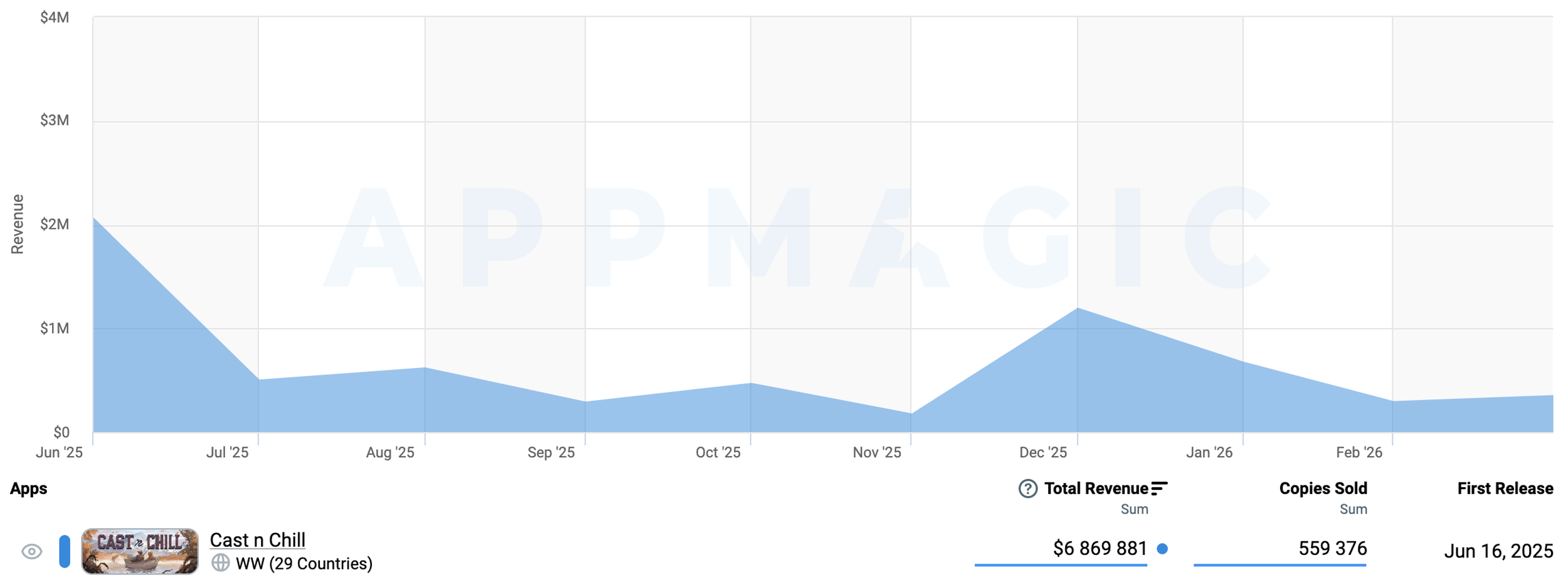
Cast n Chill: total revenue to date
At its core, it’s a fishing loop: cast a line, wait, reel something in, sell it, upgrade some gear, and unlock new spots. There’s always more fish to catch, and a few rare ones that keep people hooked—and chasing.
What helps is the fishing theme: slow, repetitive, a bit random, and built around collecting over time. Add a cozy vibe and bolder visuals, and it becomes something that can just be left running on its own with little thought.


People play it differently, too. Some treat it like a regular fishing game, while others barely touch it and just check in from time to time. The game supports both without pushing one over the other. And that balance is a big part of the appeal.
For developers, it’s a good example of how much the theme can carry. Fishing is about collecting and the thrill of a rare catch, so it fits naturally into a background Idle. Plus, it becomes something to return to every now and then, just to see what’s been caught.
And finally, one more title that’s been all over the place, more because it went viral than anything else.
Bongo Cat
Bongo Cat hit Steam in March 2025 as a free-to-play release from Irox Games. Since then, it has generated over $670K. Actually, it doesn’t really behave like a game. Every time a key is pressed, the cat taps along on the taskbar, and that’s basically it. Points add up, hats unlock, and occasional item drops appear with different rarities.
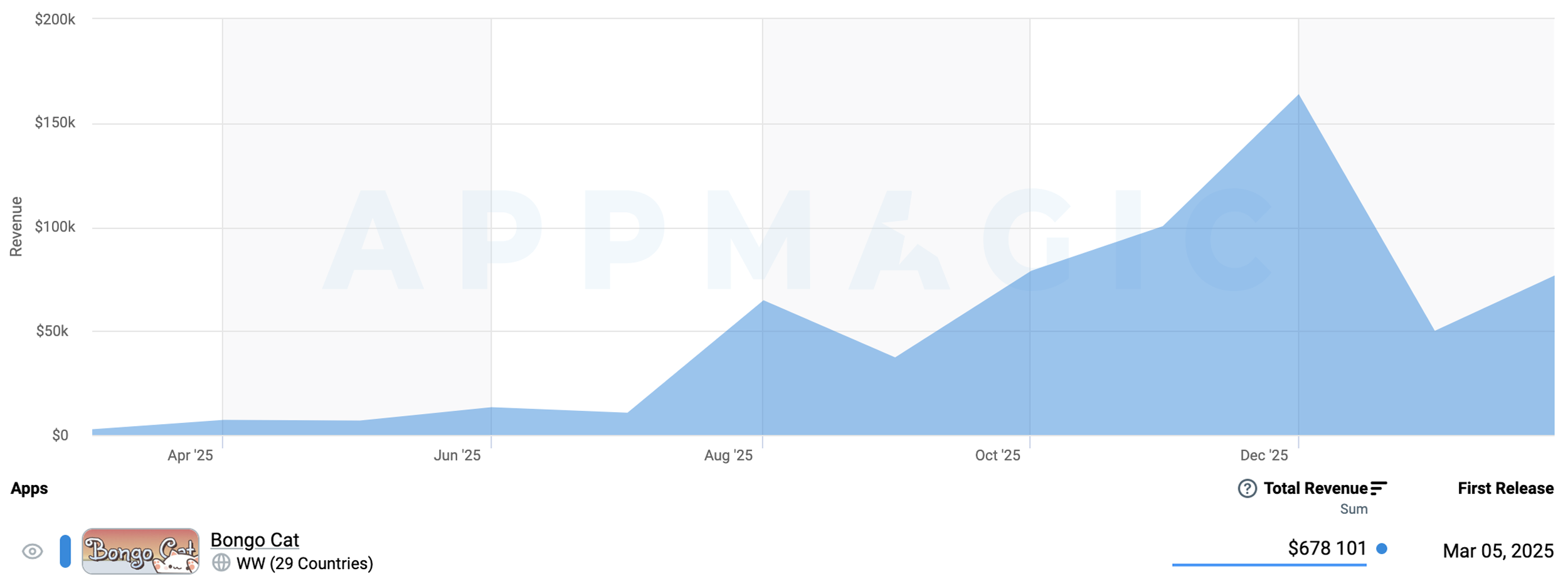
Bongo Cat: total revenue to date
It’s more of a meme or cute desktop companion. Players launch it and leave it running. And that kind of experience only works because of the platform.
On mobile, there’s no room for it. The screen is small and functional, and anything extra just gets in the way. Consoles are even more restrictive, with closed systems that don’t allow anything to run outside the game.
On PC, none of that applies. There’s space to leave things open, run them in the background, or keep them on a second screen. That’s where desktop companions come from, and why they show up here in the first place.


There are systems underneath, too, like drops, customization, and Steam integration, but they’re not the main focus. Just check-ins: see what dropped, maybe swap a hat, and move on. It doesn’t ask for much, and it doesn’t interrupt. And since it’s based on a popular meme people already know, it brings its own share of virality and spreads without much effort.
For developers, this is a slightly different take on Idle design. Bongo Cat doesn’t try to pull players deeper in: it just gives them a reason to keep it open on their desktop. Once it’s there, everything else follows.
And it’s a contrast to what comes next—games that put much more weight on systems and long-term progression.
Deep Idle Systems
Not all Idle games keep things light. Some go deeper. The loop is still there, but instead of just letting it run, you’re the one shaping it.
Progress comes down to how things are set up: the better the setup, the smoother everything starts to run on its own. That’s where optimization becomes the game. A lot of the appeal is the depth that comes through without heavy production. Most of it comes from systems, not content.
Just like desktop companions, this isn’t a small category—there are plenty of games built this way.
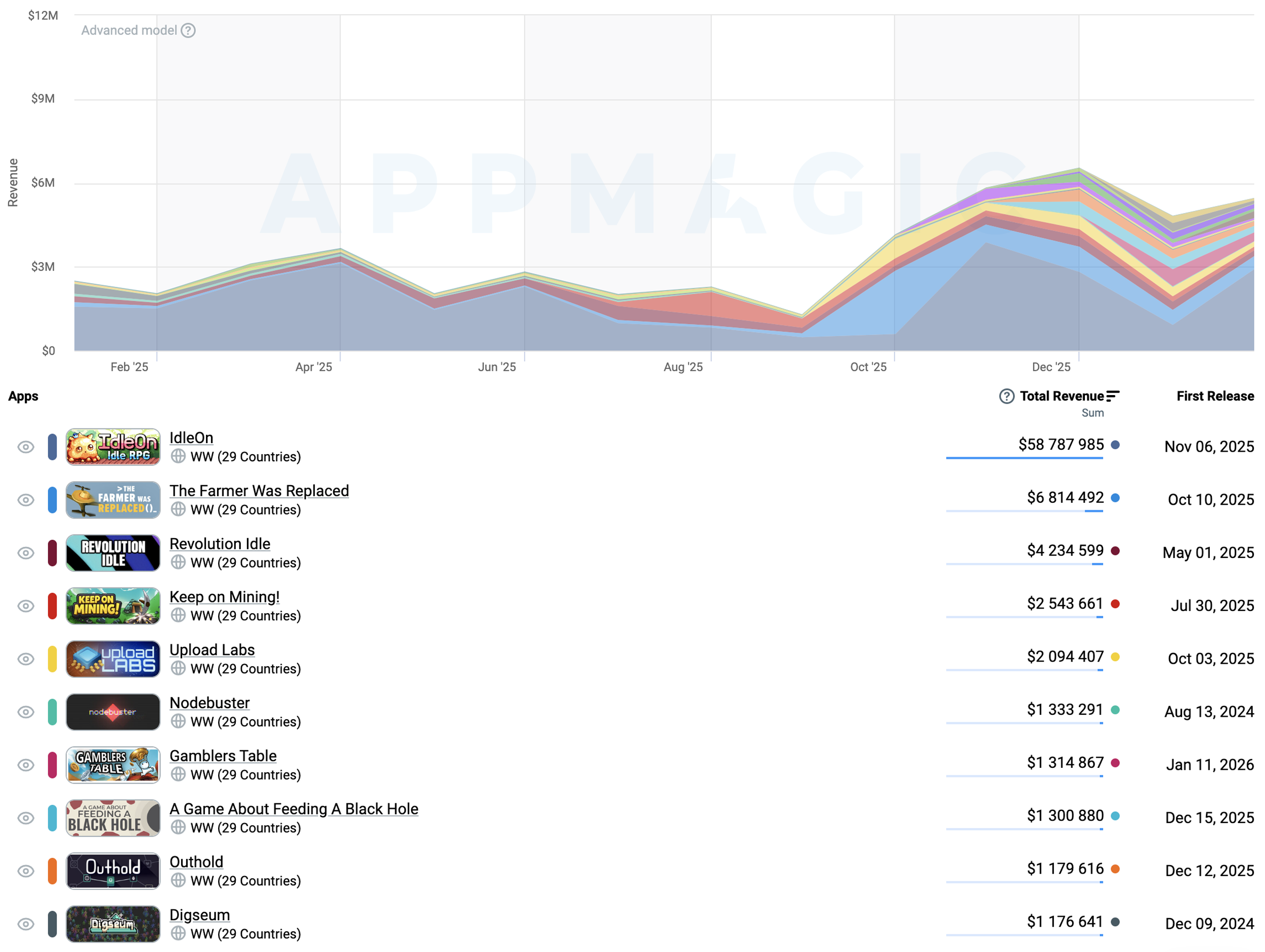
These games often borrow from other genres, adding automation, RPG-style progression, or more complex resource management. At that point, they feel closer to full systems than anything else in this space.
And a couple of examples show how far this can go.
The Farmer Was Replaced
The Farmer Was Replaced reached its full release in October 2025. Developed by Metaroot and Timon Herzog, the game has generated over $6.8M in revenue and sold more than 960K copies. It even climbed to #3 among the most wishlisted games in the Idle category on Steam.
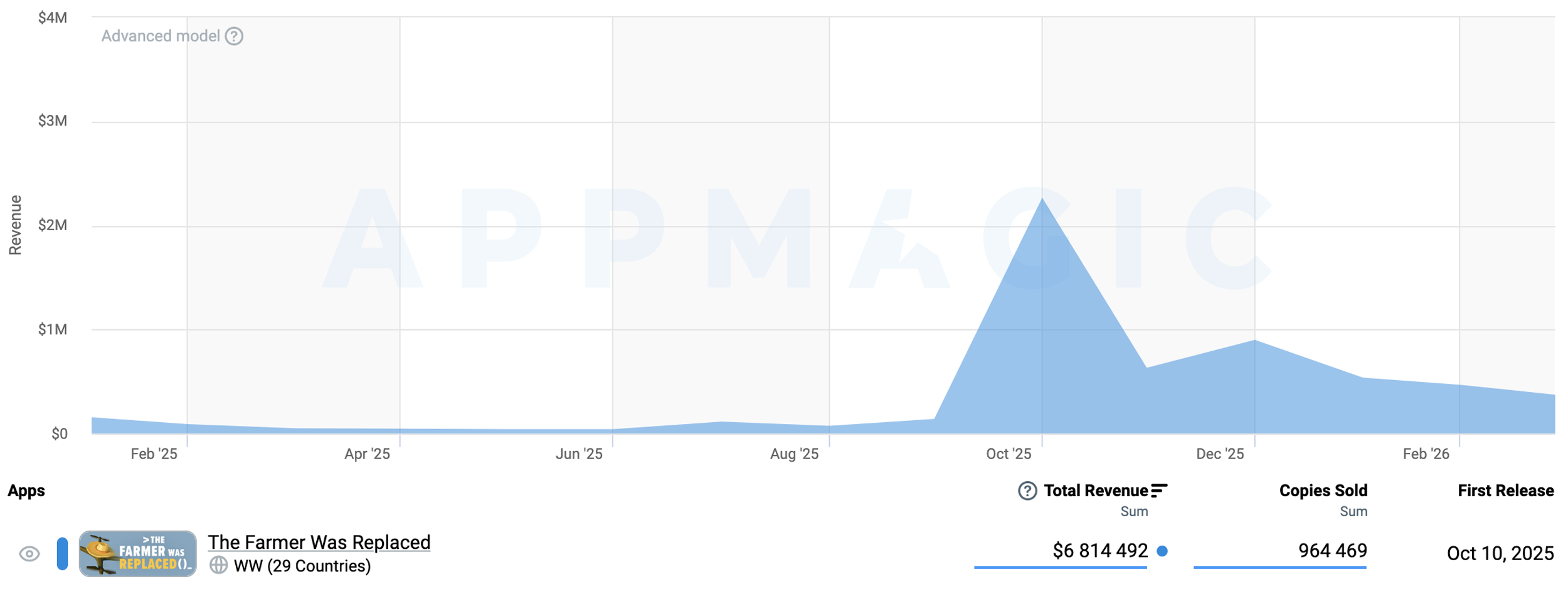
The Farmer Was Replaced: total revenue to date
Here, automation isn’t just a layer; it’s the core. Instead of clicking or managing resources by hand, players write code. The game provides a simple Python-like language and lets them automate farming tasks that would otherwise be repetitive. Planting, harvesting, resource flow—it’s all handled through scripts.
At first, it’s about getting basic commands to work. Then it starts to get deeper. The logic gets refined, small improvements add up, and setups begin to handle everything on their own. New tech unlocks, expanding what the scripts can do, and manual work turns into full automation.
That’s the hook. It’s a different kind of Idle loop, where progress comes from how well the system runs on its own. Instead of reacting to the system, players are setting it up. And once it runs, it’s left to do its job.


The Farmer Was Replaced is a good example of Idle moving toward design, where most of the work happens before you even press “run.” The next one follows a similar path, but moves away from code and leans into more traditional systems.
IdleOn
IdleOn from Lavaflame2 is a free-to-play title that spent several years in early access before releasing fully in November 2025. With close to $59M in revenue, it’s one of the biggest Idle games on Steam.
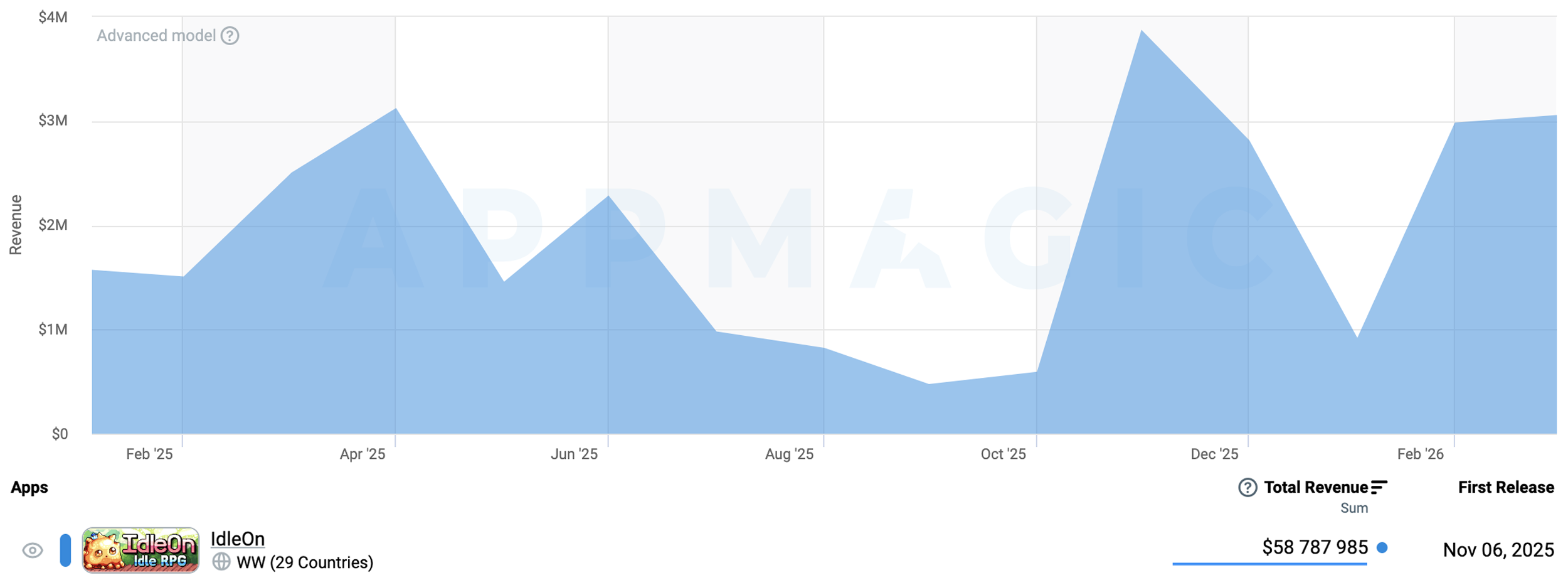
Instead of building a single system, IdleOn stacks several on top of each other. Multiple characters run in parallel, each assigned to a different role such as combat, gathering, crafting, or skilling.
The key is how everything connects. Resources move between systems, characters support each other, and long-term progress depends on how well it’s all balanced. Because of that, it eventually stops feeling like a simple Idle game and starts to feel more like an RPG, with layered progression where each system feeds into the next.


Where The Farmer Was Replaced is about setting up a system and letting it run, IdleOn keeps the player involved. It shows how well Idle can scale when it starts borrowing from other genres—not by replacing the loop, but by building more on top of it.
And eventually, the focus shifts: it’s no longer about automation, but about how much complexity players are willing to handle.
Designing Idle for Steam: What Actually Works
By now, it’s pretty clear there’s no single way to build an Idle game on Steam. It can borrow from Clickers, Automation games, cozy Sims, RPGs, even desktop toys, and still get filed under the same label. And that flexibility is probably the format's biggest advantage right now.
From a dev’s perspective, a few things keep showing up:
- You don’t need much to get people in. A lot of Idle games on Steam win the same way impulse-buy indies do. The idea is obvious, the loop clicks right away, and the price feels low enough to avoid overthinking. That’s usually all it takes. Players see it, they get it, and they hit “Buy”.
- Bundles do a lot of the lifting. These games also show up in bundles, cross-promotions, or shared audiences, which makes the low price point even more effective. Once you’re in, it’s easy to grab a few more.
- The hook has to land instantly, and it has to hold. If players have to think about it, you’re already losing them. A cat on the taskbar, fish piling up in the background, a farm that runs on code—the best-performing concepts don’t need explaining and can be enjoyed for many sessions.
- Background presence is part of the design. A lot of these games end up living on someone’s desktop. So whatever you build has to survive being left open for hours.
- Genre purity matters less than you’d expect. Pure Idles still work, but Hybrids offer more room to grow. If the game has passive progress, light check-ins, or even just a bit of clicking, it already feels close enough… which opens the door to mixing Idle into almost anything.
- Small teams actually have an edge here. This space rewards unique ideas, readable systems, and smart scope. You don’t need huge production or tons of content. In fact, it can even get in the way.
- Steam gives Idle games more freedom than mobile does now. On mobile, the genre drifted toward bigger systems and monetization. On Steam, it can stay weird, small, or extremely specific. That makes it much easier to build around a clever idea.
- The real competition isn’t other Idle games. It’s everything else already open on the player’s PC: a browser with dozens of tabs, Discord, Spotify, another game on the main screen, maybe even work (allegedly, hehe). So the ones that fit into that mess tend to stay.
And that’s where Idle games feel at home (at least for now): somewhere between one’s second monitor and mild procrastination…