Love and Deepspace: Pulling $1B User Spend On Gacha Events
Love and Deepspace has turned gacha events into a billion-dollar monetization engine. So, we took a closer look at its revenue mix and LiveOps strategy to identify the features and top-grossing offers behind this growth.
— Lera Kalashnikova and Anya Zelenina
Gacha mechanics work well by making rewards feel just within reach—always one lucky pull away. Some games lean into this feeling and build their entire LiveOps system around it. When that happens, gacha becomes more than a side feature—in a way, a natural extension of the core—and often the key revenue driver.
Love and Deepspace by Paper Games shows how it works in action. Released in January 2024, the game made a notable leap last year and stood one step away from entering the top 10 grossing Midcore titles of 2025. It also outperformed another gacha-heavy hit, Genshin Impact by miHoYo, and narrowed the gap with Honkai: Star Rail.
The picture becomes even more telling when looking at China, the game’s main market. There, it climbed to #9 by IAP revenue in 2025, moving from the 10th spot it had already secured in its launch year. And take a closer look at the publishers standing side by side with it on the chart: Tencent, NetEase, Century Games—all multibillion-dollar titans with more than a decade of expertise. The competition is fierce, especially for a relatively young Midcore title.
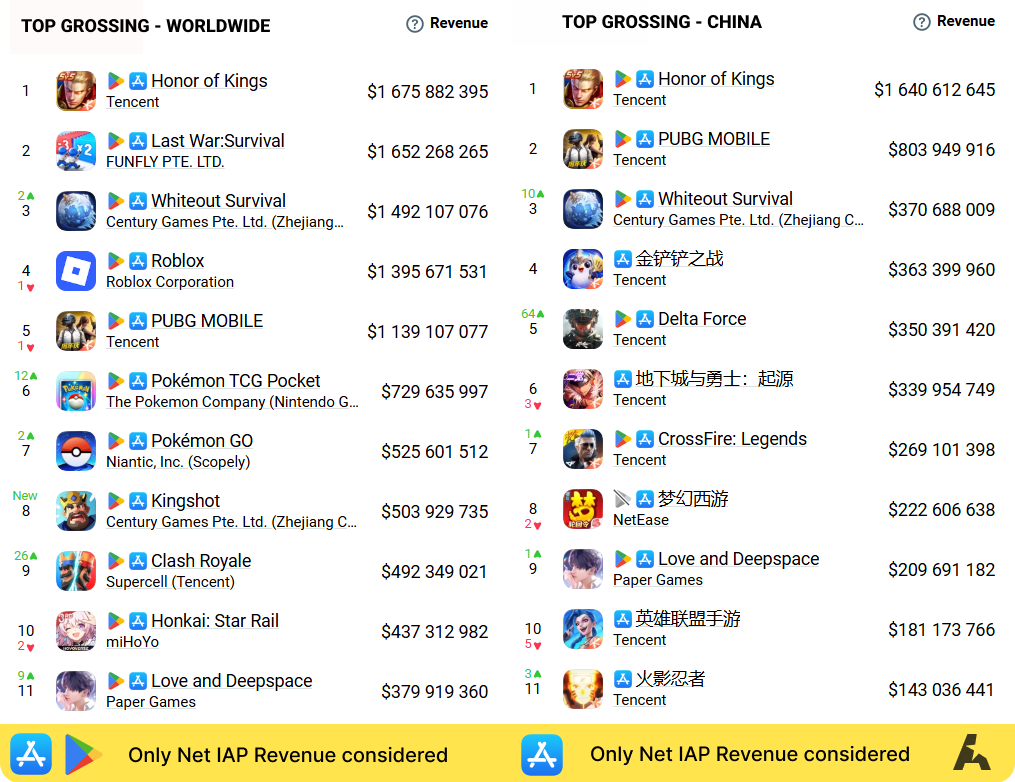
Top-grossing Midcore games in 2025: global (App Store & Google Play) vs. China (App Store only)
The main question is how, and we’ll get to it shortly. But first, it’s important to step back and look at the bigger picture. Games like Love and Deepspace or Gehshin Impact aren’t the only ones to leverage gacha mechanics in their LiveOps. Actually, it’s one of the most widely used formats across Midcore titles.
Our LiveOps Report 2025 shows that over 80% of events in top Midcore games use this mechanic, putting it firmly in the top 3 formats. And their impact only keeps growing, with presence in the segment increasing by +60% since 2024.
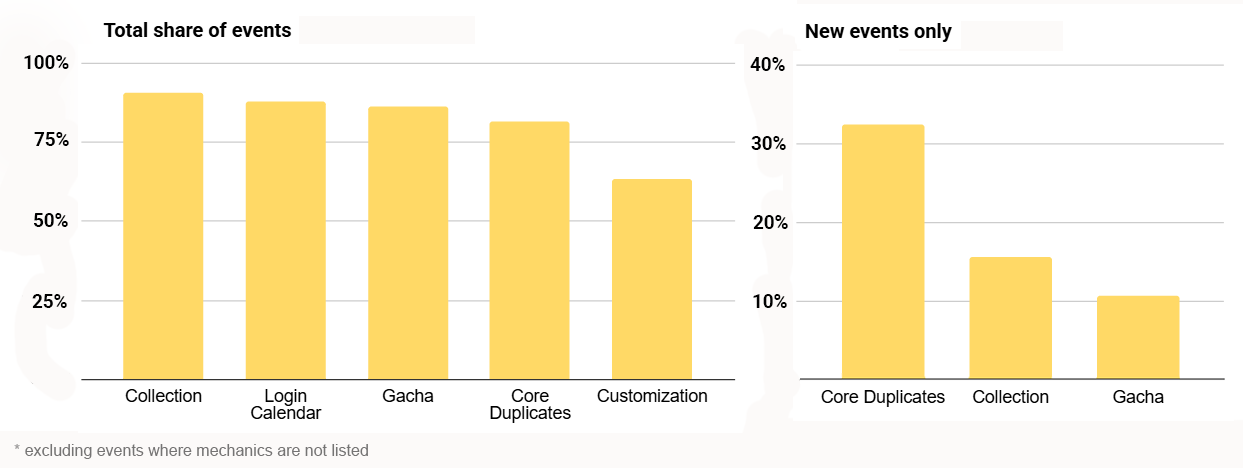
Most widely used event mechanics across Midcore games in 2025
The strength of gacha lies in its clarity and strong player motivation, which makes it a natural fit for many genres. According to our LiveOps Advanced Search, this event mechanic is used in PUBG MOBILE, Kingshot, Capybara Go!, Puzzles & Survival, and many more. But its presence also extends beyond Midcore, as Casual titles like Seaside Escape, Carnival Tycoon, and Bingo Voyage find ways to adapt this format to match their gameplay and player behavior.
In this research, we’ll analyze how Love and Deepspace builds its monetization strategy around gacha events and what results it drives. The key areas we’ll cover include:
- Ways in which core gameplay design supports gacha monetization
- A detailed breakdown of five gacha event types, including their engagement drivers and top-performing offers
- How standalone gacha events form the game’s overall IAP revenue distribution—and what it means for long-term growth
- Takeaways for Midcore teams to draw from *Love and Deepspace*’s success story
Be sure—there are plenty of insights ahead, and our journey starts with core gameplay design and how it defines the game’s growth strategy.
Core Gameplay: The Groundwork For Gacha Monetization
Love and Deepspace was released in January 2024 by the China-based developer Paper Games and published globally under its Infold Games brand. Its main gameplay is built around a dating simulation with 3D visuals and a first-person view. From the very start, this design fully immerses players in its unique sci-fi world.
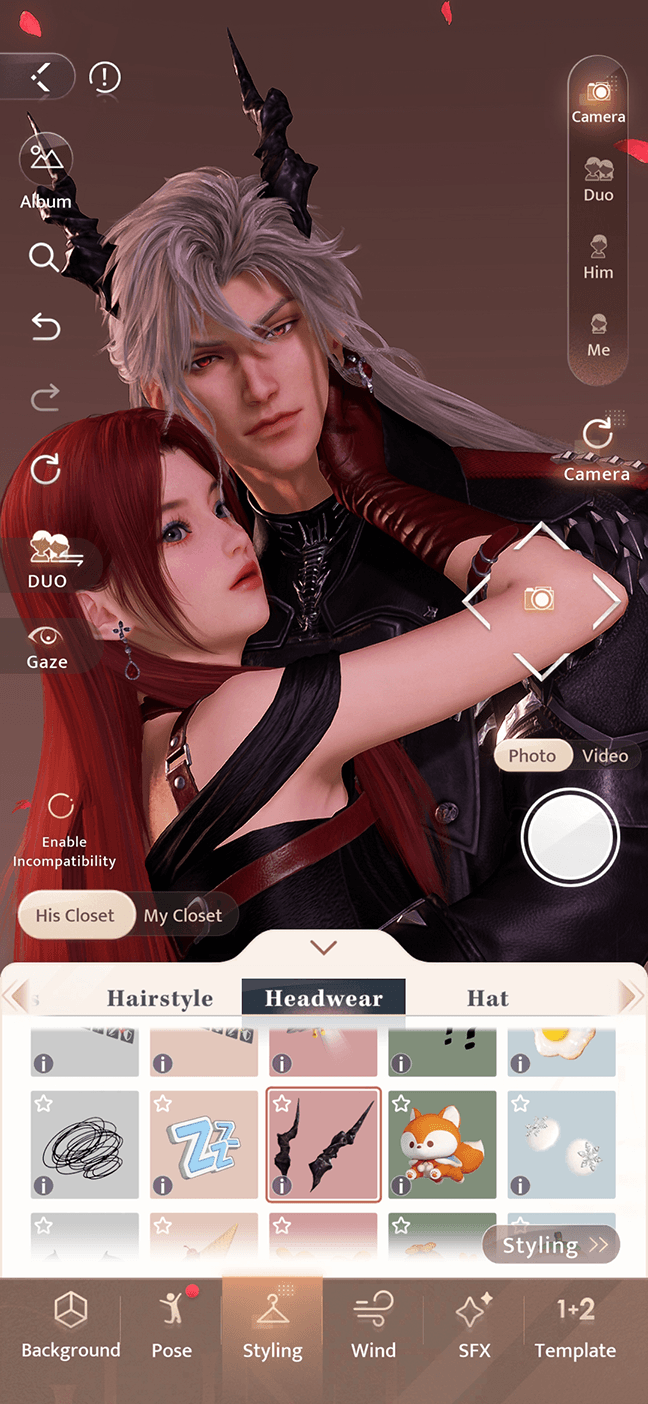
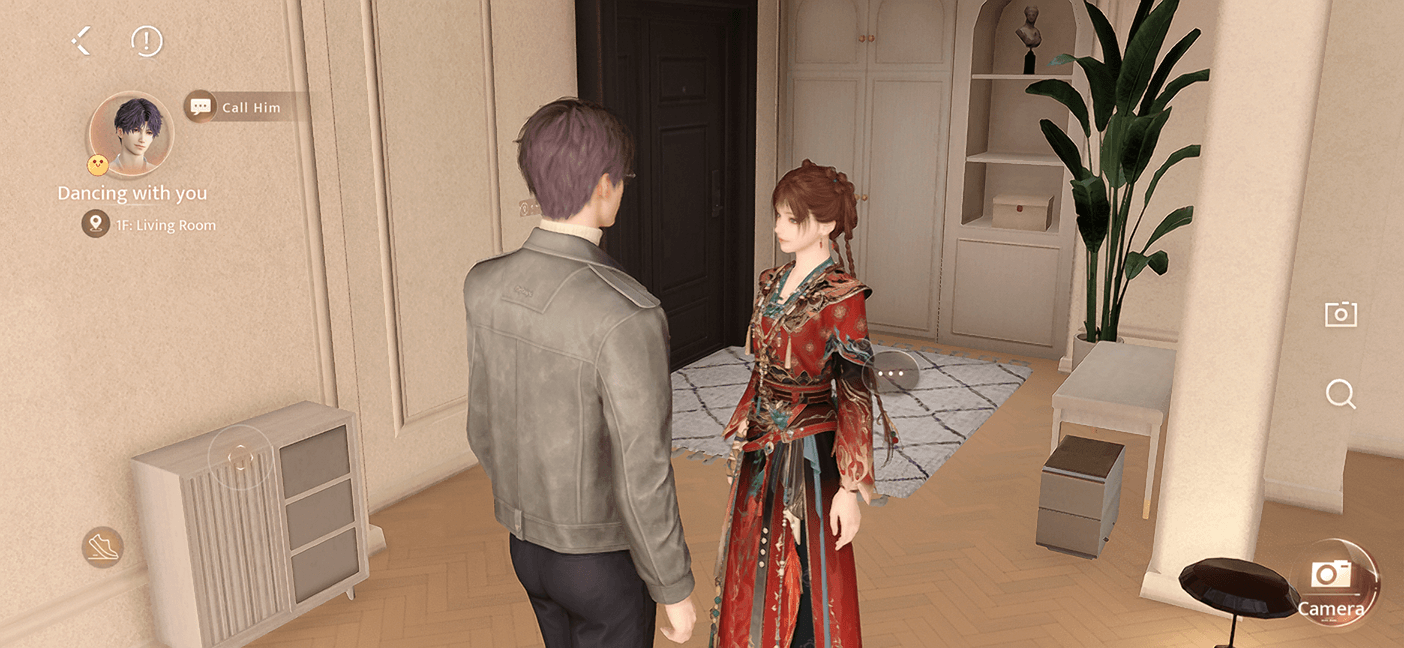
As players progress through the main story, presented as an interactive visual novel, they gradually unlock multiple game modes. Some modes lean into simulation, like the Claw Machine or the Sims-like Home feature, the latter offering opportunities for decoration and character interactions. Others focus purely on creativity, such as DIY journals or a Photo Studio with poses, SFX effects, and other creative tools.
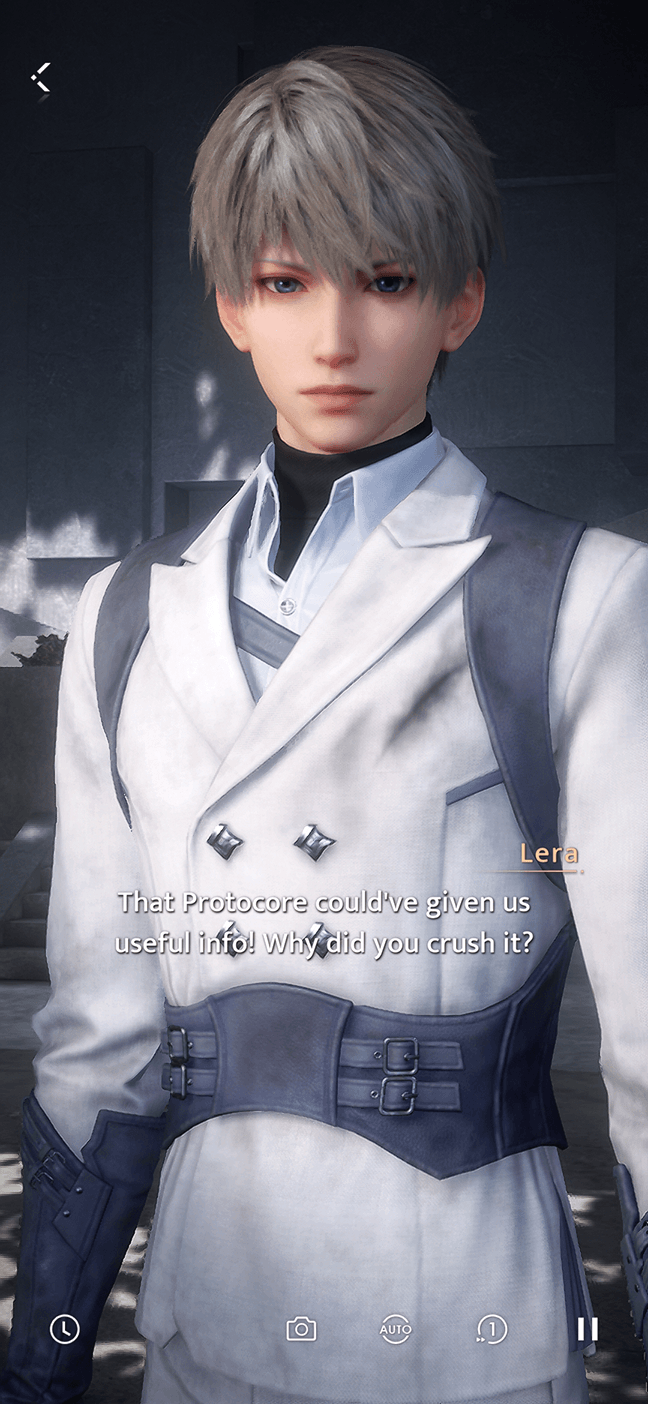
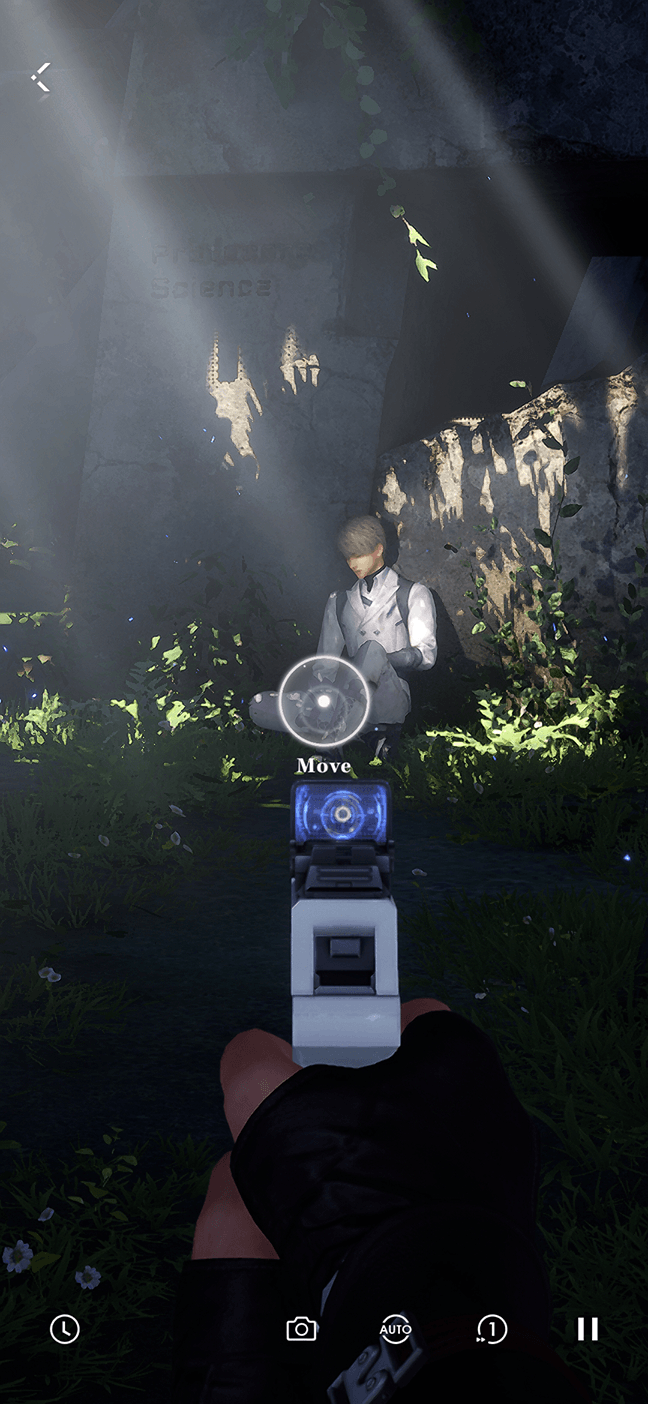
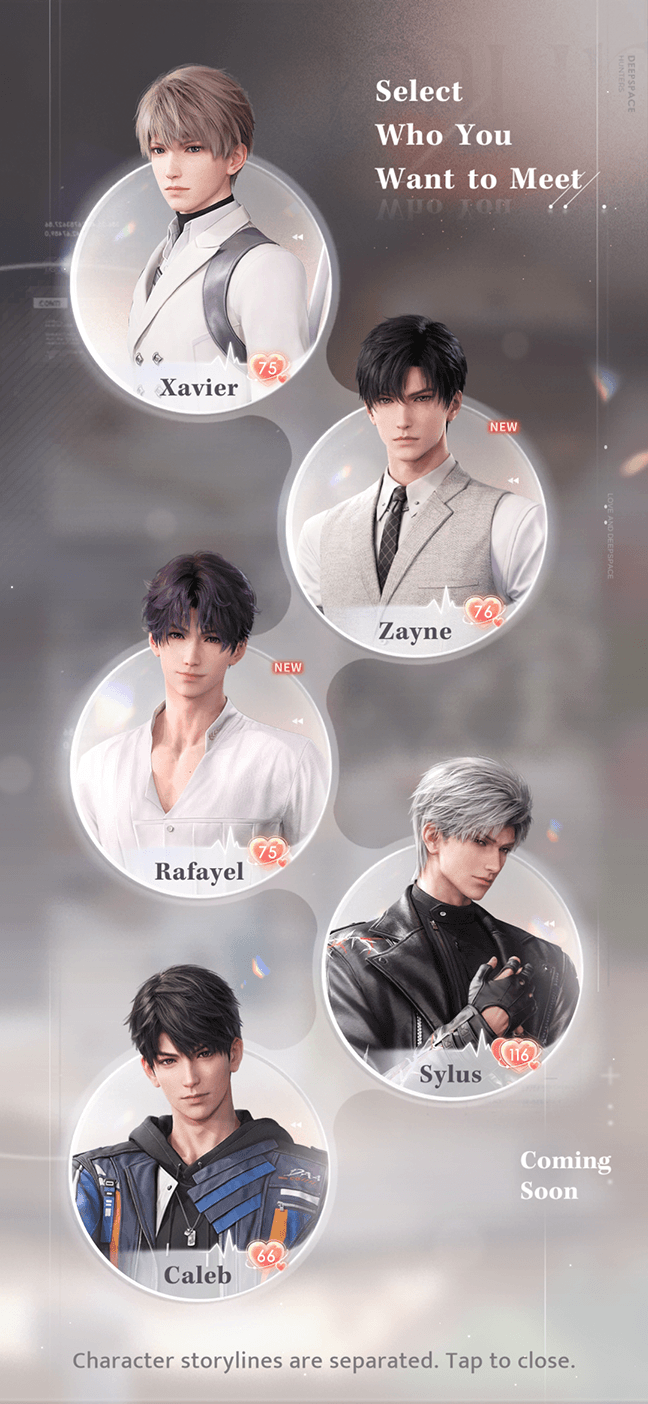
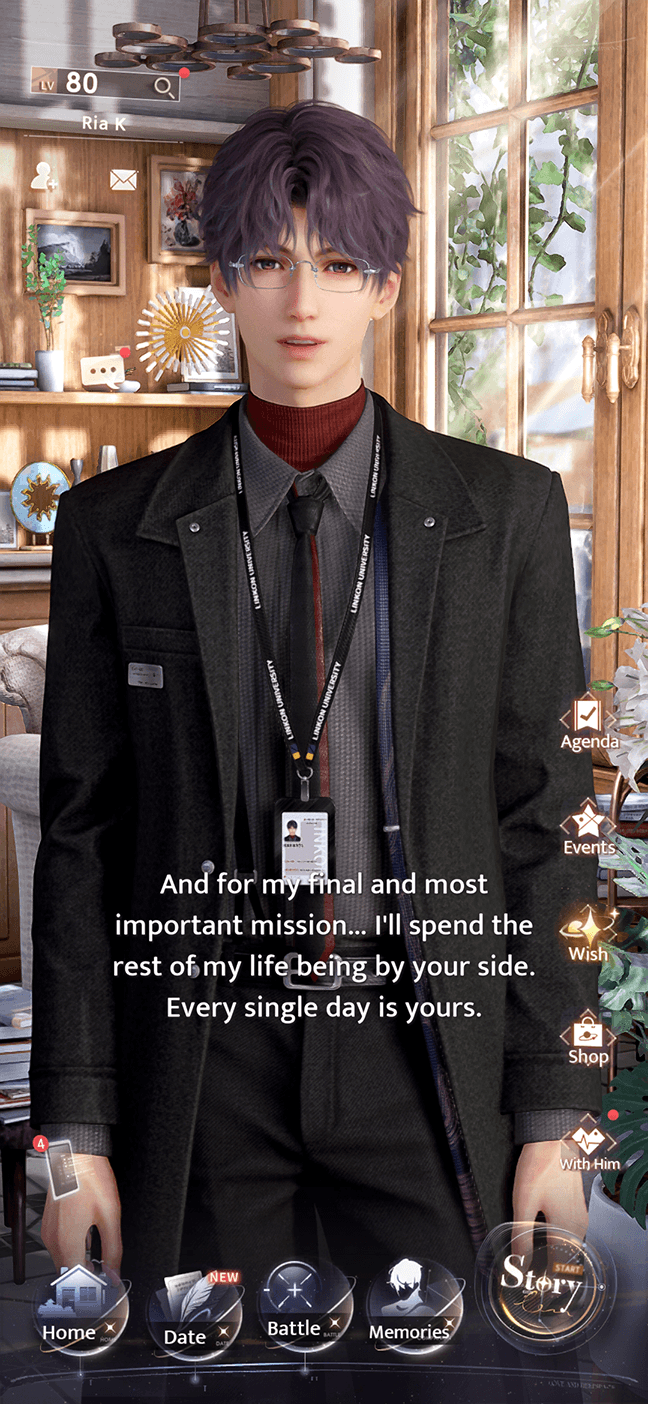
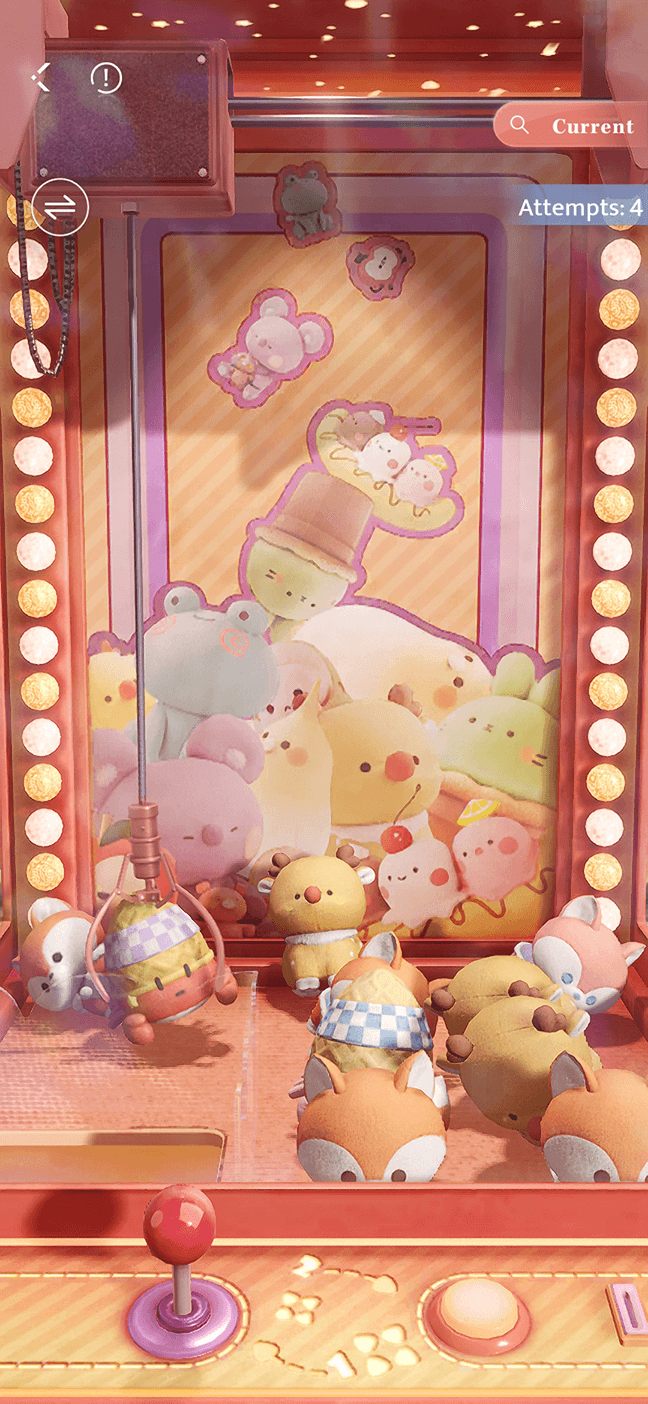
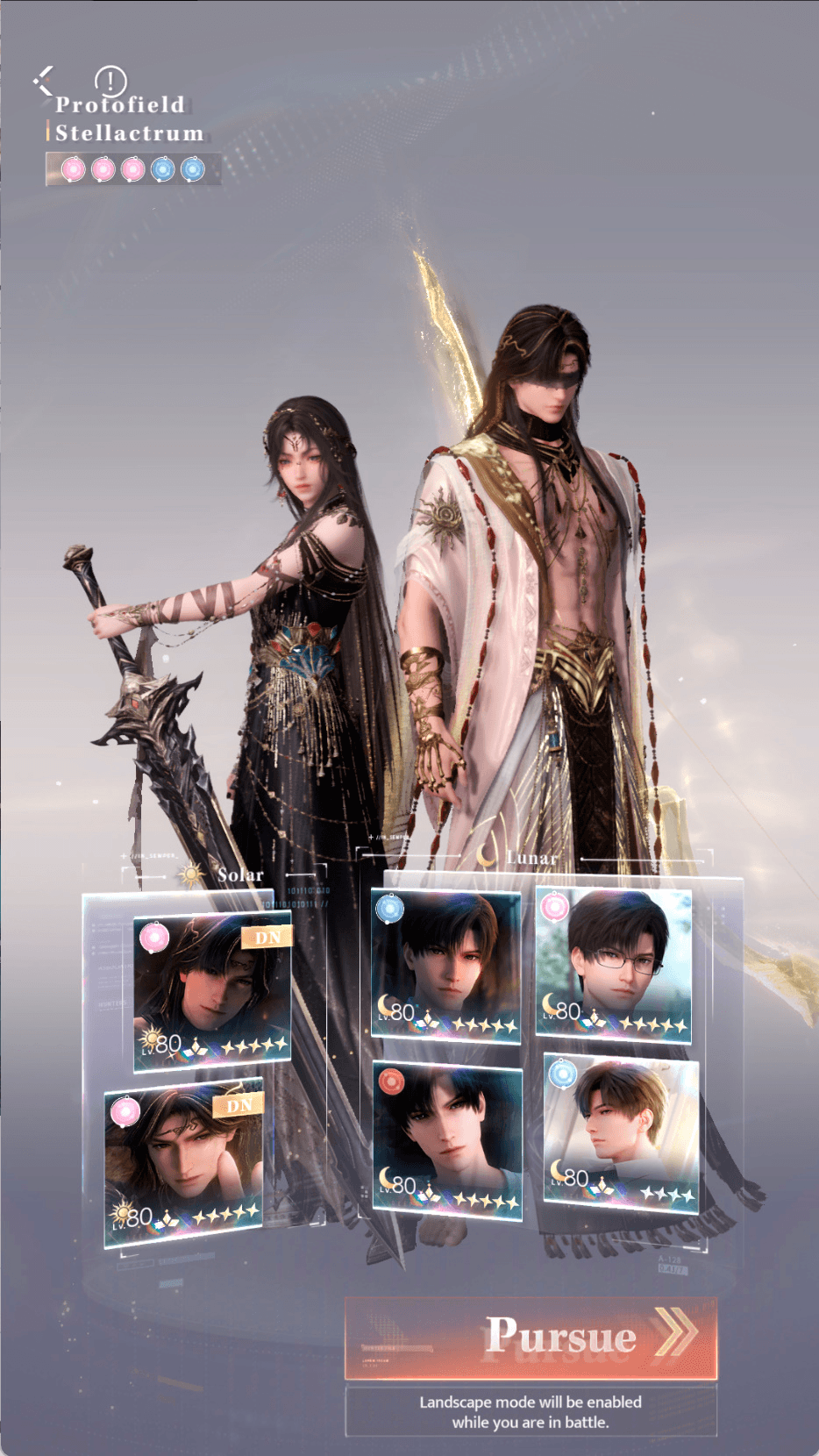
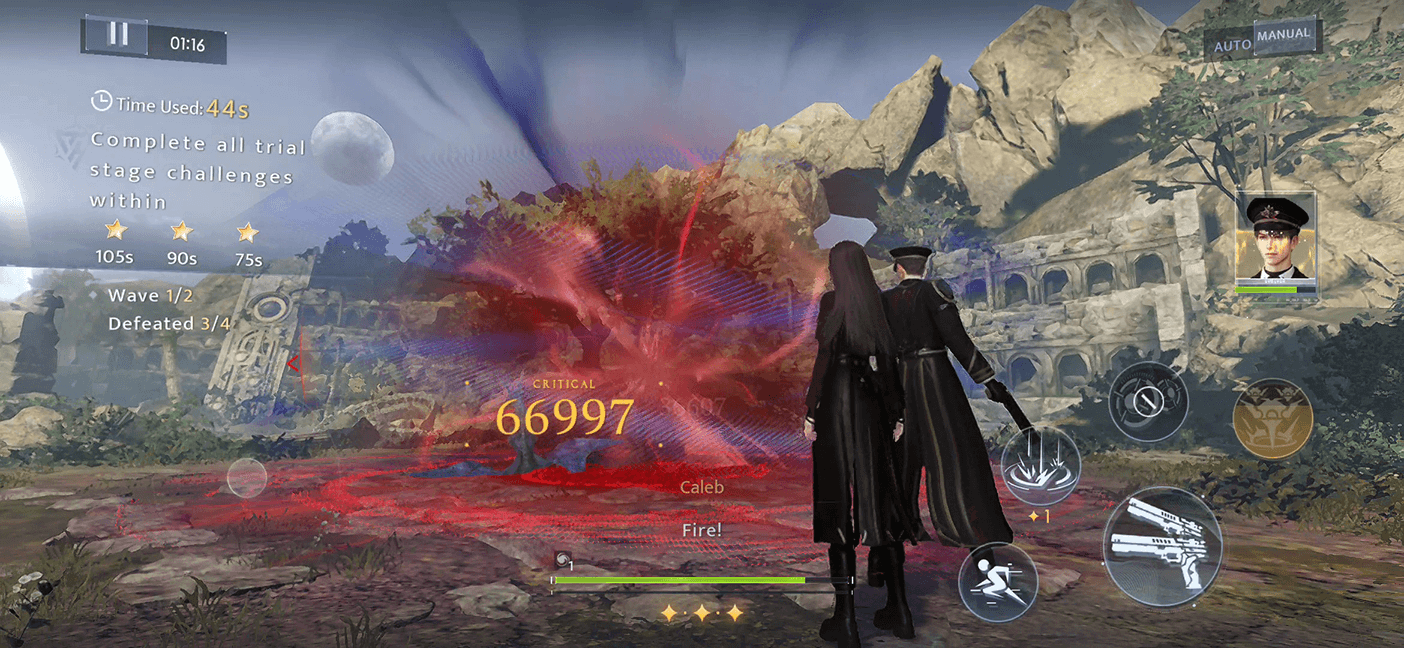
There’s a lot going on, but not all of it directly ties into the monetization of gacha events. The core of both progression and revenue growth lies in the Battle modes. Here, players build Teams made of six cards of the same male character and fight futuristic monsters. Combat happens in a third-person view, where the player actively controls the female protagonist, fighting alongside one of the five allies.
Such standoffs usually last around 2-3 minutes, making them feel like short, Casual-like sessions, especially with the auto-battle option in place. Despite that, the mechanics are much closer to Midcore Action RPGs. Combat levels feature bosses, mobs, and varying conditions. Players can choose different battle skins for male characters (called Companions), each with unique skills, animations, builds, and matching weapons for the main character that change her combat abilities.
And that’s how what begins as a romance story evolves into a complex gameplay with progression layers, strategy, and resource management. Difficulty scales steadily, requiring both skill mastery and high-quality cards. This system creates both long-term engagement and strong revenue potential, while the narrative and emotional connection to characters play a big part as well.
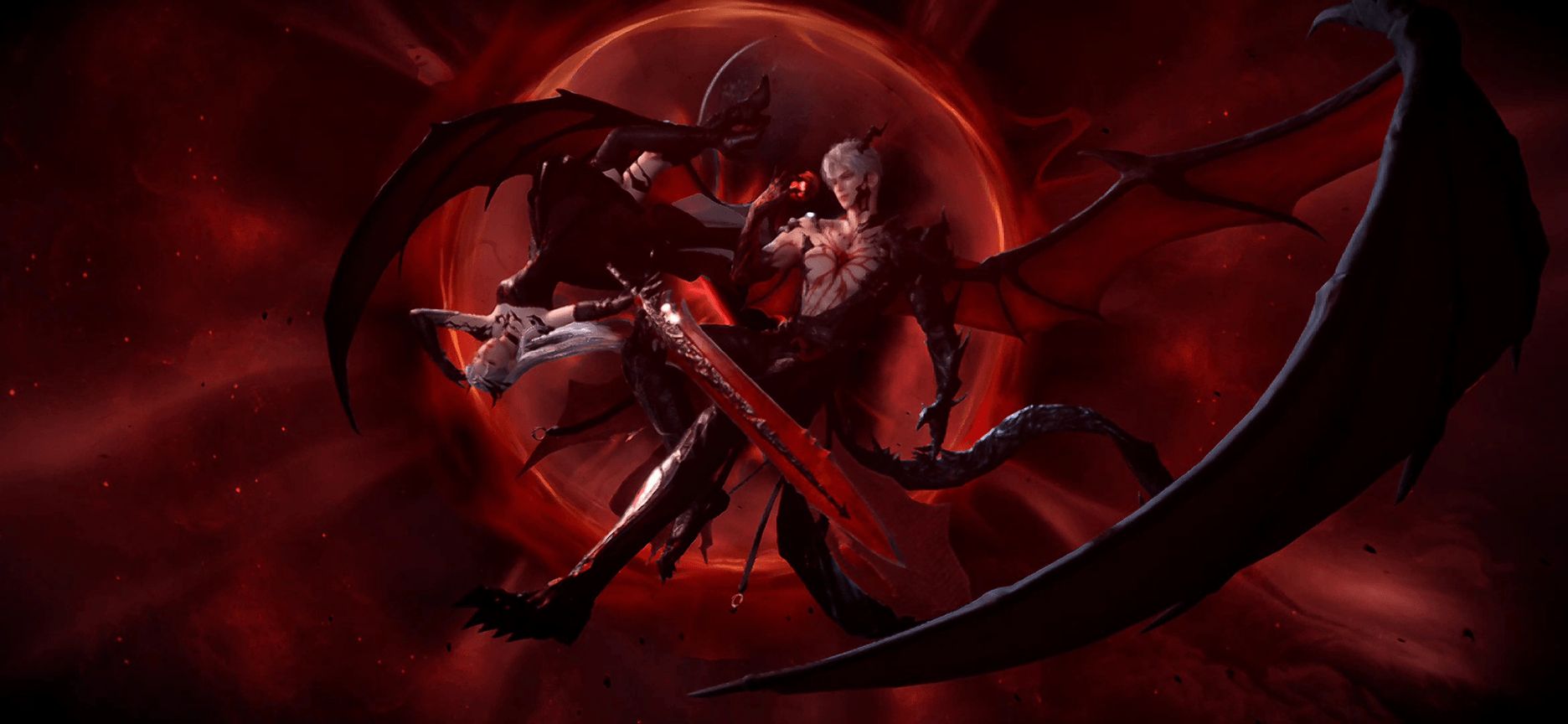
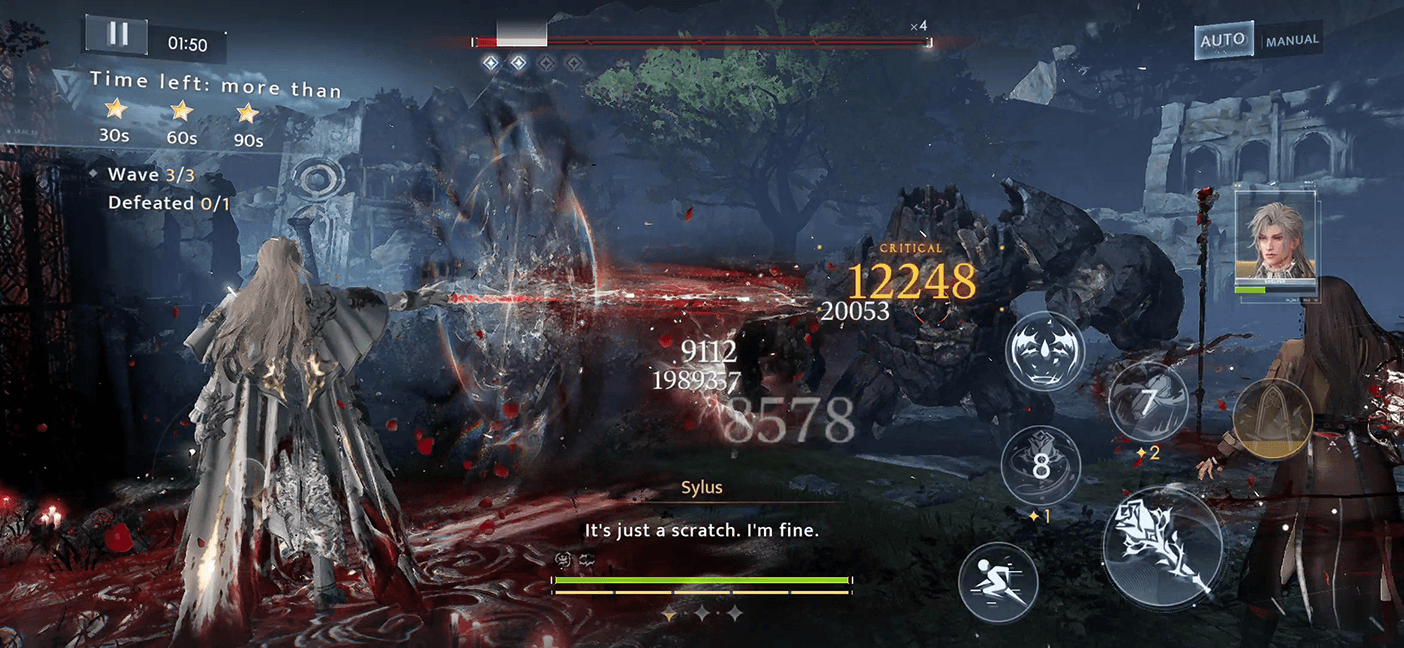
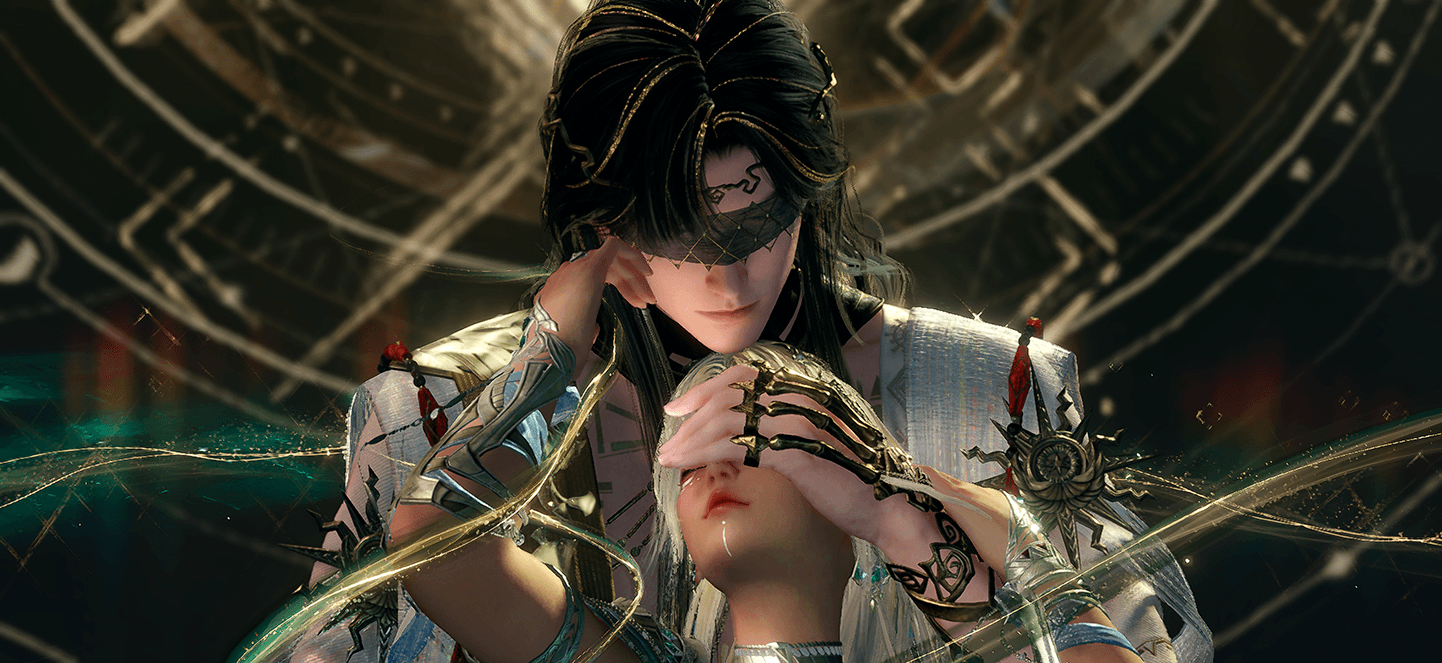
Many gacha titles scale by releasing characters frequently. Love and Deepspace chooses a different path, deepening bonds with existing characters (there are currently only five) through new cards, which are available mostly via gacha. And when new limited cards are released, revenue spikes quickly follow. For example, the game hit its peak daily IAP revenue of $7M on December 31, 2025—the day its anniversary gacha event launched.
As a result, these events strongly drive the game’s overall performance. In total, Love and Deepspace has generated about $749M in IAP revenue and more than 31M downloads (considering only the iOS App Store in China, as Google Play isn’t present on that market, and both stores for other regions). This means the game already crossed the $1B User Spend benchmark, while it also expands its revenue channels with D2C options through its webshop.
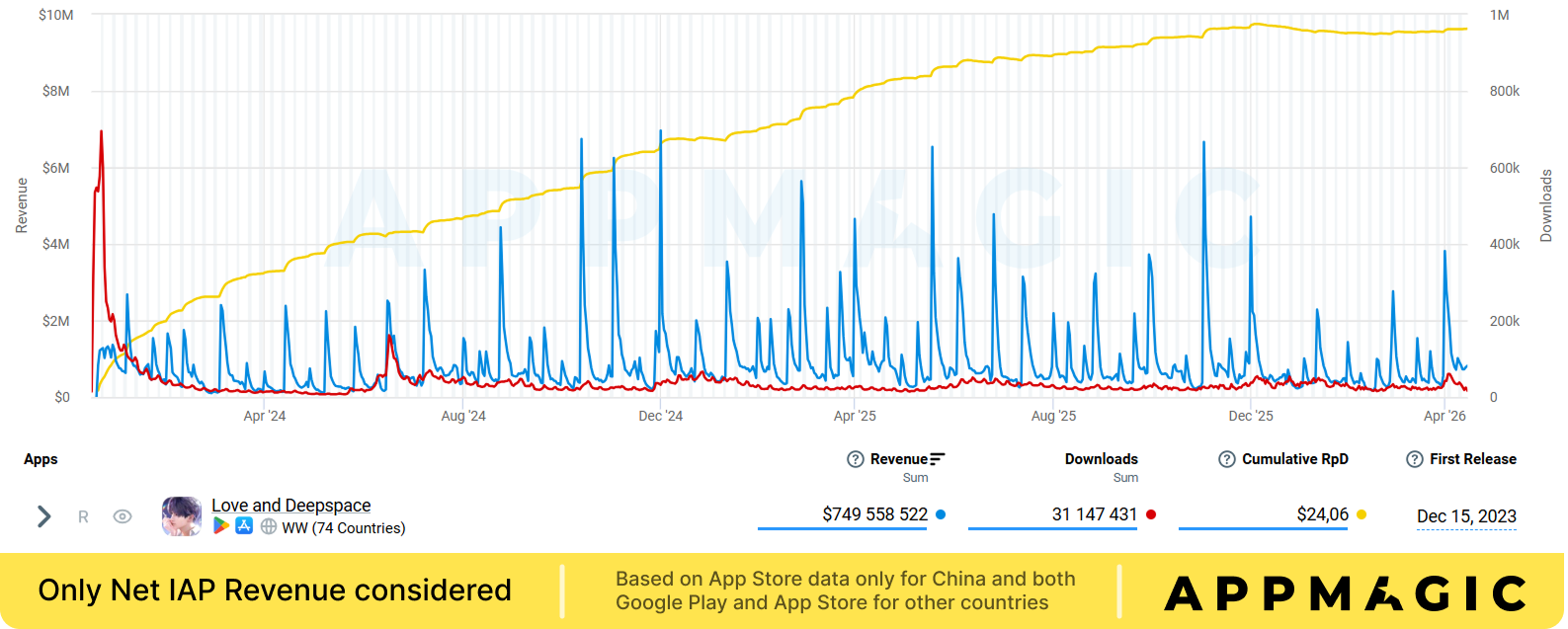
Love and Deepspace revenue, downloads, and RpD
At the same time, the title’s RpD has been steadily rising since launch, peaking at $24 in December 2025. This points to a clear focus on prioritizing LTV growth over aggressive UA—a common approach for Midcore games with high CPIs. More importantly, it shows how the game’s LiveOps strategy and monetization work in sync to increase player spend, drive repeat purchases, and sustain long-term engagement.
Before we break down the features behind this growth, it’s worth understanding what players are actually paying for and why.
Limited Character Cards: Creating Value
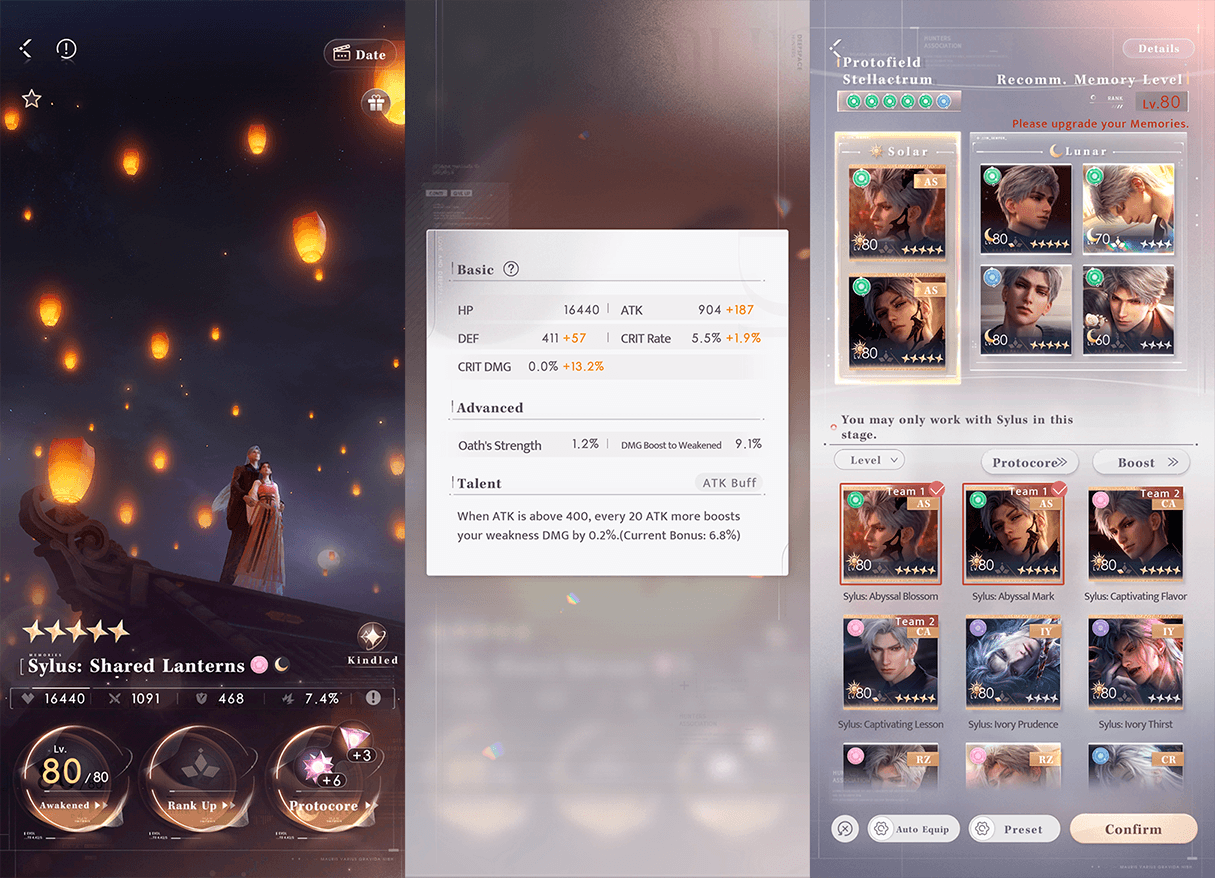
In Love and Deepspace, battle cards are the backbone of both progression and monetization. They are actually named Memories in the game, but we’ll refer to them as cards for clarity. Their value is built on several key factors:
- Cards have rarities (from 3 to 5 stars), stats like HP and ATK, buffs and color types that can be matched with combat level colors to deal more damage.
- To enhance their power, cards can be upgraded using resources and ranked up with duplicates of the same card (up to four duplicates; after that, they turn into “sand” that can be exchanged for resources).
- The rarest 5-star cards, usually obtained through limited-time gacha events, are not just stronger in combat, but also unlock exclusive narrative content with interactive scenes that deliver AAA-level production quality.
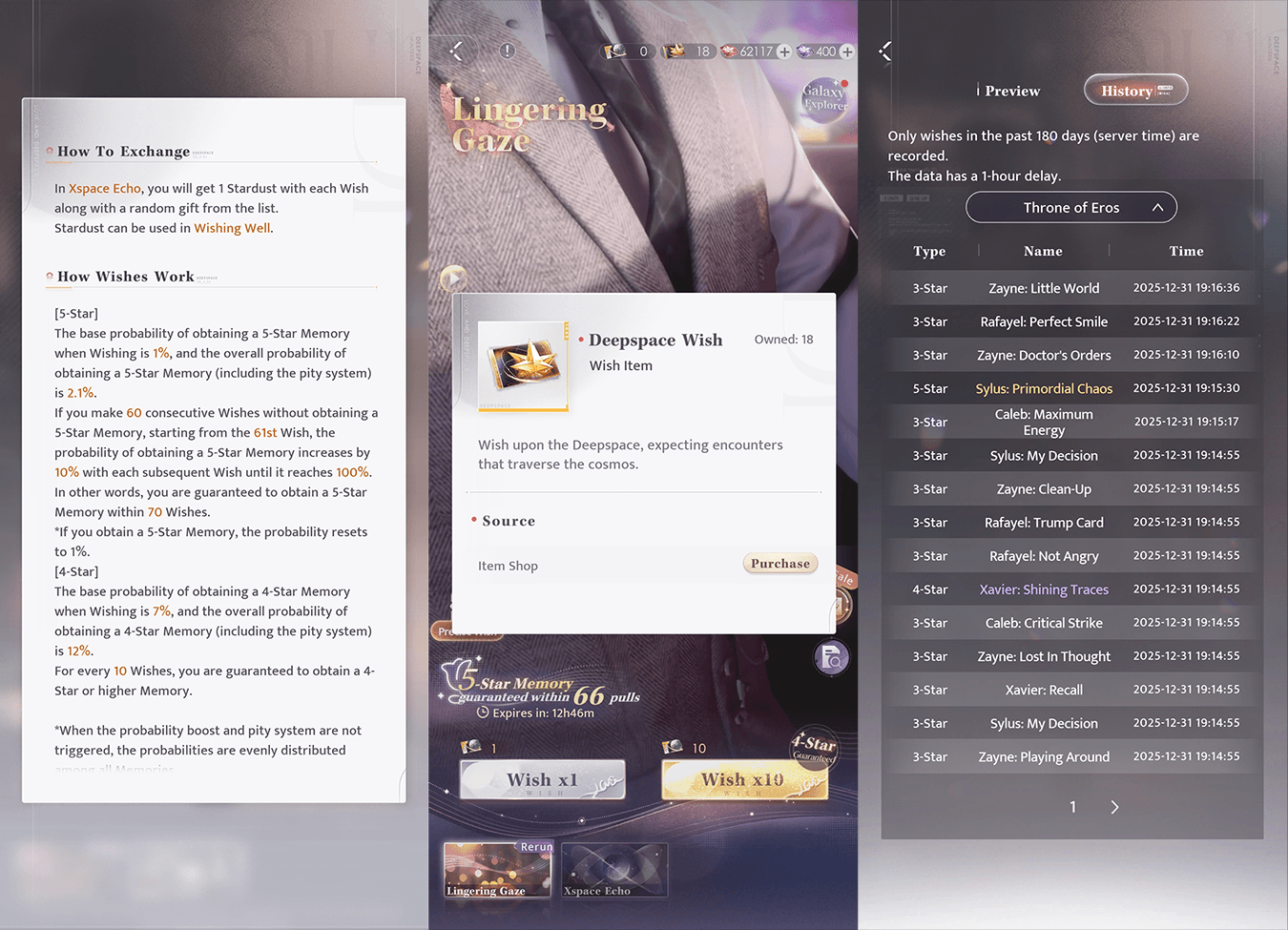
To get limited event cards, players spend Deepspace Wishes (pulls), each awarding a card of random rarity. These pulls can be purchased directly or bought with hard currency earned through gameplay. Importantly, the system is fully transparent, with strict guarantees and exact drop rates displayed on the event page.
The pull history is saved, and progress carries over between new events: if you stop 15 pulls away from a guaranteed event card, the next one will drop within those 15 pulls in the following event. This level of predictability matters. When players know their chances right away and feel like the system is fair and clear, they’re more willing to try their luck. It also lets them plan their currency spending and purchases ahead.
Alongside time-limited events, the game features a permanent gacha with standard cards that uses a separate type of Wishes. While these can be purchased, too, they are typically earned as free rewards and have little impact on monetization. That’s why we’ll only focus on gacha events and the offers tied to them.
Undoubtedly, card design itself plays a major role in the event’s performance. Paper Games is meticulous about every detail when developing its themes, storylines, and visuals. As shared by the studio’s Art Director, Xianzi Feng, during her lecture at GDC, even the smallest design choices, such as fabric textures or spacing between pearls on a necklace, are carefully curated to reflect the concept and each character’s personality. Everything is intentional.
This production depth, combined with the complexity of 3D visuals, affects how often new gacha events are launched (usually every 1–3 weeks). At the same time, players still need reasons to come back daily. While core gameplay tasks support DAU growth, Love and Deepspace relies heavily on LiveOps as its main retention driver.
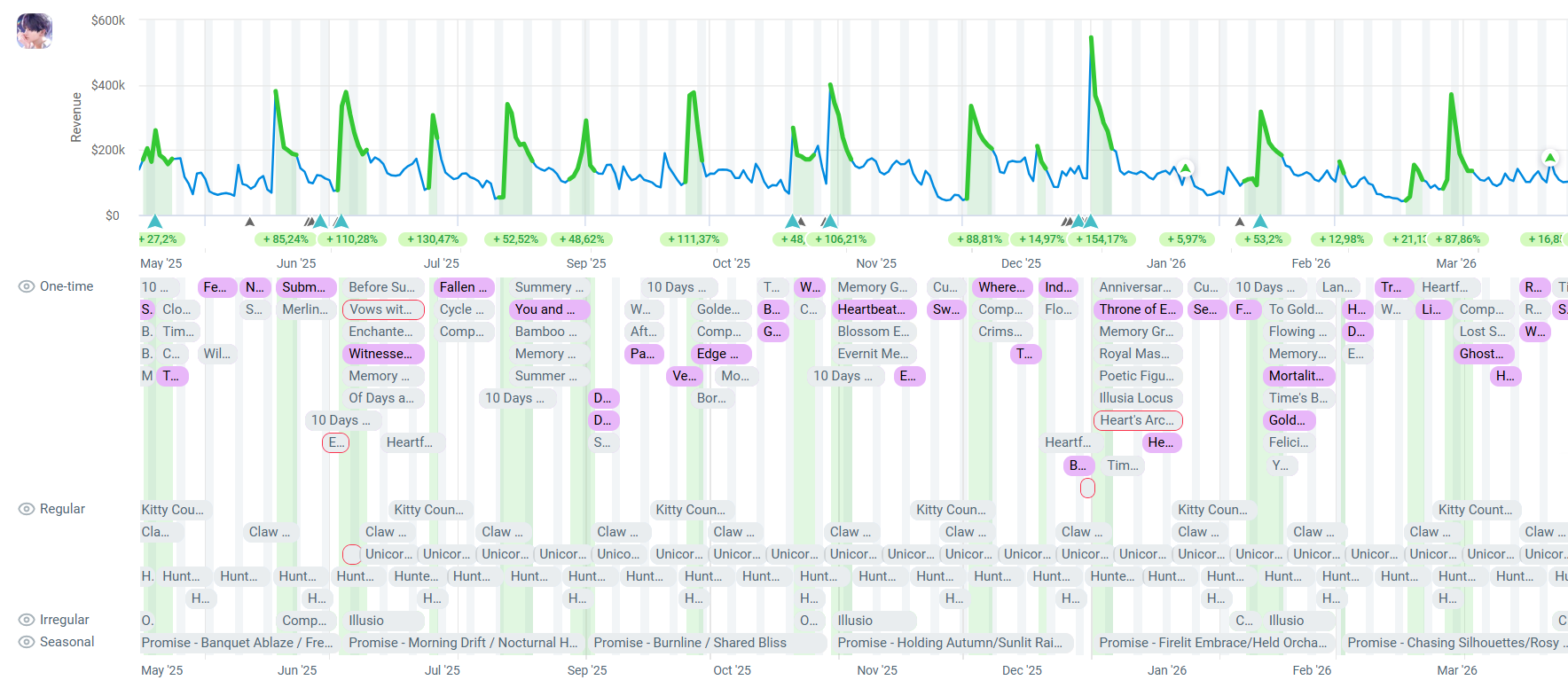
LiveOps & Updates Calendar: gacha events’ pacing in Love and Deepspace
Our goal here is to highlight practical insights applicable to gacha monetization across the broader Midcore segment. To do that, we’ll analyze the title’s LiveOps calendar and IAP revenue distribution side by side and see exactly which features drive engagement and spending. In Love and Deepspace, there are five types of gacha events, so let’s examine each, going from highest to lowest revenue impact.
1. All-Character Events: Revenue Spikes Up To +154%
As the LiveOps & Updates Calendar indicates, the largest revenue spikes typically come from gacha events that feature one 5-star card per character. And these events often generate enough momentum to push the game to the very top of the charts. A clear example is the Throne of Eros event. Launched on December 31, 2025,it drove a +154% revenue surge, taking the game to #1 across all games in China that day and #3 globally. In total, the event generated over $22M in IAP revenue.
It’s important to note that this event was part of the game’s second anniversary and launched alongside new main story chapters and the Home feature. However, the story itself doesn’t monetize players, and the Home-related offers were limited to two low-cost options with one-time or once-a-week purchase limits. In other words, the real heavy lifting still came from LiveOps.
So, how does it work? Each event includes 5 limited cards, but to make it easier to target specific rewards, the team introduced the Precise Wish system. Players can choose 1 card and are guaranteed to get it within 140 pulls. After that, they can either switch their “wish” or continue pulling duplicates to rank up the same card. This approach keeps players motivated by giving them a clear path to the reward, rather than relying on pure randomness with a low 1-in-5 chance.
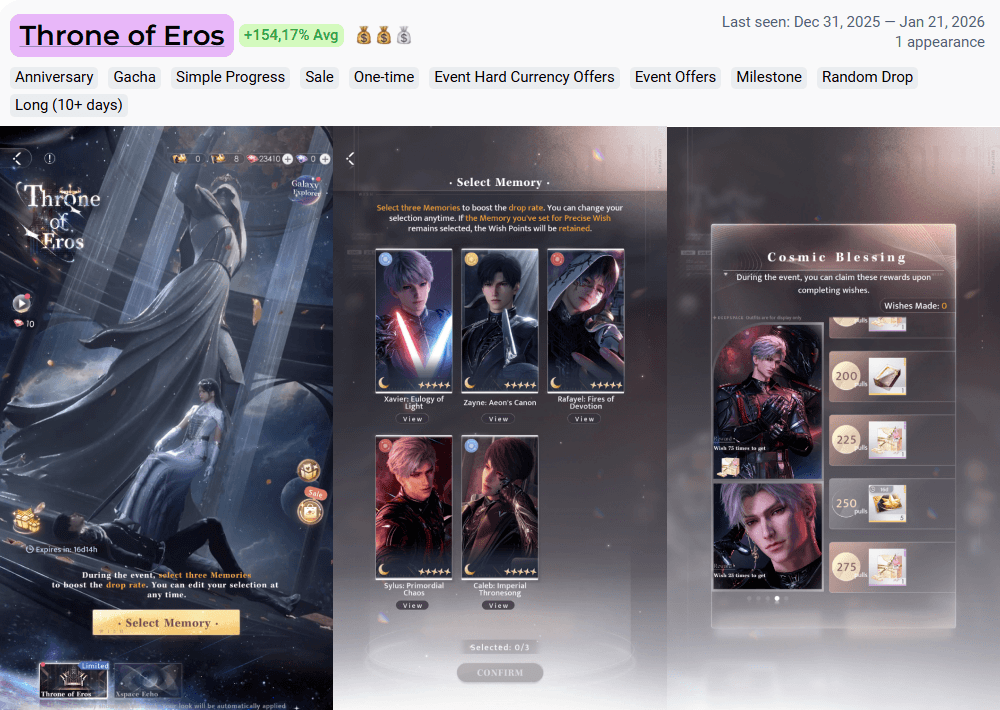
The Throne of Eros event in the LiveOps & Updates Calendar
Another strong driver of spending is milestone rewards. As players progress through milestones, they unlock free pulls, exclusive outfits unavailable elsewhere, and Crates with selectable event cards. These milestones are intentionally placed around the number of pulls needed for guaranteed 5-star cards, nudging players to spend “just a little more” to reach the next reward.
The event page features a preview video of the cards. Watching it rewards players with hard currency, but its main role is to build interest for the gacha event. This is the longest-running event format in the game, usually lasting around three weeks, with a gap of roughly one to two months. To keep players engaged over this period, the game runs a related event that typically includes:
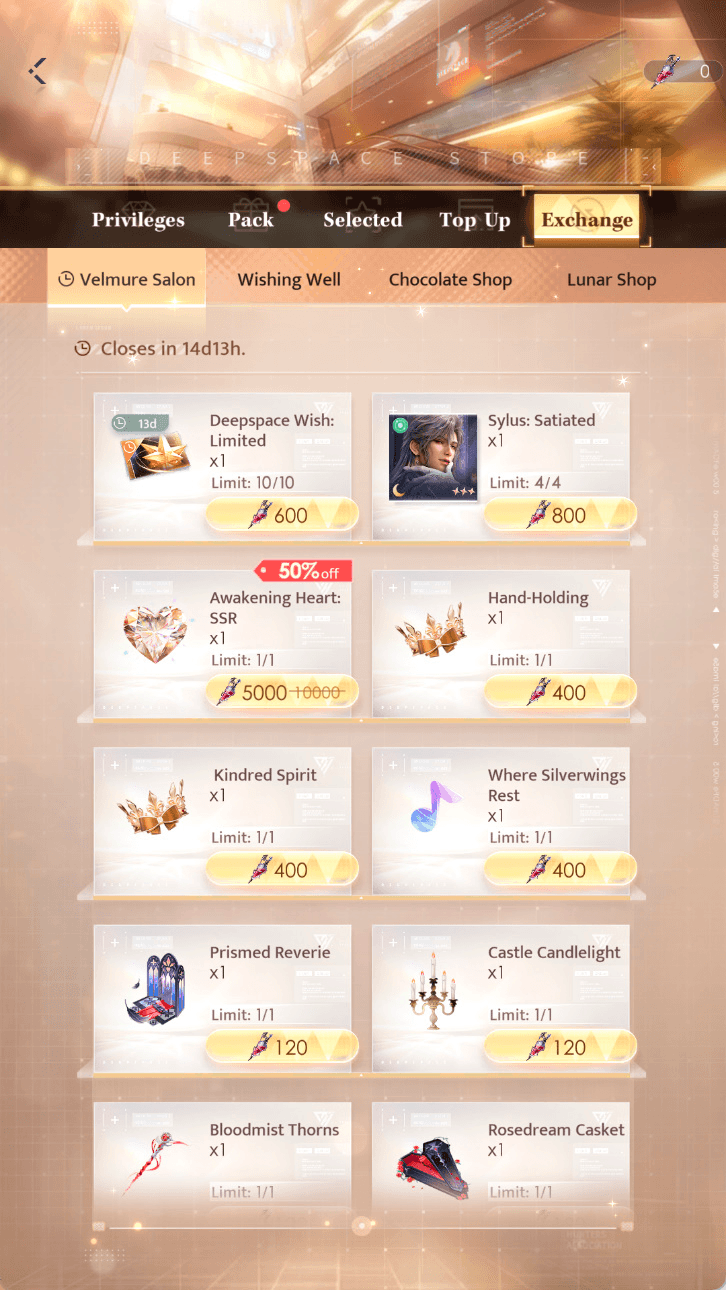
- Tasks that award event currency, which can be spent in the dedicated exchange shop on 10 time-limited pulls, items, cosmetics, and upgrade materials.
- A short visual story for each character, gradually unlocked through completing event tasks.
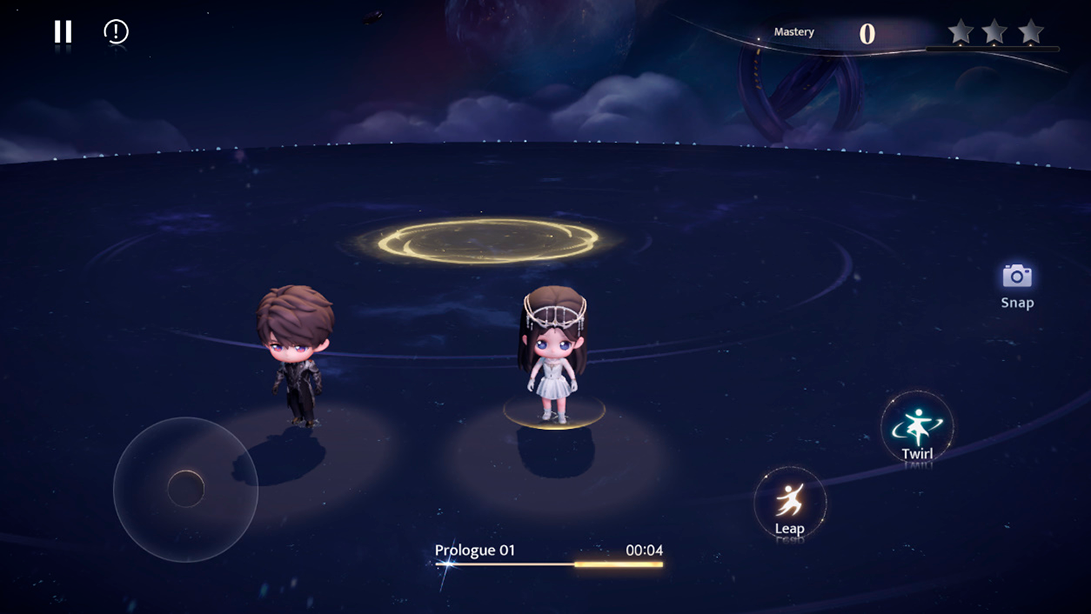
- Two mini-games: one simple and accessible, and another a bit more challenging to engage Midcore players.
The design clearly targets different player motivations—from story and customization to progression and gameplay challenge. What matters here is that every event goes beyond a simple reskin: each one introduces new mini-game mechanics, distinct storylines in a 3D visual format, and fresh design themes, like the cosmic empire in Royal Masque or the pop-idol concept in Evernit Meloride.
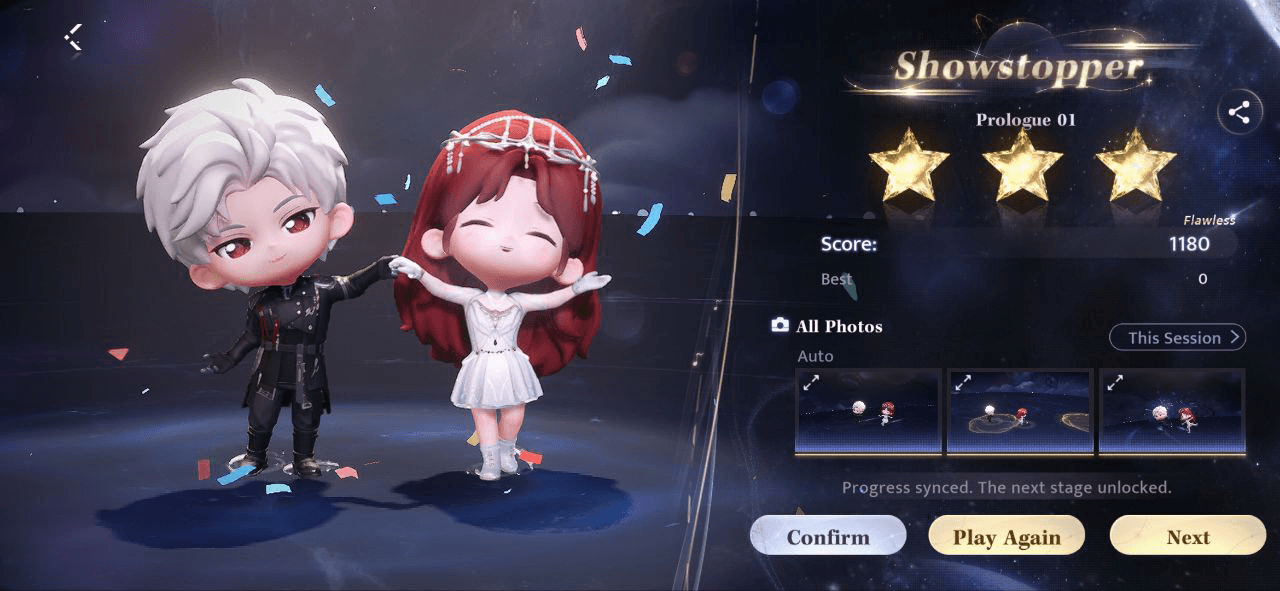
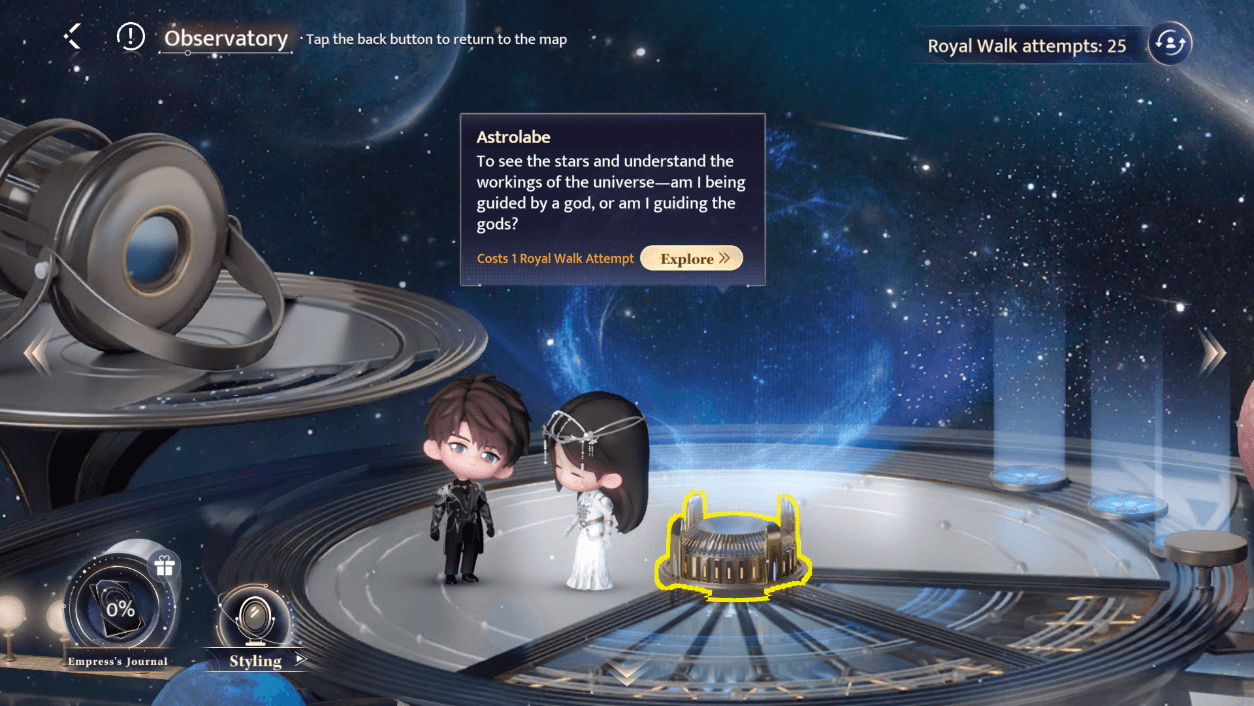
The Royal Masque event in the LiveOps & Updates Calendar
This level of variety keeps the experience fresh, but it also comes at a cost. Each event requires significant production effort, and, as a result, LiveOps becomes the primary source of new content, while the main story updates are released far less often.
Only teams with enough resources to keep this system up may adopt a similar approach, but even without matching this scale, there’s a valuable insight for studios here. While gacha events drive spending, dedicated features like the exchange shop, story, and mini-games don’t directly impact monetization. Their only purpose is to retain players by:
- Keeping DAU high through time-gated tasks, gradually unlocked chapters, and mini-game levels
- Extending session time and engaging different player segments with varied activities and flexible rewards
- Driving core gameplay engagement by tying standard daily tasks to event rewards
- Building emotional connection with characters through short but frequent interactions in stories and mini-games
On top of that, the game often runs login calendars—for example, the one integrated into the Royal Masque event page or the separate Flowing Wealth calendar that ran alongside the Mortality’s Tenderness gacha event in February.
Additional spending drivers come from Memory Growth Bonus events, which always run alongside gacha events of this type. This mechanic works similarly to a “cashback” system: players level up new limited cards using resources during the event and get some resources back. For players, this is the fastest way to progress, while the time limit adds pressure to buy resources.
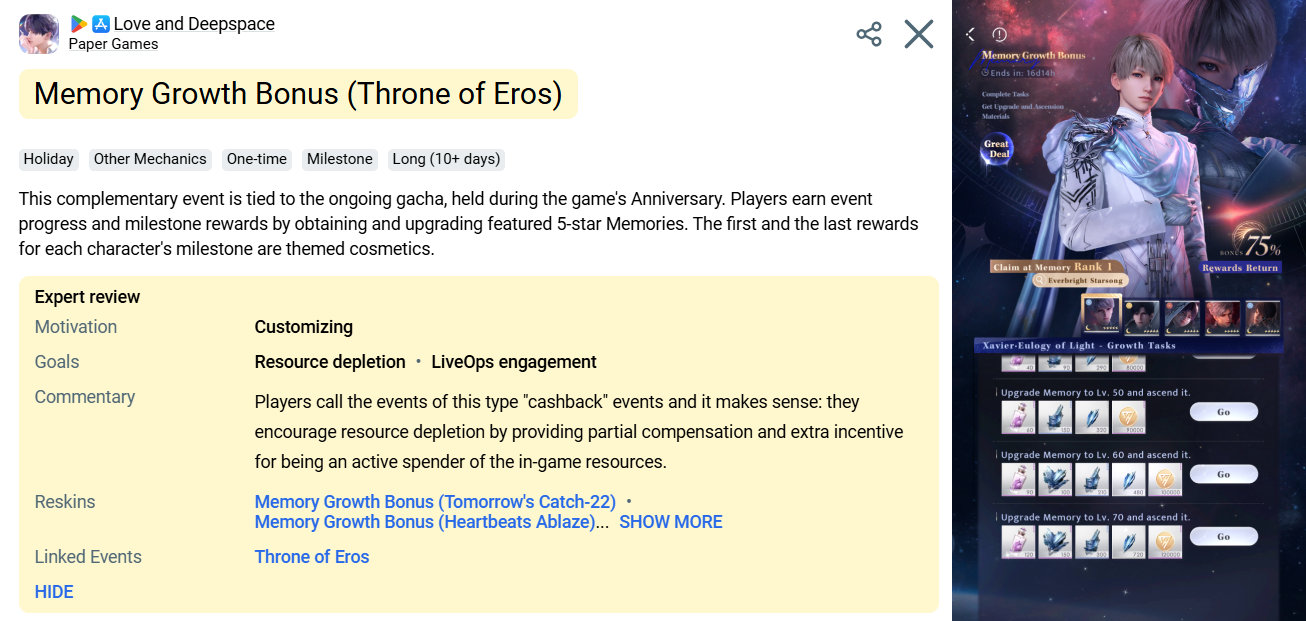
Memory Growth Bonus in the LiveOps & Updates Calendar
This event also rewards players with exclusive outfits for obtaining duplicates of new limited cards through the current gacha event. Since duplicates are already used to rank up cards and increase their battle power, this delivers extra motivation for players who value customization and exclusivity.
A similar idea is used to drive spending of paid-only currency. During these events, new clothes for the female protagonist are added to the store, available only for that currency; they typically range from one to five options and often match the male leads’ event outfits. This approach turns cosmetics into a tool for strengthening emotional attachment, while also offering multiple choices to increase the average check.
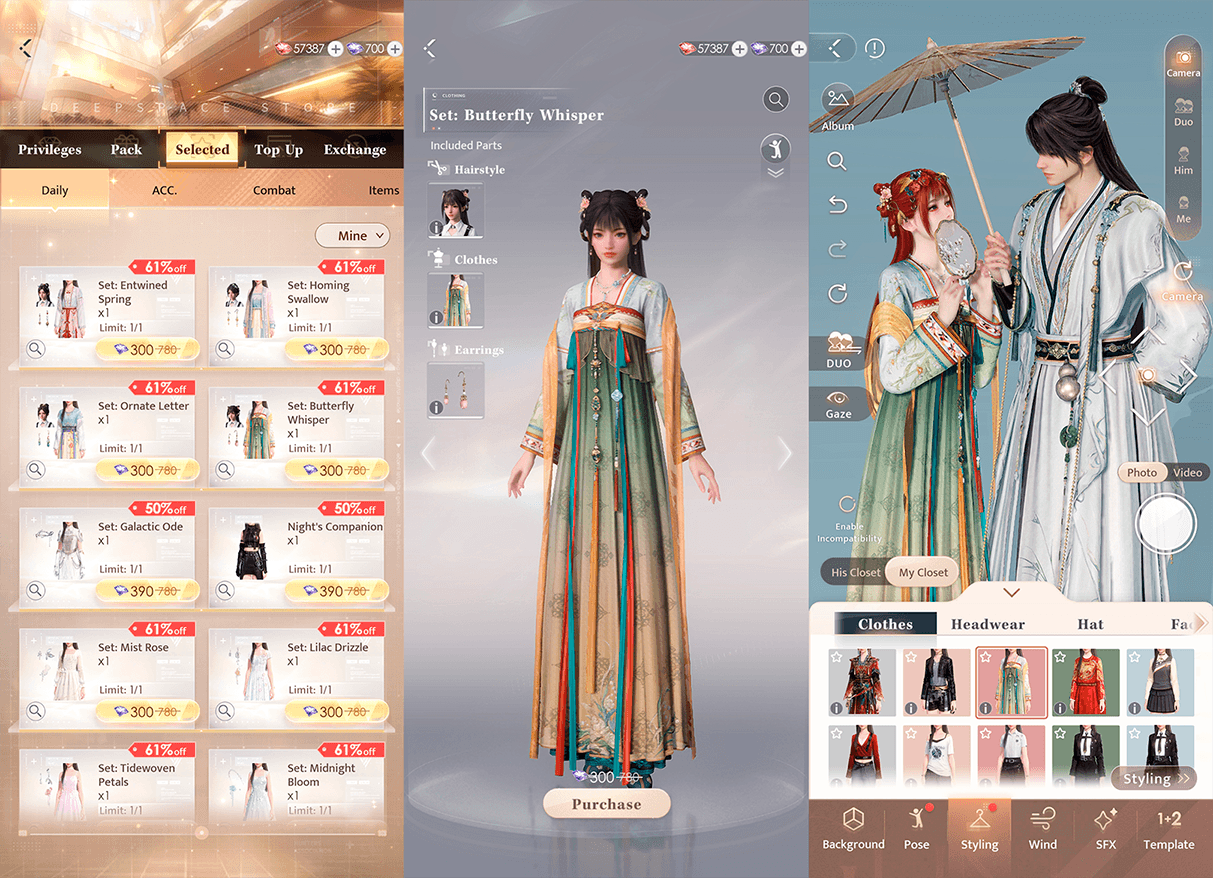
Paid-only cosmetics dedicated to Mortality's Tenderness gacha event
Compared to other event types, all-character gacha events stand out for their depth and flexibility in monetization. The team frequently uses them to test new features. A good example is time-limited chain offers, first launched in July 2025 with the Witnessed by Deepspace gacha event. According to our Monetization Intelligence, at that time, prices ranged from $0.49 to $4.99, the same range used in October. By February, the entry price was reduced to $0.29. This offer design mainly aims to improve conversion and give more accessible purchase options for low- and mid-spenders.
Meanwhile, one of the tested tools used simplified gacha mechanics, which could be a good fit even for Casual titles. In the Golden Fortune event, players could double their random free reward by making a $0.29 daily purchase or paying $1.49 upfront to cover all twelve days. The low price made it an easy impulse buy, while the randomness added an extra layer of excitement.
Another notable experiment introduced a cooperative twist. Launched a few days before the Throne of Eros gacha event, the Anniversary Presale offered players the opportunity to buy one or both offer options and contribute to a cumulative server-wide progress, unlocking generous milestone rewards for all buyers. This social element boosted spending through a shared goal.
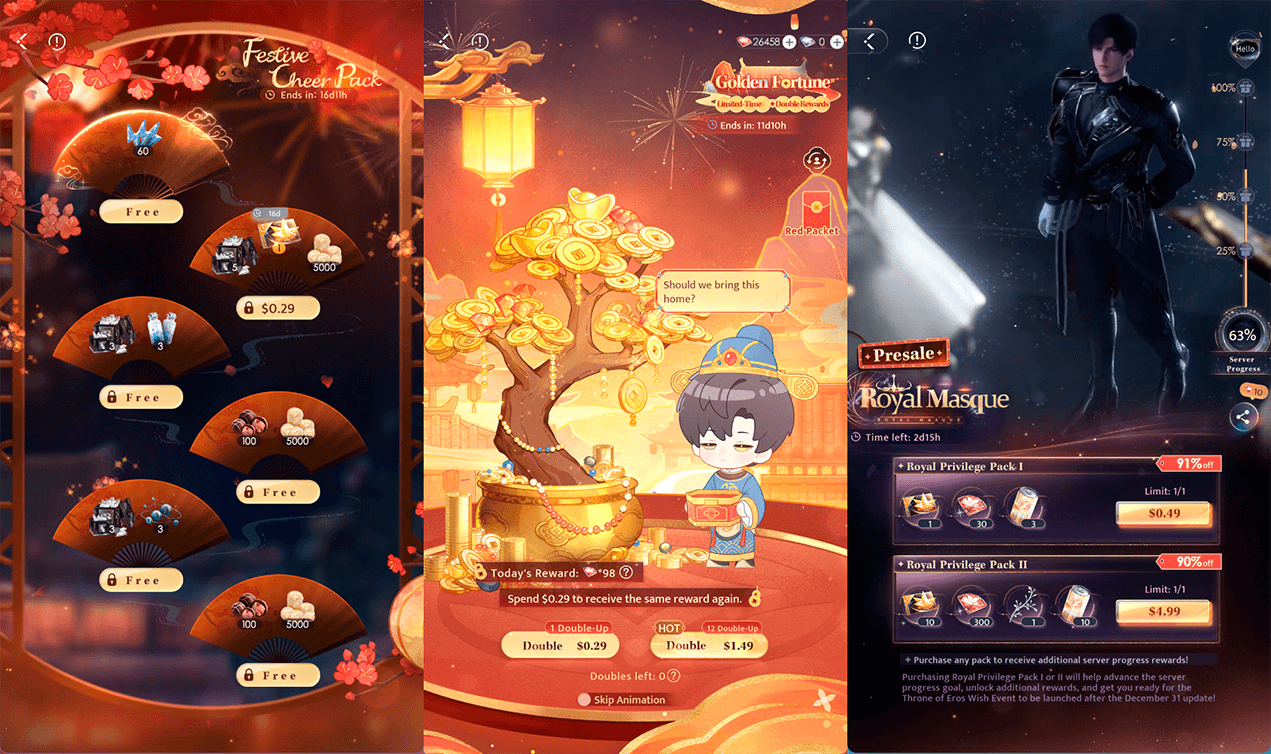
While these features expand the game’s monetization toolkit, most of the revenue still comes from event packs. These bundles include upgrade resources and time-limited pulls, which later convert into less valuable standard gacha pulls once the event ends. Each pack has a purchase cap: for example, players can buy the $0.49 pack up to 5 times, while the $54.99 pack is limited to 1 purchase only. After reaching these limits, players are left with standard store offers that provide less value.
To measure their actual impact, let’s look at the top 10 offers by revenue share during the Throne of Eros event. Most of them are event packs priced between $4.99 and $54.99, and together they account for around 48% of the event’s total revenue. Notably, bundles including resources only, such as the $29.99 special pack, did not make the top list. This proves once again that monetization here is heavily centered on gacha rather than core progression.
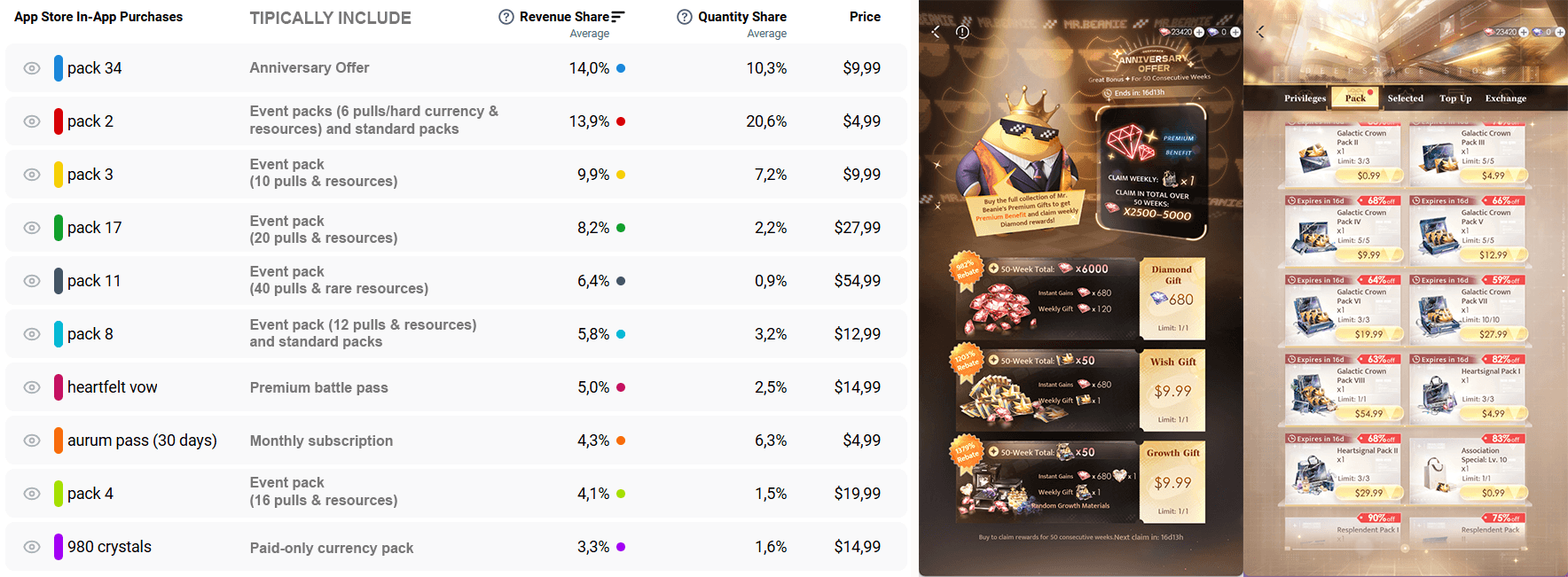
At the same time, a solid share of purchases came from the Anniversary Offer, which alone brought in 14% of the event’s total revenue. This purchase gives players weekly rewards throughout the following year (hard currency, limited pulls, or resources, depending on the chosen option). Two of the options are priced at $9.99, while the third requires paid-only currency. This setup likely explains why the $14.99 currency pack also appeared among the top offers, contributing another 3.3% of total revenue.
The key drivers here were urgency and strong motivation. This yearly subscription was only available during this very gacha event, creating a heavy FOMO effect. On top of that, players were encouraged to purchase all options at once to unlock extra weekly rewards for the entire year ahead.
Alongside event packs, the Aurum Pass ranks #4 among the highest-earning IAPs, generating 6.3% of revenue. Despite being labeled a pass, its mechanics are closer to a monthly subscription, offering instant paid-only currency along with daily hard-currency rewards. Since both currencies are mainly used for limited pulls or event outfits, it stays closely tied to gacha monetization. The same logic applies to the premium season pass, which includes both standard and limited pulls. These offers are not directly tied to the releases of limited cards, but ongoing gacha events remain the main factor defining their value.
Key Takeaways: Balance And Diversity
All-character gacha events are one of the game's key revenue drivers. The strategy behind them is built around balance: the gacha event itself drives spending through a clear guarantee system and milestone rewards, while the related events focus on engagement, with little to no monetization pressure.
Looking at the Throne of Eros event, its IAP revenue distribution reveals several key points:
- Event packs generated 48% of total revenue, with the $4.99 and $9.99 bundles being the most popular choices.
- The yearly subscription stands out for its highest revenue share (14%) and drives 10% of all purchases, thanks to strong FOMO and extra motivation for all-at-once purchases.
- Even without being directly tied to the event, the monthly subscription and premium season pass together bring in about 9% of revenue.
Overall,the system feels generous even for non-paying players, while still keeping high-value rewards behind meaningful spend. Monetization is designed to drive revenue mainly from collectors or hardcore players as they rank up cards for combat, without hurting engagement.
2. Limited Skin Releases: Revenue Spikes Up To +130%
Battle skin releases are the next major event type in Love and Deepspace. To unlock a limited skin, players need to collect a pair of new character cards through gacha. Each skin comes with new abilities, combat strategies best suited for them, battle animations, and a themed outfit, along with a weapon for the female protagonist. But the value of these paired cards goes beyond battle modes: the story they unlock is longer and more visually epic compared to most other event cards.
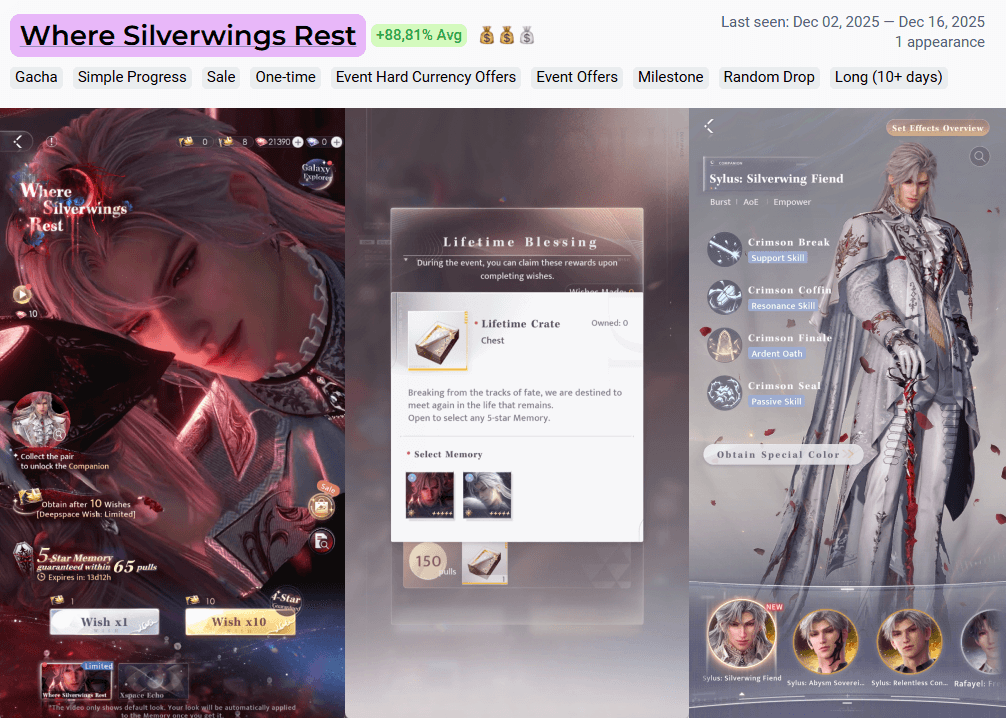
The Where Silverwings Rest event in the LiveOps & Updates Calendar
When it comes to gacha mechanics, the system is carefully designed to feel fair. Players are guaranteed one event card within 140 pulls, and at 150 pulls, they can choose the second card of the pair as a milestone reward and obtain the skin. This makes the goal feel achievable, so that players are not too overwhelmed to at least try.
However, after that milestone, each duplicate needed to rank up the cards can take up to another 140 pulls. This is especially relevant for hardcore players, whom these events heavily target. Battle skins significantly boost combat power as is, but higher ranks also unlock new abilities. Fully upgrading both cards requires four duplicates for each, and given the game’s balance and event pacing, achieving this without spending is extremely hard.
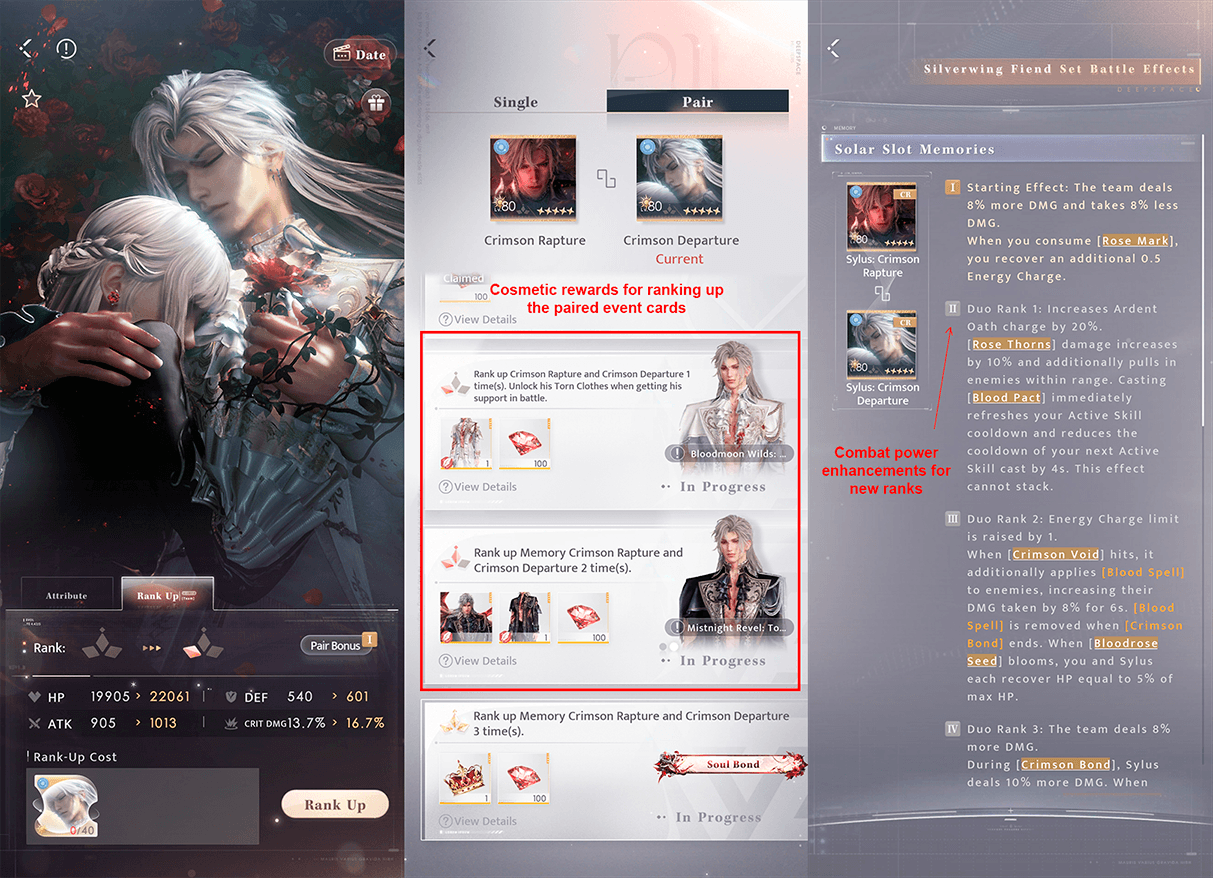
For players less focused on combat, the game adds another layer of motivation, too. By ranking up the paired cards, players get new versions of the character’s outfit. Along with this system, the cosmetics are used again to drive paid-only currency spending. Unlocking the male lead’s skin grants access to matching combat outfits for the female protagonist that can be purchased with that currency. Without the skin, the same outfit can only be used as a cosmetic item in Photo Studio mode, which keeps this monetization feature closely linked to the gacha event.
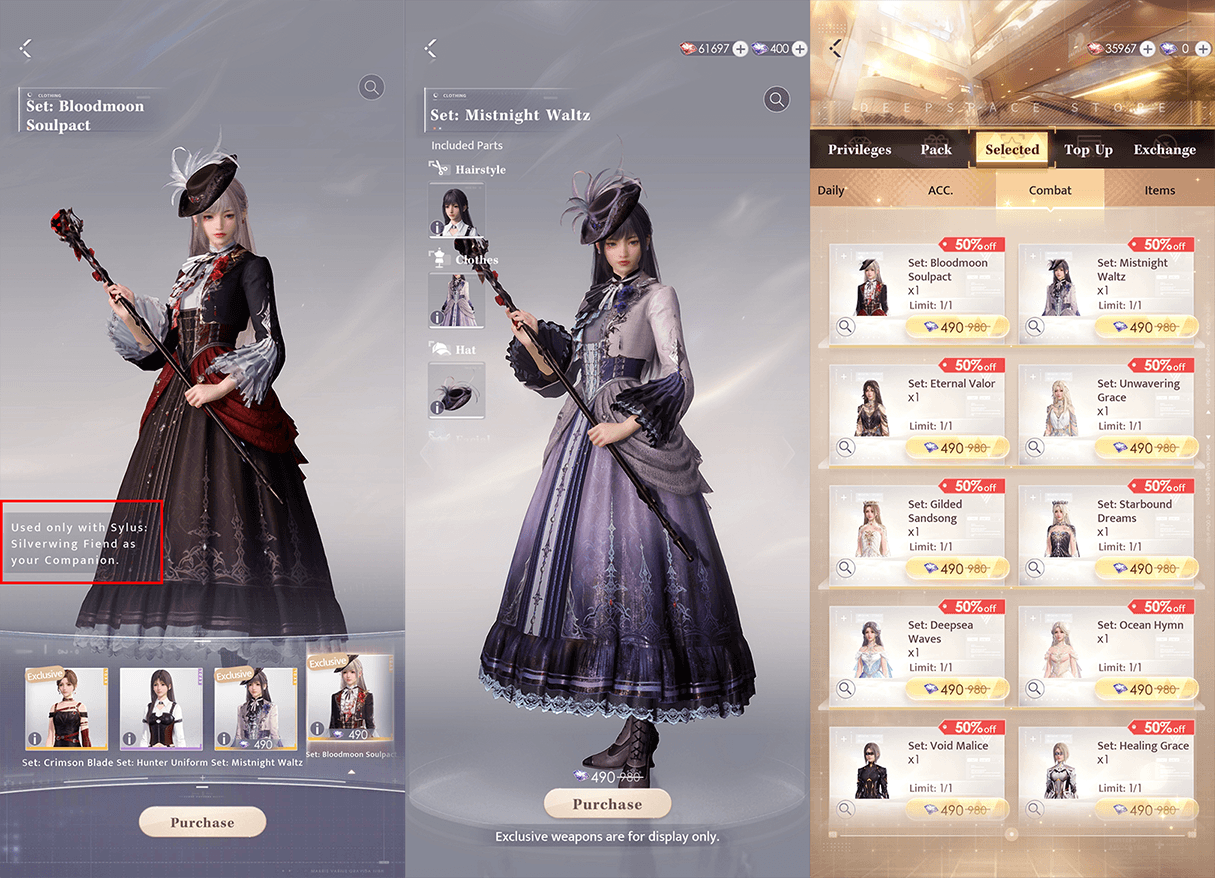
Paid-only cosmetics for combat
To introduce the skin, the game uses a soft onboarding approach. Players can preview the skin through a rewarded trailer video and try it in action in the Companion Rehearsal, which also offers valuable rewards. Together, these features showcase the visual concept and new combat skills without directly pushing to spend.
The real strength of this event type lies in its tight link to battle progression, and that’s what lays the foundation for its revenue potential. The latest notable case is Where Silverwings Rest: this event pushed the game to the #1 spot in China’s daily top-grossing chart—not only among games, but across all apps. Globally, it also secured the #1 position among games on the event’s launch day, and its total IAP revenue then crossed $23M in just three weeks.
For the community, these events hold a special meaning. They’re seen as a way to show support for favorite characters. On launch days, players often spend more just to land the game at the top of the charts. The studio encourages this by rewarding all players if the game reaches #1 in China, turning this big win into a shared celebration.
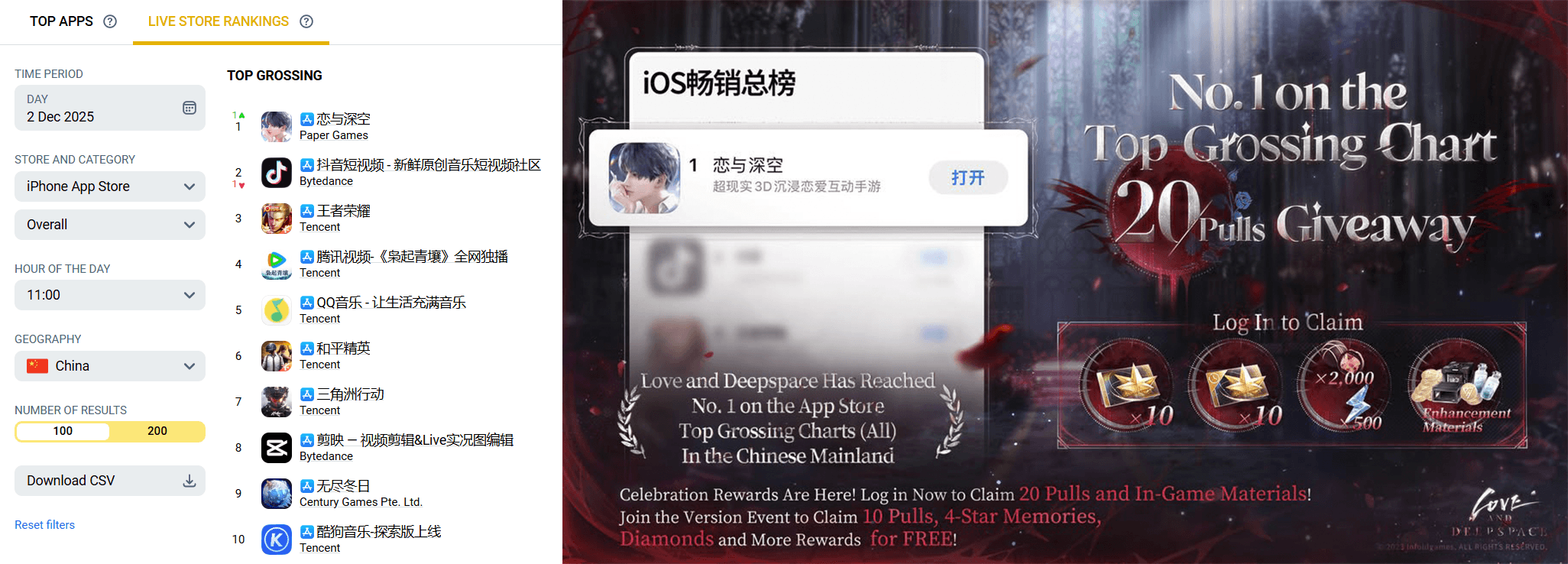
AppMagic’s Live Store Rankings (December 2, 2025)
The impact of these gacha events becomes even clearer when looking at the game’s App Ranking History. In China, its core market, the title entered the top 3 apps by daily revenue 14 times, with two #1 rankings—both driven by battle skin releases.
With this broader context in mind, let’s break down exactly how the team makes it work. In terms of pacing, these events run for about two weeks, with one to three months between them. Meaning, each of the five male leads gets a new limited skin roughly once a year, making every release rare and long-awaited.
The strategy here mirrors what we’ve seen in all-character events. The gacha drives monetization, while the dedicated events are built purely to boost engagement through:
- Tasks that reward players with event currency, which can be spent in the exchange shop on 10 time-limited pulls, a new 3-star card, items, and upgrades of materials.
- Exploration with 19 linked locations, including battle levels (featuring the new skin), short narrative episodes, and basic mini-games. Each location requires a daily attempt, and any you miss can be restored with hard currency.
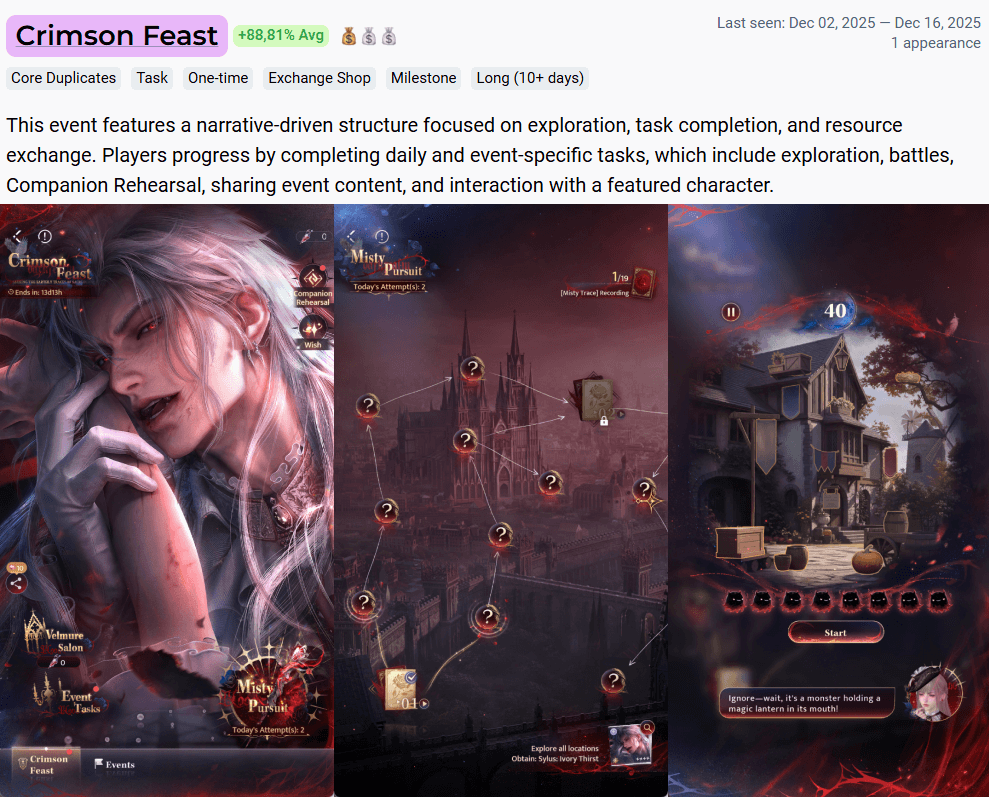
The Crimson Feast event in the LiveOps & Updates Calendar
The goal remains clear: keep players engaged daily via tasks and exploration, while offering flexible rewards for all player segments through the exchange shop. In their design, these events are closer to reskins, even though mini-games and storylines often vary.
The key difference is that they center on a single character. To engage all players—no matter which character they like—the game keeps the event activities accessible and varied. It creates simple daily touchpoints: log in, visit the event page, get deeper into the theme, and try the skin. And that’s how the game promotes the current gacha event without aggressively pushing to spend.
On the monetization side, battle skin releases feature a set of event packs priced from $0.49 to $54.99, each with its own purchase limit. Using the Where Silverwings Rest event as an example, we zoomed in on its top-earning offers and saw a similar pattern. Event packs with time-limited pulls still dominate the list, accounting for more than 73% of total revenue during the event.
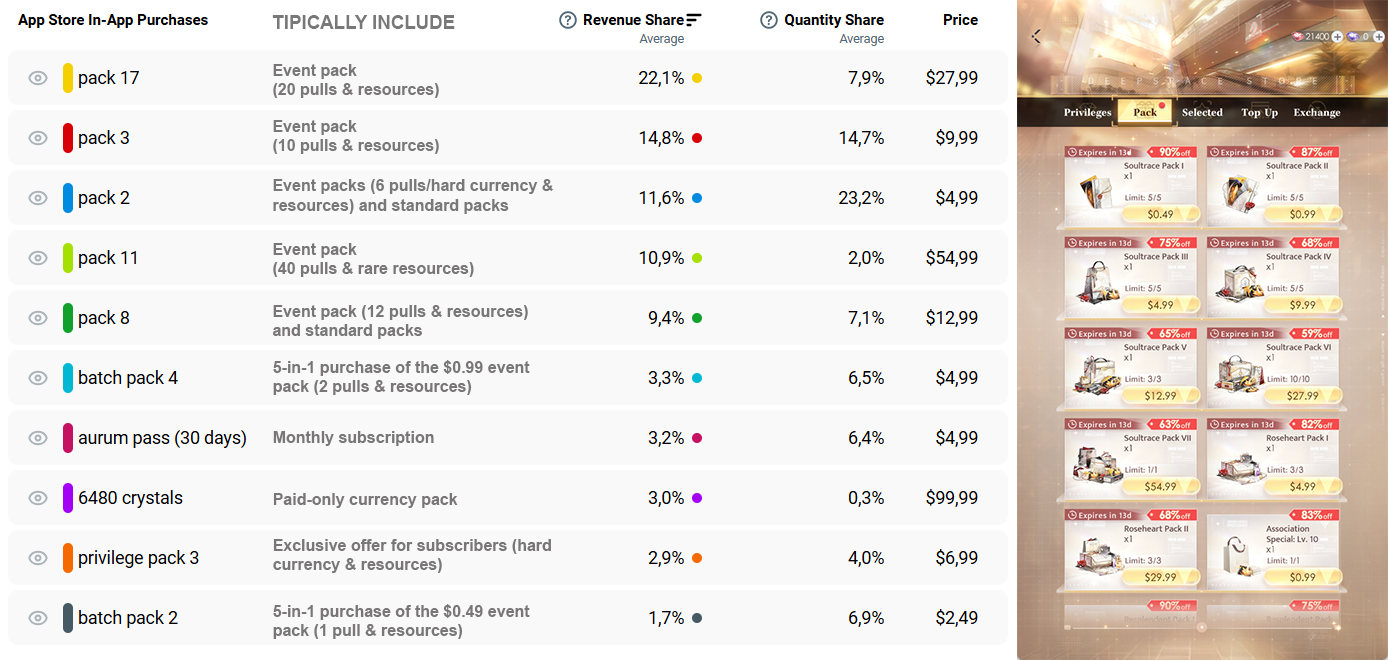
The most common purchase price points remain $4.99 and $9.99, as many players favor these packs for their value, even with cheaper options at hand. At the same time, the overall pricing range of top offers is wider compared to all-character events—from the $2.49 event pack to the $99.99 paid-only currency pack. The second one is actually the highest-priced offer in the game, which signals how battle skin releases effectively capture all payer segments, including whales.
What stands out more clearly is how spending shifts toward higher tiers. The $27.99 event pack captures the largest share of revenue at about 22%, compared to ~8% for a similar offer in the all-character event. The most expensive event pack ($54.99) also performs better here, contributing 10.9% of revenue compared to 6.4% during the Throne of Eros event. When it comes to skins and fully ranked cards that significantly boost progression, players are far more willing to spend on high-priced offers.
Key Takeaways: Progression Impact And Rarity
At first glance, events focused on a single character might seem limited by his popularity. In practice, however, the team’s design choices turn it into a strength. At the core of this strategy are the heavy impact on progression, epic concepts, rarity, and special meaning for the community.
We took a closer look at the top offers from Where Silverwings Rest to highlight key monetization insights:
- Event packs account for more than 73% of total event revenue.
- The $4.99 and $9.99 packs remain the most common purchases.
- Players are more willing to buy the highest-priced offers—such as the $54.99 event pack or the $99.99 paid-only currency pack—because the reward justifies the spend for them.
The approach is similar: the supporting LiveOps layer sustains engagement, while the gacha mechanics balance accessibility—lower pressure to obtain the skin—with depth that still pushes hardcore players to spend.
3. Birthday Celebrations: Revenue Spikes Up To +50%
Gacha events dedicated to characters’ birthdays lean heavily into emotional connection. The same could be said about any event in the game, but these take it much further. They recreate real-life celebrations with gift preparations, cakes, singing “happy birthday”, and spending time together. The visual story unlocked by the limited card also revolves around celebrations and even lets players record their own voice message with birthday wishes.
Each birthday event features one card of the male character, showcased through a rewarded teaser, along with reruns of his birthday cards from previous years. Both follow the standard guarantee system, ensuring the event card within 140 pulls. However, it’s the only event type without milestone rewards tied to pulling.
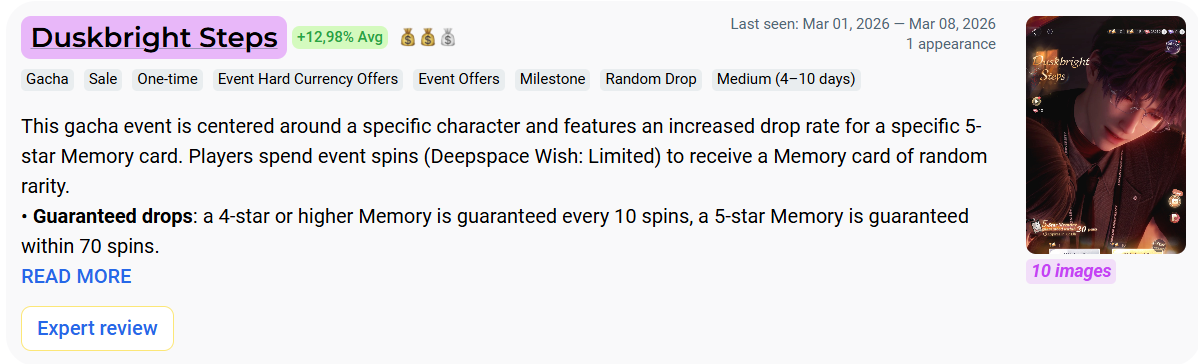
The Duskbright Steps event in the LiveOps & Updates Calendar
That doesn’t mean players don’t get any free content. Rewards are still available in the related event, which typically includes:
- A short visual story with chapters unlocking every day or two
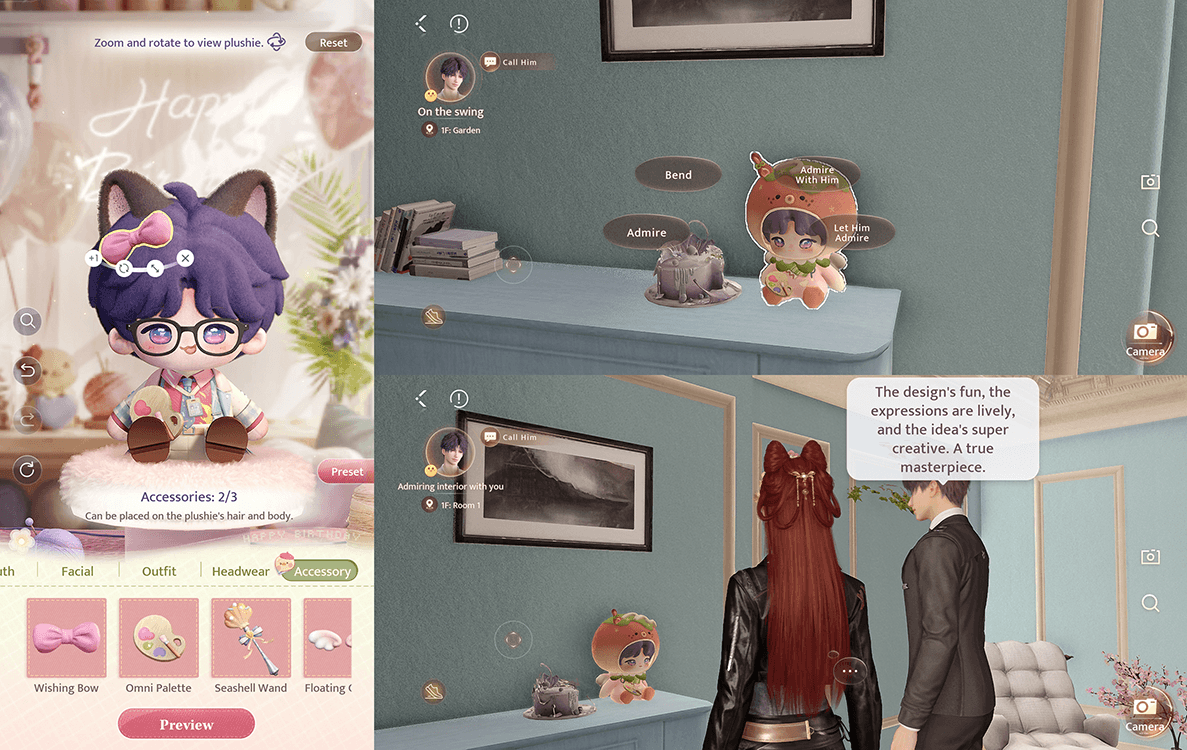
- A customizable plushie of the character
- A mini-game where players collect materials and use earned points to unlock plushie parts
- Tasks that grant event currency, which can be exchanged in the shop for 10 time-limited pulls, 3-star cards, cosmetics, items, and upgrade materials
These events are designed as memorable moments that players want to share with the characters. To reinforce this feeling, the game gives them keepsakes. The DIY plushie and the themed cake are saved as interactive items in the Home feature, while an immersive interaction becomes available in that feature only on the character’s birthday date. Altogether, this creates a deeply personal experience.
Alongside DIY activities and narrative, the event features a Casual mini-game, reused across all birthday events throughout the same year to reduce production costs. In 2026, the team focused on puzzle mechanics, gradually increasing difficulty with new boosters and conditions. This choice is not surprising given the growing momentum of Casual Puzzles in both revenue and user base, which we noted in our Casual Games Report 2025. Their use in Love and Deepspace shows once again how the game walks a thin line between Casual and Midcore audiences.
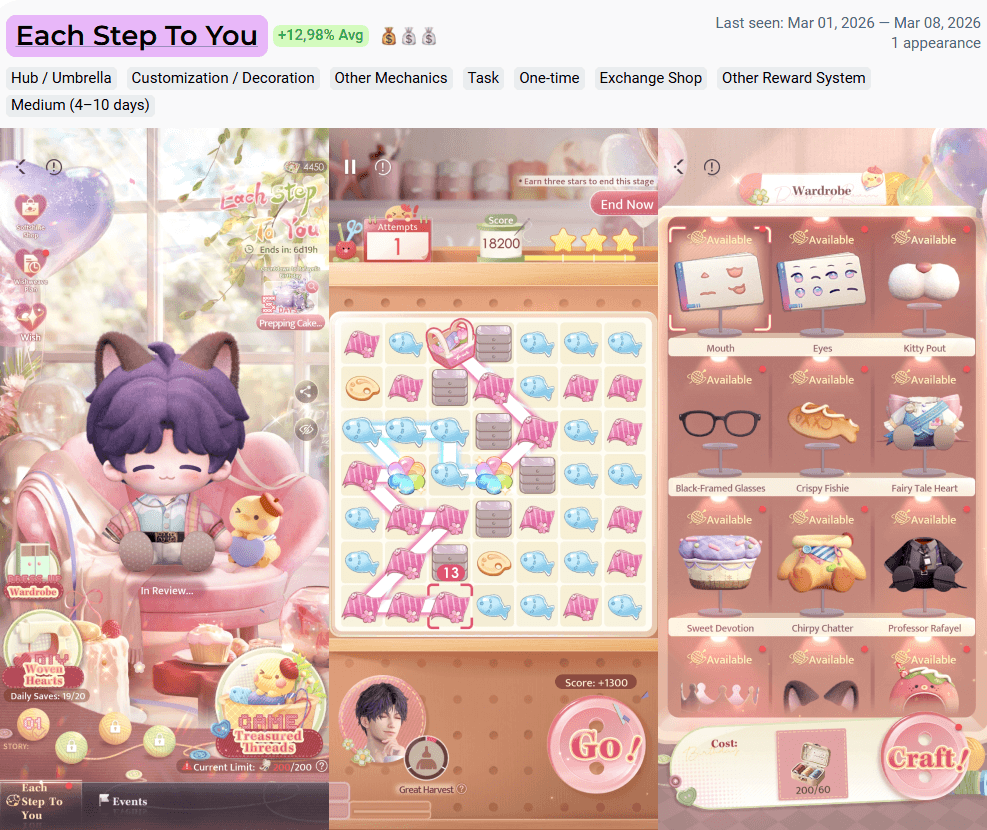
The Each Step To You event in the LiveOps & Updates Calendar
However, it comes with a trade-off. Birthday events offer less depth and value for hardcore players, relying primarily on emotion and creative freedom. Although birthday cards are used in battle, their impact is noticeably lower compared to battle skins. And that’s one of the reasons why revenue growth here doesn’t come close to what we’ve seen before.
Despite this, birthday events play a key role in the community and serve as a strong driver of short-term engagement, typically lasting around a week. Their monetization relies solely on limited event packs priced between $0.49 and $49.99. To see exactly what drives their revenue, let’s break down the top offers by IAP revenue share of the Duskbright Steps birthday event, which generated roughly $4.9M in a week.
What stands out is that the $14.99 premium pass sits at the top with 17.5% of the event’s total revenue. This is largely due to timing: the pass launched alongside the birthday event. The same applies to its $9.99 option, which also ranks among the top offers. In this case, the team effectively leveraged the attention around the event to boost purchases of seasonal offers.
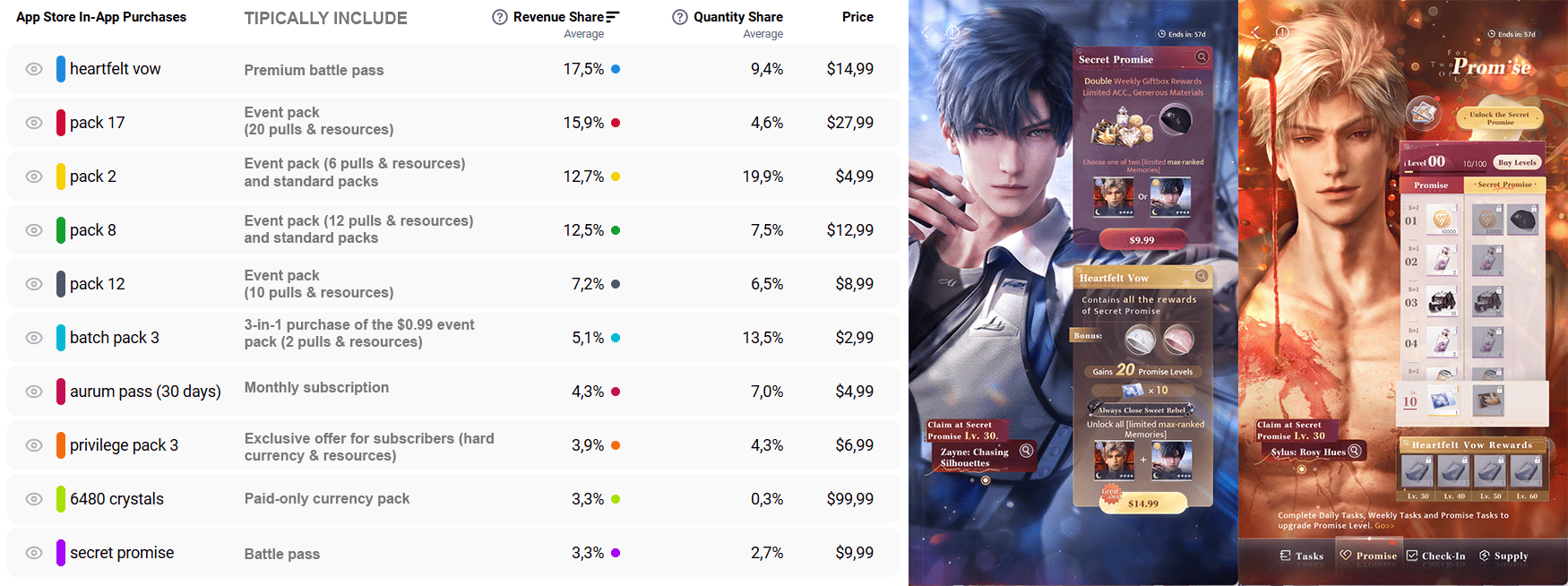
Still, event packs remain the backbone of monetization. Together, they generate more than 53% of total revenue, with the $27.99 pack bringing in nearly 16%. In terms of frequency, players prefer the $4.99 and $2.99 tiers—accessible price points that appeal to low- and mid-spenders. The monthly subscription, along with its exclusive weekly pack, acts as a supporting layer, encouraging players to spend regularly.
Key Takeaways: Special Moments To Share
Birthday events recreate real-life celebrations through narrative, DIY gifts, and immersive interactions, making the experience very personal. They are mainly built around emotional engagement rather than monetization pressure.
This focus is reflected in their revenue structure:
- The timing aligned with the release of a new season pass, resulting in ~18% of event revenue coming from an offer not directly tied to the themed gacha event.
- Event packs with time-limited pulls generated more than half of total IAP revenue, with the $27.99 pack as the main contributor.
While birthday events have a lower revenue impact, they take their rightful place as part of the LiveOps strategy by fitting naturally into the game’s romantic concept.
4. Solo Events: Revenue Spikes Up To +30%
Alongside larger formats, the game also runs gacha events focused on a single new character card, not tied to any specific occasion. These events last about a week and follow the standard guarantee system with milestone rewards such as free pulls, exclusive cosmetics, and upgrade resources.
As in all-character events, the milestones are carefully aligned with the guarantee system. For example, even if players obtain the card early, they still need to reach 70 total pulls for a special outfit that isn’t available for direct purchase. Some rewards are added to the permanent shop later, but only after a long delay, which helps maintain FOMO.
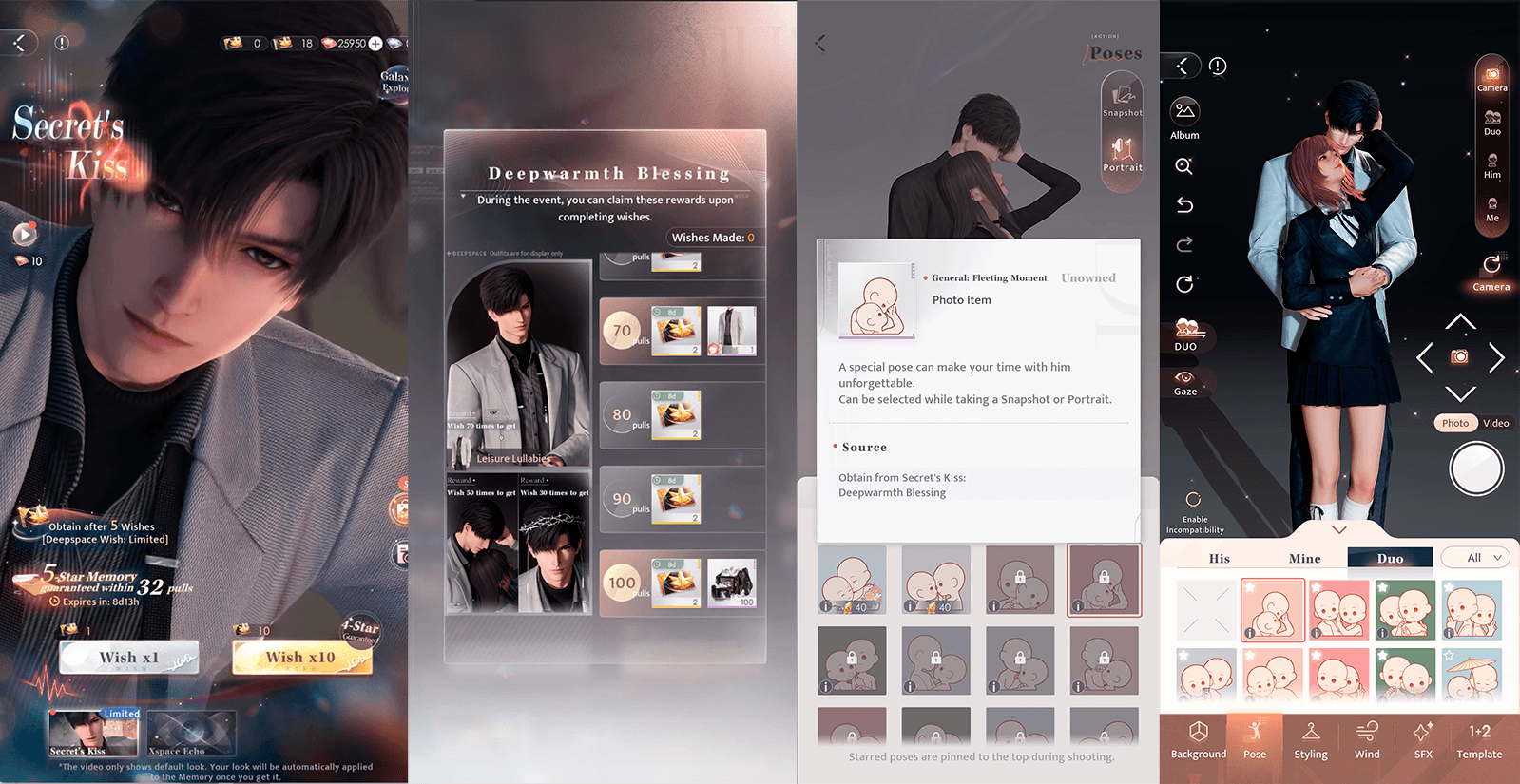 The Secret's Kiss event in the LiveOps & Updates Calendar
Players can preview the card through a rewarded video, while the supporting event promotes the theme through:
- A short visual story with chapters unlocking every 1–2 days
- A mini-game where points lead to milestone rewards (cosmetics, soft currency, and resources), with new levels unlocked by days
- A customizable avatar of the female MC on the event page
This is the only event type without an exchange shop, relying instead on a simpler but less flexible milestone system. The design leans heavily into accessibility, using Casual Puzzle mechanics—for example, the Sort Puzzle gameplay in Curious Chase or Match 3D mechanics in Cuteness Charge. Levels unlock gradually over time, supporting short-term retention.
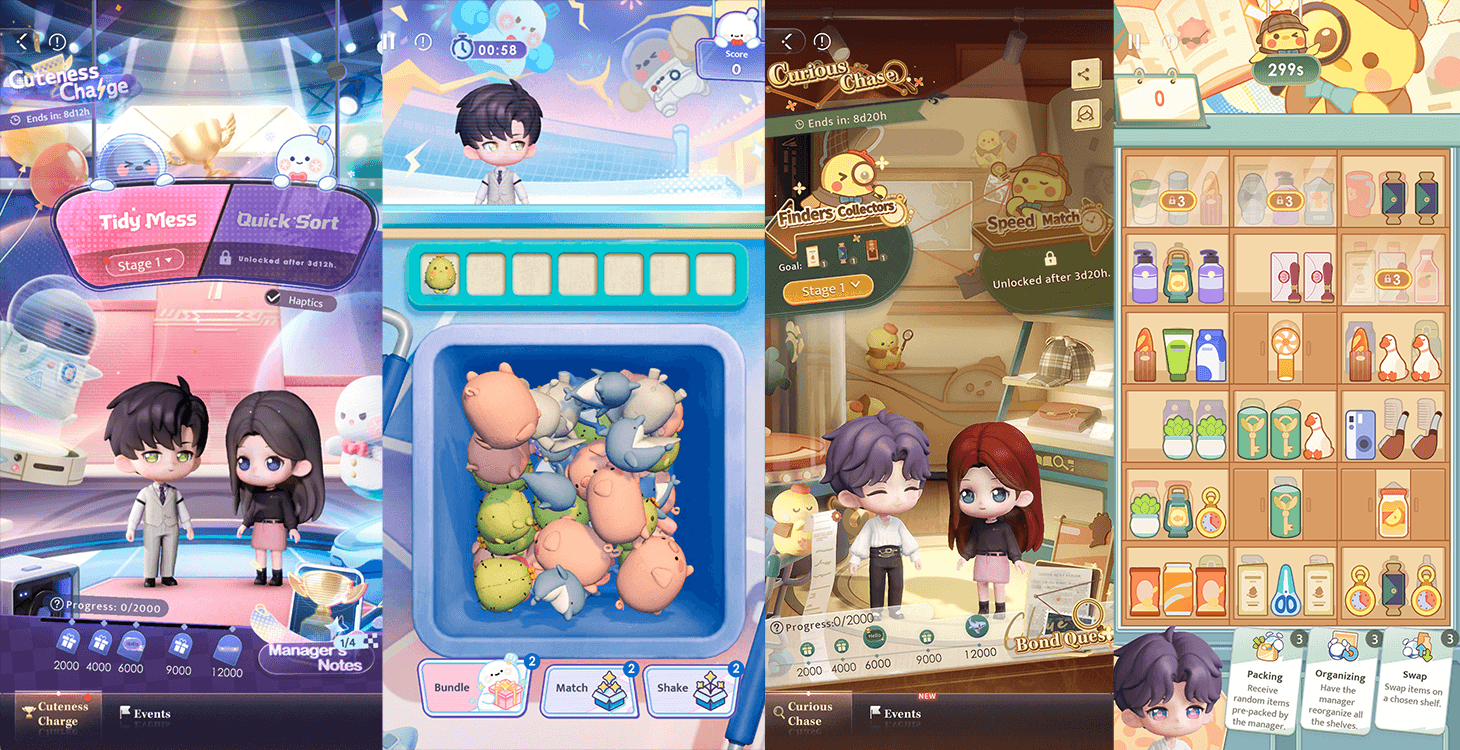 Solo events in Love and Deepspace: Cuteness Charge, Curious Chase
Alongside these events, the game introduces limited event packs priced between $0.49 and $49.99. In the Secret's Kiss solo event, for example, these packs dominate the list of top-performers, accounting for roughly 55% of the total revenue generated during the event.
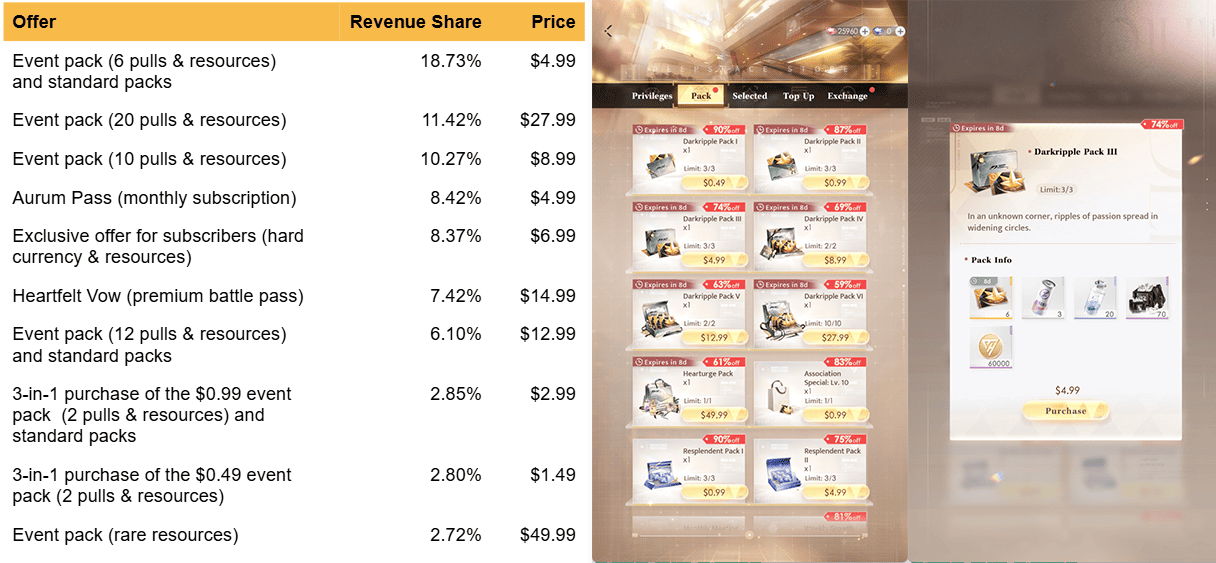
Top offers by revenue share during the Secret’s Kiss event (iOS, US only)
The $4.99 pack stands out as both the top-grossing and most frequently purchased option, showing a strong match between price and perceived value. One notable exception appears here: for the first time across all event types, a resource-only pack ($49.99) enters the top 10. This offer targets whales, providing one of the game’s rarest resources that’s meaningful for progression.
Key Takeaways: Steady Content Flow
Solo gacha events mainly play a supporting role in monetization, keeping the content flow steady and the player base continuously engaged. The related LiveOps features add variety through Puzzle mechanics and simple reward systems, but this comes at the cost of depth and flexibility. In Secret's Kiss, the overall pattern remains: event packs contribute around 55% of total revenue, forming the core of its monetization.
5. Reruns of Past Gacha Events
While this isn’t exactly a distinct category on its own, its monetization works differently enough to stand out. Since early 2025, the game has been rerunning past gacha events across all types. These reruns keep the original mechanics intact, such as the Precise Wish for all-character events or the selectable card at 150 pulls for battle skins. However, the supporting content, like mini-games, tasks, or stories, isn’t included.
Reruns still come with dedicated event packs that include time-limited pulls, which can only be used for reruns. As with new events, pulls can be purchased with hard currency. The key difference lies in the structure: there are fewer special packs, and purchase limits are often tighter. This changes the overall balance and makes reruns more expensive for players.
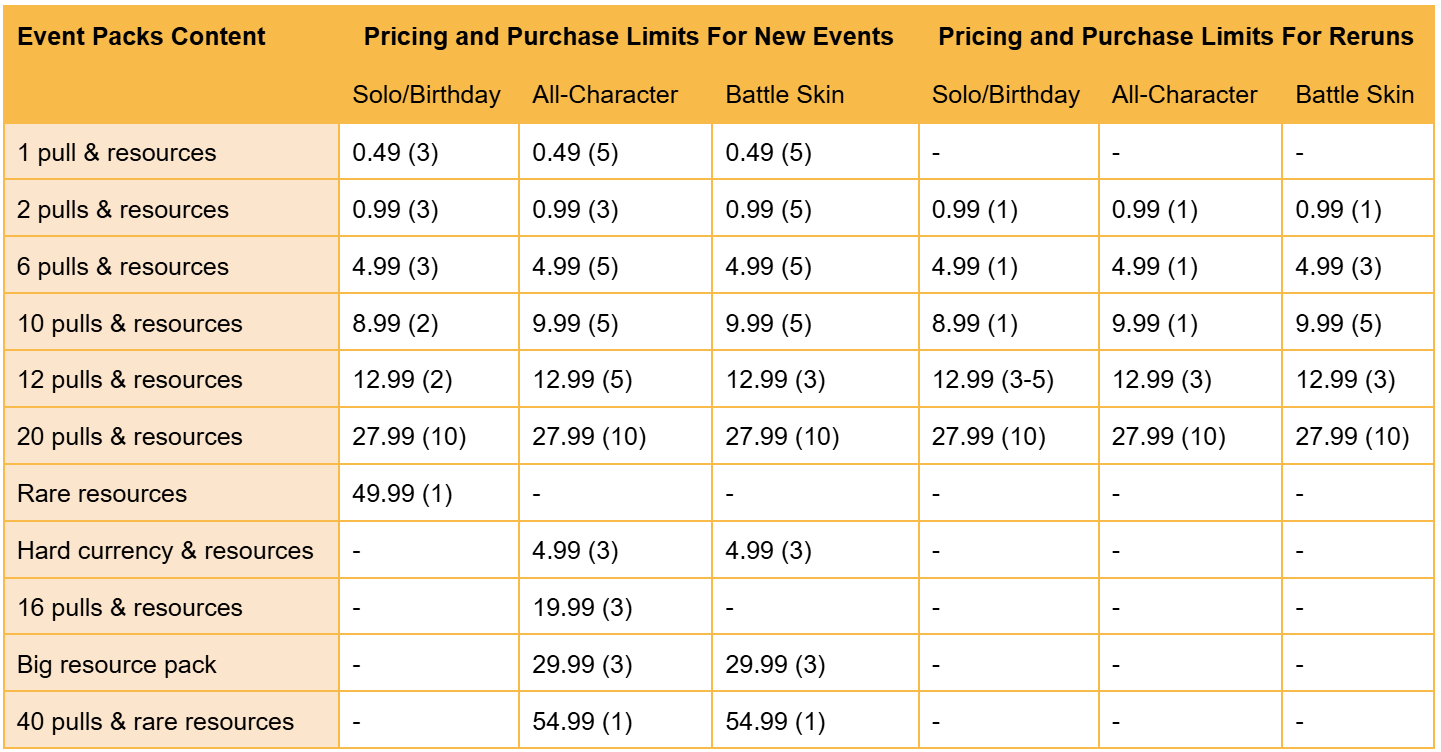
From a strategic standpoint, this likely aims to make new events seem even more attractive. Long gaps between original runs and reruns—sometimes up to two years—also reinforce FOMO. Still, there’s a downside. Reruns primarily target new players, yet the higher cost may discourage them early on. This is especially true for collectors, who may feel that completing a set requires too much time and spending.
Measuring the exact impact of reruns is tricky, as they often overlap with new events. Still, the LiveOps calendar reveals a consistent pattern: revenue spikes on their launch days are noticeably lower than those of new gacha events.
Overall Revenue Structure: How It All Comes Together
Stepping back from individual event types, let’s explore how they shape the game’s broader LiveOps strategy and monetization. By looking at the game’s top-performing offers in 2025, we can see how these elements work together at scale.
Every monetization strategy starts with the first purchase—and in Love and Deepspace, gacha events play a central role in driving that conversion. Our data highlights which offers bring players into spending:
- $4.99 packs (both event and standard) lead the way, accounting for nearly 20% of all first purchases in 2025. They also top the chart as the most common purchase, making up 20% of all transactions.
- $9.99 packs—featured across all-character events, battle skin releases, and their reruns—follow with 10%, showing how these events motivate players to make their first purchase.
- The monthly subscription generates over 6%, helping build ongoing spending habits.
- The $12.99 and $27.99 packs, present across all events, each add another 6%, proving that higher price tiers can still convert first-time buyers when perceived value is strong.
The key insight here is the gap between accessibility and choice. While the game offers many low-priced options starting at $0.29 that are clearly designed for impulse buys, most players still choose the more expensive offers even as their first spend.
What further highlights the impact of the LiveOps strategy is the total revenue share of the offers in 2025. Many IAPs on that top list include time-limited event packs. Together with some store packs, they bring in 60% of total revenue. Supporting this structure are recurring systems, such as the premium pass and the monthly subscription, which together contribute over 7% of annual revenue and reinforce consistent spending behavior.
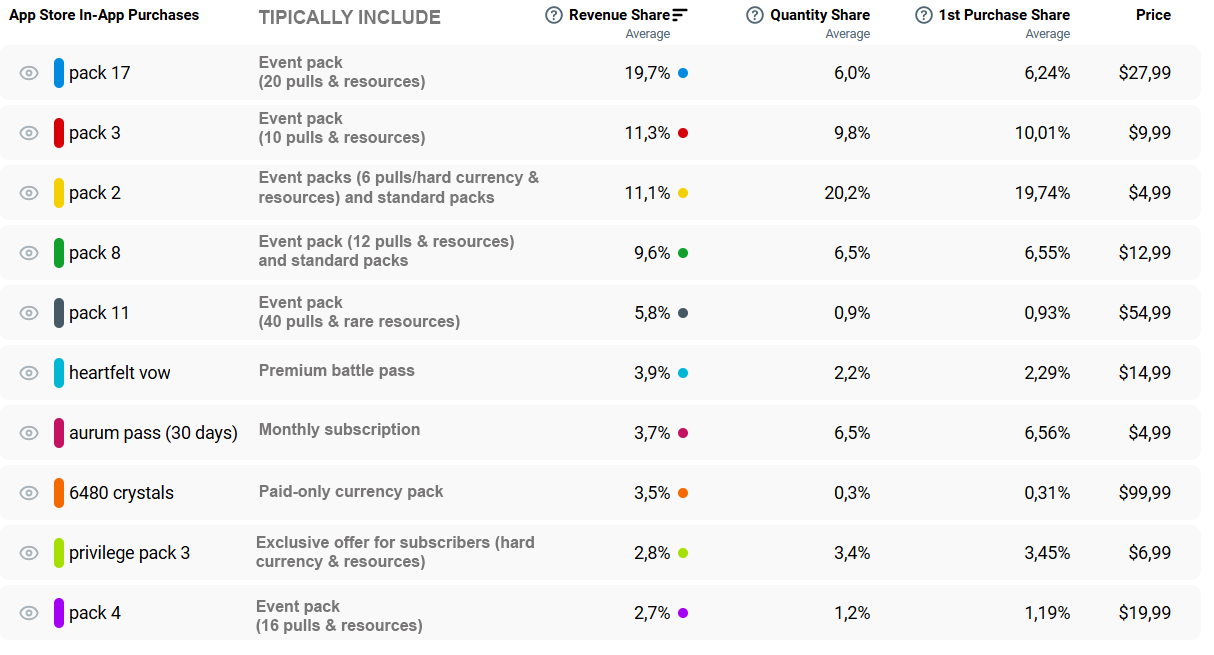
IAP Revenue Distribution: top offers by revenue share in 2025
To put this into perspective, the monetization structure here differs from other gacha-heavy titles like Honkai: Star Rail and Genshin Impact by miHoYo. In those games, monetization relies mostly on paid-only currency packs, which generated more than 74% of IAP revenue in Honkai: Star Rail and 82% in Genshin Impact in 2025. In contrast, similar packs account for only about 11% in Love and Deepspace in the same year.
Both strategies can perform well, but they shape player behavior very differently. In Love and Deepspace, monetization is tied much more closely to LiveOps and time-limited offers. For players, this sets a clear goal: if they want a new limited card, they spend directly in order to get it. Time pressure and purchase limits strengthen this through FOMO and impulse-driven spending at peak interest.
This model is built around emotional spending. Instead of calculating efficiency, players think in terms of “how many pulls do I need to get him?” The decision shifts from logic to attachment. Missing a card feels like missing a meaningful moment with the character, a piece of their story.
However, there’s a potential downside: revenue becomes highly dependent on event pacing, content quality, and character popularity. Core gameplay and permanent systems play a much smaller role. This model can deliver strong results, but it demands consistent execution. If events slow down or fail to resonate, revenue can quickly follow. Long-term success here depends on how narrative depth, LiveOps activity, and monetization reinforce each other at every step of the player journey.
Conclusion: Not Betting On Luck
In about two years, Love and Deepspace has generated more than $749M in IAP revenue, and that kind of success doesn’t happen by chance. At its core lies monetization built around gacha events, carefully integrated into the main gameplay. What starts as a romance story gradually evolves into a complex system where combat modes and character cards become the heart of progression. This shift builds the foundation for revenue growth, and this is where gacha comes in.
Most of the strongest battle cards are available only through gacha events, making them a key monetization driver. Besides combat power, the cards deliver exclusive story content with AAA-level production quality, turning each pull into both a gameplay upgrade and access to the game’s lore.
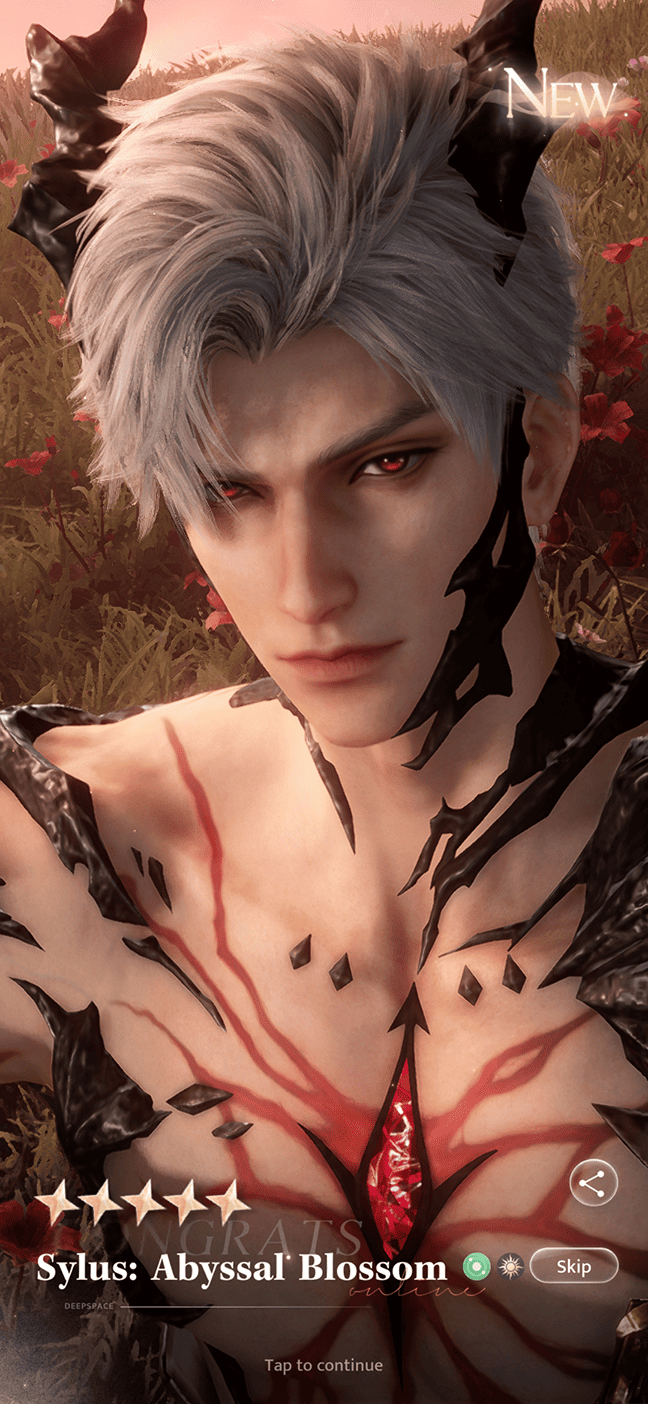
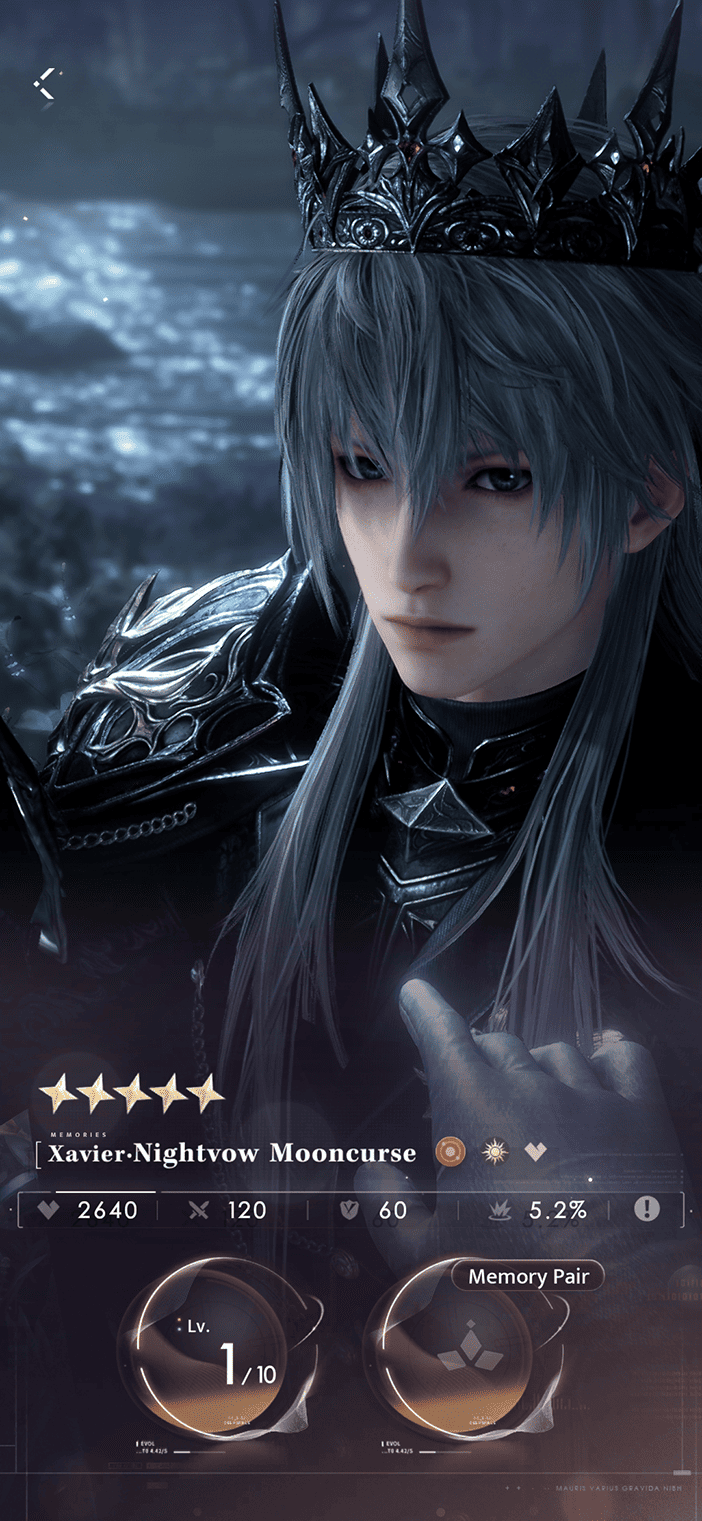
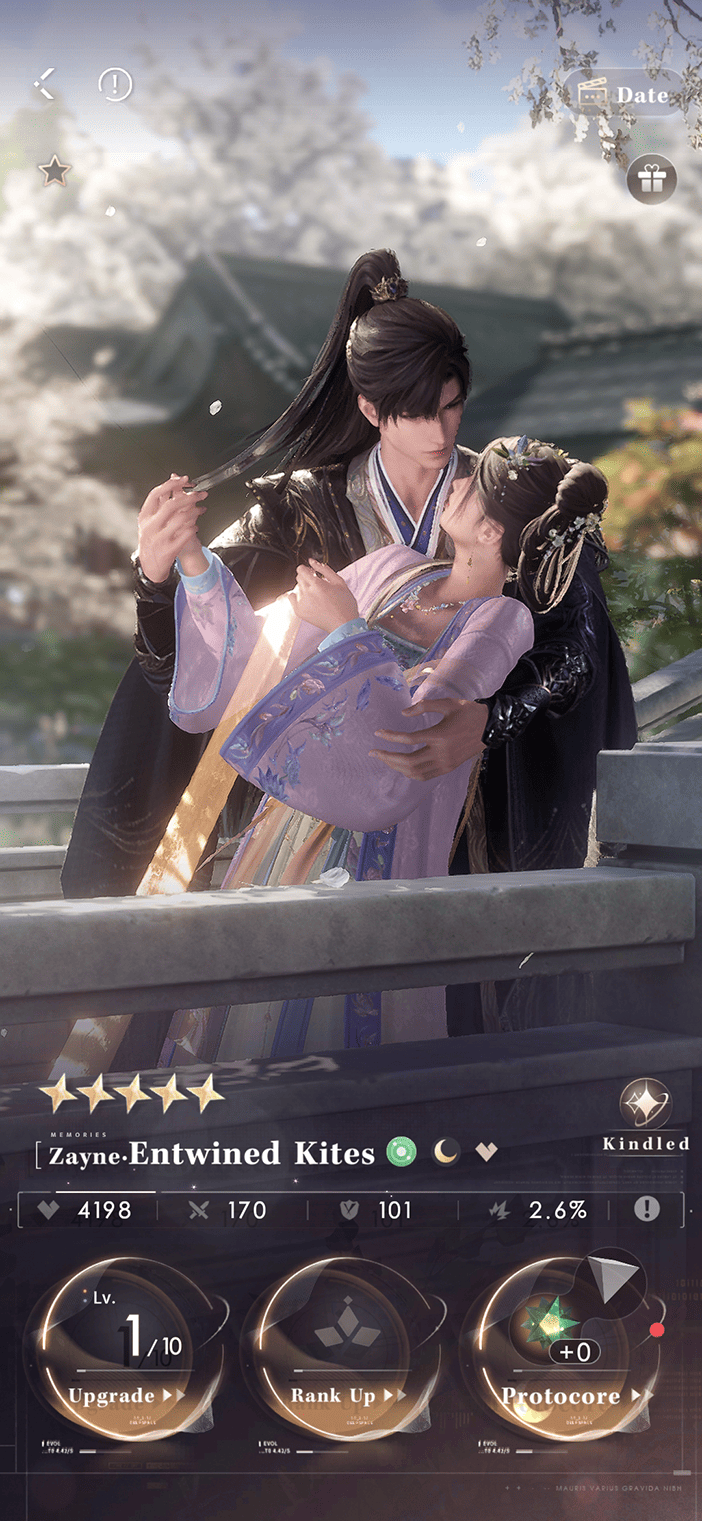
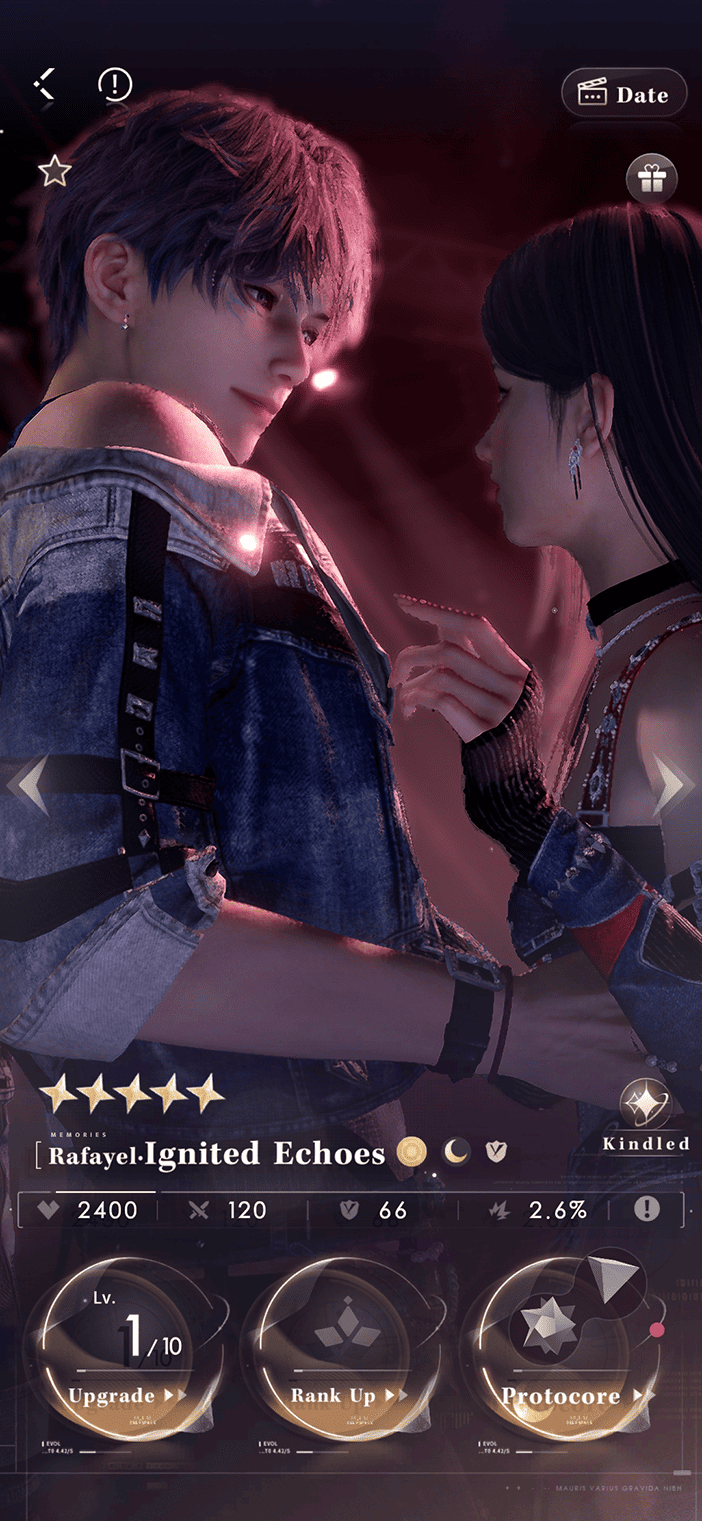
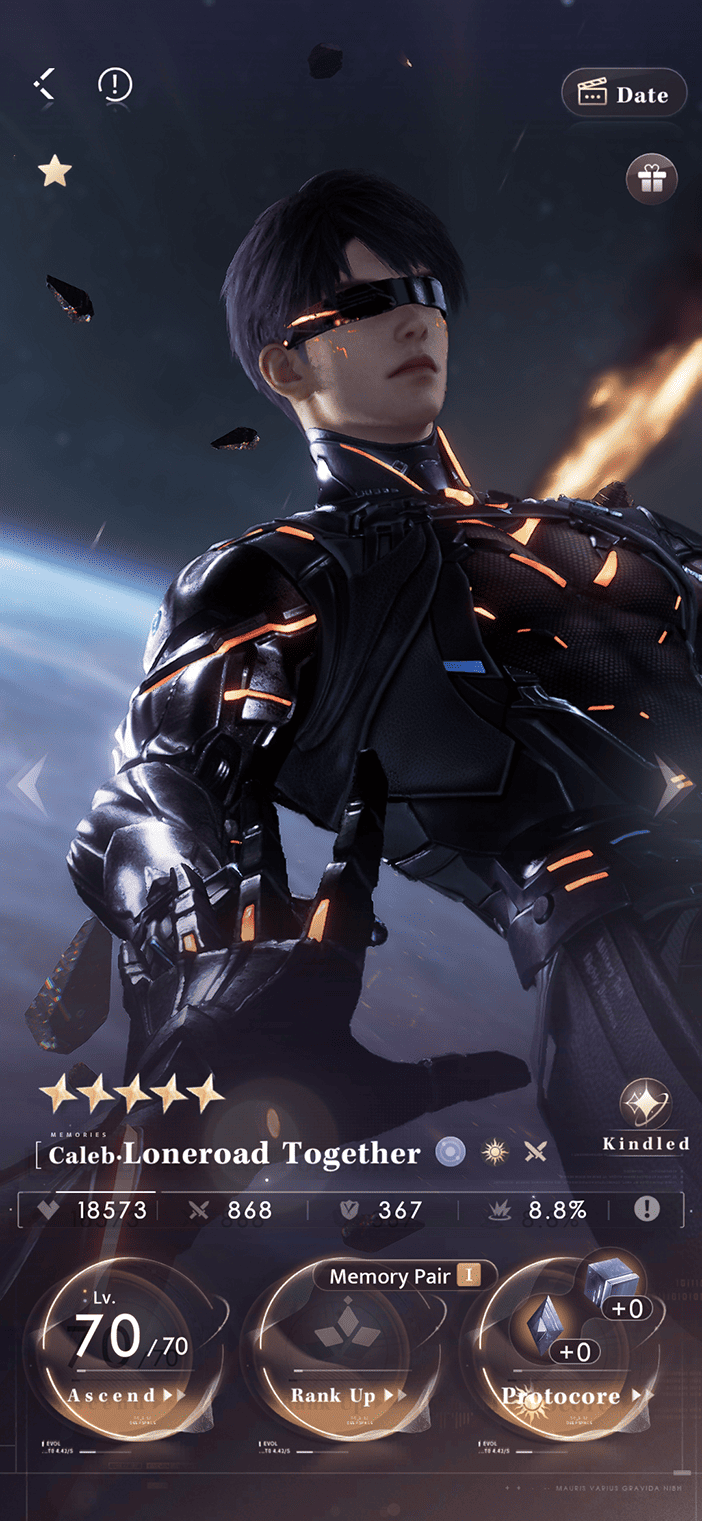
To keep this system running smoothly, the game structures its LiveOps calendar around five types of gacha events. Among them, battle skin releases and events featuring cards of each character stand out as the main growth engines, often driving the biggest revenue spikes.
What makes the strategy work in the long run is balance. Monetization pressure is paired with engagement drivers in a way that feels rewarding even for non-spenders, while high-value content stays behind a clear paywall. By analyzing both the LiveOps calendar and IAP revenue distribution, we can see how each feature supports a specific goal:
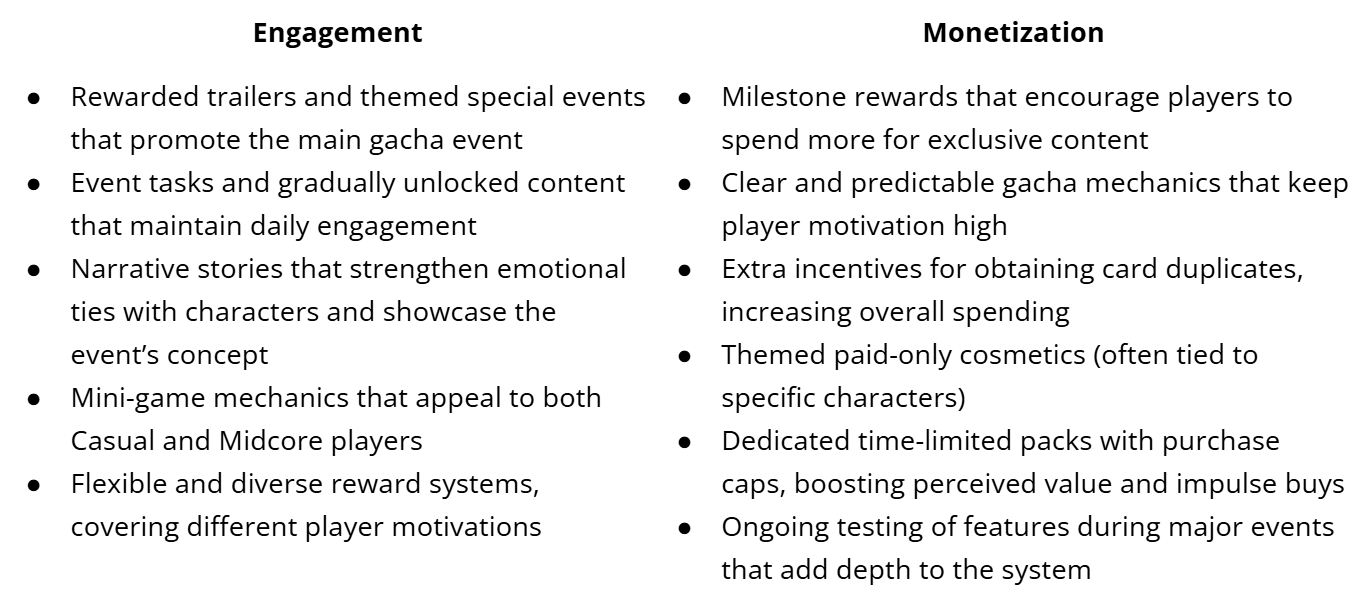
In this model, revenue growth is tightly linked to the pacing and quality of gacha events. The numbers reflect this clearly: time-limited event packs generate around 60% of total revenue, while regular features like passes and subscriptions play a supporting role.
This structure holds both opportunities and challenges. On the one hand, it allows the game to generate strong revenue spikes. On the other hand, it depends heavily on a consistent flow of high-value content, well-planned timing, and a deep understanding of player behavior. Besides being a revenue driver, gacha events become a key source of content and a character-development tool that reinforces emotional attachment over time.
And that leads to a broader takeaway. Love and Deepspace proves something any Midcore team can benefit from: gacha monetization works when it feels like an integral part of the experience rather than a separate layer on top. When LiveOps, progression, and monetization move in sync, spending feels like a step deeper into the game’s world, not a push. And that’s what keeps players around in the long run and sustains steady, scalable growth.