Moco Goes Global: Full LiveOps Deconstruction vs. Squad Busters
Supercell’s latest game mo.co has just launched globally. It’s time to break down how its LiveOps stack up against Squad Busters and what that says about the studio’s evolving strategy.
— by Lera Kalashnikova and Andrei Zubov
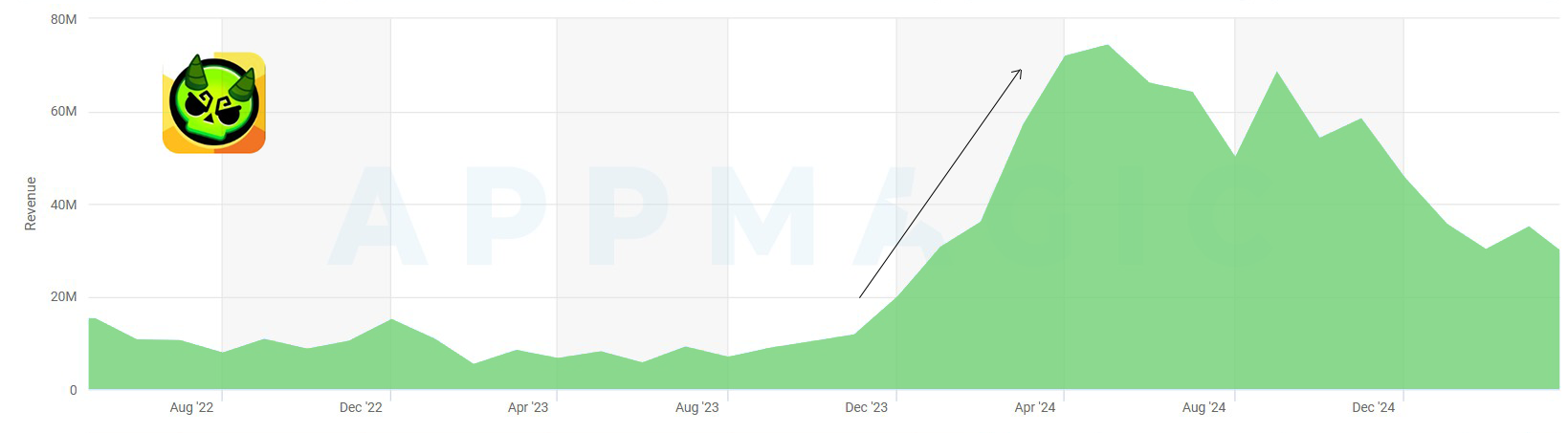
LiveOps has always been one of Supercell’s strongest tools and a major reason behind its games’ great performance after many years. Brawl Stars proved that in 2024 with a huge comeback, hitting a new revenue peak more than five years after launch, thanks to smart and content-rich LiveOps.
After nearly six years without global releases, the studio returned with two bold launches: Squad Busters on April 22, 2024, and mo.co on March 17, 2025. Just yesterday, the team announced that their latest title is now officially available globally with no invite-only access restrictions.
Now that the dust has settled and both games have had some time to prove themselves and expand their event calendar, we can speak more confidently about what worked and what didn’t.
First, a Quick Look at Squad Busters’ Playbook…
Squad Busters took LiveOps seriously from day one. Sure, it’s not as rich and varied as Brawl Stars yet—but Supercell’s tried-and-true playbook was already at work from the start: daily tasks, regular and seasonal milestones, a new Gem Pass each month, and one-time events now and then to keep things fresh.
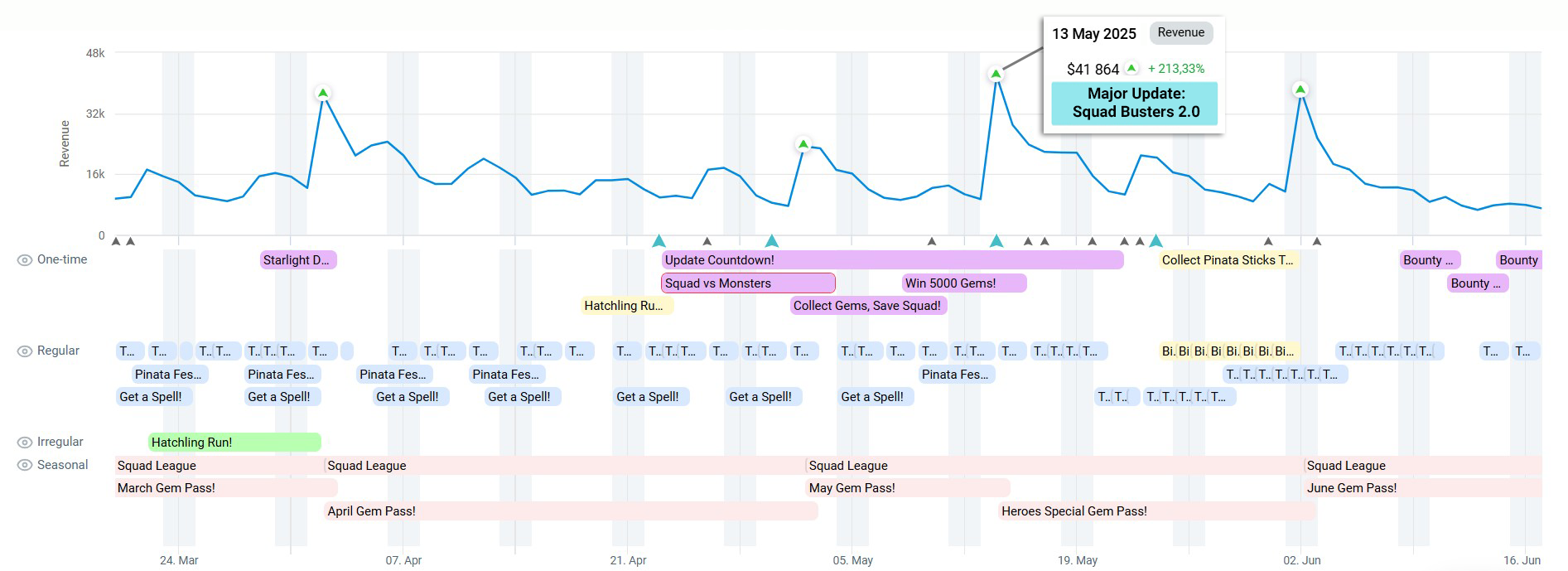 Squad Busters’ LiveOps & Updates Calendar (last 90 days)")
Using AppMagic’s LiveOps & Updates Calendar, we have discovered that, from June 2024 to June 2025, Squad Busters ran 70 different events—not quite as many as the 128 by Brawl Stars, but still impressive for a newly launched game. However, while the event quantity is remarkable, their diversity and quality are of no less importance. So let’s take a closer look at how the game is doing on that front.
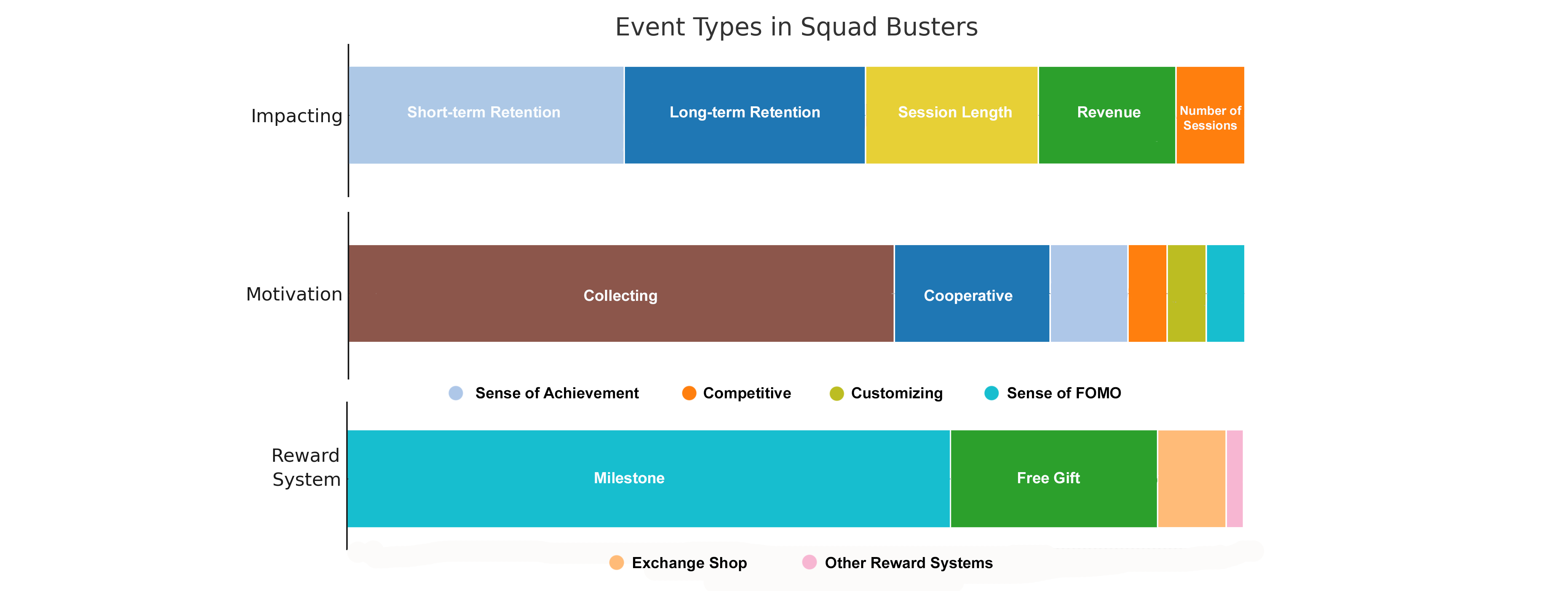
One thing stands out right away: most Squad Busters events tap into two key motivations—collecting and co-op. The collecting aspect is pretty straightforward: gacha packs with squaddies of different rarities make for a reliable end reward, and we even use the “Collecting” tag to highlight that. So let’s focus on the second one.
Co-op events are where things get more interesting. Given the limited social features the game has—no clans, no leaderboards, and only a handful of team-based modes—it feels like Squad Busters is trying to fill that gap with co-op-focused LiveOps. These events offer players a shared goal and a sense of connection that the rest of the game doesn’t really provide.
Take Pinata Festival, for example—the most frequent co-op event in the game, which has run 40 times so far. It follows a simple milestone format: players collect piñata sticks during regular matches and contribute them to a shared pool with up to four other friends.
While the event doesn’t affect gameplay as such, it adds motivation on several levels: short- and mid-term through rewards and responsibility before other participants, and long-term by bonding players together and creating emotional ties that help them stick with the game.
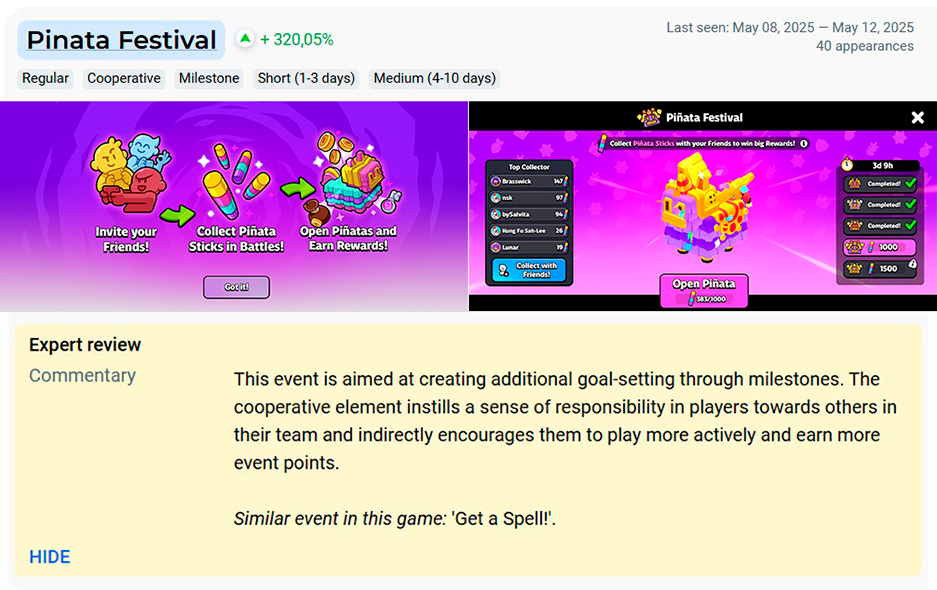 Pinata Festival event review in our LiveOps & Updates Calendar
Another notable event is Tara’s Mystery Challenge, which has appeared nearly 200 times, according to the LiveOps & Updates Calendar. It’s a straightforward daily event: players get one reward card for completing a match, with the final prize unlocked only after all previous cards have been revealed. Most versions include from two to five cards in total. While the gameplay remains unchanged, the event works well to extend session length and boost daily logins.
What’s even more interesting is how the developers keep fine-tuning the event. The duration, for instance, has been adjusted multiple times: 12 hours at the start, then shortened to 2, increased to 6, and finally brought back to 12 hours in December 2024. One way or another, the event became part of the players’ daily routine, without really impacting gameplay or progression. The rewards per card are small: 25 hero points (while upgrades cost thousands) or five squaddies—and you already know how far that gets you.
And yes, both Tara’s Mystery Challenge and Pinata Festival are milestone events, which explains the dominance of this reward system in the previous chart!
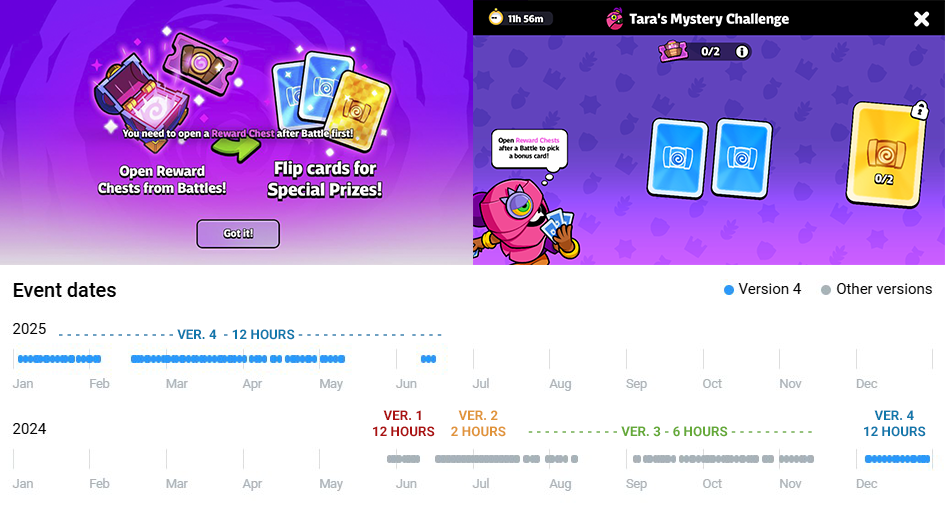 Tara’s Mystery Challenge versions in our LiveOps & Updates Calendar
That doesn’t mean all events in Squad Busters are this repetitive and predictable. Supercell regularly brings in events that do influence the gameplay and hence feel meaningful. The most obvious examples are IP collaborations, one of Supercell’s long-time LiveOps strengths. And Squad Busters, being a multiverse of the studio’s own worlds, is the perfect playground for external IPs to drop in naturally. We’ve already covered the Squad Busters x Transformers collab in our earlier Supercell’s IP collabs deconstruction, and it’s definitely worth a read.
On June 17, just as we were wrapping up this research, Supercell launched a new collab with Sonic the Hedgehog, an iconic character known across generations, making him a naturally fitting IP crossover. Sonic became the very first Speedster hero: сonsidering there are only six hero classes in total, that makes his arrival feel significant and immediately impactful. His skill lets him transform into Super Sonic, granting temporary invincibility and speed boosts to the entire squad. As for the squad itself, Knuckles and Tails are now available as new squaddies!
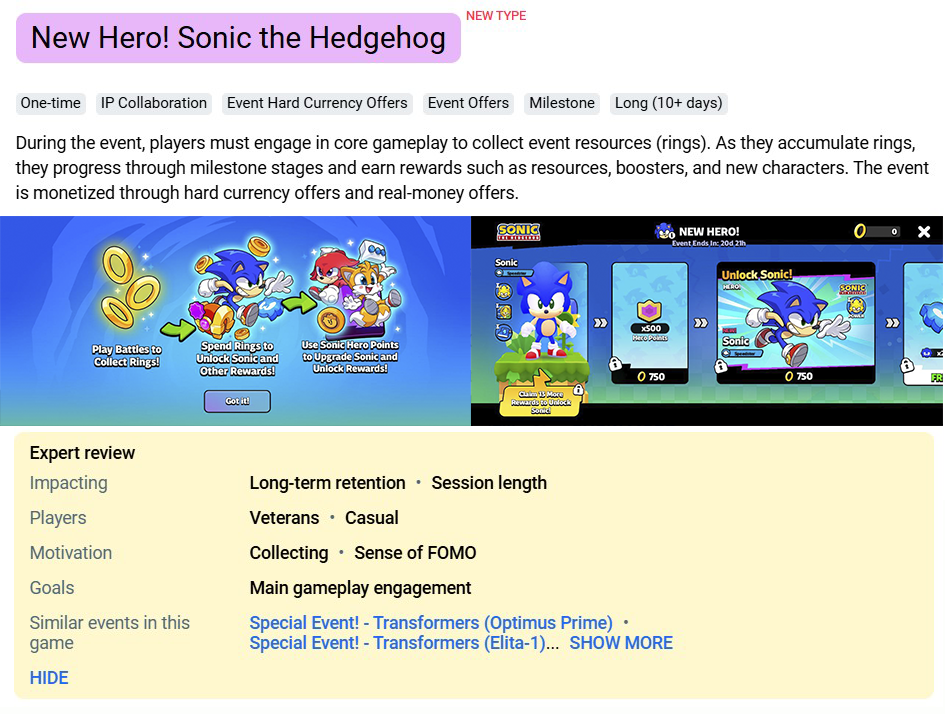 Sonic The Hedgehog event review in our LiveOps & Updates Calendar
Introducing a famous character that’s fun to play is only part of the deal. What matters just as much is making the whole event feel fresh and engaging—and that’s actually what Squad Busters pulled off. The new limited-time mode called Dr. Eggman Attacks brings in familiar mobs and collectible rings from Sonic games, and throws in a two-phase boss battle against Dr. Eggman himself. To make sure players actually participate, Sonic was made unlockable by playing the event exclusively—there’s no way of just buying him outright.
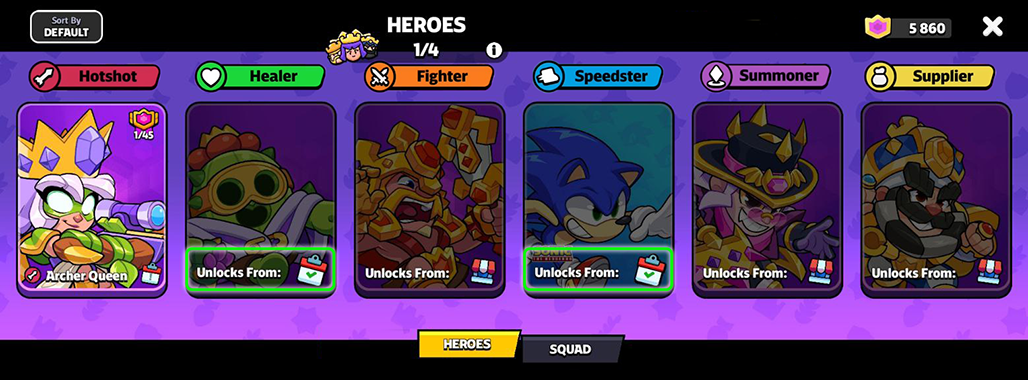
It’s a strong event that shows Supercell is willing to go beyond just surface-level fan service. But looking at it in a broader context, Sonic’s grand appearance is a variation of *Squad Busters*’ main game mode called Gem Hunt. Meanwhile, Brawl Stars casually launched a full-blown MOBA-style event with entirely new mechanics, and did so without any big IP collabs! This contrast highlights one of *Squad Busters*’ key issues, in our opinion.
While some events—like the Easter-themed Hatchling Run—do experiment with new formats, most still revolve around the same core mechanics. And that core is relatively narrow: just two regular main game modes compared to at least seven in Brawl Stars. That makes repetition hard to avoid and increases the chances of players burning out on the main gameplay cycle—no matter how polished or monetizable it is.
Considering that mo.co launched with a much broader set of gameplay modes, it’s likely avoiding the same LiveOps issues, right? Well, let’s see.
So, how did Supercell’s experiments shape mo.co’s LiveOps?
Mo.co has been out for a few months, so it’s just getting warmed up. Still, it is warming up slower than Supercell’s previous launch. Last year, Squad Busters kicked off with 19 events in its first 90 days, each with varied mechanics, reward systems, and duration. So far, mo.co has only launched eight within the same timeframe. This slow pace may reflect its more strategic, midcore focus with less frequent content drops.
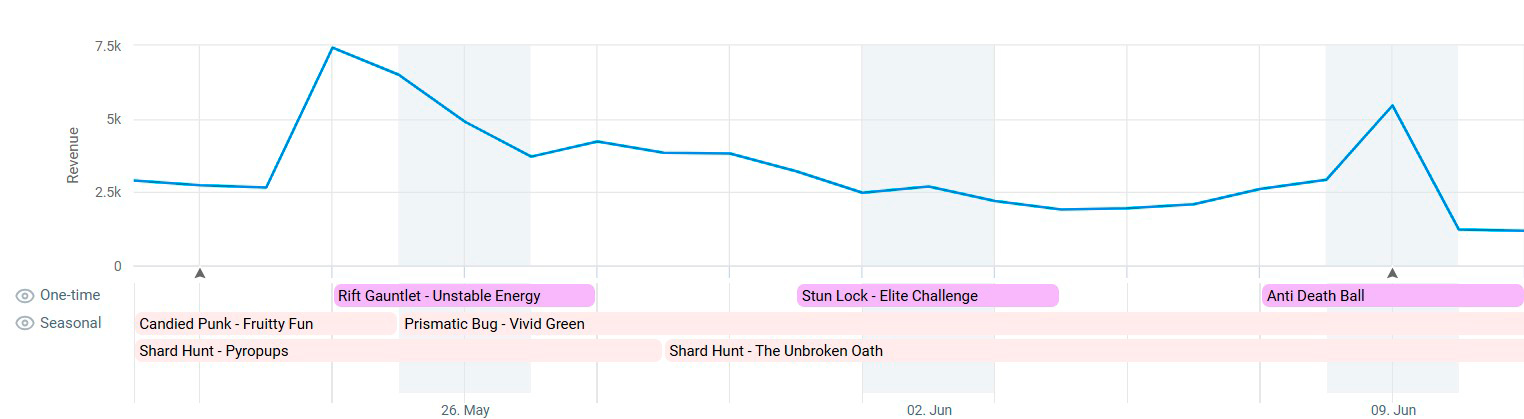 Mo.co’s LiveOps & Updates Calendar
Looking at *mo.co*’s LiveOps & Updates Calendar, we see a much lighter grid with only two or three events running at once. So far, they fall into four main types:
1. Special Challenges. These are skill-based challenges designed for competitive or co-op play. Sometimes, it’s PvP with unusual rules like one-hit kills; sometimes, it’s PvE tower defense-style missions. Either way, players enter with a fixed loadout and level, making success entirely dependent on their skill. While the gameplay isn’t radically different from the core loop, the added constraints and time limits provide a sense of novelty and achievement.
The rewards, however, don’t always match the challenge. There are almost no rare items or limited cosmetics to make the grind feel worthwhile. Occasionally, players get a status badge or some minor cosmetics, but most of the time it’s just XP, arsenal progression packs, and a handful of hard currency. Decent, but hardly worth overworking yourself if your early attempts to beat the challenge fail.
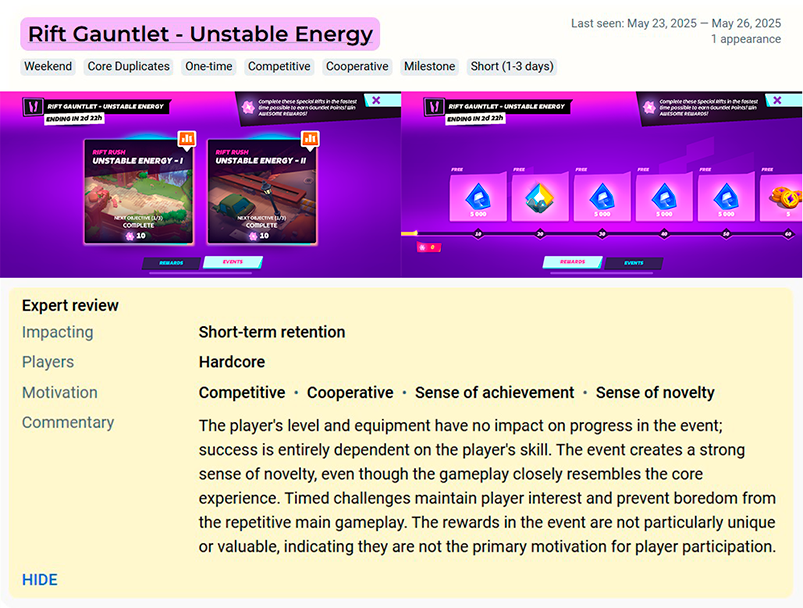 “Rift Gauntlet - Unstable Energy” event review in our LiveOps & Updates Calendar
2. Classic Gacha. A familiar format built to drive monetization through cosmetics, which, as we’ve already noted, dominate *mo.co*’s event rewards a bit too much. These time-limited events revolve around random skin drops, often bundled with alternate versions and exclusive emotes. On the bright side, the system avoids duplicates and indicates drop chances upfront, which lowers frustration and gives a sense of progress. But for players hoping to earn something that affects gameplay, this isn’t the place to look.
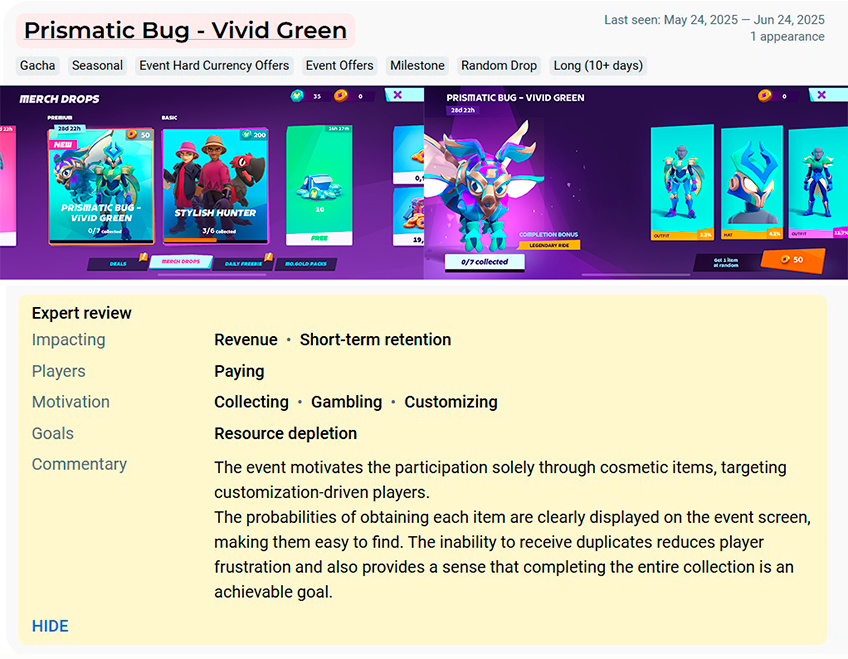 “Prismatic Bug - Vivid Green” event review in our LiveOps & Updates Calendar
3. Battle Passes. We have already covered the game’s passes in the monetization section, so here’s the core idea: premium rewards are cosmetic-only, which limits their motivational reach. If a player doesn’t like the offered sets or just doesn’t care about how their character looks, there’s little reason to make a purchase. By contrast, Squad Busters does the opposite: a lot of progress and no cosmetics.
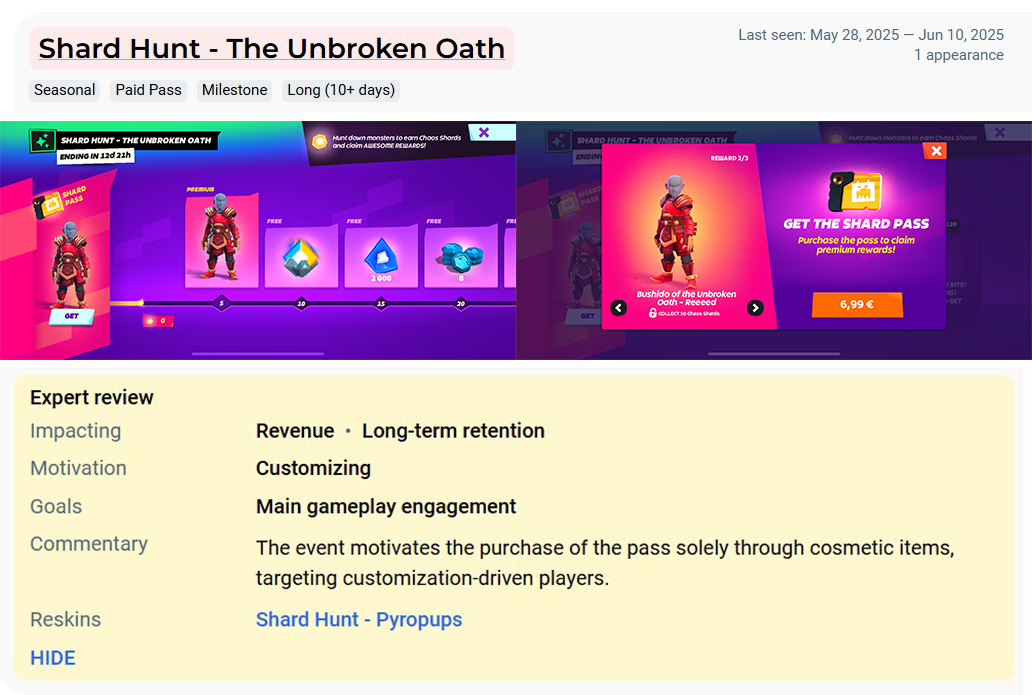 “Shard Hunt - The Unbroken Oath” event review in our LiveOps & Updates Calendar
4. Milestones. Events like XP Rush usually accompany bigger events, adding a progress bar with free rewards: XP, gear upgrades, and a bit of hard currency. There’s no paid track, but they work well for short-term retention, giving players a reason to log in and stay active during the event.
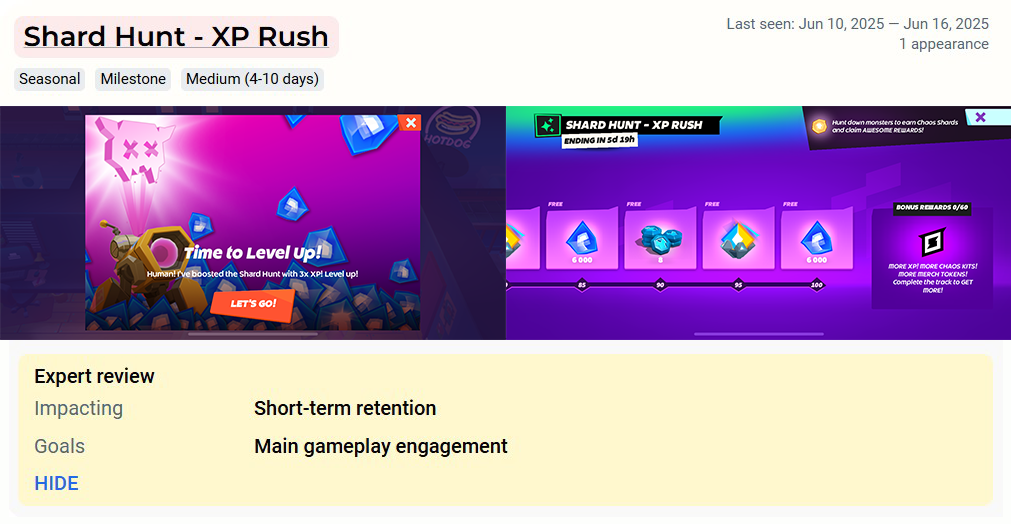 “Shard Hunt - XP Rush” event review in our LiveOps & Updates Calendar
Once players hit level 30, characters enter the so-called “Elite League,” where progression resets to level 1 and leveling up no longer boosts any stats. Instead, players unlock three new ring slots—each adding passive stat buffs and opening up more room for experimenting with builds. Rings are upgraded in the same way as regular weapons and gadgets: through gacha packs earned by playing the core game and completing daily tasks.
Elite League also comes with a three-month Elite Pass with new tasks and rewards, but nothing is just given to the players. Instead of automatically unlocking items, players earn Elite Tokens—an event currency obtained by completing tasks and used to purchase the rewards they want. As you’d expect, most rewards are cosmetics: outfits, emotes, and status bars. There’s also a premium $24 option that lets you buy exclusive skins. It doesn’t increase currency earnings or affect pass progression, so that players earn and spend the same amount of currency, but can spend it on more of the options.
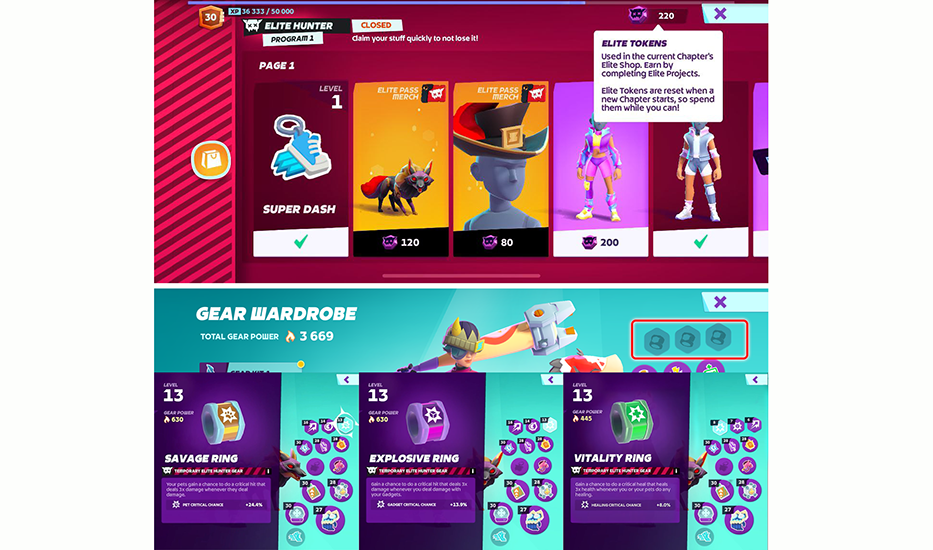
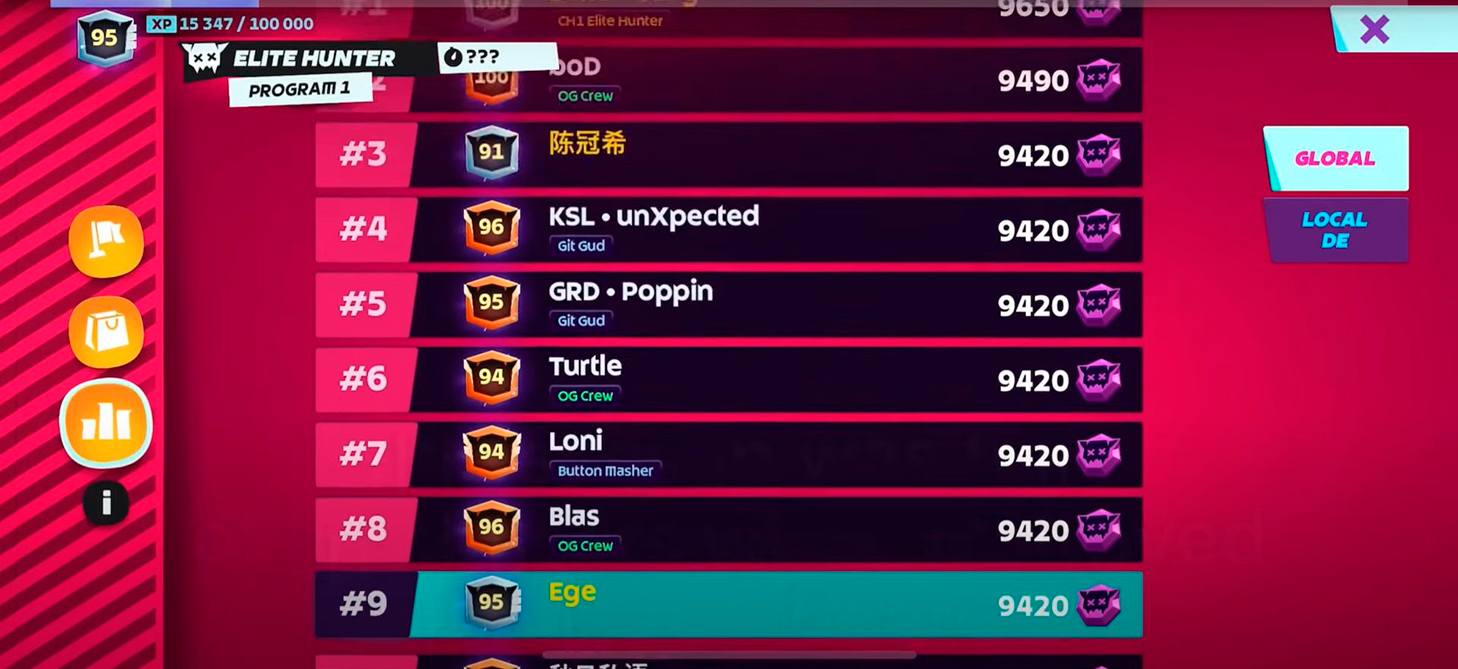
The Elite Pass also introduced global and local leaderboards, ranking players by the number of Elite Tokens they earn. With no clans or guilds in the game, this feature was meant to boost its social dynamics. However, leaderboards were removed with the Chapter 2 update in June 2025 and replaced by smaller, friend- and group-based rankings.
Why remove the global leaderboard? Most likely, the original system failed to serve its purpose. The number of tokens players could earn was capped, so top players all ended up with the same maximum score. With all of the 200 top players coming in neck to neck with identical rankings, the concept of a leaderboard was kind of wasted…!
With the ranking removed, many players feel like their past efforts were erased. Losing their status has been frustrating, and it likely dampened some of the excitement for Elite League Chapter 2.
Still, Supercell clearly knew that reducing social features wouldn’t go down well. So, while they took something away, they added even more in return!
With Chapter 2, they introduced Chat Groups: massive player chats that can include up to 900 members. These groups work much like clans in Brawl Stars or Clash of Clans, offering a shared space for players to connect and chat. Considering how many co-op events there are in the game, this is a huge boost that allows players to find party members and make friends.
The only thing missing? Group activities like clan wars or exclusive events. Then again, these aren’t exactly clans per se. And while some social features are still absent, a 900-player group is bigger than any clan out there—and maybe that’s exactly what the game needs at this stage!
To sum up, *mo.co*’s LiveOps is just as minimalist as its monetization strategy. It revolves primarily around reinforcing the core gameplay loop, offering an additional layer of motivation to progress. However, thanks to the game’s well-crafted NPCs and daily tasks, players already have solid incentives to log in regularly, engage with various modes, and advance through the core content.
In that sense, the current LiveOps system works. It doesn’t distract from the core experience or overload the player: instead, it offers small doses of novelty that complement the game’s built-in variety. But there’s clearly room to grow. Expanding the LiveOps system could unlock significant long-term potential, and Supercell knows it better than most, so we’re looking forward to what’s coming!
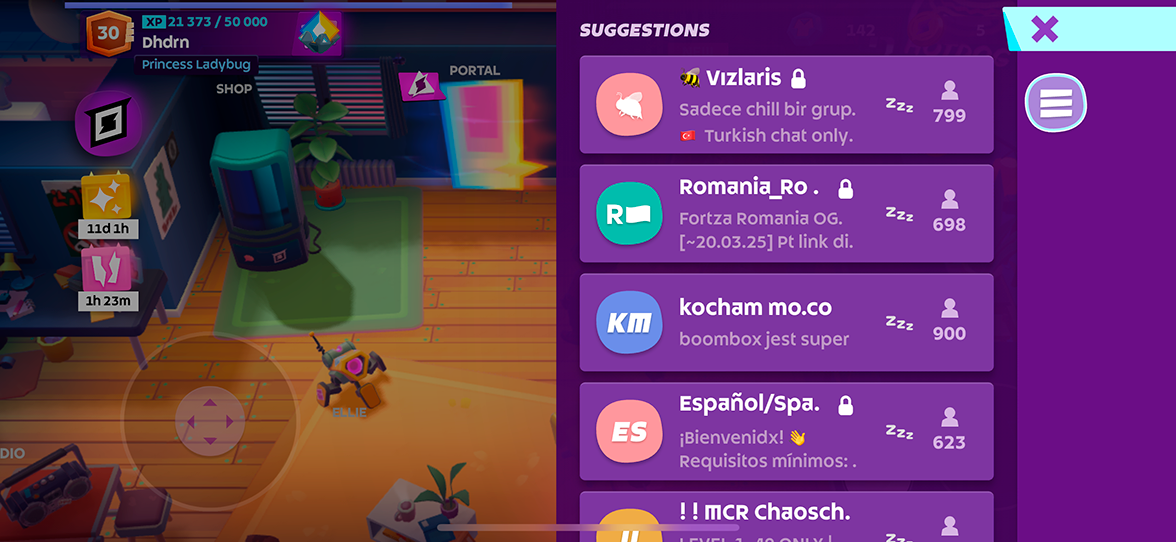 Chat Groups in mo.co
LiveOps: Key Takeaways
So far, Squad Busters offers significantly more events than mo.co, and that’s no surprise. The game has been globally available for over a year, while mo.co remains at its invite-only stage. However, this minimalist approach in mo.co seems deliberate. The game launched with a broader range of core modes right from the start, giving players plenty to explore without relying heavily on LiveOps from day one.
Nevertheless, Squad Busters and mo.co share quite a bit when it comes to LiveOps, both the strengths and the shortcomings:
- Focus on Core Gameplay: Both games design their LiveOps to reinforce the core gameplay loop, encouraging players to spend more time in the main modes. It’s a solid tactic for midcore titles, but it only works if the core gameplay offers enough variety, while in both cases, it arguably doesn’t.
- Seasonal Structure: Major events and content updates are tied to new season launches in both games. The season pass plays a central role in this scheme, which is a proven midcore tactic to drive both engagement and monetization.
- Progression vs. Personalization: In Squad Busters, paid options focus on accelerating progression: the Gem Pass gives more resources, but no exclusive cosmetics. In mo.co, you can’t speed up progression with money at all. Instead, monetization is built entirely around cosmetics: skins, emotes, and visual flair.
- Limited Social Systems: Neither game offers full-fledged social features like clans, alliances, or guild wars. Squad Busters tries to simulate social play through co-op events like the Pinata Festival, but lacks persistent systems to build long-term player bonds. Mo.co has only recently introduced Chat Groups, which allow coordination but don’t support true group activities. In both cases, the social potential is underused.
Interestingly, many of the challenges here mirror broader issues in gameplay design and monetization, and we’ve looked at those aspects in our full deconstruction, so check it out!