Smash Fest!: Casual LiveOps Turned Into Genre-Wide Trend
Smash Fest! by Flow Games broke into the top 10 grossing Hybridcasual games within two months, triggering a wave of new “smash puzzles” across app stores. This article traces the trend’s origins, what’s fueling it, and where it’s headed next.
— Lera Kalashnikova
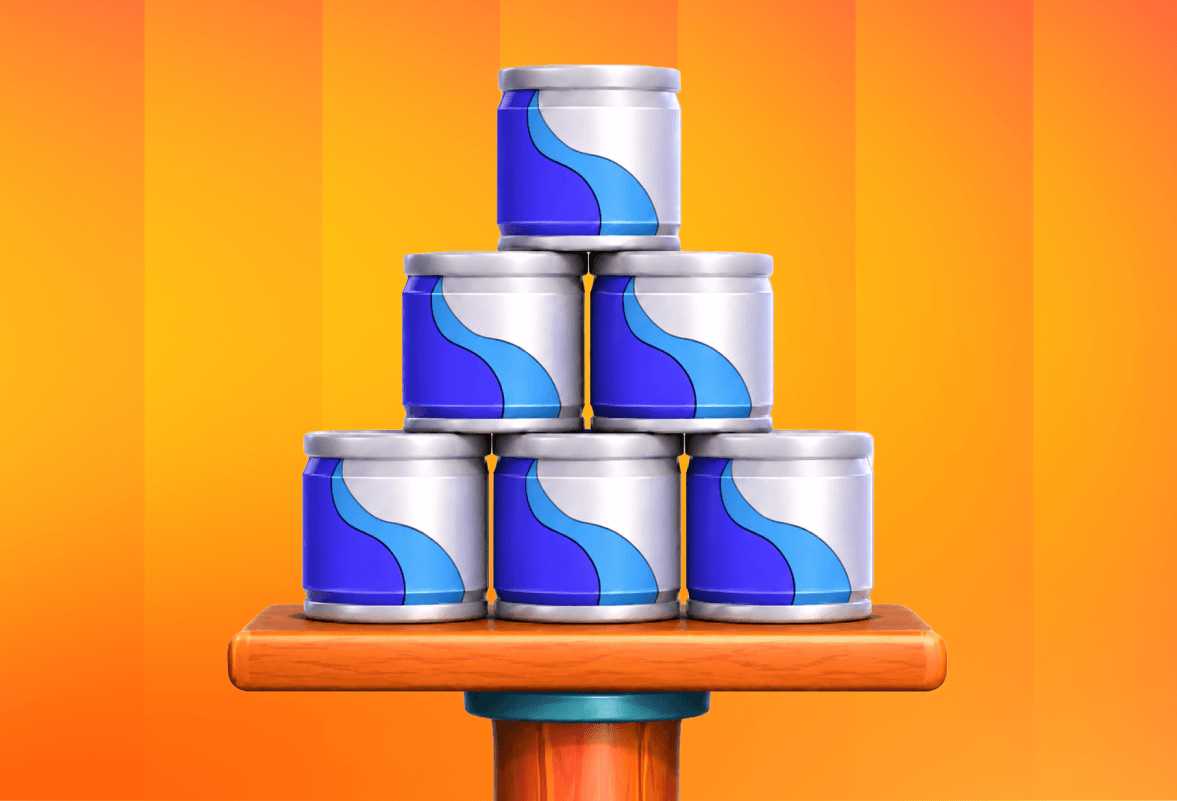
Hybridcasual remains a fast-moving space where a catchy mechanic can turn into a full-blown trend almost overnight. Dozens of lookalike games spawn across app stores within weeks, and the hits that lead the charge often secure top chart spots within months. We've seen this pattern play out before. Here it comes again.
In under two months since global release, Smash Fest! by Flow Games joined the top 10 grossing Hybridcasual games this July, landing even higher by downloads at #4. All it took was a simple loop: aim, fire cannons, smash cans, boxes, and whatever else stands in the way until the whole scene falls apart. But that's just the tip of the iceberg, and the broader trend this game set in motion deserves a much closer look.
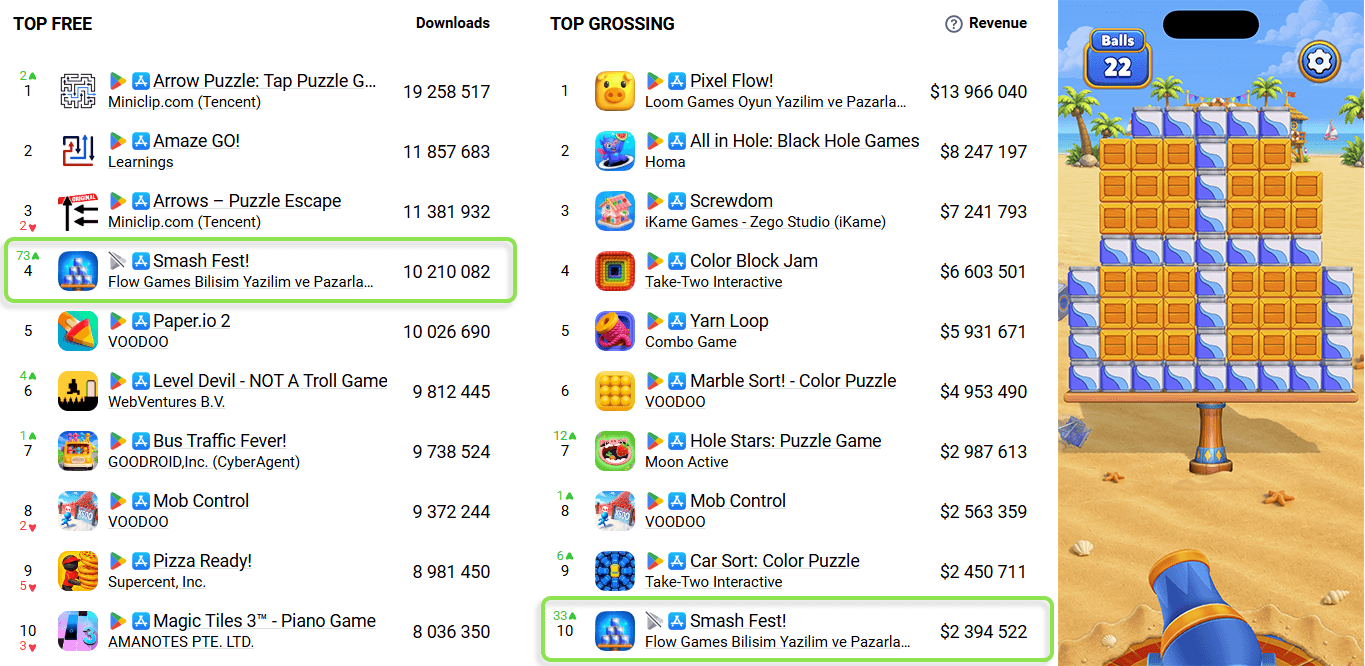 Top 10 grossing Hybricasual Games, July 2026
Our Advanced Search shows the "smash" keyword is gaining momentum: out of the 70 new games featuring it this year, nearly 50 have launched since June alone. It’s worth noting that not every one of them actually uses the trending mechanic, and not every title riding the trend bets on the keyword at all—Ocean Block Shoot and Cannon Pop are proof of that.
The raw numbers might not look impressive on their own, but the list of publishers joining the trend is telling enough. Moon Active is already testing Splash Kingdom: Tower Blast. AZUR GAMES just soft-launched Hit Fest: Cannon Smash. Supercent now has two such projects in testing—Smash Down: Blast It Away! and Target Smash - Physics Puzzle—and so does Tripledot with Angry Smash and Stack Smash - Block 3D Puzzle. When large studios well-known for spotting growth opportunities early hop on an emerging trend, it clearly signals strong potential.
It won't be surprising to see some of these titles climbing the charts soon. But now, we’ll unpack what's currently fueling the trend:
- How Smash Fest! draws inspiration from Casual LiveOps
- Which offers drive the game’s success
- How Royal Smash! builds on Smash Fest!’s core
- How Casual games leverage the trend through misleading ads
Let's start where it all began: Smash Fest!, and where its core idea actually came from.
Smash Fest!: From LiveOps Minigame to Top Hit
Released globally in early June, Smash Fest! by Flow Games has already generated over 15M installs and $4M in IAP revenue. Even after being pulled from Google Play by the end of July—more on that shortly—and losing a big chunk of its potential player base in the process, the game still maintained solid revenue performance.
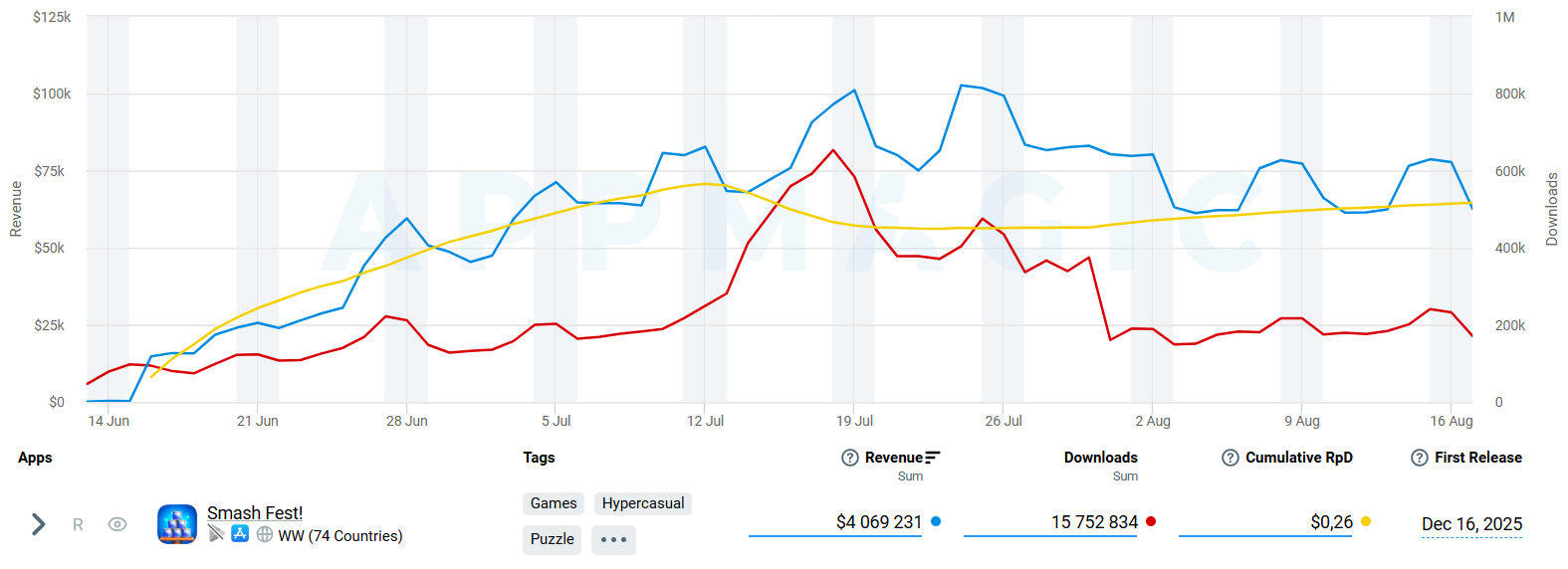 Smash Fest! revenue, downloads, RpD
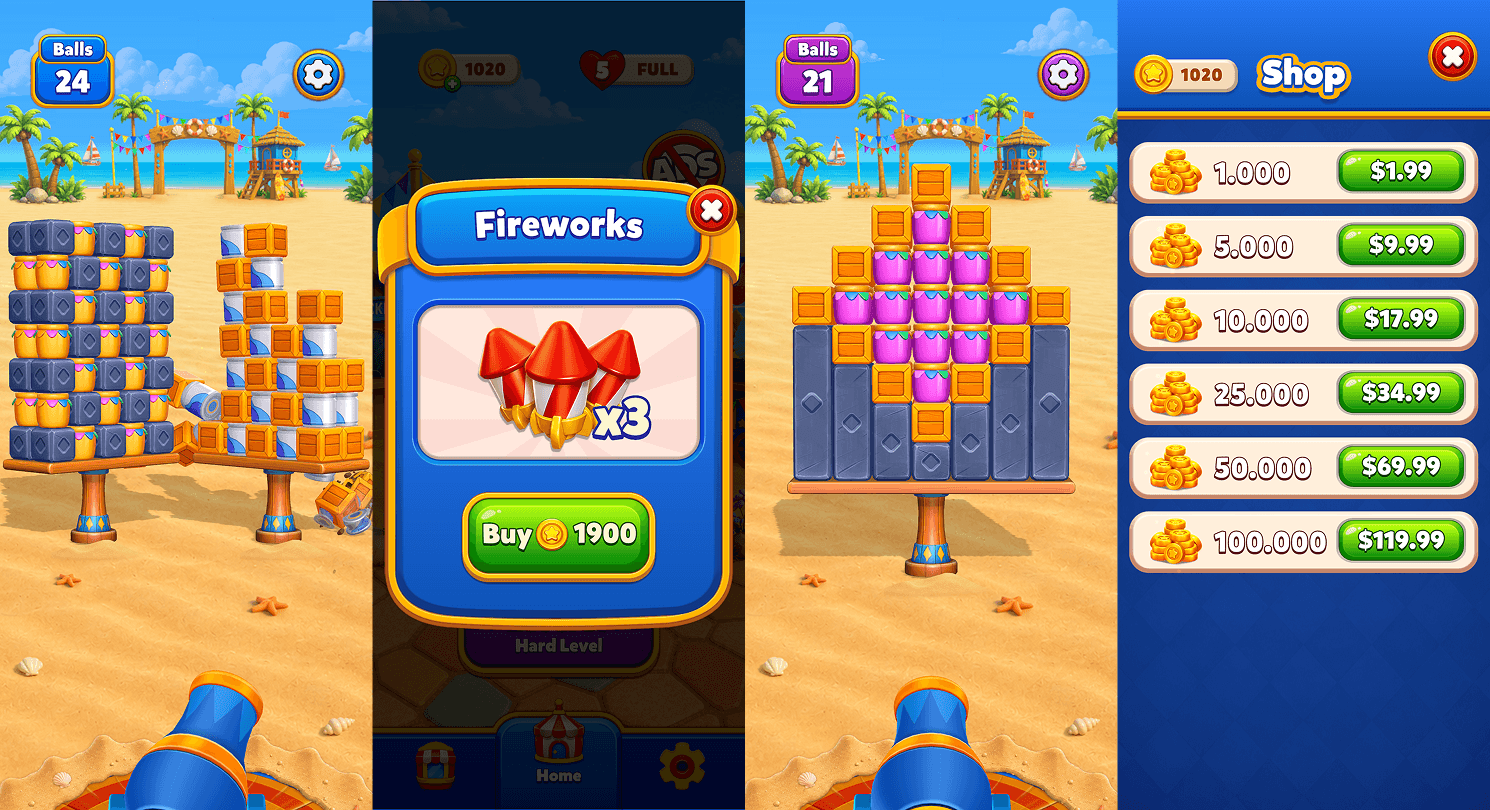
The big part of the surge comes down to its core idea. The main loop revolves around shooting cannons to smash towering stacks of items—cans, stones, paint jars. Players adjust angle and timing, fire, and a well-placed shot triggers a chain reaction that crushes multiple targets at once.
Moves are limited, and new boosters and obstacles get layered in as levels progress. What makes it so satisfying are the physics behind every move: jars shatter into shards, heavy stones demand more force or repeated hits, and every item type carries its own sound effects and movement behavior. That attention to detail creates a tactical loop that feels highly realistic.
Even though the trend is just forming, the mechanic itself isn’t new at all. We spotted it back in late 2024, as a LiveOps minigame introduced in Toon Blast's event called Cannon Fest, which is still part of the game's regular event rotation. The format has also appeared in Toon Blast's ad creatives, often as playables. The loop there is nearly identical to what we now see in Smash Fest!: multiple levels, a variety of items to smash, obstacles along the way, and even a name reference (which could be why it's no longer on Google Play).
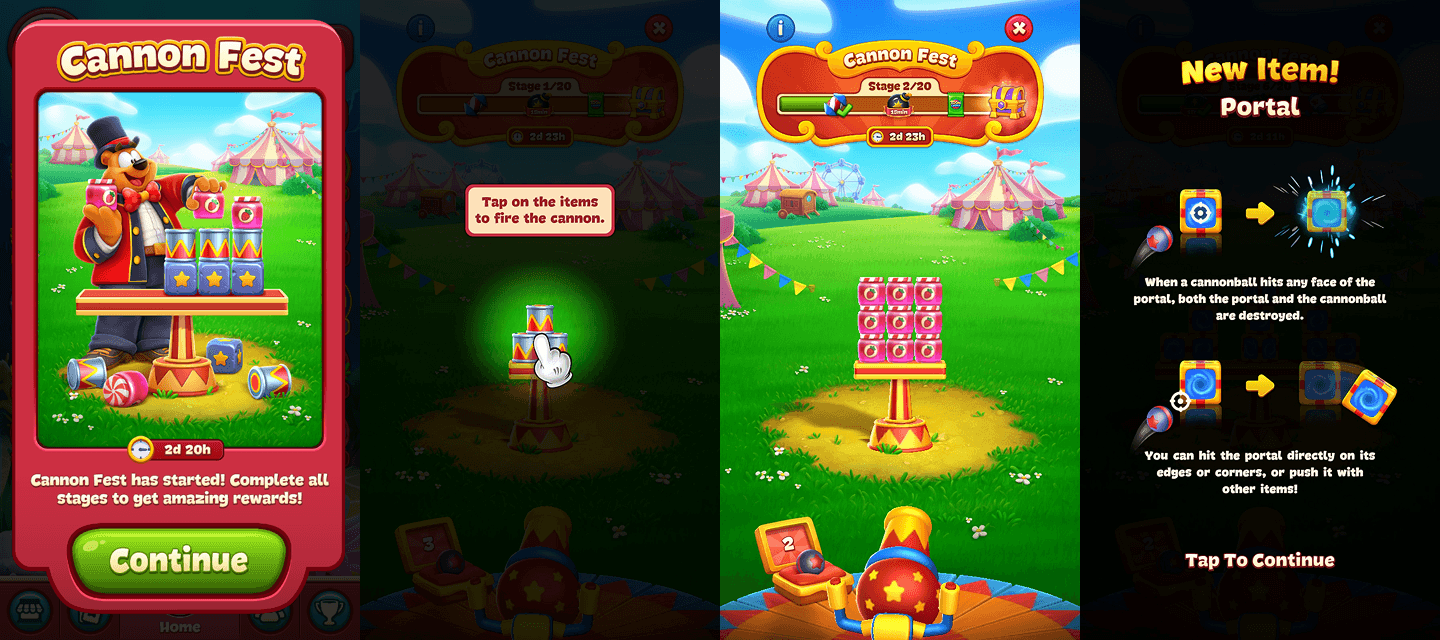 The Cannon Fest event in Toon Blast
Hybridcasual Puzzles once emerged by borrowing from Casual games—deeper monetization, richer LiveOps, more engaging progression—and in this case, even the core mechanic traces straight back to Casual roots. Smash Fest! took an event minigame and turned it into a standalone title with a broad player base of its own. And what turned that catchy core into real revenue is a monetization setup built around it.
Simple IAP Mix That Works
Flow Games uses a hybrid mix of IAA and IAP revenue. Interstitials and rewarded ads keep non-payers monetized, while currency packs and a no-ads offer bring in revenue from purchases. The monetization toolkit stays deliberately simple—no battle passes, no piggy banks, no special offers layered on top. Smash Fest! can get away with that simplicity, because the core loop itself delivers enough novelty to keep players engaged and willing to spend (for now, at least).
So which offers actually drive performance? Zooming in on the game's IAP revenue distribution, the largest share comes from the $7.99 coin pack at 28%, with the $14.99 pack close behind at roughly 21%. That split says a lot: plenty of players feel committed enough to spend on higher-priced offers, even though the cheapest $1.99 pack remains the most popular purchase in quantity. That same low price point also makes it the most appealing as a first purchase, driving more than 52% of them.
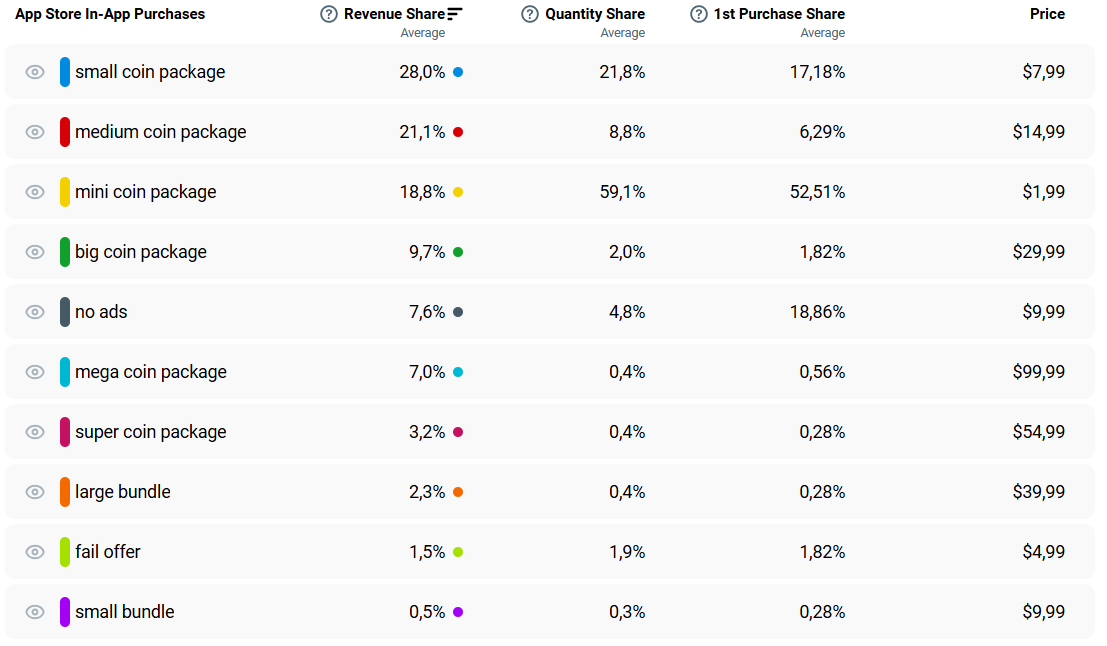 Smash Fest’s top performing offers by revenue share (iOS, US only)")
On top of that, this hybrid model lets the team use ads as a conversion tool rather than just a revenue stream. Interstitials only start appearing after level 20, by which point players are already invested enough to consider spending. The pressure is there, but it's not aggressive. This careful balance pays off: despite holding a smaller revenue share (7.6%), the $9.99 no-ads offer plays a meaningful role in conversion, ranking as the second most common first purchase at 17% of them.
As a trailblazer, Smash Fest! can afford to lean entirely on its trending core and smart yet minimalist monetization—no deep meta, no heavy LiveOps to maintain retention. But the titles following in its footsteps don't have that luxury. They're already building the deeper systems needed to stay competitive over the long run.
Royal Smash!: A Follower or the Next Leader?
Royal Smash! - Physics Puzzle by Cypher Games is the clearest example of how dev teams now layer a trending concept with a more complex setup. The game was released at the start of July, and so far, it is closing in on 9M installs. IAP revenue looks modest by comparison, reaching $1M, but a closer look at the daily revenue curve reveals how it’s actually breathing down Smash Fest! ’s neck.
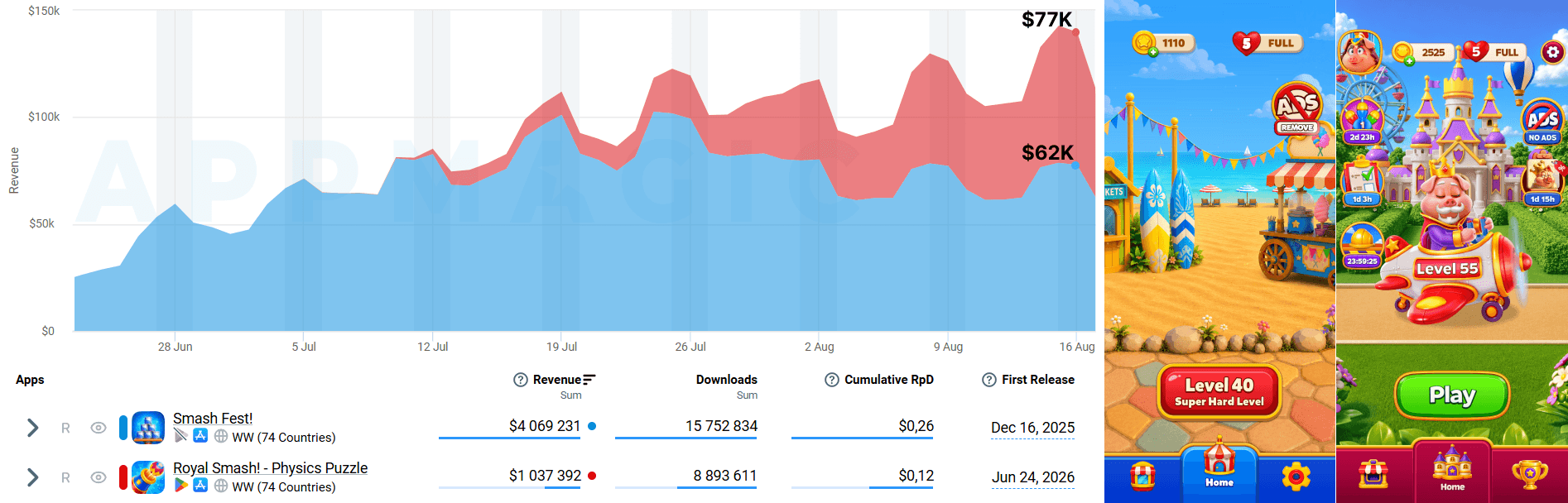 Royal Smash! vs Smash Fest! daily revenue dashboard
The core loop is almost the same, varying in some items and boosters. The real difference becomes apparent at level 11, when events start to appear. The first is Royal Canvas, a task-gated piggy bank that rewards players with coins for completing core levels, but only if they've bought the dedicated offer. With this approach, LiveOps is tied closely to monetization from the earliest sessions.
Events gradually become a key part of the experience: a win streak appears at level 16, followed shortly by a chain offer, weekly tasks kick in at level 40, and a competitive Dart Night event lands at level 55. These are all classic formats from Casual trendsetters, now increasingly adopted by Hybridcasual titles like Screwdom or All in Hole. To keep short-term engagement high, upcoming events are even displayed on the main screen from the start, giving players a clear sense of what’s coming.
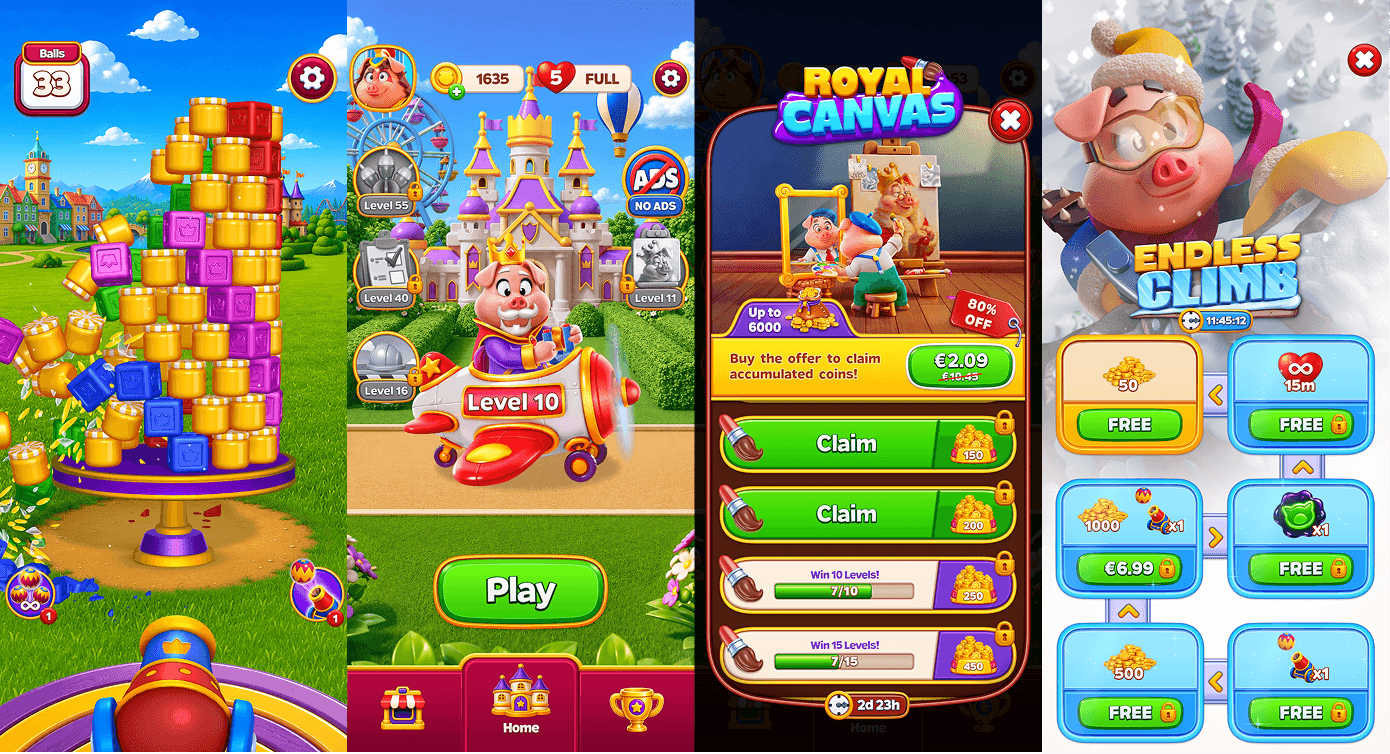
Proven LiveOps practices aren’t the only thing the game borrows from Casual hits. The visual design, theme, and the “royal” reference in the title all position it to look like part of the Royal Match and Royal Kingdom game series. Unaware that the titles are completely unrelated, many players will probably find the game familiar and trustworthy at first glance, and that alone might be enough to convince them to give it a try. Notably, *Splash Kingdom* by Moon Active uses a similar playbook, leaning on a "kingdom" keyword paired with early-game LiveOps.
Putting it together, we can see the “next wave” already taking shape: the same trending core, but wrapped in deeper systems and more engagement drivers, built not just to stand out from the original hit but to sustain growth over time. Given how fast Royal Smash! is catching up to Smash Fest!, it may soon outpace it, or any other title polished enough to break through.
Back to Casual: The UA Blast
While studios of every size rush to launch their own "smash puzzle", Casual publishers ride the rising trend through UA creatives. Mystery Town by Learnings, for example, was among the first to echo the mechanic in ads, using AI-generated hooks that switch into another misleading gameplay clip.
Here's what makes this especially notable: most top Merge games—including the long-standing leader Gossip Harbor—typically lean on emotional creatives built around dramatic narrative. This year, Tasty Travels broke that pattern entirely, climbing into the genre's top chart largely thanks to misleading gameplay ads. Mystery Town now adapts a similar UA strategy, folding fresh Hybridcasual trends into its own mix of misleads.
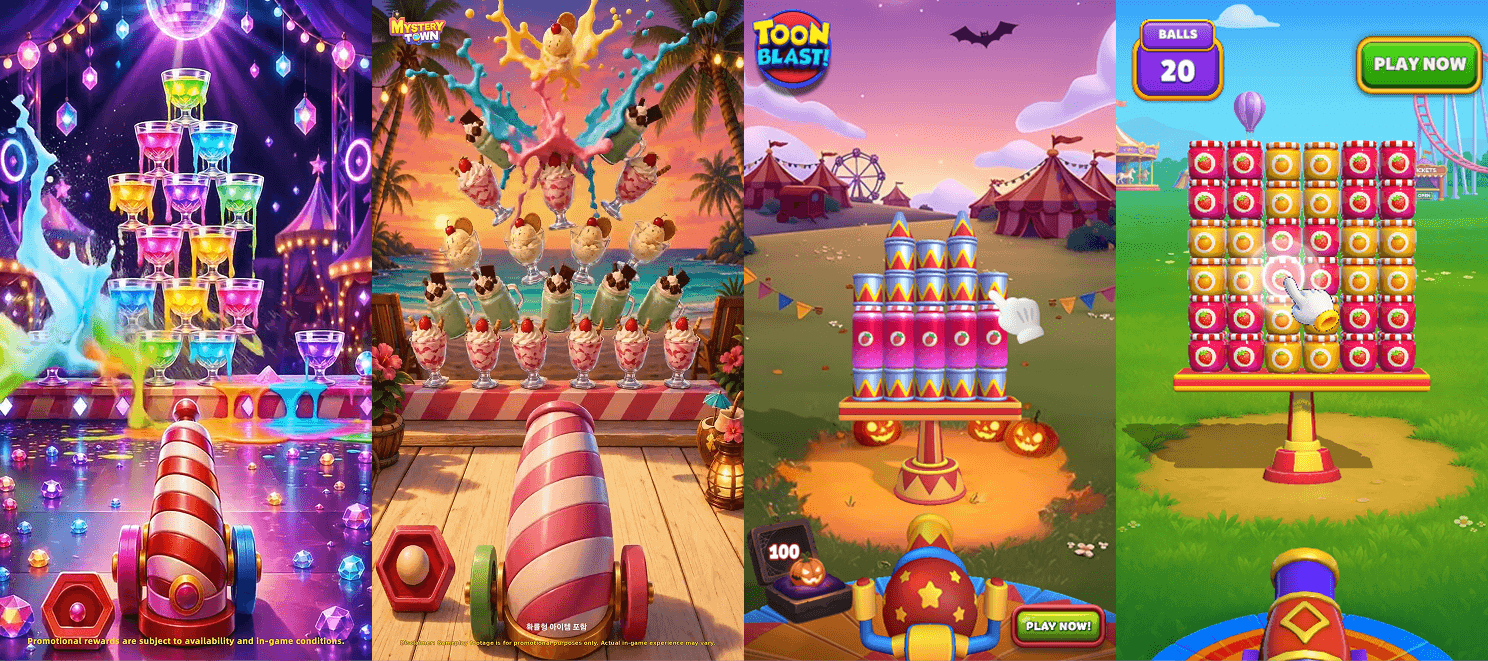 The trend in ad creatives: Mystery Town, Toon Blast, and Top Tycoon
At the same time, Toon Blast itself leverages the trend it never meant to start. The game is actively pushing more creatives built around its Cannon Fest minigame, and the impact is already visible. Installs are rising, hitting 1.6M this July. That's nowhere near an all-time high, but the last time the game climbed over this mark was all the way back in January 2020. No single format deserves all the credit for that, of course, but Peak Games clearly knew how to use the momentum and timing to their advantage.
The format has even traveled well beyond the Puzzle territory, now showing up in Top Tycoon's recent ads—a Coin Looter game already known for strong UA execution. This story illustrates nicely how trends travel from the Casual market into Hybridcasual—and back. The lines between genres keep blurring, and the influence they have on each other only grows stronger.
Key Takeaways: The Trend’s Chain Reaction
Hybridcasual still has plenty of room for anyone paying close enough attention. A single well-placed mechanic, caught at the right moment, can carry a game into the top ranks within weeks.
What started as a LiveOps minigame turned into a standalone hit with 14M installs—and that hit is already inspiring the next wave of "smash puzzles," this time built with deeper retention systems tied tightly to monetization. Hybridcasual trends become less about who launches fastest and more about who wraps the loop in the right systems to keep players around once the novelty wears off. Royal Smash! may well be the one to prove it soon enough.
Spotting a trend at the right moment matters well beyond the segment where it started. This one hasn't even fully taken shape, yet it's already leaking into UA creatives across genres, from Merge titles like Mystery Town to Coin Looter's Top Tycoon. Genres across both markets are locked in a constant back-and-forth, and each keeps handing the other new lessons to ace.