Everything Is a Simulator: Steam's Hottest 2026 Trend
A new wave of Simulation games is taking over Steam. Naturally, we explored the standout releases of 2025–26 to highlight where the genre is heading, why niche concepts turn into super-selling games, and what developers can learn from the trends shaping this market.
— Maria Bolshman and Evgeny Kolodyazhny
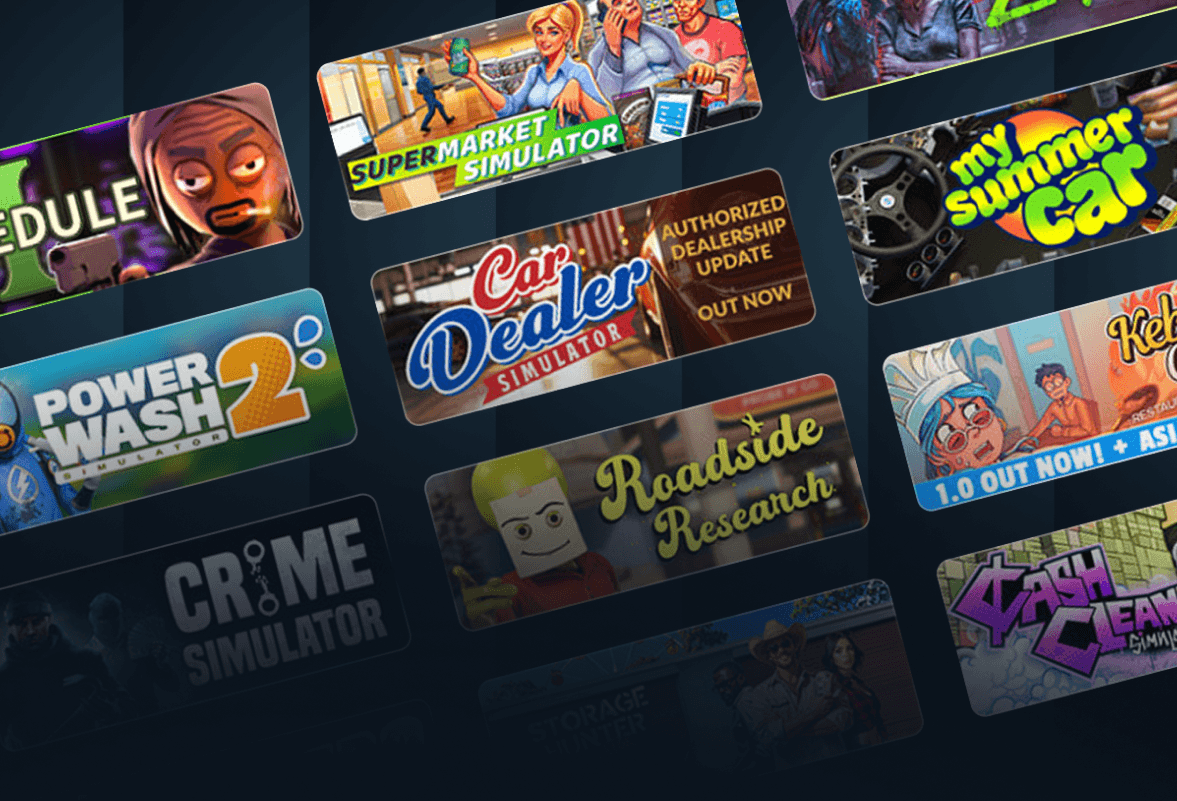
Steam has never been short on Simulation games. Players would drive a truck, run a farm, fly a plane—you get the idea. And they still do all of that, of course. The difference is that Steam has become comfortable with… well, pretty much everything else.
Today, the Simulation tag covers thousands of games, and not all of them fit the traditional idea of a Simulator. Alongside long-running classics, there's now a stream of indie games built around ideas that would've sounded like truly odd pitches a few years ago. Yes, some still aim for realism. Others? Couldn't care less.
If you need proof, just look at Schedule I. In 2025, the indie hit from TVGS climbed to the top of Steam's Simulation charts, selling over 9M copies and earning more than $172M, ahead of Euro Truck Simulator, The Sims 4, and several other Simulation staples.
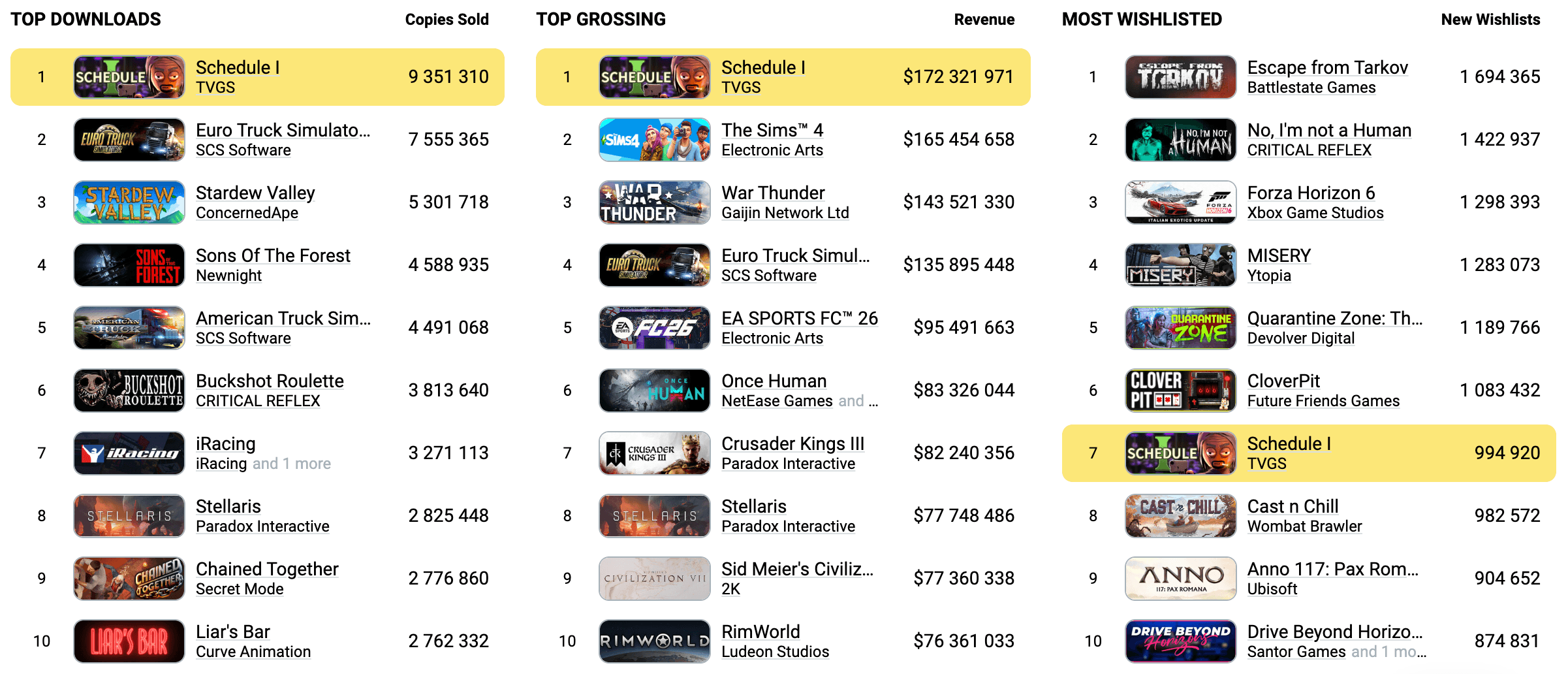
Steam's top 10 Simulation games of 2025
Quite a statement for the genre. Then again, Steam's Simulation offering has grown so broad that the tag alone no longer tells the full story. So we looked beyond the label, pulling together dozens of notable indie releases from 2025 and 2026 and grouping them by the kind of experience they offer rather than their setting.
The categories are ours. The trends, however, are very real. Let's get unpacking!
Mapping Steam's New Simulators
Some modern Simulators let players run a supermarket or manage a liquor store. Others ask them to clean dirty cash, inspect zombie apocalypse survivors at a quarantine checkpoint, or somehow convince them that organizing a library sounds like a fun way to spend the evening…
That's the thing: Simulation has become less about broad professions and more about very specific fantasies. Developers are turning small businesses, everyday routines, and weird ideas into entire games. Just look at the 2025–26 Simulation dashboard we have put together. Many of its top performers are fresh releases that haven't even had much time to settle.
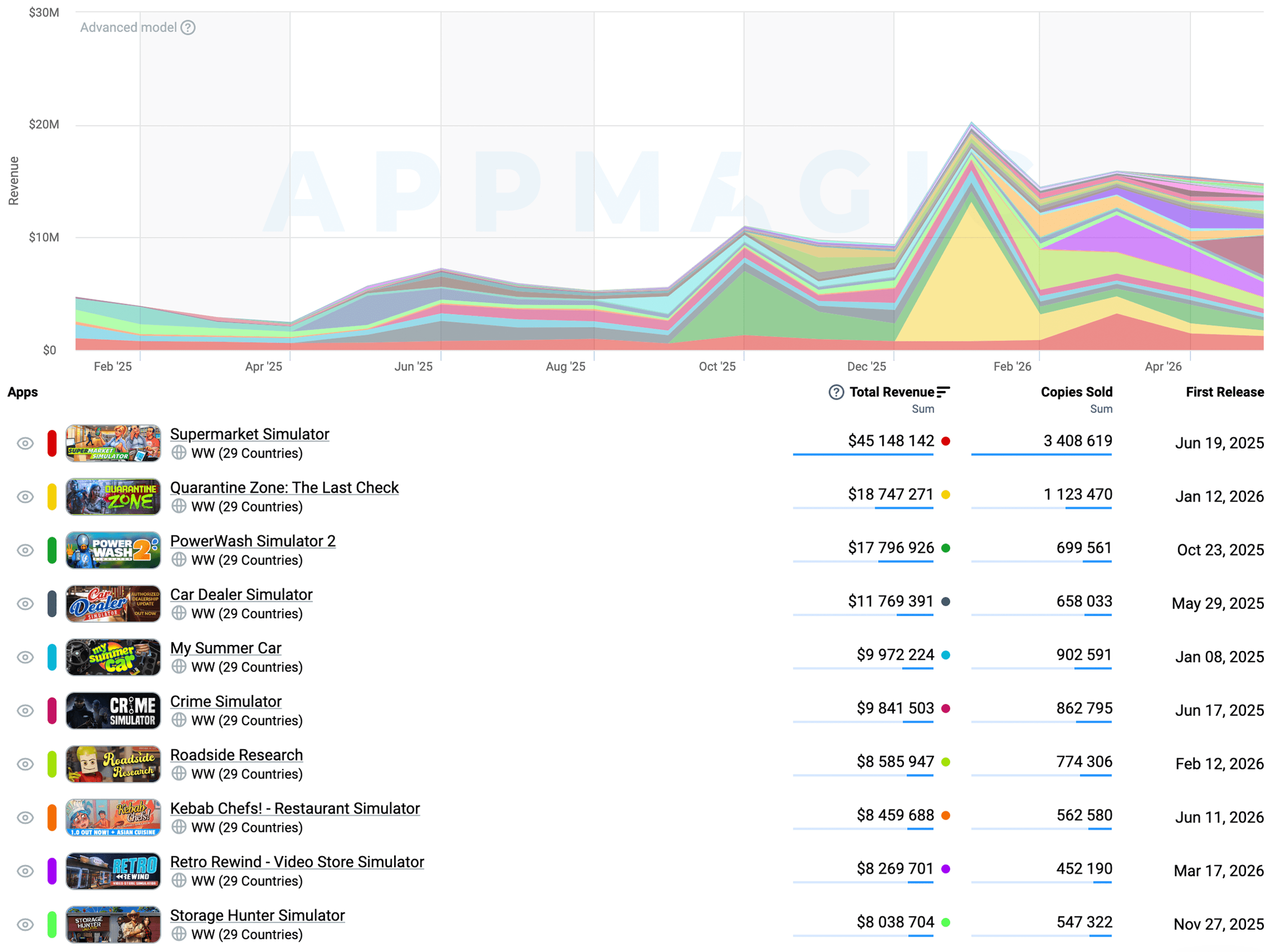
Top Steam Simulation releases by revenue, 2025–26
Take Quarantine Zone: The Last Check, one of the biggest standouts of Q1 2026. Anyone familiar with Papers, Please will immediately recognize the checkpoint gameplay that it popularized, though this time, the job is screening survivors during a zombie outbreak.
That sounds like a very niche concept until you notice it earned $18.5M in revenue and sold over 1.1M copies in just a few months. The game also continues Devolver's impressive run of indie hits—a publisher we've already written about in our coverage of Ball x Pit.
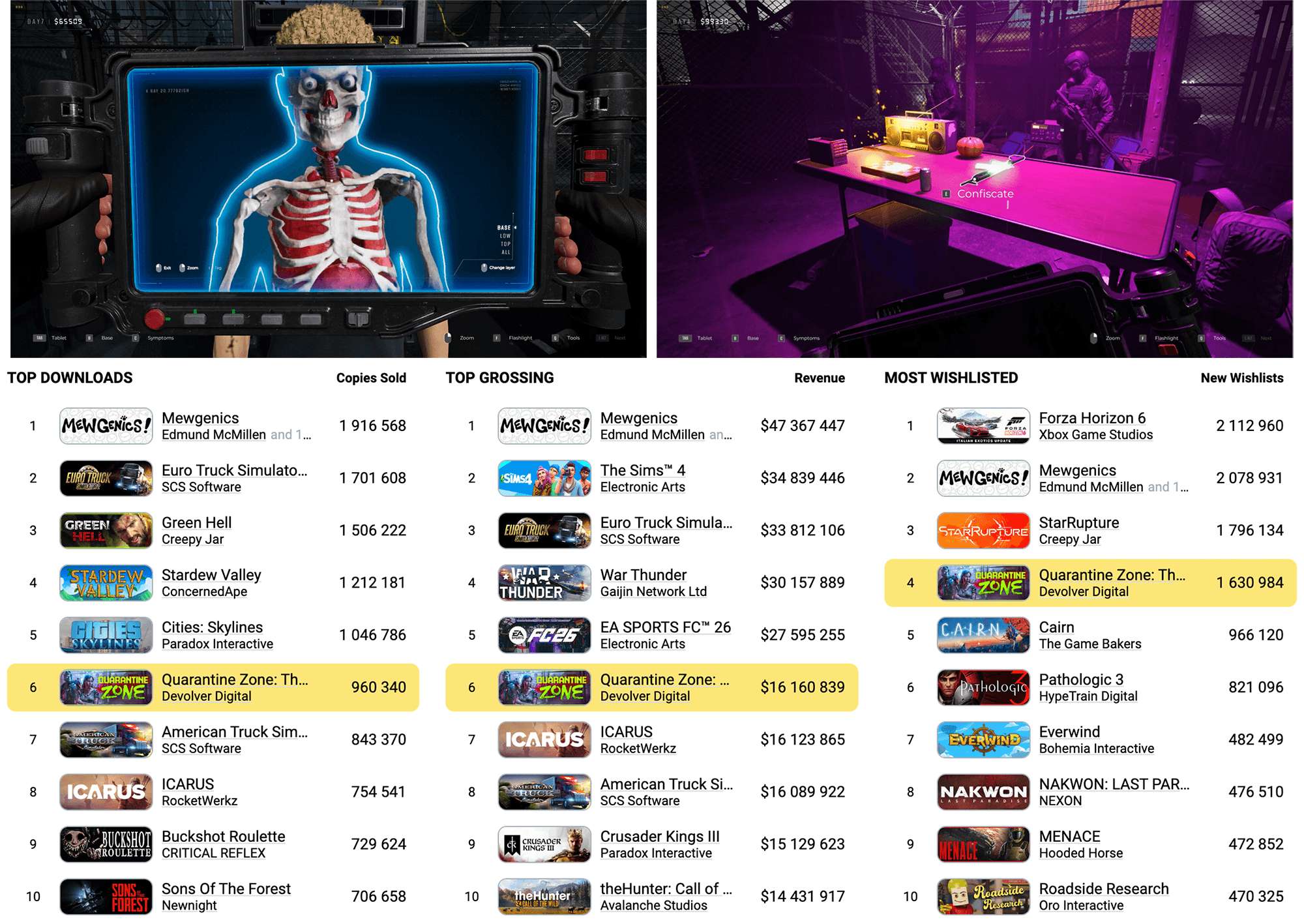
Quarantine Zone: The Last Check among Steam's top 10 Simulation games in Q1 2026
Several other 2026 releases, including Roadside Research, Retro Rewind: Video Store Simulator, Kebab Chefs!, and Librarian: Tidy Up the Arcane Library!, have been making plenty of noise as well. And we'll get to those shortly.
Then there's pricing. Most of the games from our dashboard launched at price points between $8 and $16, with almost every title priced below $20, making them easy impulse purchases. And judging by the reviews, players rarely have any regrets either. Nearly every game here is in the Very Positive territory, and plenty have crossed the 90% mark.
We explored the role of pricing in much more detail in our Steam pricing research. If you'd like to dive deeper into the subject, you can read the full article on our blog.
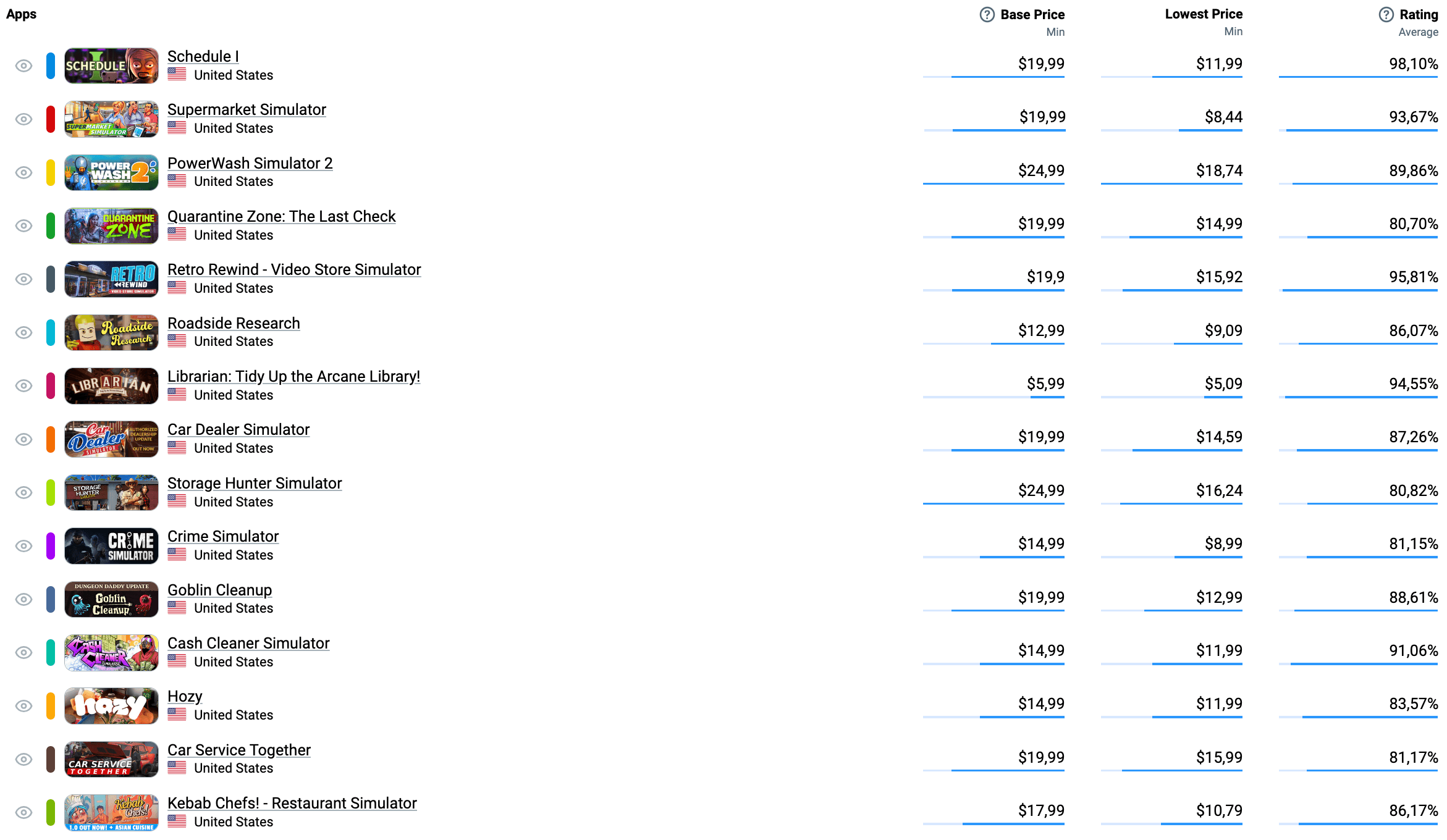
Base and lowest US prices across selected Steam Simulation titles
Many of these titles were built around similar gameplay loops:
- Buy, sell, upgrade
- Clean, organize, repeat
- Restore, unlock, expand
The setting is just the wrapper. That's also what makes them so easy to explain. A single sentence usually sells the fantasy, while a single trailer explains the gameplay. And, as we know, sometimes a single viral clip is all it takes.
At some point, we stopped caring what these games were simulating and started paying more attention to how they actually felt to play. So instead of grouping them by craft or profession, we put together our own completely unofficial classification based on the kinds of experience they create.
We ended up with three categories. Could there have been four or five? Easily. But we had to draw the line somewhere…
Business Sims
Business sims take up a huge chunk of our dashboard, so starting here felt like the obvious choice. The fantasy is simple: build a business, make it run a little better than yesterday, earn more money, repeat. It's calm, repetitive, and satisfying. The biggest drama here is usually somewhere between "we're out of stock" and "why is the floor dirty again?". And somehow, for players, that's more than enough.
For this category, we picked two games released one year apart. Supermarket Simulator became one of the defining business sims of last year. Retro Rewind: Video Store Simulator is a more recent case that shows how quickly developers are finding fresh settings for the same core idea.
Supermarket Simulator
Supermarket Simulator by Turkish studio Nokta Games spent over a year in early access before reaching its full release in June 2025. To date, it has generated more than $45M in revenue and sold over 3.4M copies at a $19.99 base price.
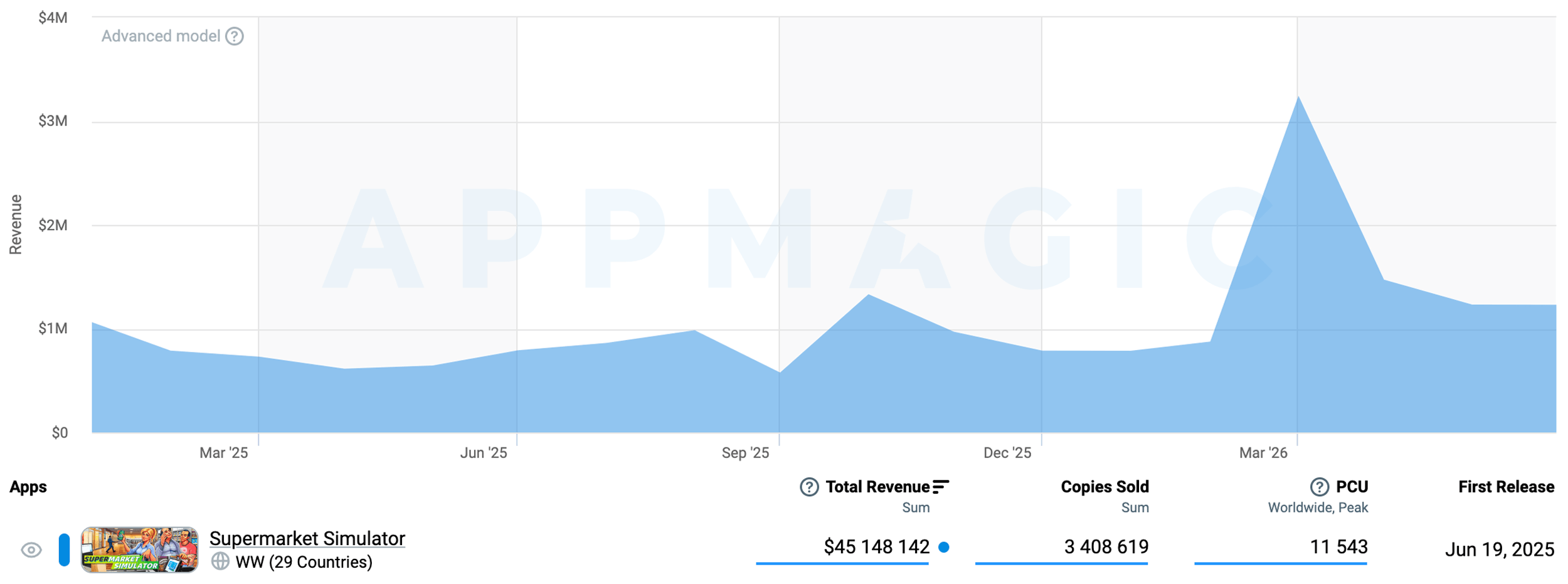
Supermarket Simulator: revenue over time
The loop is exactly what you expect, and that is part of the appeal. Players order stock, unpack boxes, fill shelves, scan groceries, set prices, clean the store, and gradually turn a modest shop into a proper retail machine. Visually, it's pretty rough around the edges, but the progression is sticky. Every upgrade removes another manual task, every new system gives players one more thing to optimize, and before long, you're spending hours building a store that needs you a little less every day.


The game's post-launch strategy is just as interesting, as Nokta Games has kept expanding Supermarket Simulator with modular DLCs. These are not major expansions, but 8 small, inexpensive packs that add new product categories to the store, such as clothing, electronics, hardware, or ice cream. In the US, four of the seven packs cost just $1.99, one is priced at $4.99, and the remaining two cost $6.99 each.
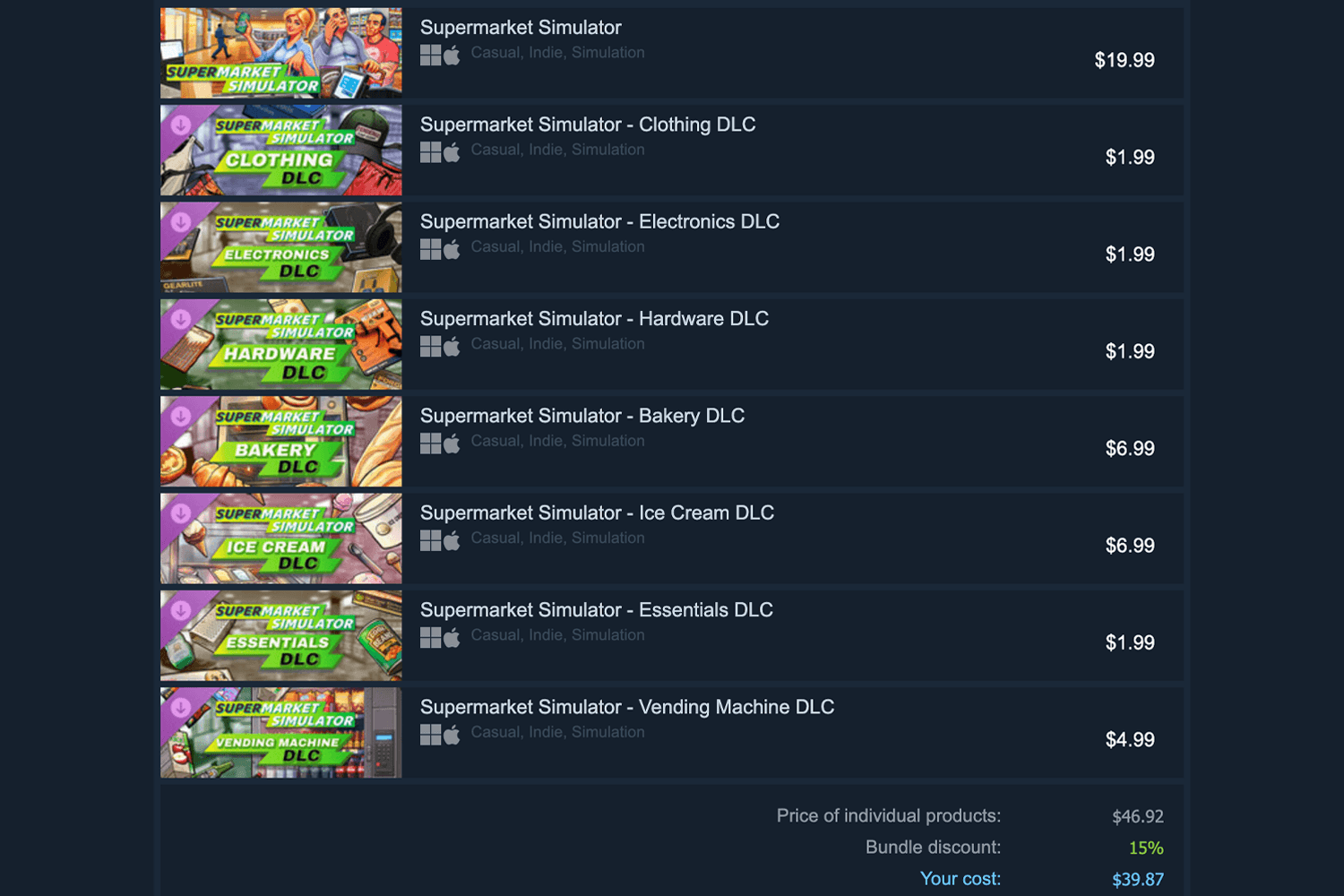
Supermarket Simulator's DLC catalog on Steam
None of them changes the core loop, and that is probably the point. They give existing players another reason to return, add something new to their shelves, and spend a little more on a business they have already spent hours building. For developers, that means a steady stream of relatively low-scope content that players are happy to pick up thanks to its very low price and strong value for money.
Retro Rewind: Video Store Simulator
Retro Rewind: Video Store Simulator arrived in March 2026, with Blood Pact Studios taking almost the same business formula and wrapping it in pure '80s nostalgia. Grocery shelves became VHS tapes, price tags turned into late fees, and customers came looking for movie recommendations instead of fresh produce.


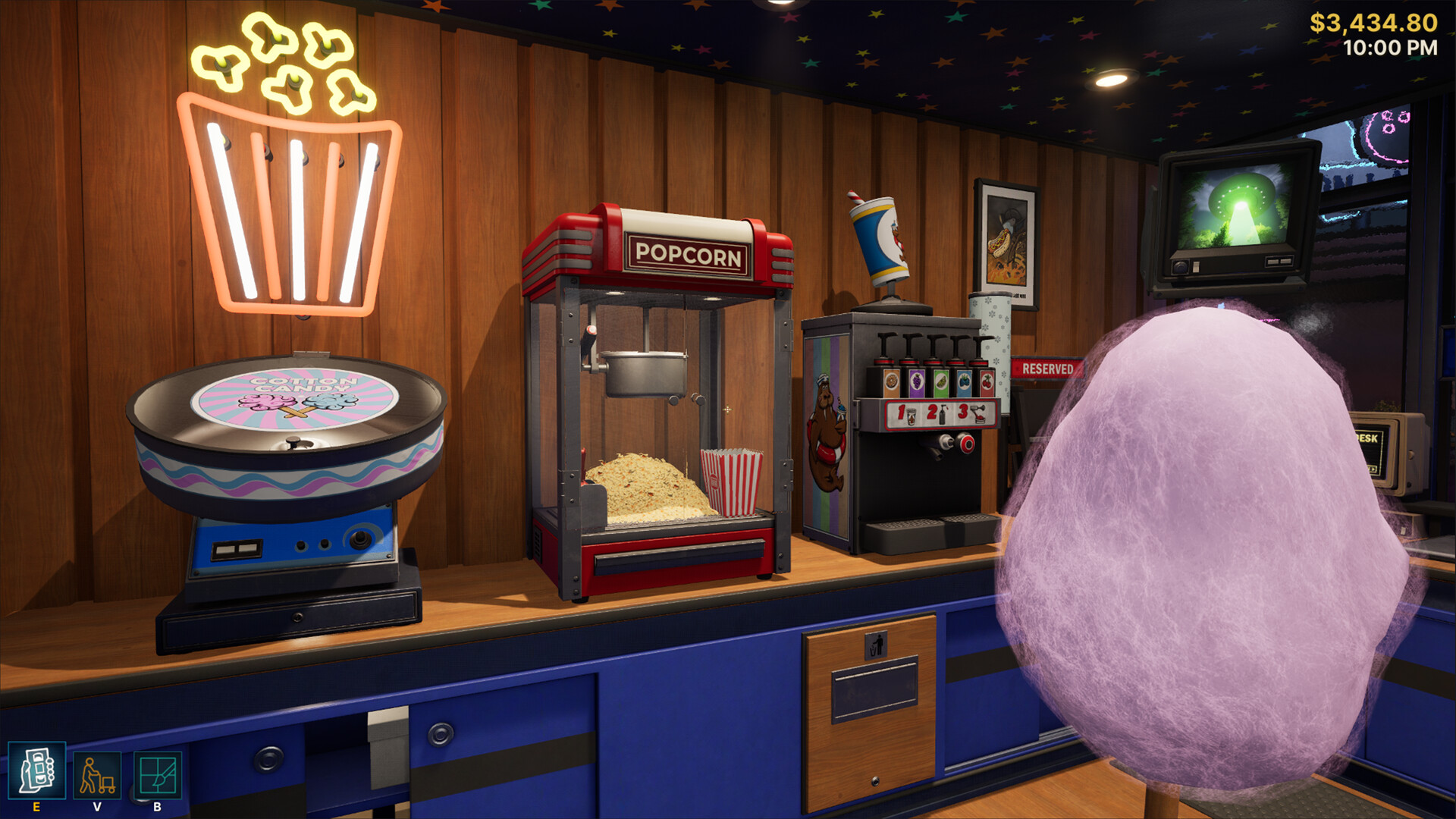
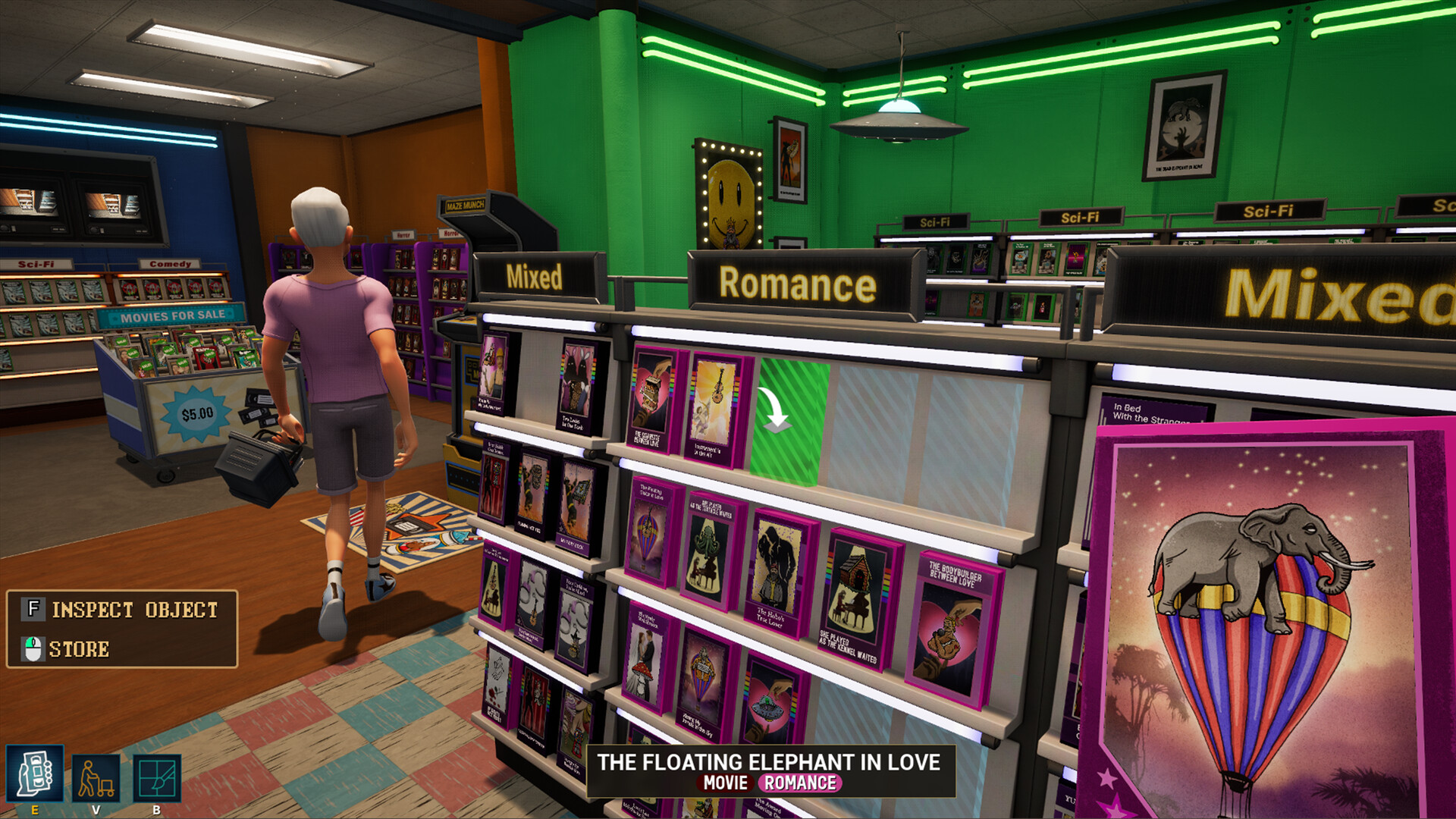


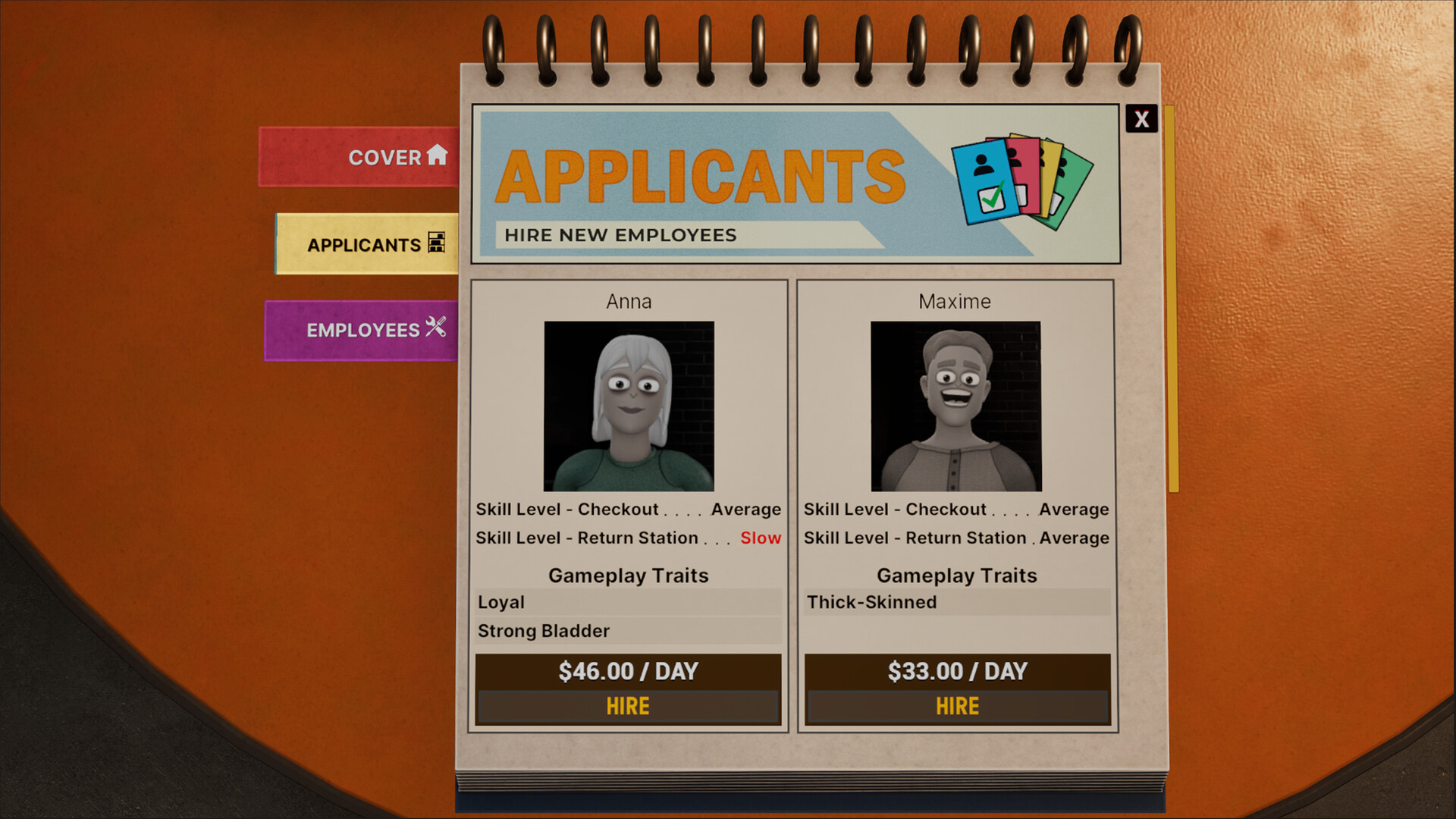
Different fantasy, same obsession. Nostalgia gives the game a stronger personality, but the engine underneath is still pure business sim. Despite launching at a noticeably higher $19.90 base price, the game has earned over $8M in revenue from more than 452K copies sold.
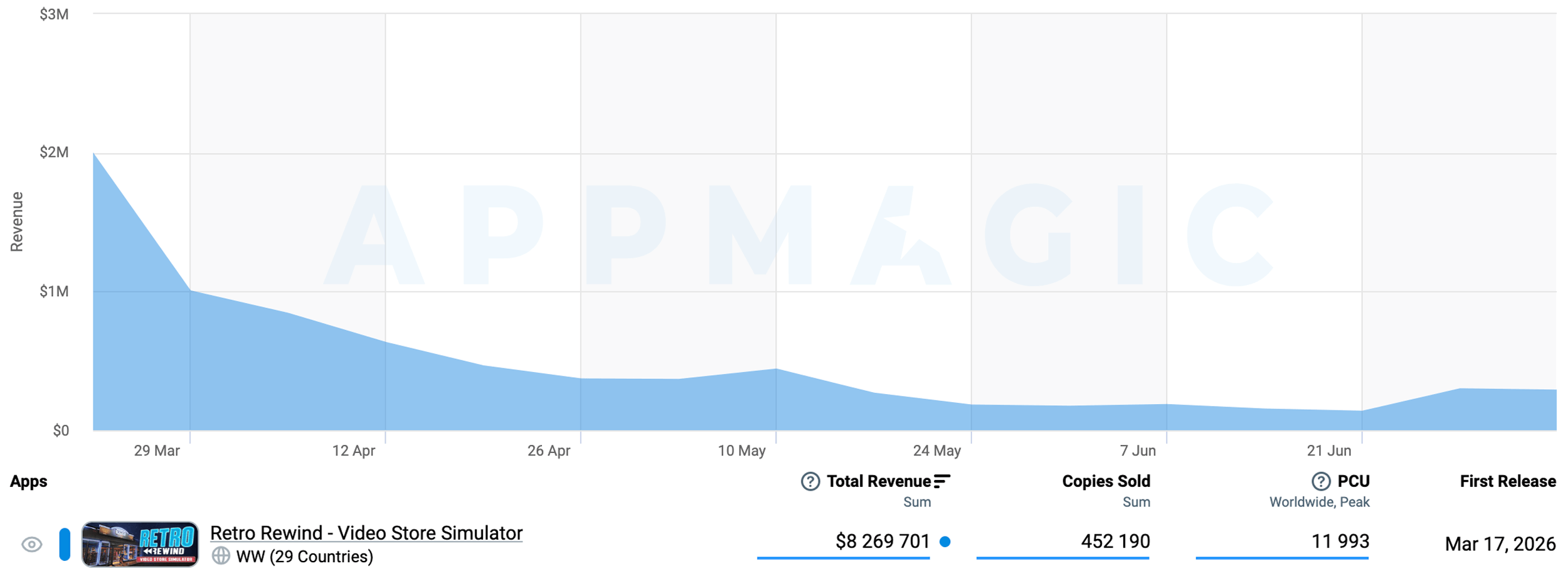
Retro Rewind: revenue over time
Looking past the setting, both Retro Rewind and Supermarket Simulator are doing almost exactly the same thing. Customers still arrive, shelves still need filling, the business still grows. The key difference here is what's sitting on the shelves and the aesthetics surrounding it. And that's probably the main lesson from business sims: once developers find a progression loop players enjoy, others can build on it, making their own product more niche and unique.
Business sims appear to reward this kind of creativity, so one of the working strategies of 2026 is finding a business fantasy that nobody has turned into a Simulator yet. Even if it means the weirdest concept, like Shark Dentist, the horror Simulator about cleaning sharks’ teeth, which got over 220K wishlists, according to AppMagic’s Steam analytics. That’s why, in a crowded market, good idea-scouting and fast concept-testing are becoming just as valuable as building the game itself!
Worth keeping an eye on:

Performance comparison of select business simulators
- Car Dealer Simulator turns buying, repairing, and flipping used cars into a standout business sim. Players are already asking for deeper dealership management and more content, while the game itself has generated more than $11.7M from 658K copies sold.
- Storage Hunter Simulator feels like the video game version of the TV show Storage Wars, challenging players to bid on abandoned storage units in the hope that the next one will contain something valuable. The game has already crossed $8M in revenue, with 547K copies sold.
- Megastore Simulator takes retail management to a larger scale, challenging players to build and run an entire department store. So far, the game has earned more than $1.8M from 143K copies sold.
- Tobacco Shop Simulator is another reminder that even the most niche businesses can become Simulators on Steam. Running a neighborhood tobacco shop has brought in more than $1M from 132K copies sold.
Next, we move from running a business alone to making the whole thing someone else’s problem, too…
Co-op Sims
Want to make any Simulator twice as entertaining? Let players bring in their friends. It doesn't really matter what kind of business they would be running. The moment co-op enters the picture, things rarely stay under control. Which brings us to another category: co-op sims.
Here, the business is only half the fun. The rest begins once friends get involved, turning even ordinary tasks into the kind of co-op chaos that spreads across streams and TikTok.
Sounds familiar? We've already explored the entire friendslop phenomenon in another article on our blog. This time, though, we wanted to look at what happens when developers bring that same co-op formula into Simulation games.
Schedule I
There was really no way to avoid Schedule I. After launching in March 2025, it quickly climbed to the top of Steam's Simulation charts and stayed in the spotlight, eventually generating more than $189M in lifetime revenue from over 10.2M copies sold (all at a $19.99 base price).
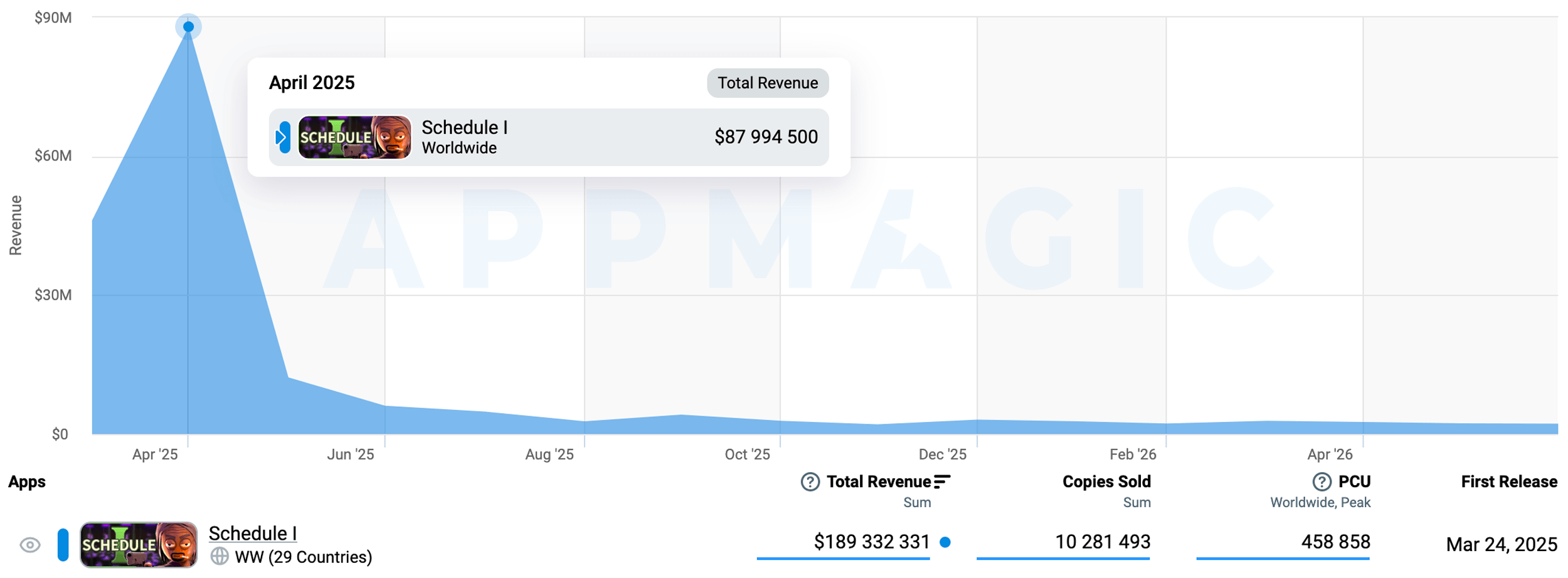
Almost $88M arrived in April 2025 alone. That's the kind of explosive launch we've come to expect from viral friendslops. Even more than a year after release, Schedule I was still bringing in around $2.5M during April 2026. Considering friendslops are usually built around a handful of memorable evenings rather than months of retention, that's an impressive run.
The game also made headlines far beyond gaming media, attracting criticism, calls for bans, and the occasional moral panic. Did all that attention help it reach numbers like these? Who knows, but it certainly didn't hurt its visibility.
Under all the crime and questionable career choices is a familiar business sim. Players are still building production chains, automating repetitive work, expanding into new locations, and chasing bigger profits. The drug empire is just the setting. Co-op is what turns that progression loop into unpredictable moments, terrible ideas, and the kind of chaos players can't wait to clip and share.
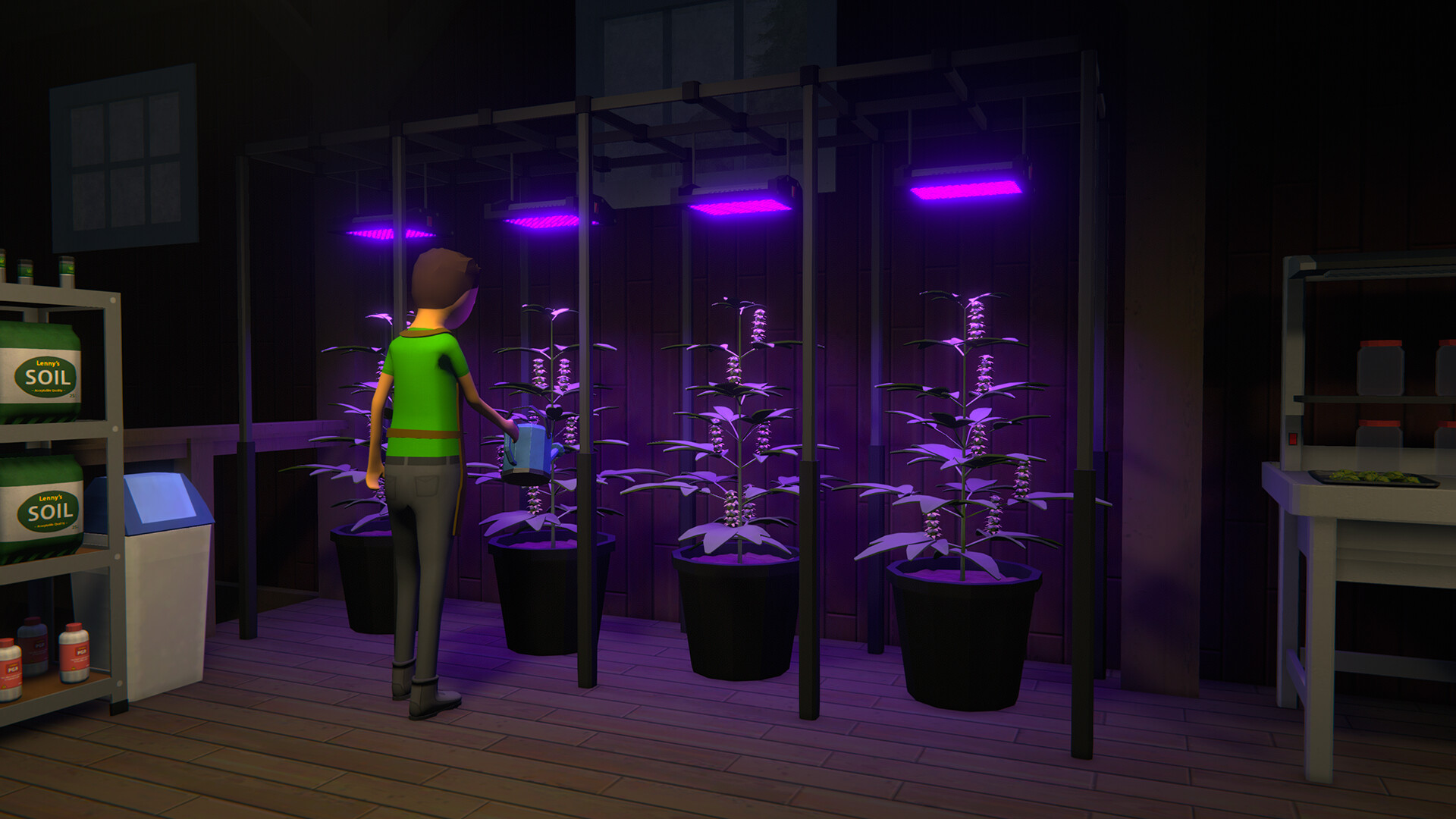


Interestingly, weed-selling business sims are not new to the industry. Mobile got there years ago: back in 2017, LBC Studios launched Hempire, a mobile tycoon that has generated more than $40M to date. Its performance has declined significantly since then, and the setting has never developed into a successful mobile niche. Today, its strongest title is Metamoki’s Weed Inc, which earned around $240K in June. That is a decent result for such a specific fantasy, but still modest by mobile market standards.
The audience is clearly there, just not on a massive scale. How do we know? Well, AppMagic has a dedicated Weed tag for anyone looking to explore this unusually specific corner of the market! Feel free to take a look once you’re done with the article, but for now, let's get back to Schedule I.
The game’s success shows not only that the setting was a strong choice, but also that it became one of the clearest examples of the friendslop boom that defined Steam in 2025. And in 2026, players still haven't tired of the formula. As we are writing, Meccha Chameleon is everywhere, with over 15M copies sold. And by the time you’re reading this, chances are that another co-op hit has already taken its place.
For developers, that is good news. Friendslops have already shown that the formula can work across wildly different settings, and the setting itself can be almost anything. Aliens included.
Roadside Research
Released in February 2026 by Oro Interactive, Roadside Research puts players in charge of a gas station. Except the employees happen to be aliens secretly studying humans…
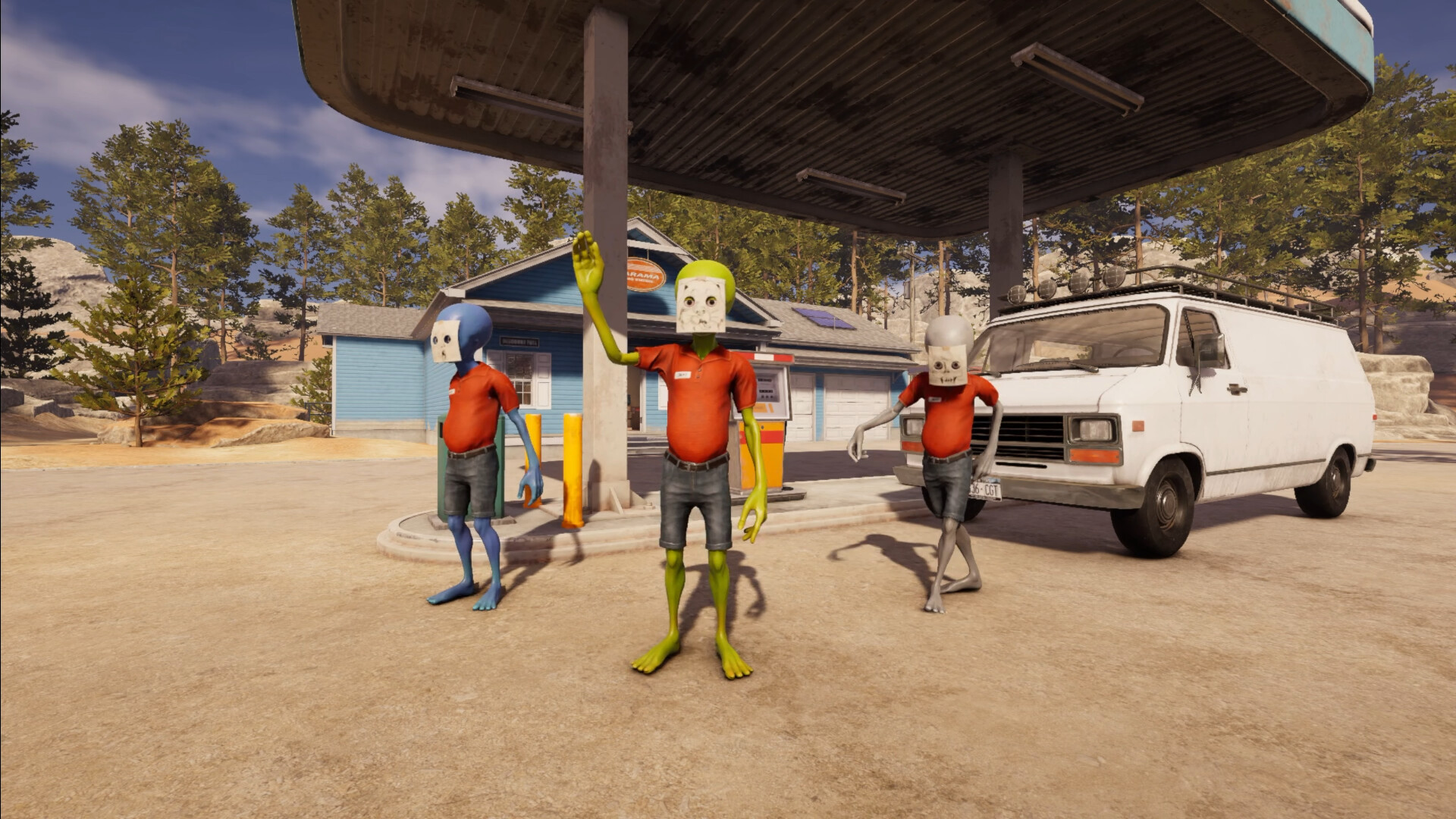

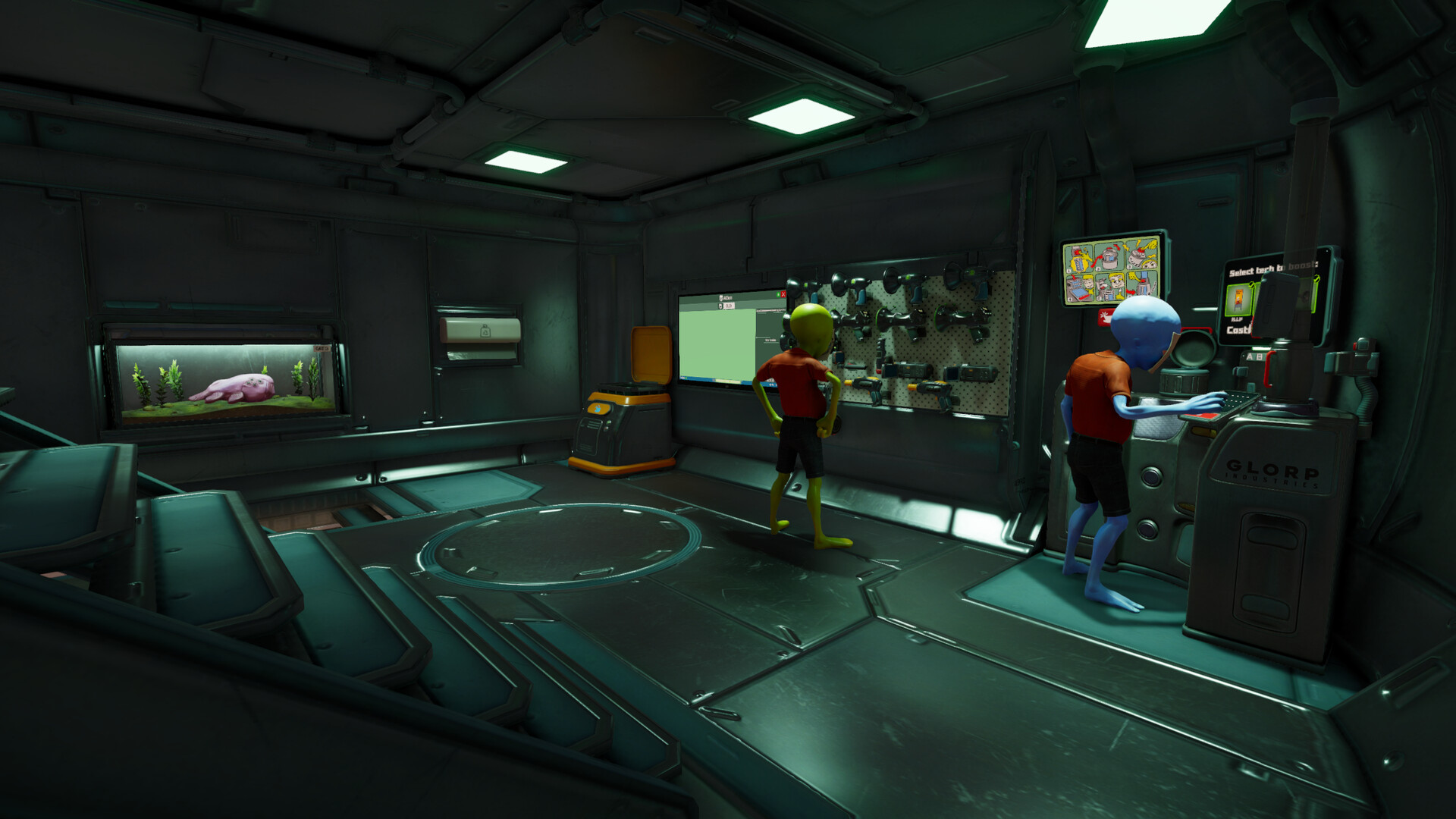
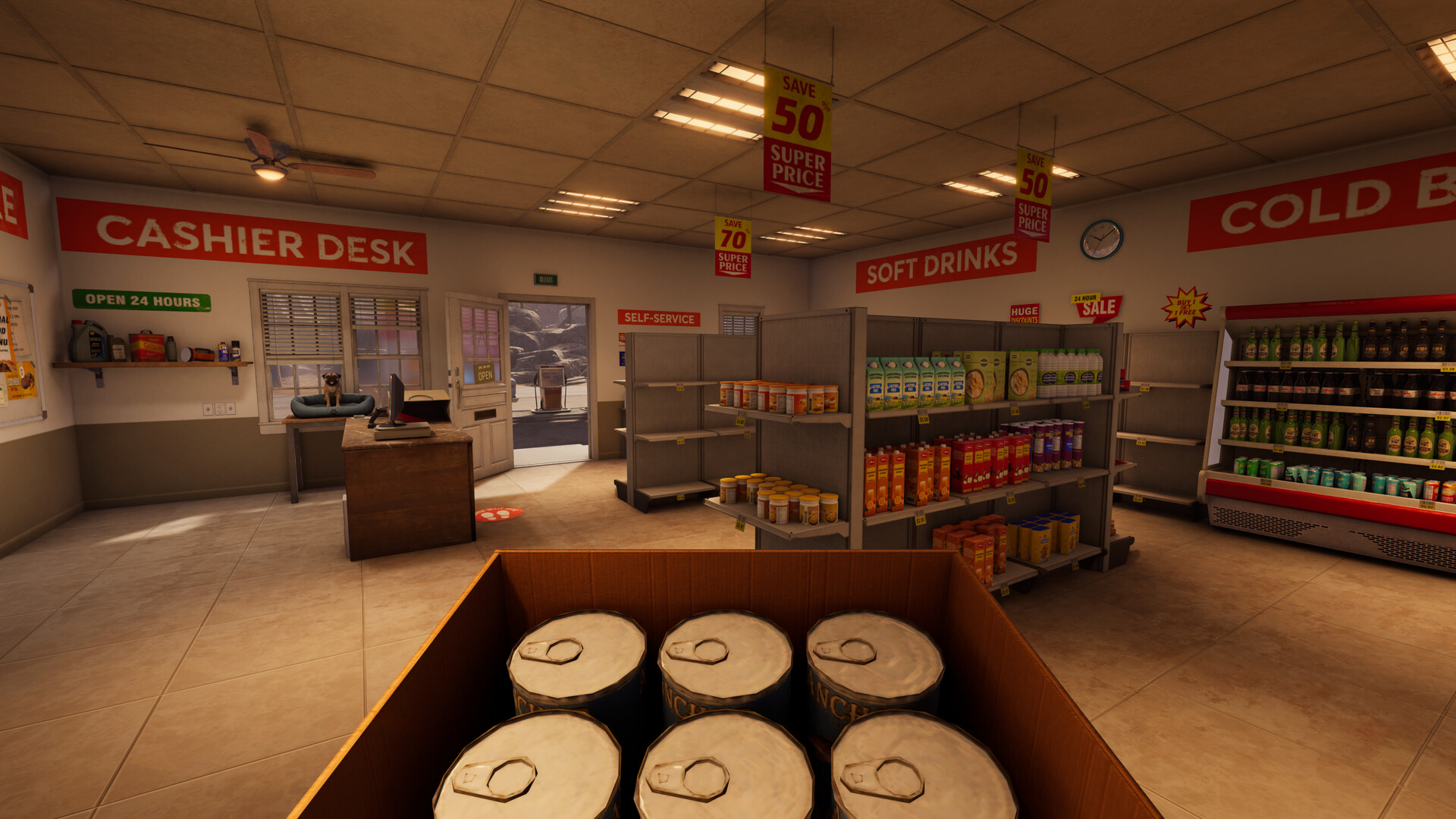
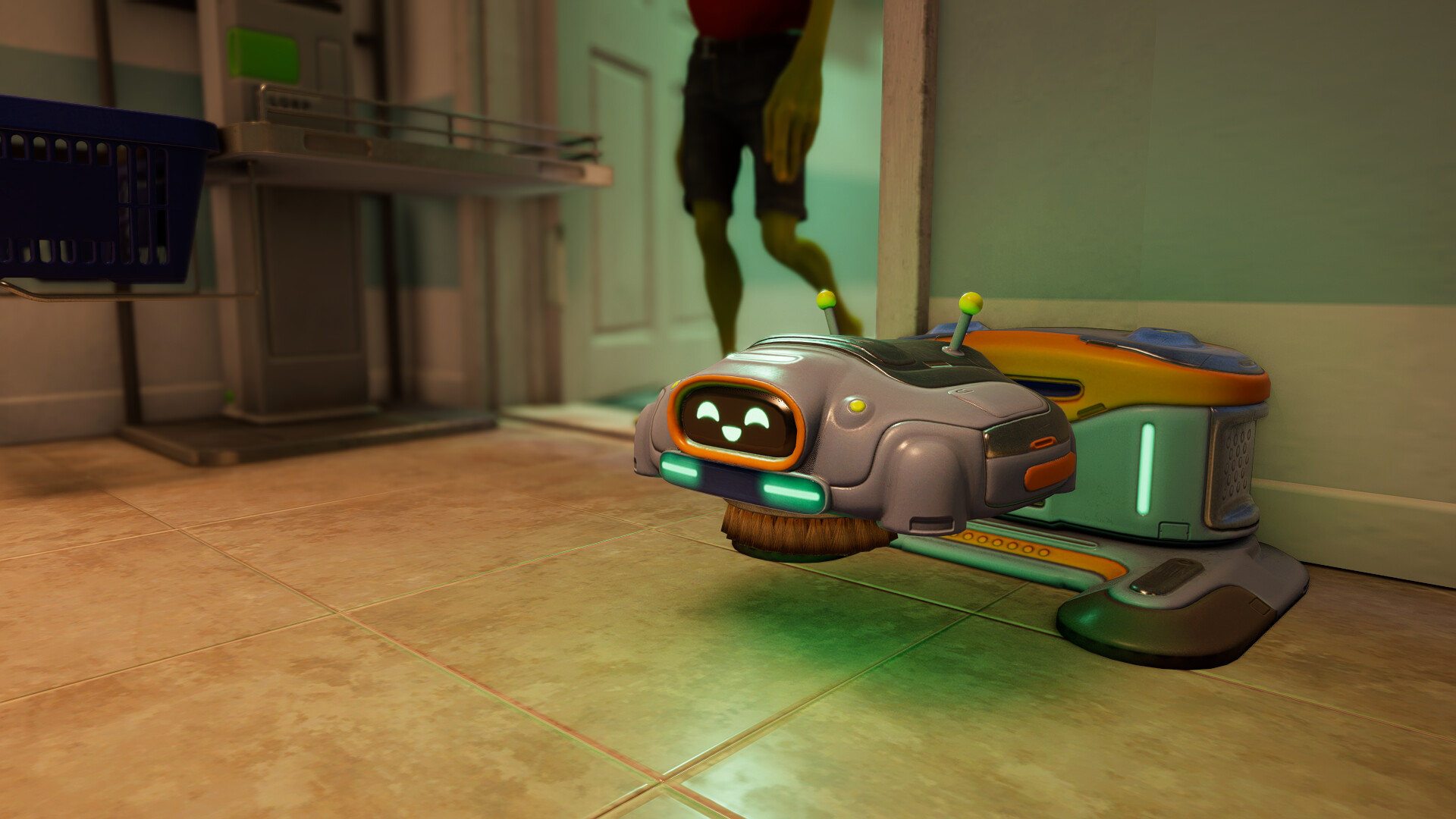
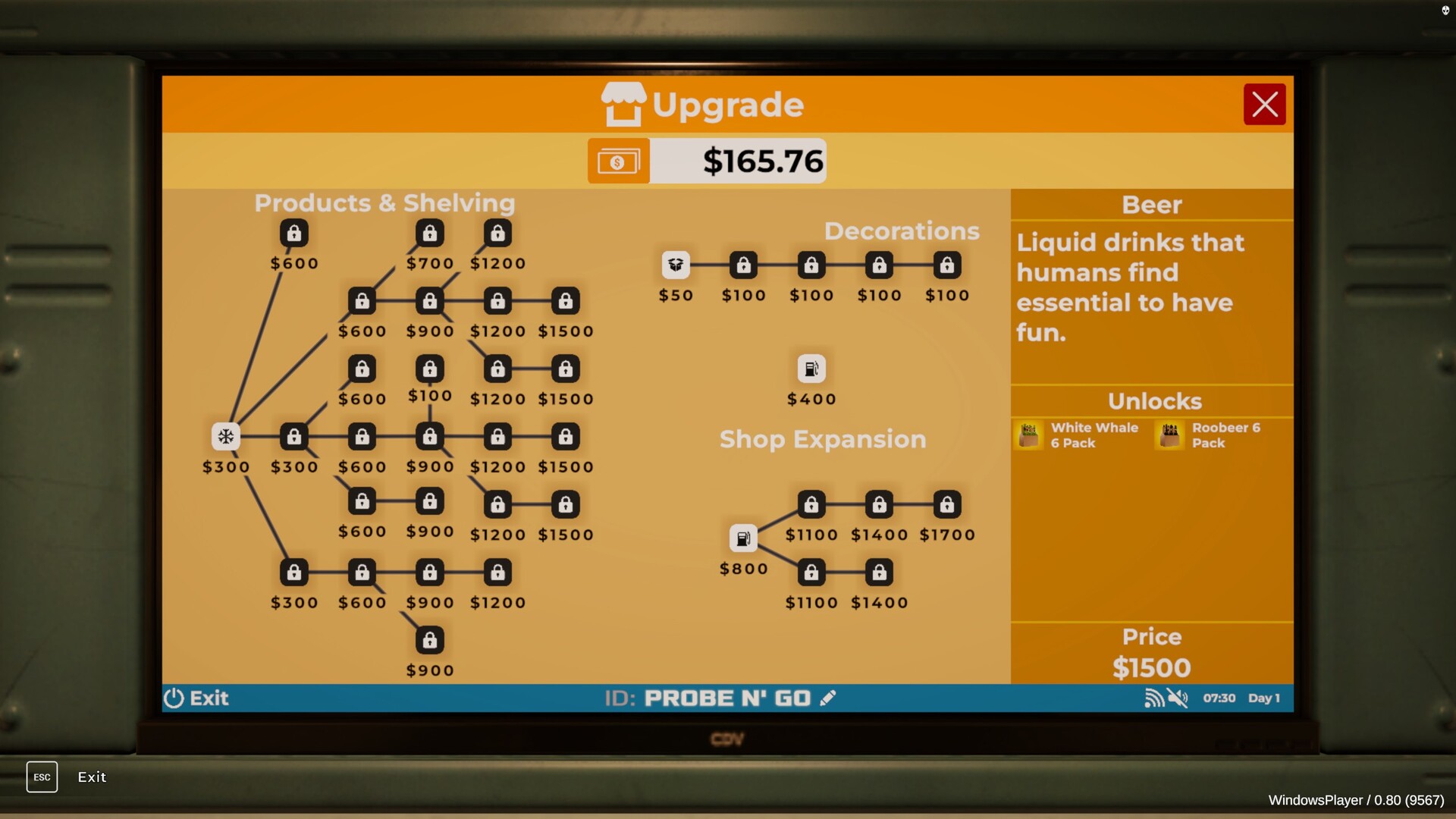
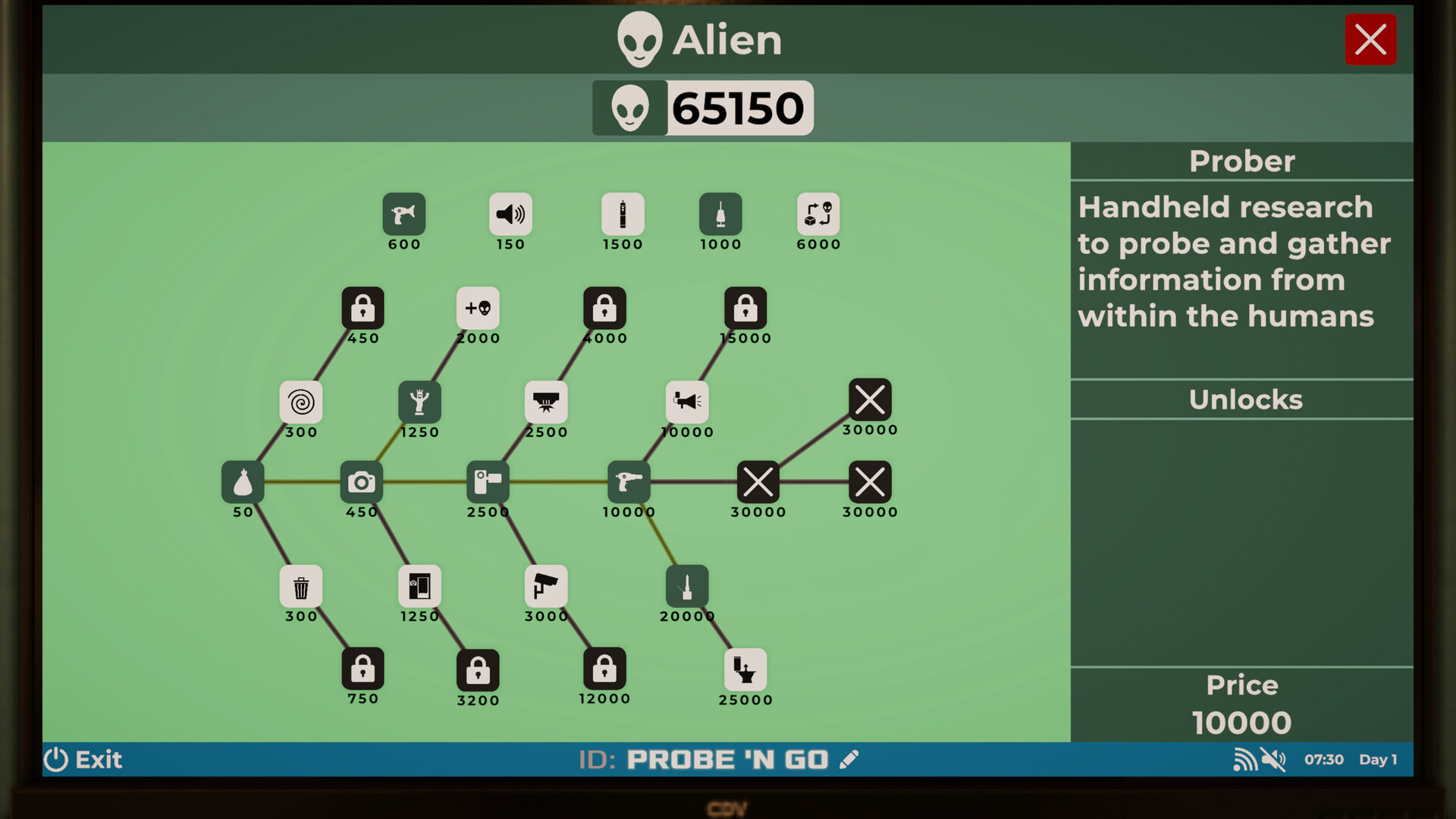
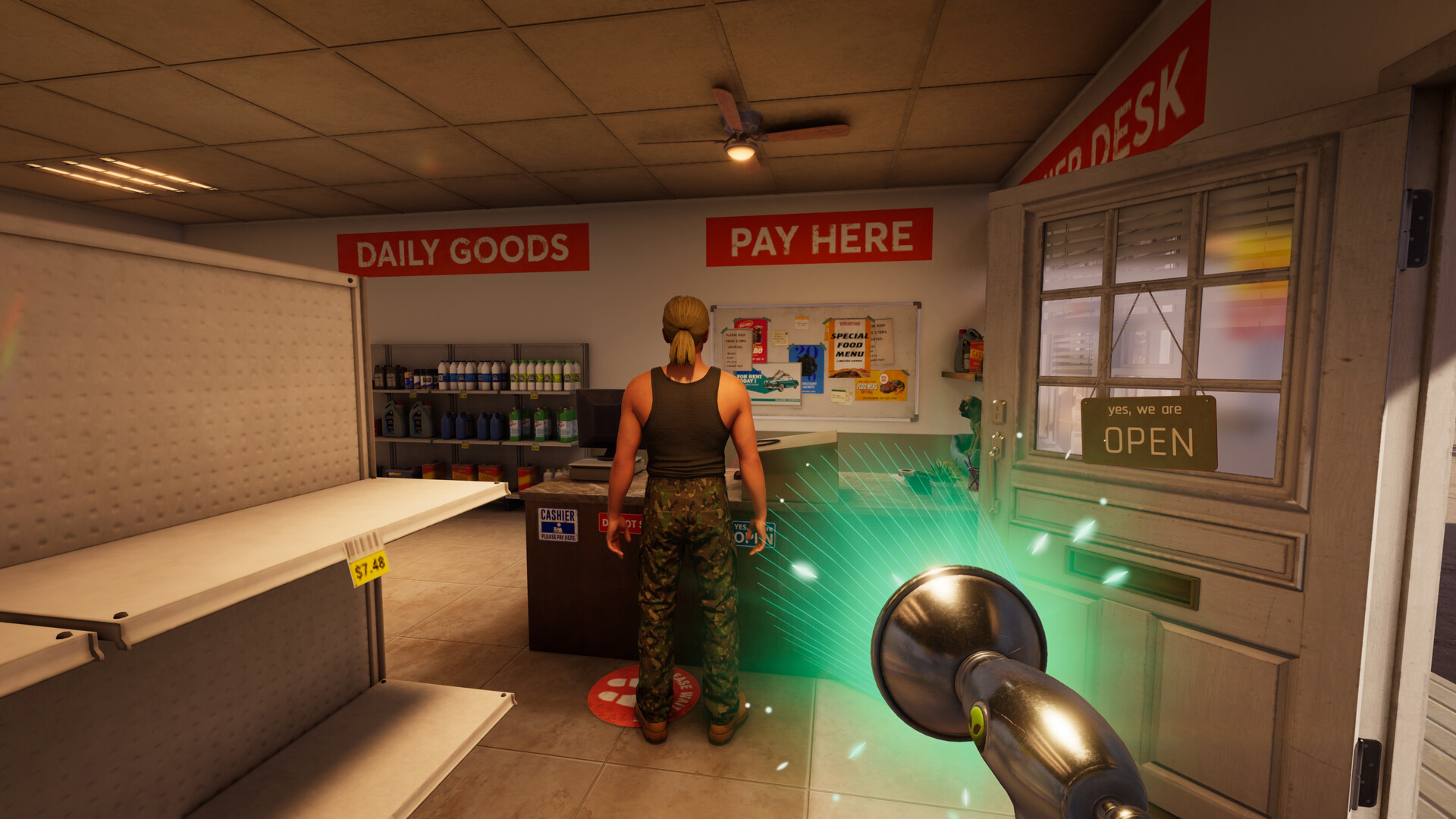
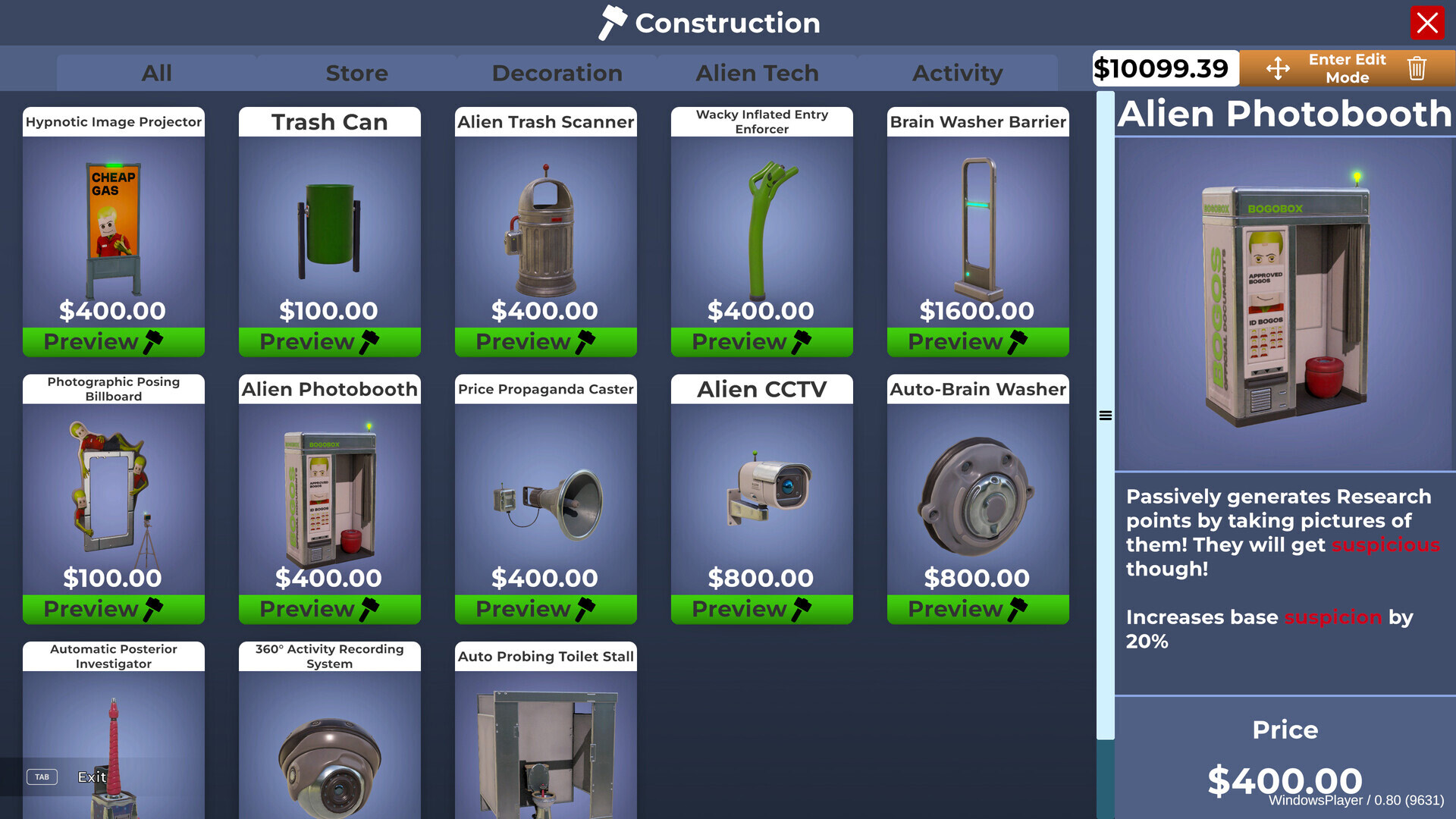

During the day, players stock shelves, cook food, refuel cars, and keep customers happy. Between shifts, they scan unsuspecting visitors, steal research data, and try very hard not to get caught by government inspectors. Completely normal gas station management.
The concept landed. Just a few months after launch, Roadside Research had earned more than $8.5M from roughly 774K copies sold, all with a game at a base price of just $12.99. More than $3.5M came in during its launch month alone. Much like Schedule I, the strongest performance came almost immediately after release.
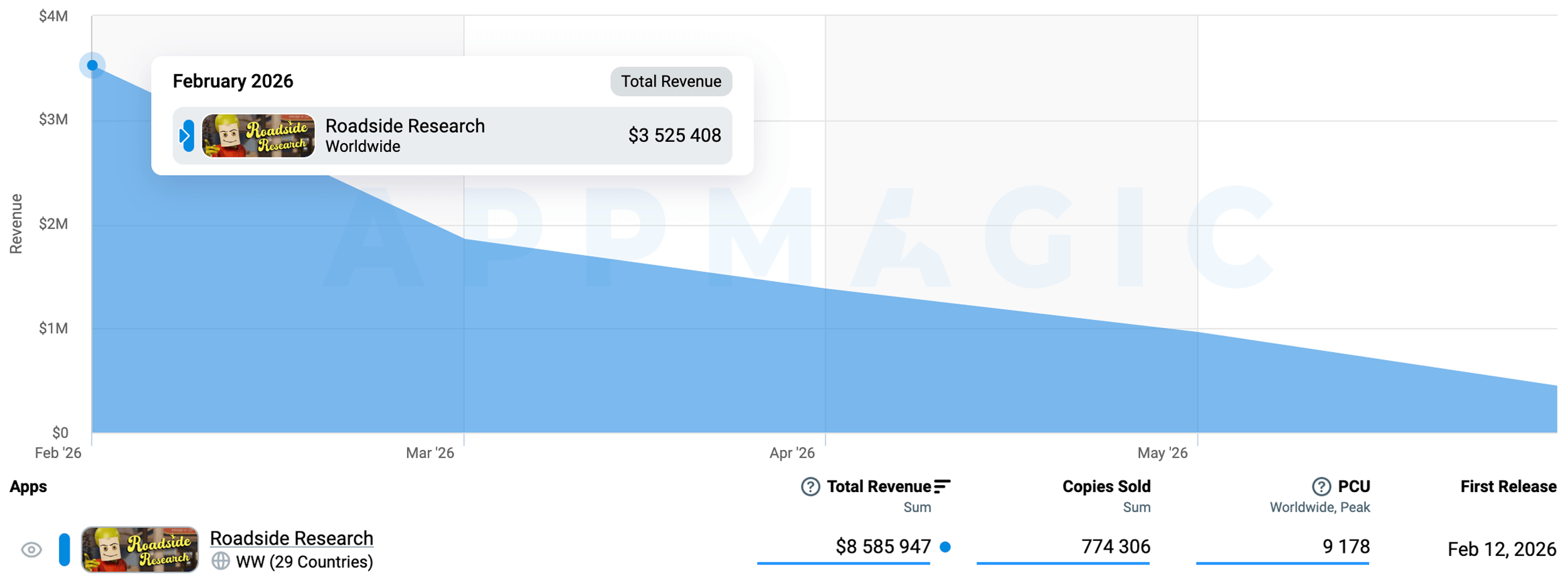
Roadside Research: revenue over time
Looking at these games, it's becoming harder to draw a line between business sims and co-op sims. The progression loops are often almost identical; what's different is the role the multiplayer aspect plays. Co-op creates a steady stream of moments worth clipping and sharing, turning gameplay into UGC-driven marketing across social media.
And this is the advantage we can hardly underestimate: every viral clip can reach players that a traditional trailer never would. The unpredictable moments that friendslops generate travel naturally across both short- and long-form videos, driving enormous amounts of organic traffic in the process. And in 2026, there is little sign that this formula is becoming any less effective!
Worth keeping an eye on:

Performance comparison of select co-op simulators
- Crime Simulator is another entry in PlayWay's growing collection of crime-themed Simulators, swapping business management for co-op break-ins and house robberies. The idea is already closing in on $10M in revenue from 862K copies sold.
- Kebab Chefs! has barely been on Steam for a month, yet it's already generated more than $8.4M from 562K copies sold. Building, expanding, and running a restaurant together isn't exactly a new idea, but this launch shows just how well the polished co-op management sims resonate with Steam players.
- Car Service Together, meanwhile, takes a more traditional approach to co-op. Instead of friendslop-style mayhem, it asks players to repair cars, upgrade the garage, and grow their business together. So far, that has translated into nearly $5M from 276K copies sold.
- Restaurats leans much further into co-op chaos than traditional restaurant sims, replacing realism with frantic teamwork, flying ingredients, and the occasional friendly sabotage. That mix has already generated more than $3.1M from 227K copies sold.
If co-op sims are built around chaos, our next category is all about cleaning up the mess and restoring order.
Cleanup Sims
Cleanup sims ask very little of players: keep going until the mess disappears. Whether players are washing, sorting, organizing, or restoring, the reward is always the same: watching chaos slowly turn into order—and that's hard to put down.
That also makes cleanup sims much trickier to build than they look. These games live and die by the tiniest detail. Every animation, every sound effect, and every visual cue has to reinforce that feeling of satisfaction. Getting there often means refining dozens of tiny interactions until everything feels right. The mechanics are only half the job—the real challenge is making every action feel satisfying.
Long before cleanup sims carved out their own niche on Steam, Frozen District's House Flipper had already turned restoration into a simulation fantasy players couldn't get enough of. The series has stayed relevant through years of updates and DLC, while newer cleanup sims have simply narrowed that fantasy down to increasingly specific tasks.
PowerWash Simulator 2
There was never much doubt that PowerWash Simulator 2 would end up in this category. Released by FuturLab in October 2025, the sequel has earned $17.8M from over 699K copies sold. With a base price of $24.99, it has become one of Steam's most successful cleanup releases of the past two years.
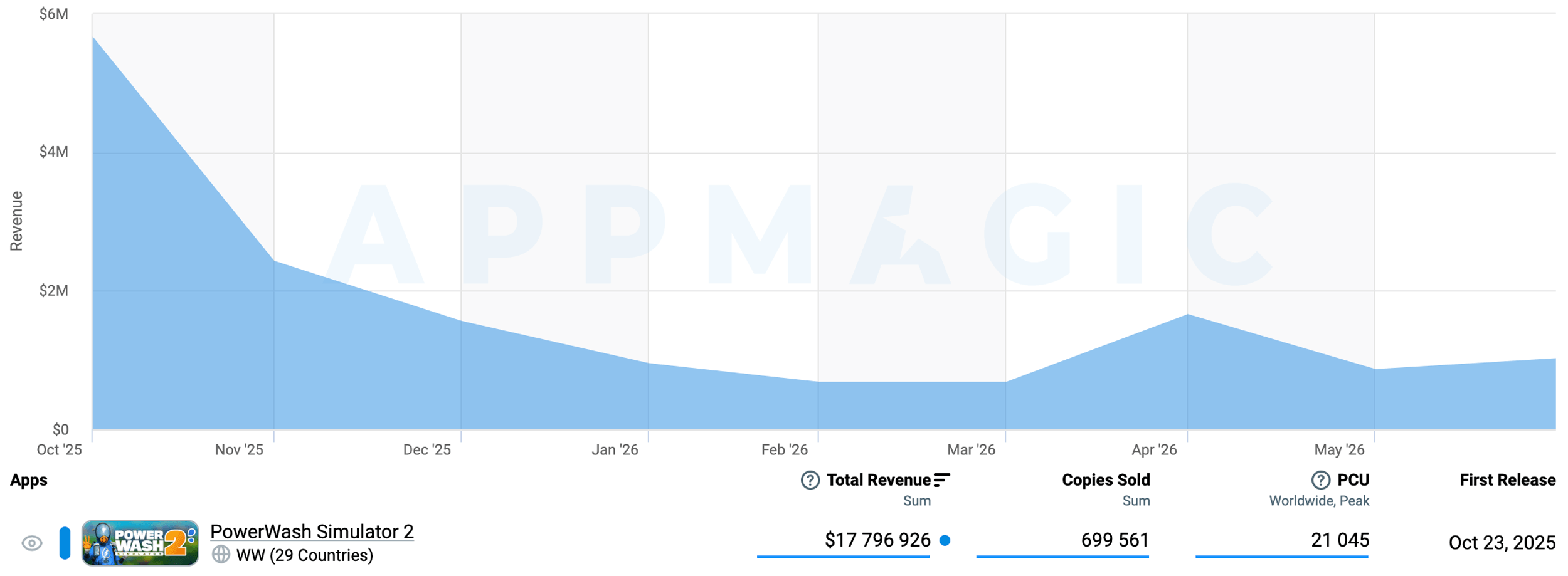
PowerWash Simulator 2: revenue over time
The core loop barely changed. Players are still washing dirt off walls, vehicles, rooftops, playgrounds, and just about anything else developers can cover in mud. New tools, multi-stage jobs, split-screen co-op, and a growing list of locations simply give players more ways to enjoy that same satisfying loop.
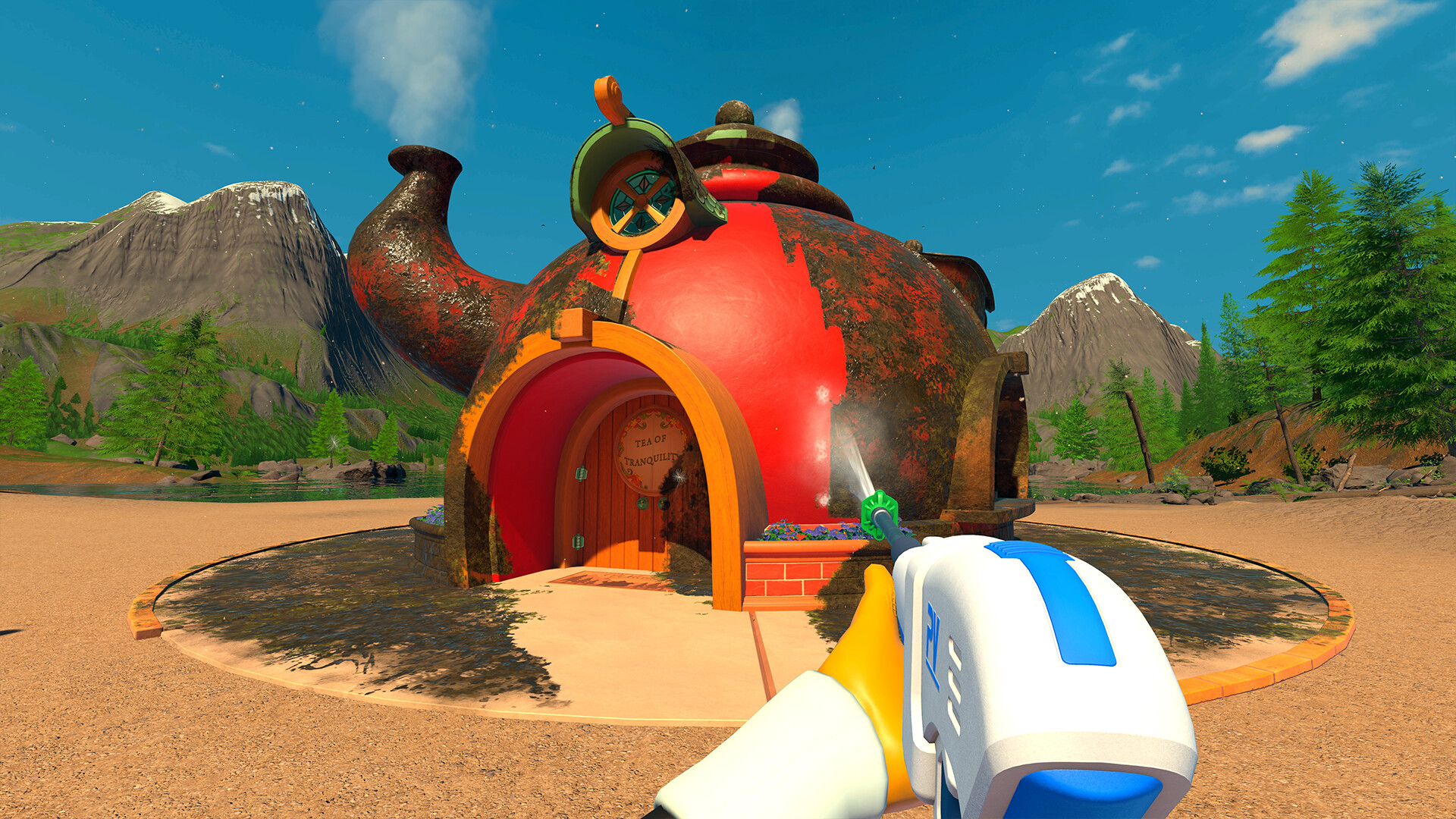
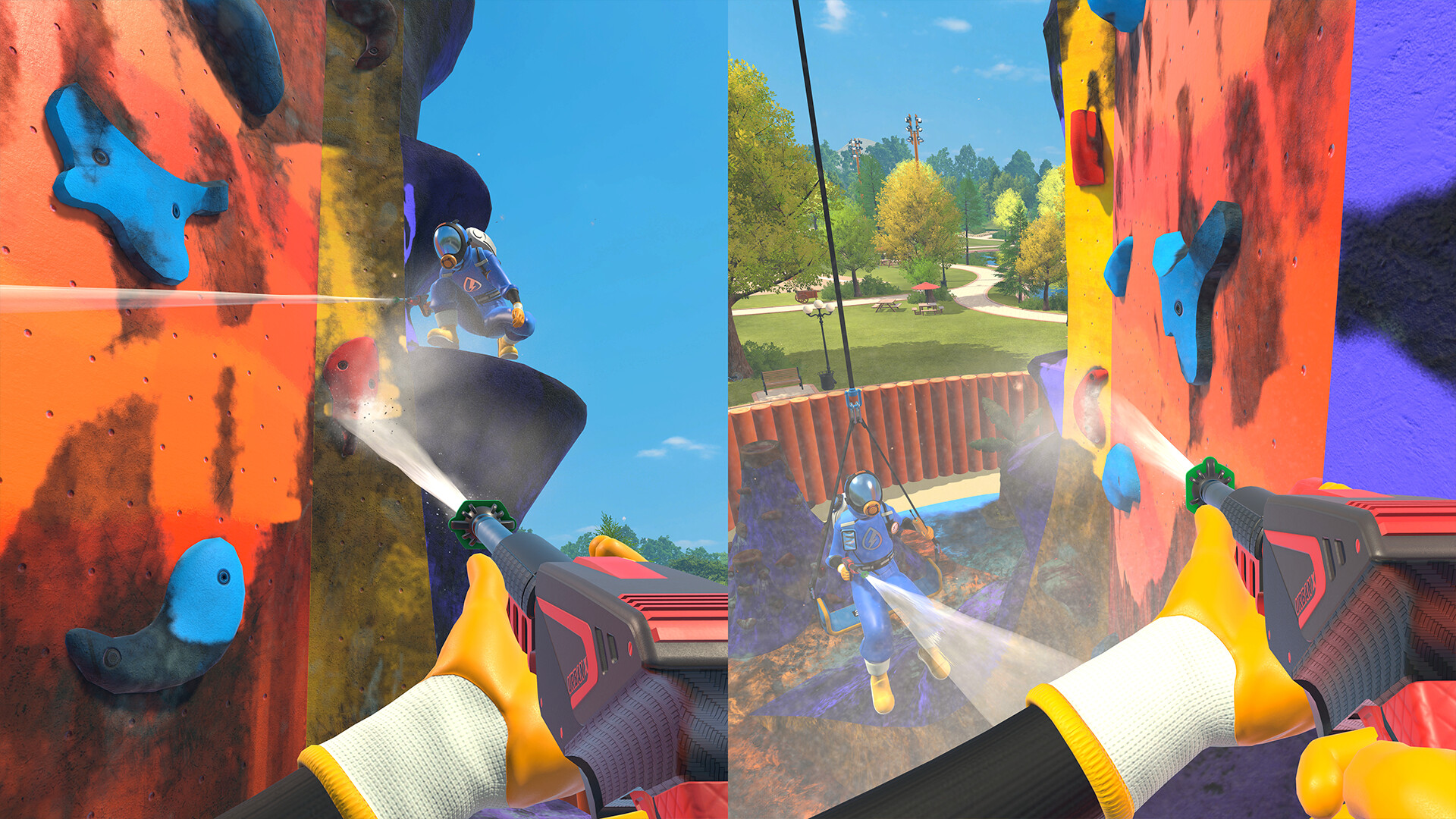
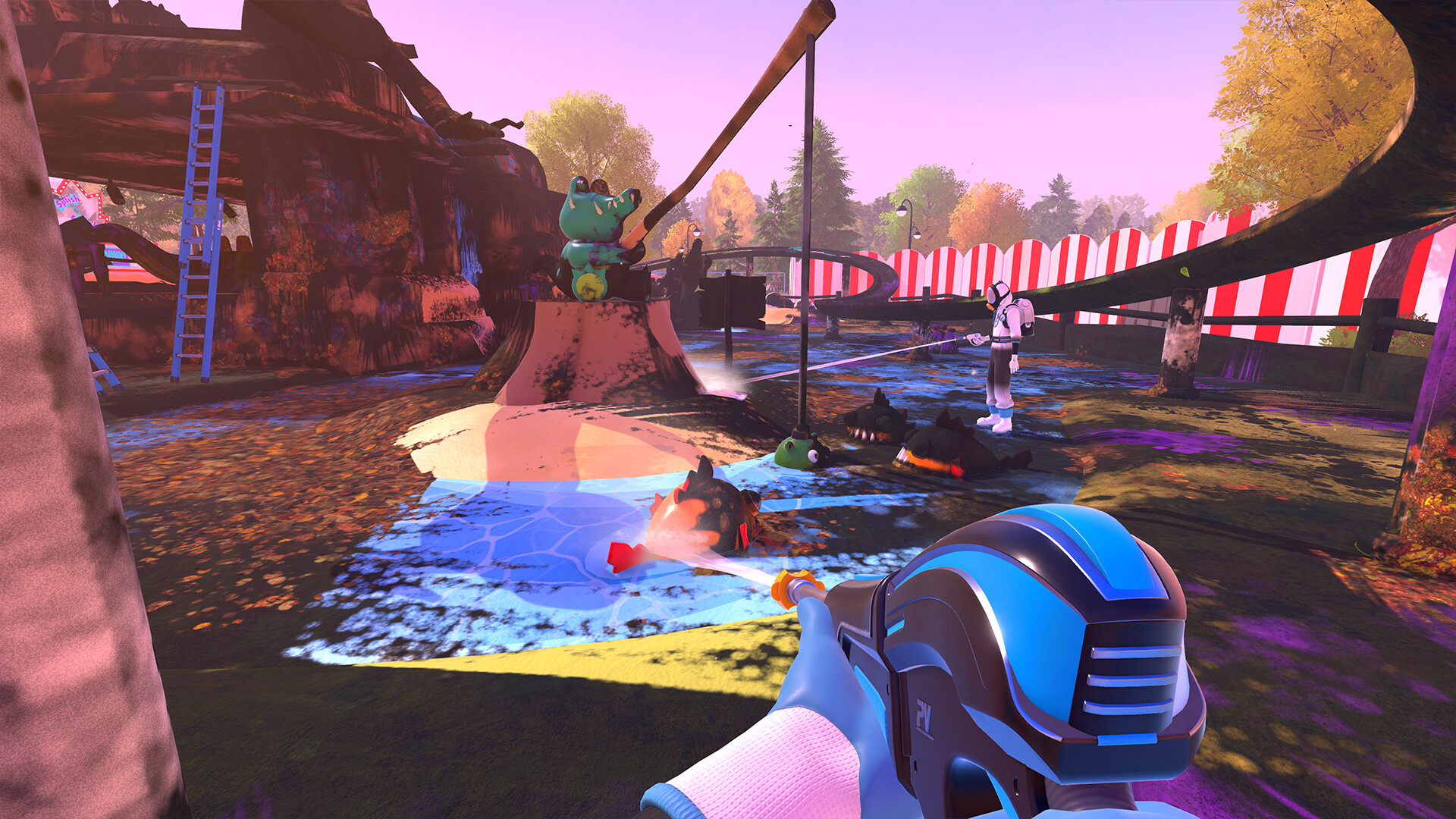

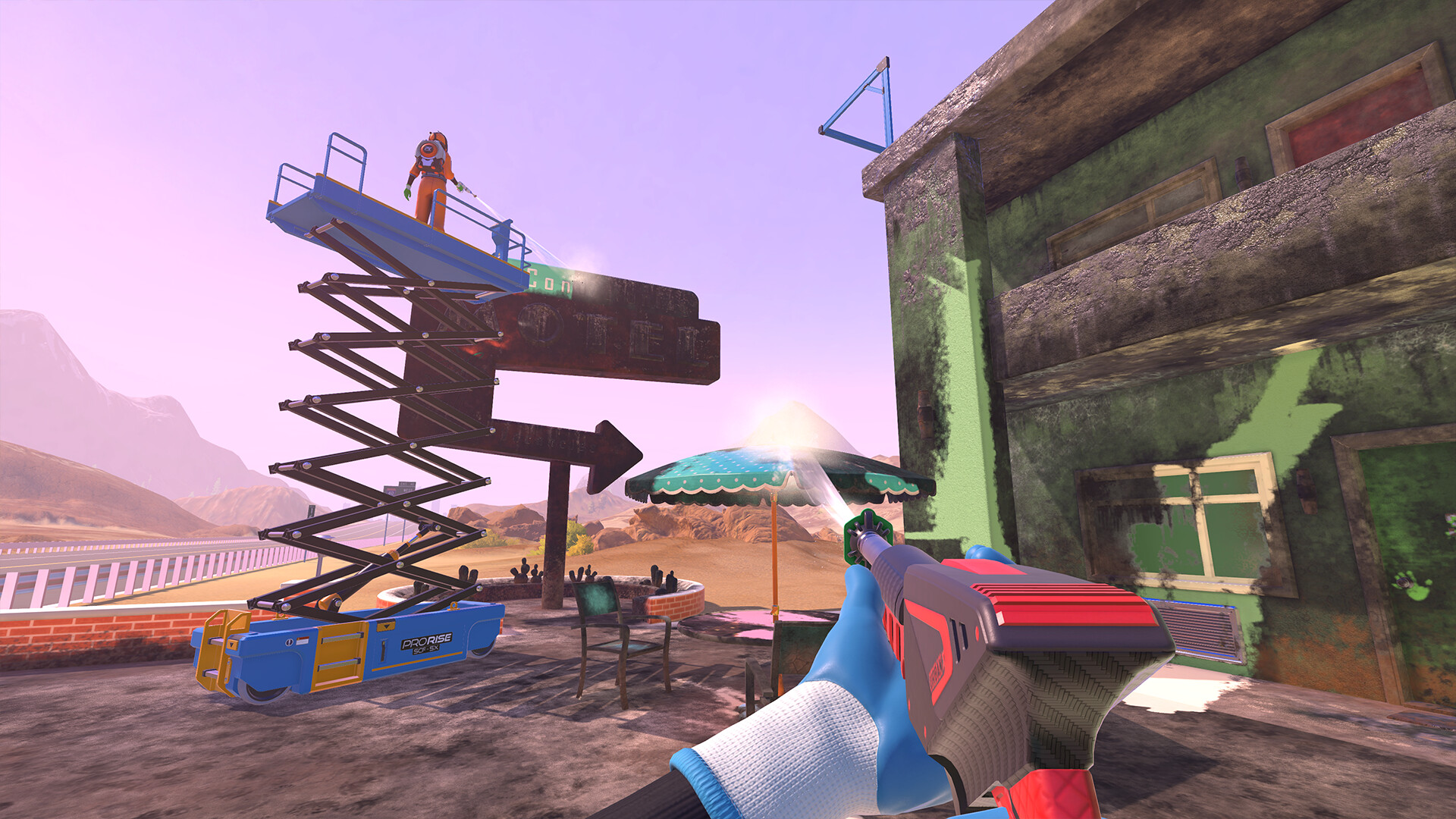

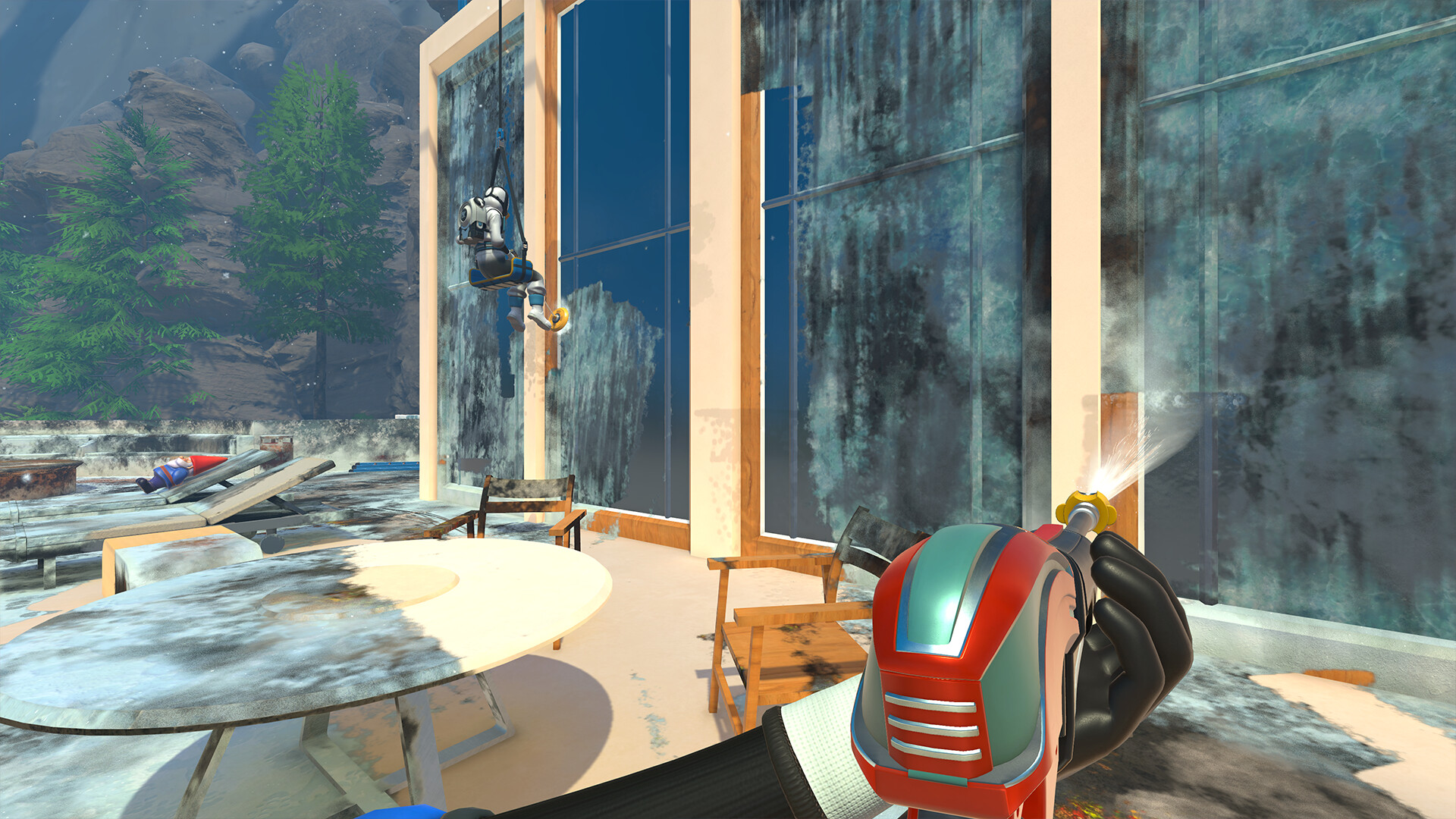
The original PowerWash Simulator proved that cleanup sims had plenty of room to grow after launch. Years of DLC, crossover collaborations, new jobs, and regular updates kept players coming back. PowerWash Simulator 2 is already doing the same, with both free updates and paid expansions planned throughout 2026. That makes post-launch support feel less like an extra and more like an expected part of the genre.
And the costs add up quickly. In the US, the base PowerWash Simulator is priced at $24.99, while each of the six major crossover packs included in the Ultimate Satisfaction bundle costs $7.99. Buying the game and all six packs separately brings the total to $72.93, almost three times the original entry price. The bundle reduces that to $58.33, but it still shows how much additional revenue a successful premium game can generate after launch!
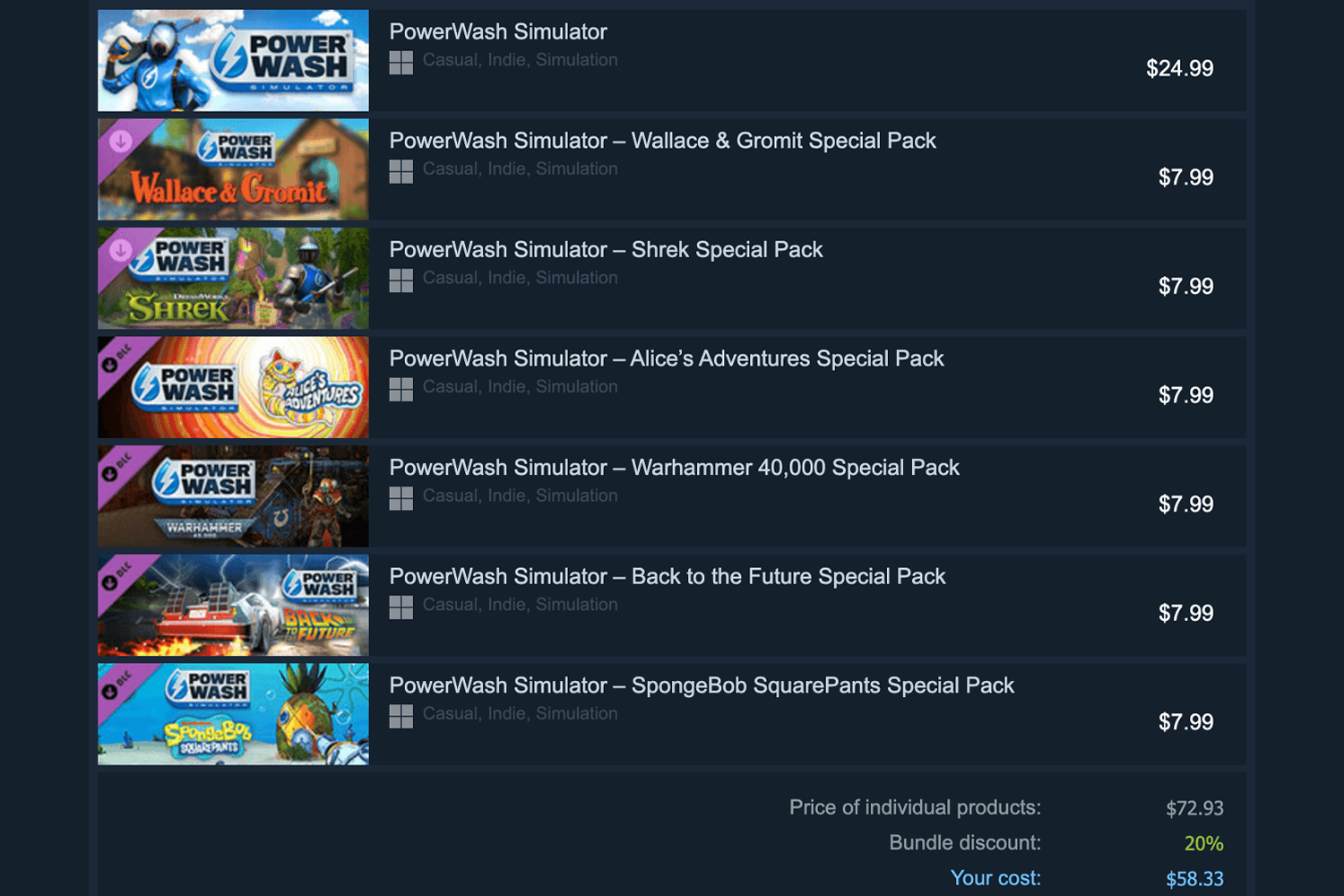
PowerWash Simulator: Steam bundle pricing
This is a different approach from the small, inexpensive assortment packs used by Supermarket Simulator. PowerWash Simulator sells larger themed campaigns built around recognizable entertainment brands such as Shrek, SpongeBob SquarePants, Back to the Future, or Warhammer 40,000. The mechanic stays untouched, while each collaboration provides a fresh setting, a clear reason for existing players to return, and access to an audience that may discover the game through the licensed IP.
Librarian: Tidy Up the Arcane Library!
Librarian: Tidy Up the Arcane Library! showed just how far the cleanup formula can stretch.
Released by ArtRising in April 2026, the game swaps pressure washers for more than 3,000 misplaced books scattered across a magical library. Players restore order by sorting every volume into the correct place while unlocking spells that speed up the process, highlight matching series, or automatically shelve books. Every organized shelf opens up another corner of the library, while the evolving soundscape keeps every action satisfying.
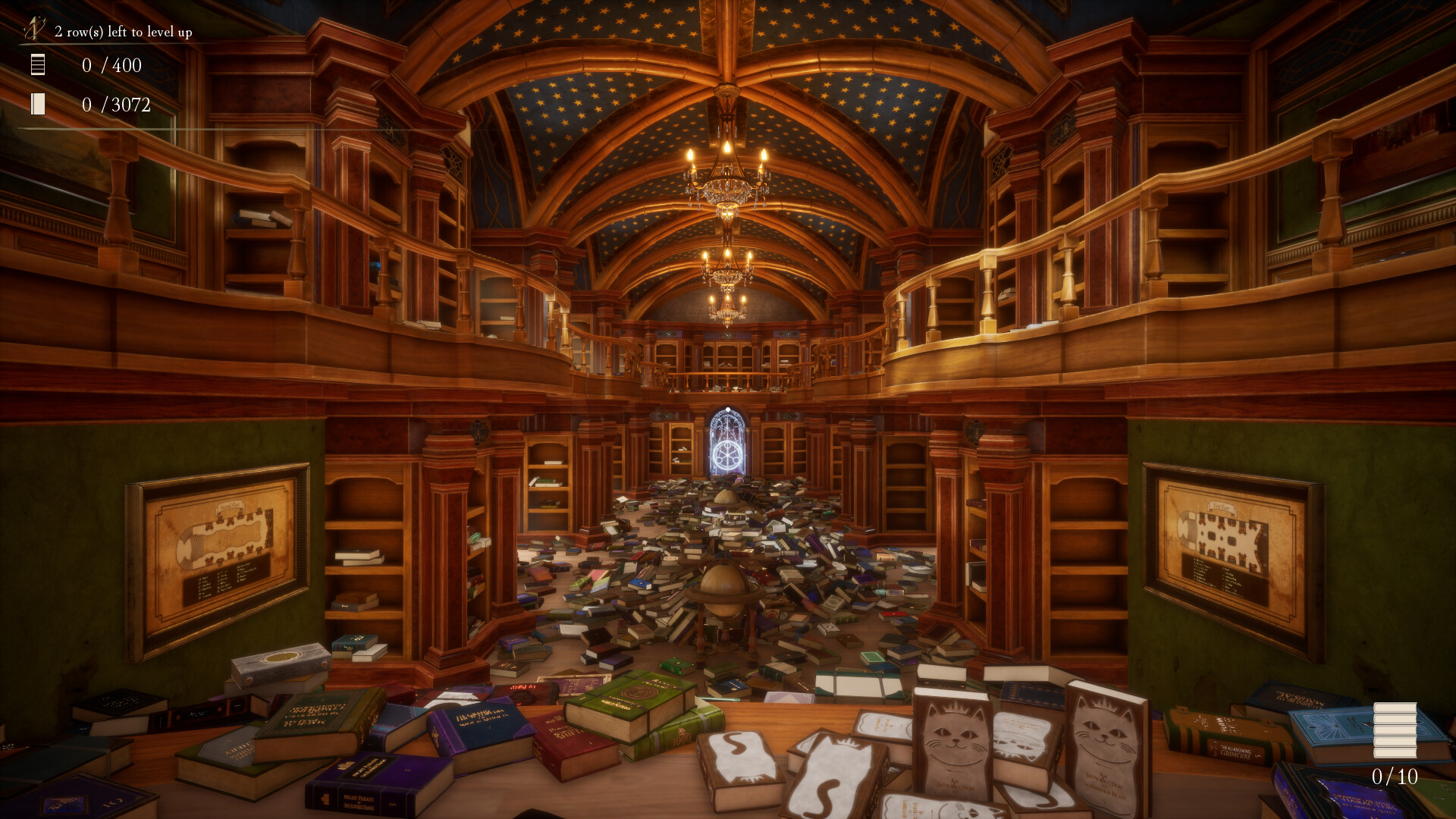




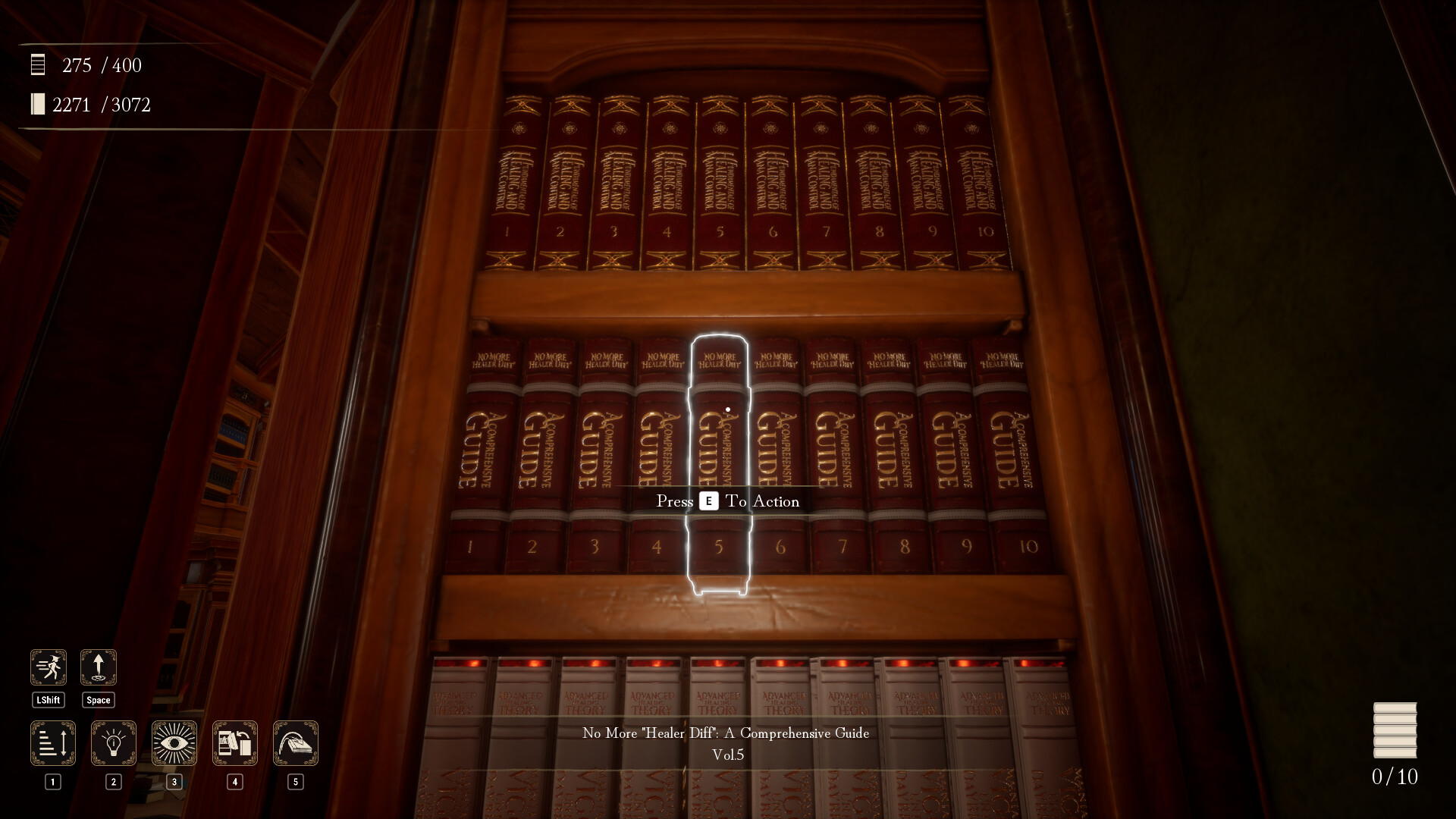


Steam players embraced the idea almost immediately. Within weeks, Librarian had already generated almost $7.2M from over 1.2M copies sold, even breaking into Steam's Top 10 by monthly copies sold in May 2026. Today, players can pick it up for $5.99.
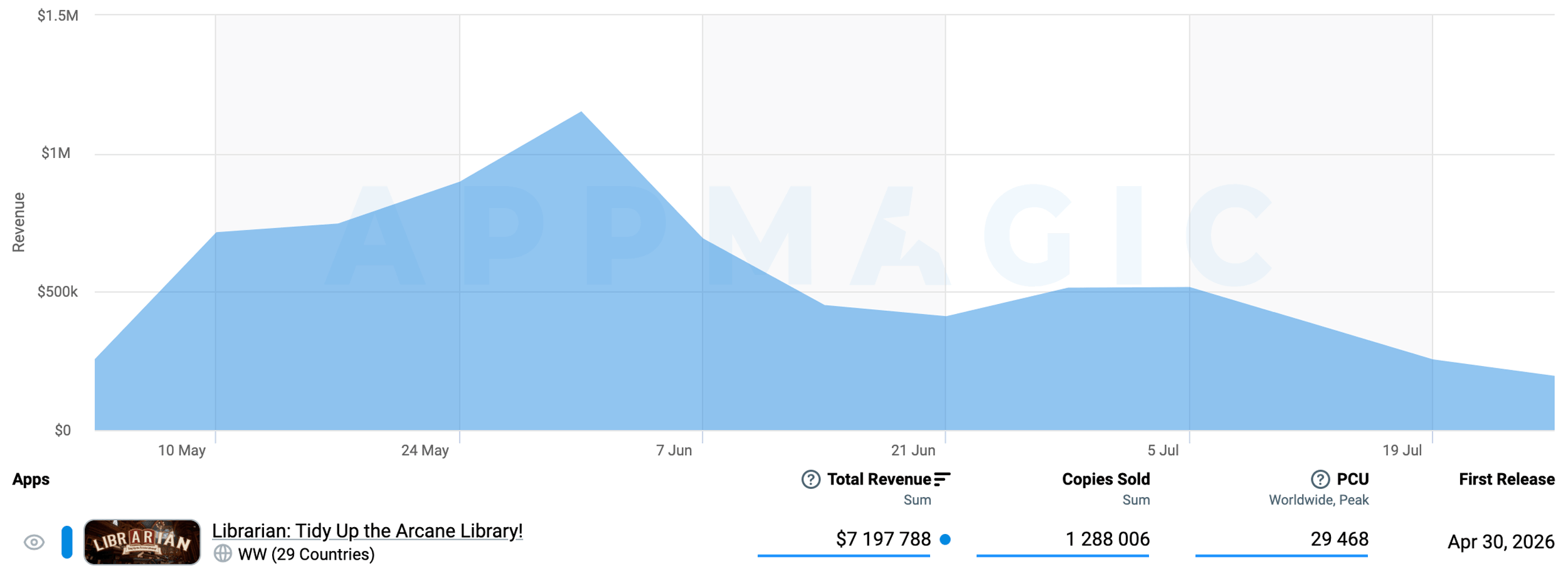
Librarian: Tidy Up the Arcane Library!: revenue over time
Librarian also fits neatly into Steam’s growing wave of cozy sims. It is relaxing, low-pressure, and built around a satisfying routine rather than challenge. But it also points to a more interesting business opportunity for cleanup games: developers do not necessarily need to make them larger or more mechanically complex.
Sometimes, one polished activity is enough. Librarian has a single location, a single objective, and very few systems competing for the player’s attention. At $5.99, that narrow scope is much easier to sell. Players are not expecting a giant simulation and are paying for a clear fantasy, a satisfying routine, and a few pleasant hours of putting everything back where it belongs.
In a way, it is almost like selling a single highly polished level as a complete game. Judging by Librarian's performance, that can be a surprisingly effective business model.
And if one level is all you're building, you might want to make sure it lasts a little longer than Steam's two-hour refund window. Librarian did exactly that. The game takes considerably longer to complete, and the developers even added a dedicated Steam achievement for anyone who manages to finish it in under three hours!
Worth keeping an eye on:

Performance comparison of selected cleanup simulators
- Cash Cleaner Simulator reimagines cleanup as organized crime. Instead of washing floors or restoring objects, players launder money… literally. Orders arrive with tight deadlines, requiring players to clean cash, sort bills, remove counterfeits, and prepare deliveries under pressure. That interpretation of the cleanup formula has generated more than $7.3M from over 510K copies sold.
- Goblin Cleanup asks a simple question: what happens after the heroes leave the dungeon? Instead of fighting monsters, players clean up the mess together. This co-op twist has already brought in nearly $4.5M from 257K copies sold, making it one of the strongest examples of multiplayer cleanup done right.
- Hozy leans fully into the growing appeal of cozy sims. Instead of adding more mechanics, it focuses on presentation. Nearly every interaction is packed with ASMR-inspired audio and tiny visual details, making even the simplest chores feel satisfying. That level of polish is likely one of the reasons the game has generated more than $4.2M from 368K copies sold.
- Supermarket Chaos hints at another direction worth following: collectathon-style games. Like Librarian, it's all about collecting, organizing, and putting hundreds of objects back in place. Rather than adding more mechanics, these games keep the formula simple and build everything around one satisfying activity. Even though it launched only at the end of June 2026, Supermarket Chaos has already generated over $750K from 163K copies sold, making it another promising example of the trend.
Building a Steam Simulator in 2026: Five Takeaways
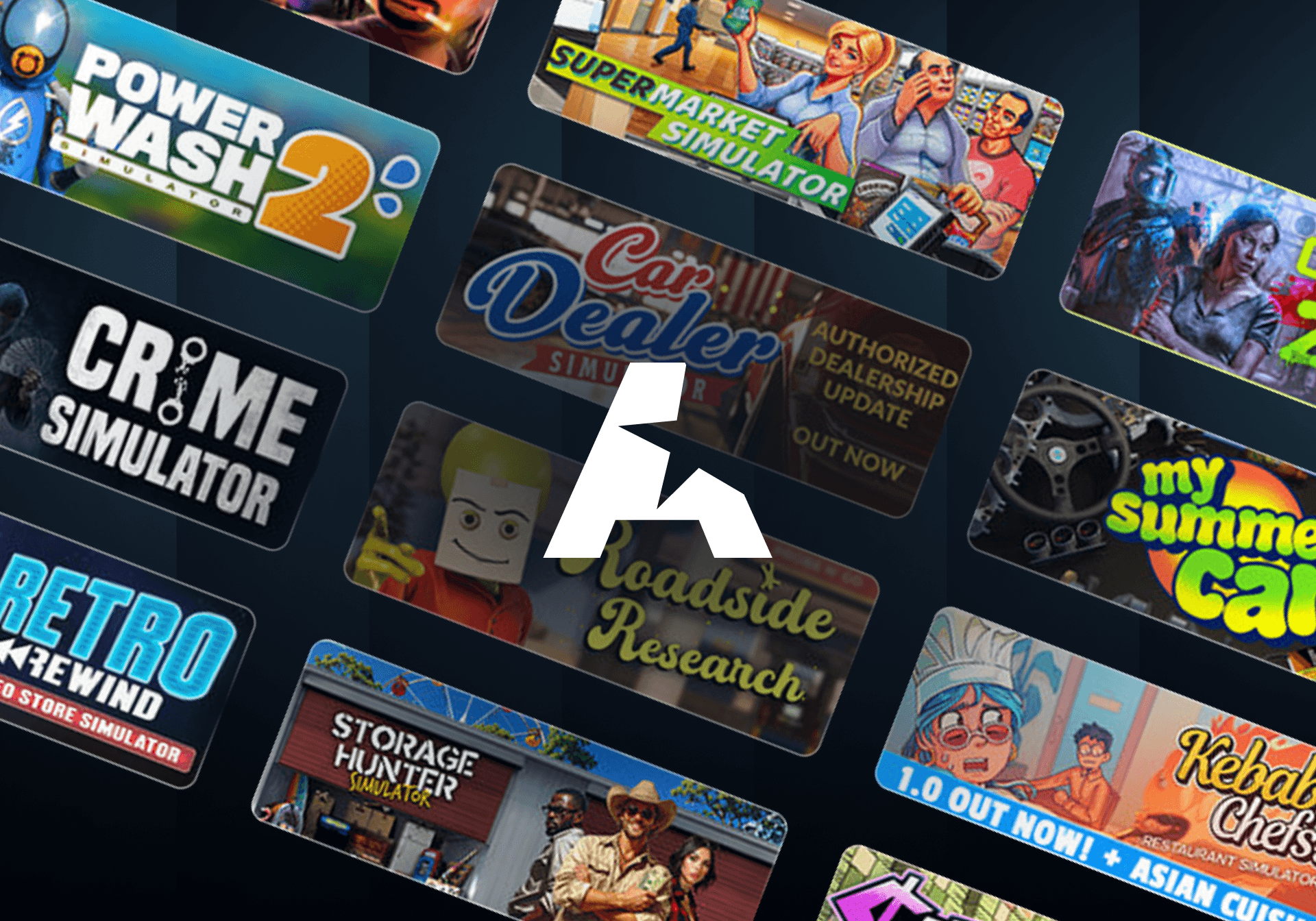
We set out to write this article in the hopes of answering one simple question: what counts as a Simulator in 2026? Well, that didn't quite go to plan. But we did come away with five takeaways every Simulation developer should keep in mind.
- Steam keeps rewarding games that are easy to grasp. Players see a fantasy, watch a few seconds of gameplay, and either get it… or they don't. There isn't much middle ground. In a storefront built around quick decisions, that kind of clarity has become a real advantage.
- Being niche isn't much of a risk anymore. Some of the strongest performers we looked at revolve around ideas that would've once sounded far too specific. Steam players seem much more willing to embrace quirky concepts, as long as the gameplay loop delivers. Standing out no longer feels like a bonus—it almost feels expected.
- One polished routine beats a realistic simulation. Today's Simulators don't have to recreate an entire profession, or even real life. More and more often, one satisfying activity is enough to support an entire premium game. The fantasy gets players interested, but it's the routine that keeps them coming back.
- "Just one more task" is replacing "just one more level". Progression still matters, of course, but what really keeps players going is the satisfaction of finishing one small job before jumping onto the next. The smoother that cycle feels, the easier it becomes to keep playing for hours.
- The smallest details often carry the biggest weight. Many of these games don't rely on cutting-edge graphics or dozens of interconnected systems. Instead, they obsess over tiny interactions: an object snapping into place, a perfectly timed sound, a clean animation, etc. Believe it or not, players notice.
Now, if you'll excuse us, we're off to scout for more games about jobs or crafts we never knew we wanted… Ah, wishlisting has never felt this natural.