Top Events of The Month: May 2024
Welcome to our new column, highlighting the hottest LiveOps trends! Learn about innovative mechanics, profit-boosting events, and engagement strategies. This edition covers Complementary events in Brawl Stars, Gardenscapes, Frozen City, and Travel Town.
— by Alexandra Doroshenko and Andrei Zubov

Welcome to our new column, where we gather the top-performing LiveOps trends and dissect the latest events of the best mobile games in the market. Trendy mechanics, profit-boosting events, and innovative update strategies: everything you need to enhance your LiveOps.
Analyzing mobile game events is crazy these days, considering the amount of content you need to consume and digest. But don’t worry, we've got you covered!
How come? That’ll be thanks to our magic tool—the LiveOps and Updates Calendar—that monitors 170+ games in real time. We’ve done all the heavy lifting for you: each event comes with screenshots, expert commentary, and a detailed chart showing its impact on the key metrics!
In the first edition of our digest, we explore the power of complementary events—a practice that can boost both engagement and monetization metrics of main events. So, let’s get into it!
What Complementary Events Are About
Complementary events are precisely what their name suggests: they complement an ongoing main event with additional layers of progression and rewards designed to enrich the player experience and boost the main event's performance.
Complementary events are most often launched alongside complex and long-running events that usually see the metrics drop in the middle. To counter this decline, short mini-events use time pressure and FOMO (the “fear of missing out”), extending session lengths and offering unique rewards that encourage spending.
Let’s explore how top-grossing games like Brawl Stars, Gardenscapes, Frozen City, and Travel Town work their complementary events to keep players invested and investing.
The Carton Event In Brawl Stars
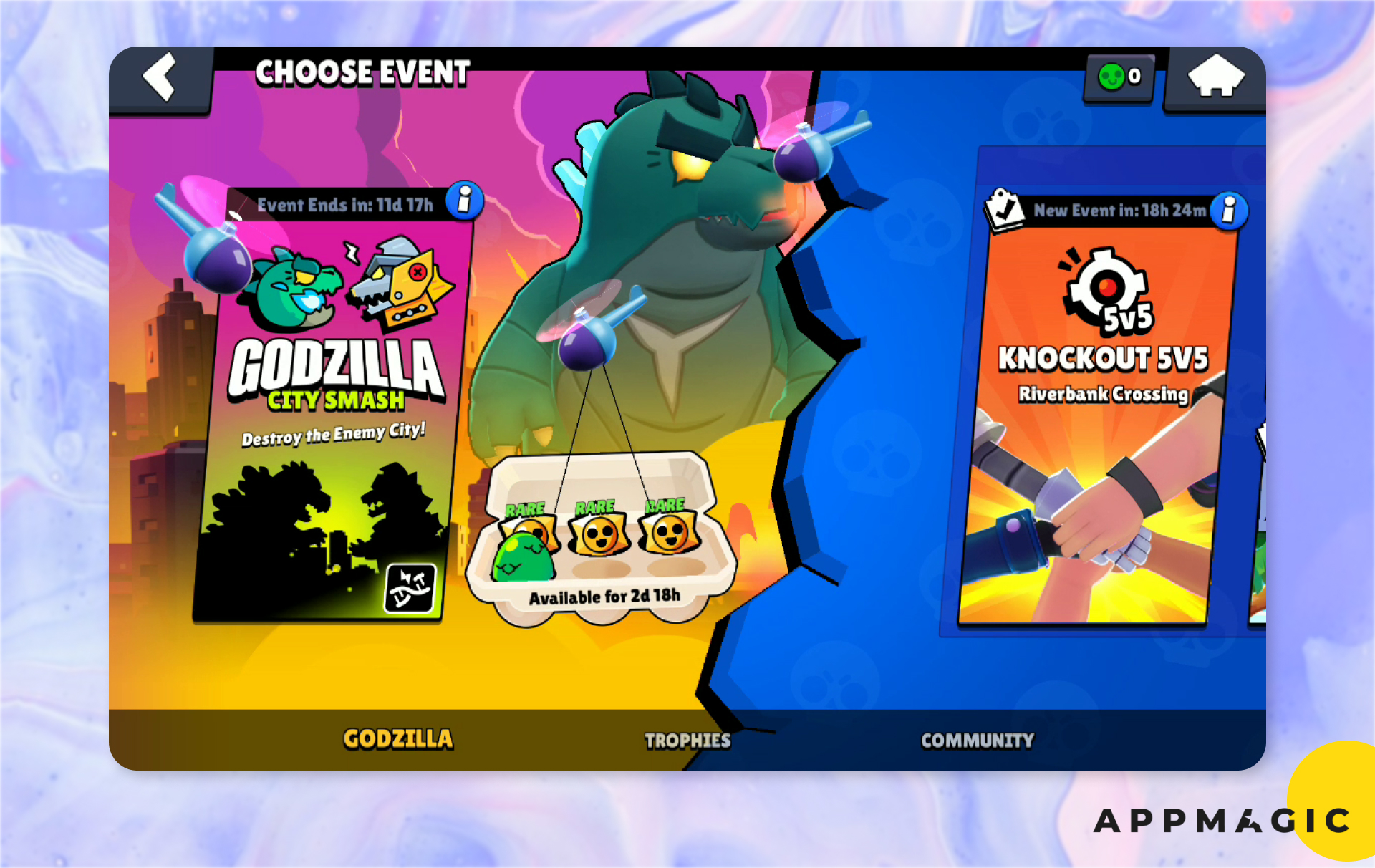
Found in: Brawl Stars (complementary to Godzilla City Smash)
The recent IP collaboration with Godzilla was an immediate success. One day after the event’s release, the game saw a 70% spike in daily revenue! While this was a temporary surge, spikes like these still contribute to the long-term growth of the game.
During the new Godzilla collaboration, Brawl Stars introduced a new type of gacha called Monster Eggs, obtainable by participating in thematic events. The complementary Carton event came with a new thematic mode, undoubtedly contributing to the game’s success during the collab.
To win a match in thematic mode, players receive a gacha egg, which is stored in a Carton. You can only claim rewards from the eggs when the carton is full. Besides, claiming all the rewards is only available once during each Carton event, which lasts for three days and reappears after ending.
Good old FOMO motivates players to fill the carton before the time is up. This, in turn, encourages them to enter the new mode more often or buy offers that include eggs.
By regularly introducing a variety of new updates like this, Brawl Stars managed to grow its revenue by x6.8 times if comparing April 2024 to September 2023, which is when the updates started rolling in!
Fever Events In Scapes Games
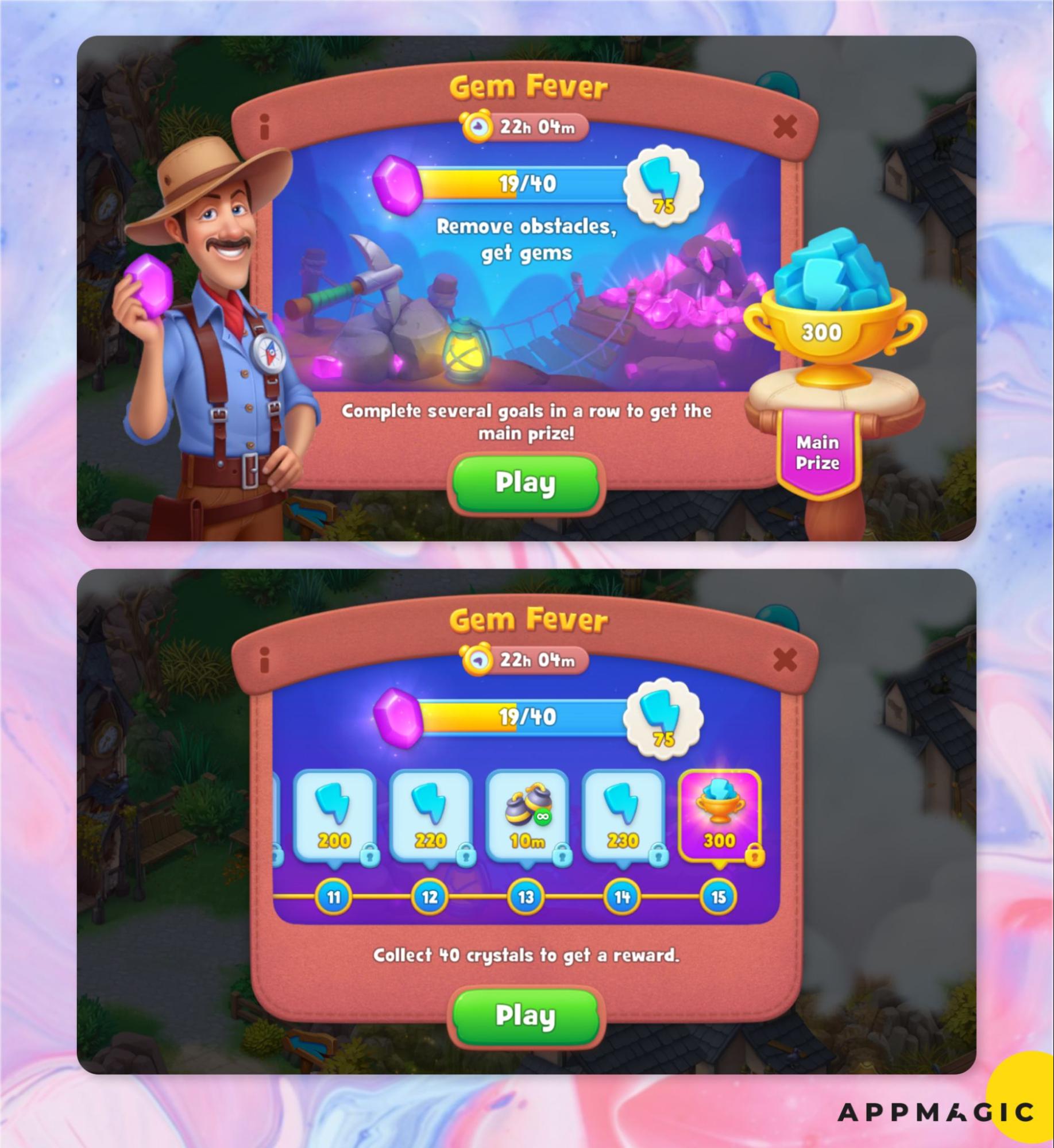
Found in: Gardenscapes, Homescapes (complementary to Expedition)
In Scapes games, short complementary events like Gem Fever or Expedition Fever, launched during the long-running Expedition event, can boost revenue by up to 60%!
They introduce additional progression tied to completing the main event’s milestones and offer valuable rewards. Fever events return a significant amount of energy spent in the Expedition, allowing players to progress faster in the main event if they participate in the complementary one. It is an effective means of driving engagement and extending session length.
Additionally, special Expedition offers during the Fever event are almost too good to refuse: players’ investments have a greater effect due to additional returns from complementary events. When implemented wisely, this strategy can significantly boost ARPU during the main events.
Competitive Race Events In Scapes Games And Frozen City
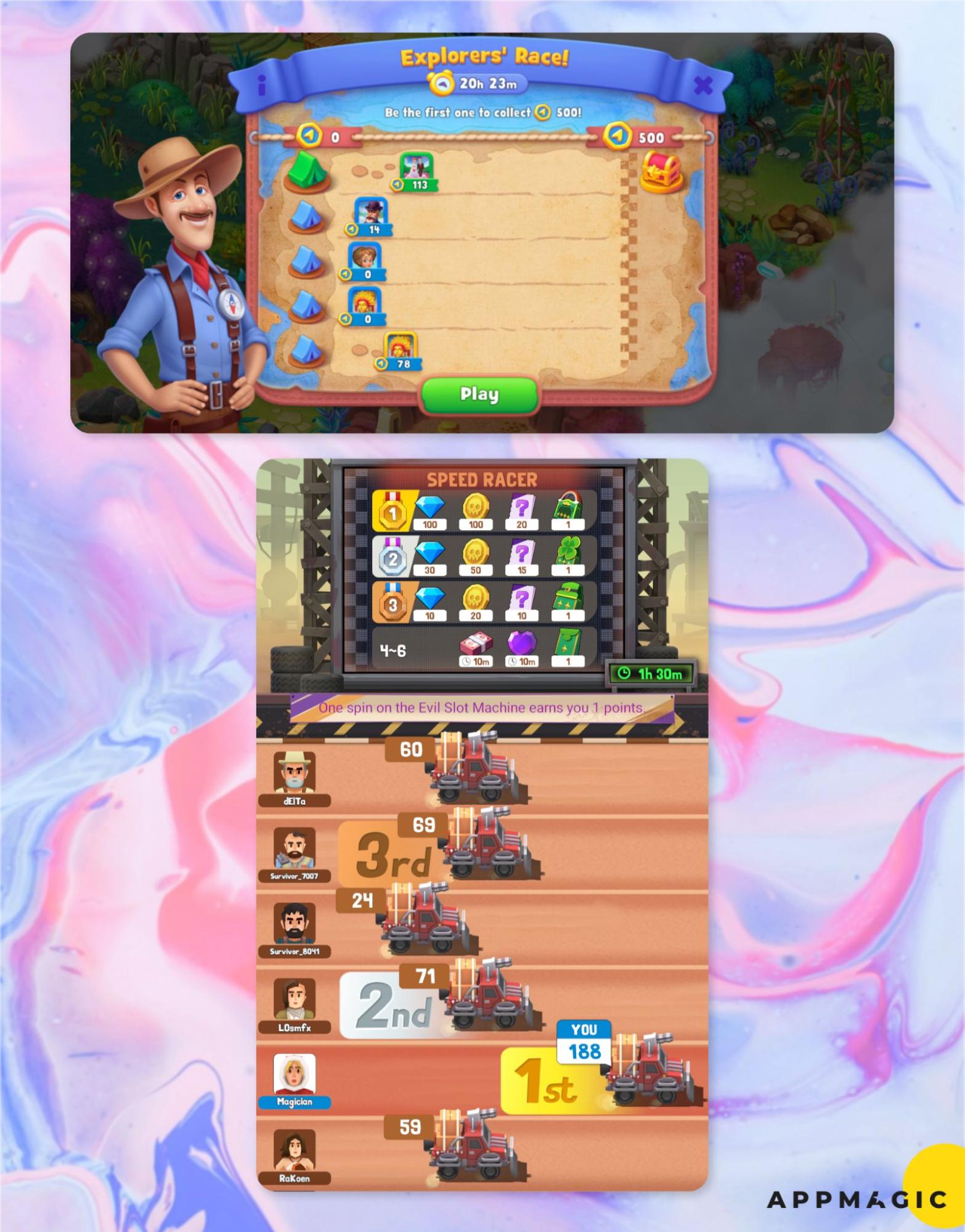
Found in: Gardenscapes (complementary to Expedition), Frozen City (complementary to main events in separate locations)
Race events feature a dynamic leaderboard with five competitors, visualized as a race. Players compete by earning points to advance along the track, all starting from the same position. The mechanics can differ between the games: — In Gardenscapes, players earn event points by progressing in the Expedition. They have 24 hours and an exact finish line: the first person to reach it claims the rewards; — In Frozen City, players advance by spending event currency. The event has no finish line and lasts only two hours. After the time is up, rewards are distributed based on players’ positions on the leaderboard.
In these two examples, progress in the Race events depends on the main event, bringing a social competition element to it. To outpace others, players tend to play longer sessions and log in more frequently.
As a result, the event stimulates spending hard currency, often imposing so-called “corner cases” on players where they are effectively cornered into purchasing as the only quick and simple way to advance on the leaderboard.
Token Events In Travel Town
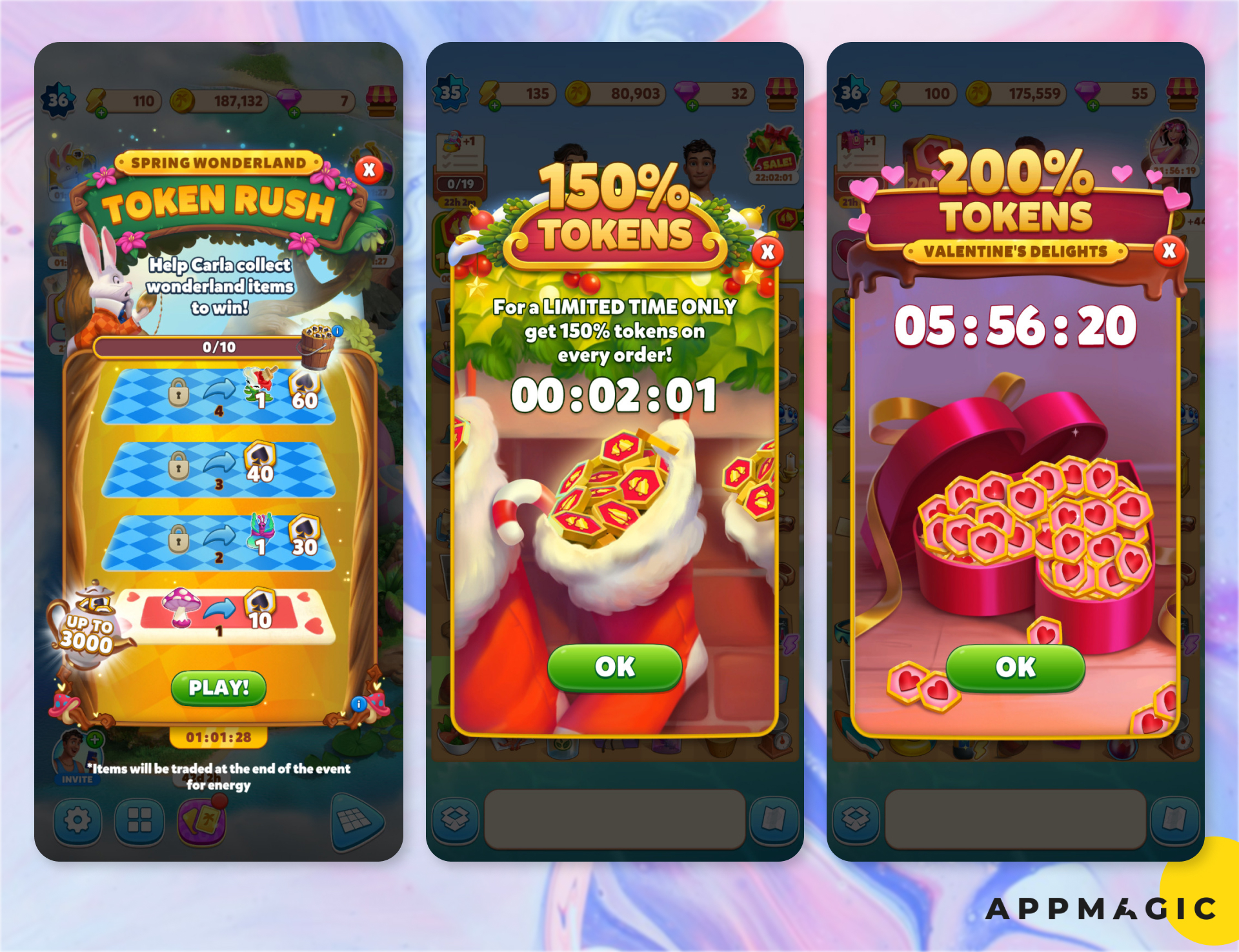
Found in: Travel Town (complementary to events with a decorations exchange store)
Events with a decoration exchange store, such as Fantasy Island, are usually complemented by two mini-events. The first type is Token Rush, which can boost revenue by up to 30%. It introduces additional time-limited orders that reward players with points for the main event.
In turn, these event points can be exchanged for unique decorations in the main event’s store, which makes them extremely valuable. That’s why players are likely to play longer sessions and encounter more corner cases, eventually purchasing hard currency and offers to keep the event coins flowing.
The second type includes 150% and 200% Tokens mini-events, functioning as a temporary perk that allows players to receive more points for the main event. The impact on metrics is similar: longer session => corner case => purchase.
Interestingly, the 150% Tokens event transforms into the 200% Tokens as the main event nears its end. The increased value, combined with the growing time pressure, creates strong incentives for players to maximize their spending.
Complement And Engage
Complementary events are a powerful strategy to boost player engagement and spending during complex, long-running events. As demonstrated by top-grossing games, this approach can significantly enhance a game’s profitability during the operational stage—which is especially important in times of UA struggles.
These are just a few examples of the clever and fun events developers introduce every day to captivate and monetize their audiences. If you want to always stay up to date on these trends, try our LiveOps and Updates Calendar.
Stay tuned for more insights, and comment below on which aspects of LiveOps you’re most interested in. Who knows, maybe we’ll be covering your topic of interest next!