Screw Puzzle Evolution: How Wool Sort Is Twisting the Genre
Wool Sort put a creative spin on Screw Puzzle mechanics and sparked a new wave of Wool Puzzle titles. We explore what’s driving this trend—and where it might lead next.
— by Lera Kalashnikova and Andrei Zubov

Mobile gaming moves fast—and sometimes, a new subgenre emerges that catches the market by surprise. This year, Wool Sort by Wing Soft introduced a fresh twist on Screw Puzzle mechanics, replacing screws with spools of thread, which players sort and connect to form a complete image. And this has formula quickly proved successful.
Within just a few months, the game climbed up the top charts. Launched in early 2025, Wool Sort made a notable leap in April and surged by more than 50 positions within the Screw Puzzle category based on downloads. It currently holds the first spot among the top-trending Screw Puzzle titles over the past three months, with over 4M total installs.
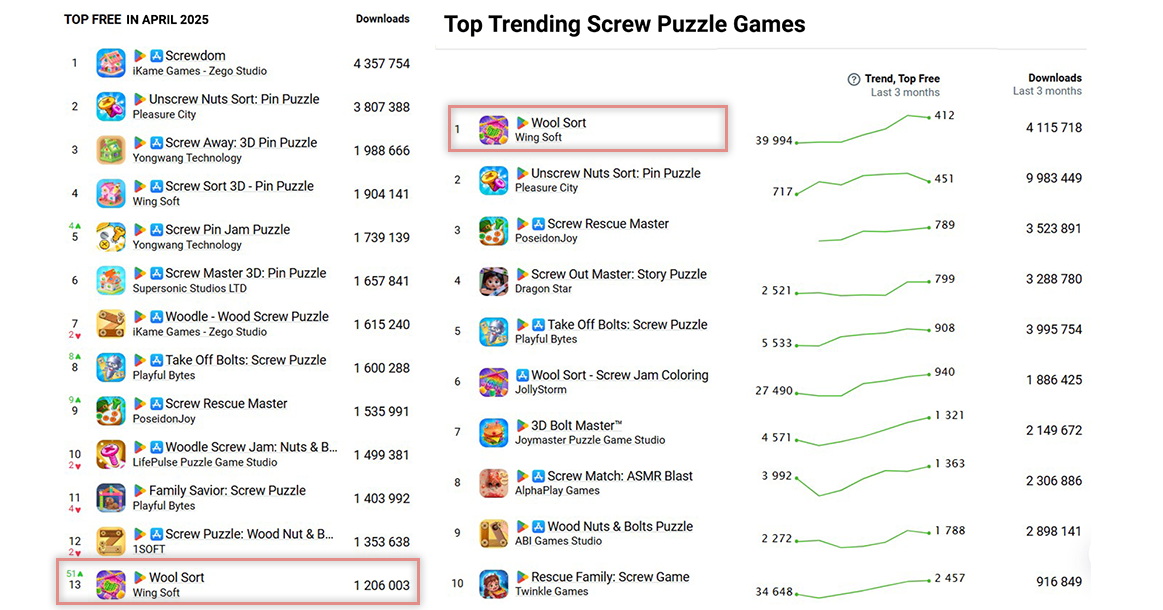 Top Free Screw Puzzles in April 2025 & Top Trending Screw Puzzles
What's most intriguing is not just the game itself, but the trend it quietly set in motion: wool puzzles. AppMagic’s Advanced Search data shows a clear increase in similar releases, with developers seeking to replicate *Wool Sort*’s rapid growth.
Before 2025, only seven wool-themed games with various types of gameplay had been released. Meanwhile, 19 new titles have already been launched this year—14 of them in April and May alone—following the game’s strong chart performance.
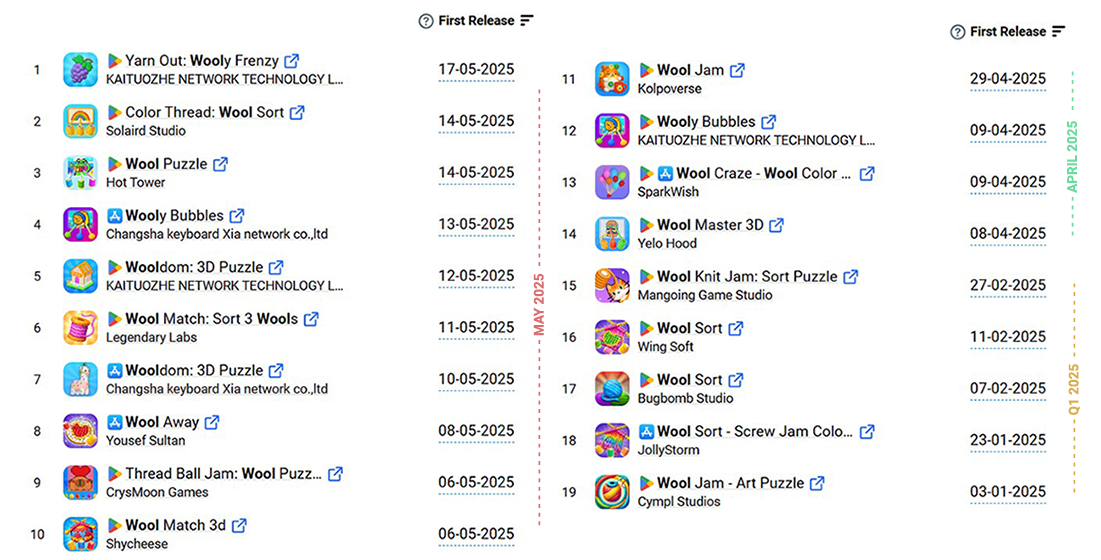 New “Wool” games released in 2025 in AppMagic’s Advanced Search
Another similarly standout title is Wool Sort - Screw Jam Coloring by JollyStorm. It’s an iOS-only game that ranks as the second best-performing Wool Puzzle with 1.8M+ downloads. It is very much the same game as the original Wool Sort, but due to unclear ties between Wing Soft and JollyStorm, we’re keeping the games separate for now. If you can confirm their affiliation, let us know at [email protected]. That said, this uncertainty doesn’t affect our analysis, so let’s dive right in.
In this article, we’ll be looking into the following: - What makes Screw Puzzles one of the top-performing genres today? - Which new elements does Wool Sort bring to the table? - How does *Wool Sort*’s monetization model differ from the current genre trends? - What are the key differences between *Wool Sort*’s and *Screw Jam*’s LiveOps strategies?
And finally: are Wool Puzzles the next market breakthrough?
Screw Puzzle: One of the Best Growing Genres of 2025
It’s no surprise that Screw Puzzles evolve. Every day, thousands of developers try to stake their claim and benefit from one of the most dynamic and scalable segments within the Hypercasual space.
In Q1 2025, the genre generated over $27M in revenue, which is nearly four times more than in the same period last year. Now, Screw Puzzles contribute 34.3% of the total Hypercasual IAP revenue, driving the Hybridcasual monetization in the segment.
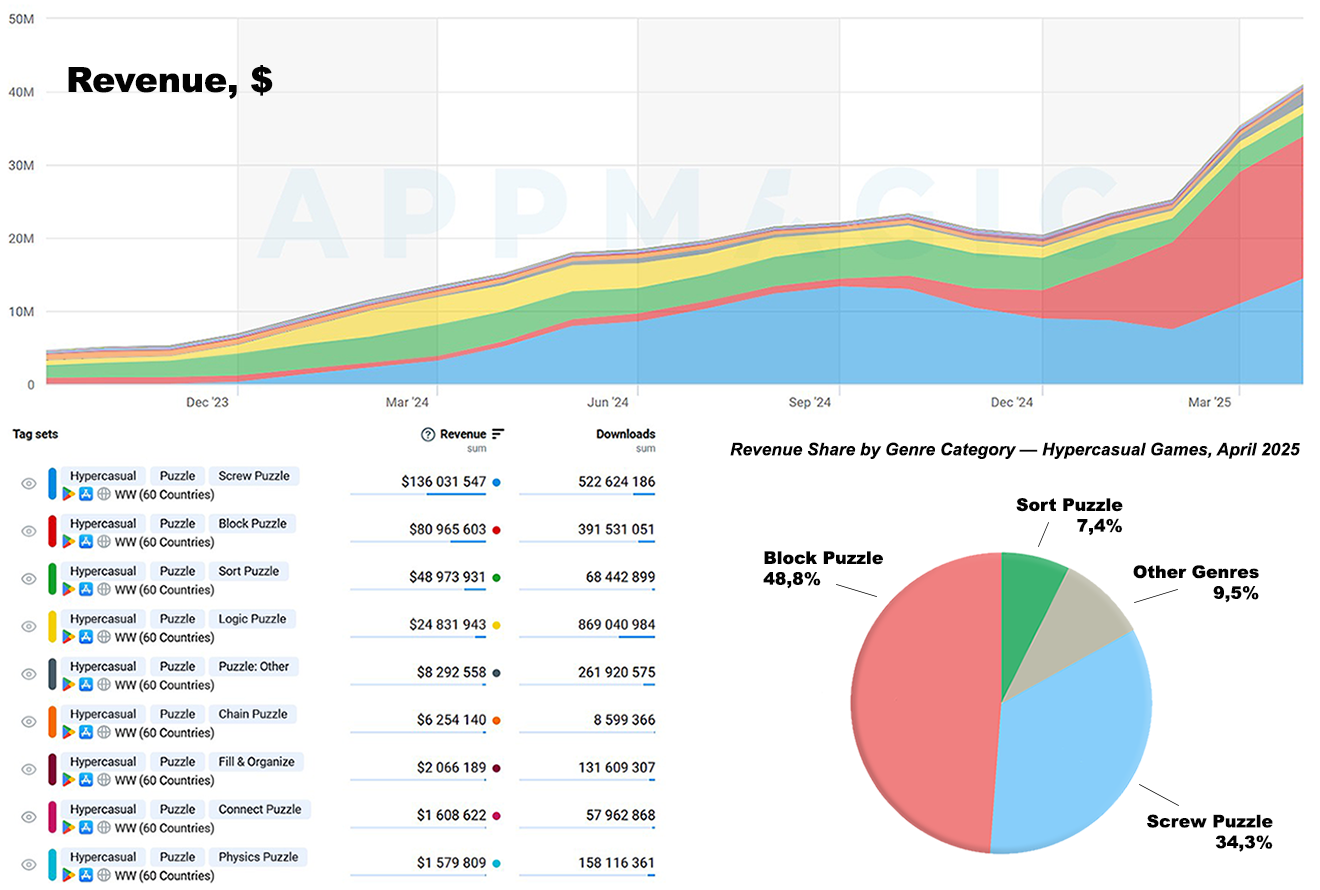 Hypercasual Puzzles Revenue Dashboard
Top titles like Screw Jam and Screwdom have led the Screw Puzzle category, setting IAP performance milestones for the genre. By layering casual features—such as boosters, meta systems, and optimized monetization—on top of simple core mechanics, these games helped push the genre toward Hybridcasual territory.
💡 For a closer look at how Hypercasual games are moving toward Hybridcasual, check out our Q1 2025 Hybridcasual Report.
However, Wool Sort takes a different path compared to top-performing Screw Puzzle games, including its closest gameplay reference, Screw Jam by Rollic Games. Analyzing the differences between the two can shed light on the ongoing shift toward IAP monetization and help predict where the wool-themed trend might head next.
Wool Sort vs. Screw Jam = Hypercasual vs Hybridcasual
While Wool Sort builds on the same gameplay established by top performers, the game combines these mechanics with a visually rewarding, craft-like experience. Instead of unscrewing bolts, players untangle colorful thread spools and sort them into groups of three by color.
These threads are then woven into parts of a larger image and gradually come together to produce a complete painting. Finished artworks are saved in the player's gallery—it deepens the game's meta layer and speaks to players who are motivated by collecting and completing sets.
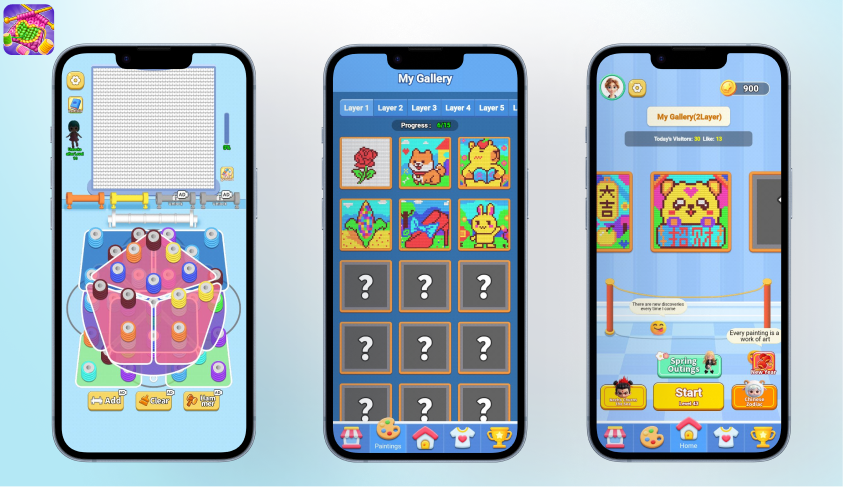
The game also has light progression features: players earn “likes” and “visitors” based on how many levels they complete, how often they play, and how many days in a row they log in. This adds a playful simulation element, turning puzzle-solving into a personalized creative journey.
Wool Sort is showing standout results, peaking at over 180K daily downloads and surpassing more than 2M installs in May 2025 already—milestones that even Screw Jam, the closest gameplay inspiration for Wool Sort, has never reached.
Despite its impressive download numbers, Wool Sort remains far behind in IAP revenue, with total earnings still under $40K. That signals just how heavily the game relies on the Hypercasual monetization model driven by ad revenue.
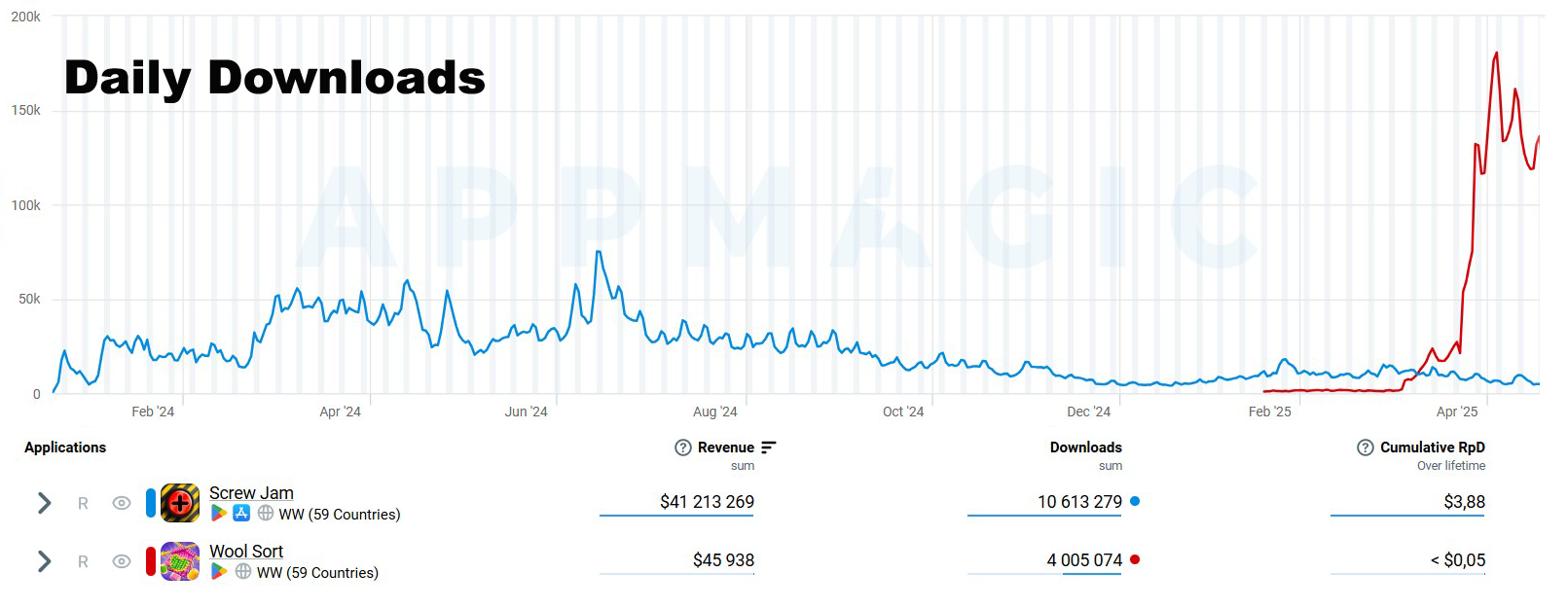 Screw Jam vs Wool Sort downloads comparison Dashboard
The reason behind this gap becomes even clearer when we look at how each game’s core gameplay, meta systems, and LiveOps are built to keep players engaged—and how they turn that engagement into revenue.
Core Gameplay and Meta Systems
With short, progressively challenging levels, Screw Jam delivers a polished gameplay loop that rewards quick wins and encourages players to return frequently. A smooth difficulty curve and system of limited “lives” gently nudge players toward boosters and event participation. This approach aims to support long-term player retention by building habit loops and softly guiding players toward their first purchase.
In contrast, Wool Sort starts players off with harder levels right away. This leads to longer sessions and a stronger sense of achievement, appealing to players who seek a challenge; however, it may also impact retention negatively in the future. With fewer systems designed for long-term engagement, the game uses early difficulty spikes as a tool to drive rewarded ad views from the very beginning.
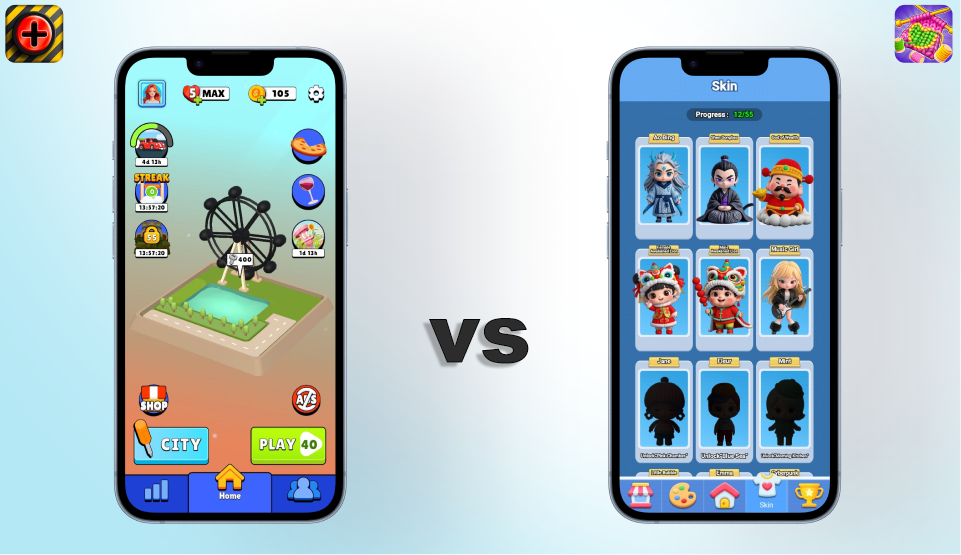
Screw Jam shows strong retention metrics, with D1 above 40% and D7 around 15%. This performance is supported by a simple, effective meta and consistent LiveOps. The game uses a light city-building system where players automatically unlock new buildings after each level by spending their earnings: this keeps progression clear and satisfying without overcomplicating the experience.
Meanwhile, Wool Sort leans into collection mechanics, with players unlocking completed artworks and exclusive character skins via level streaks and event participation. This meta appeals to completionists and those motivated by visual customization.
Both strategies serve to extend the player lifecycle, though they target slightly different engagement drivers.
📩 Want to stay on top of Hybridcasual trends? We run a paid monthly digest: 50 pages of curated insights, market data, and LiveOps analysis. If you’re interested, reach out to Stan on LinkedIn or drop us a line at [email protected]
LiveOps Comparison
Event strategy plays a key role in this dynamic—and it’s where Screw Jam doubles down. The game runs frequent events, which we track in our LiveOps & Updates calendar. Over the past three months, the game has implemented 11 types of regular events, including lava quests and win streak mechanics.
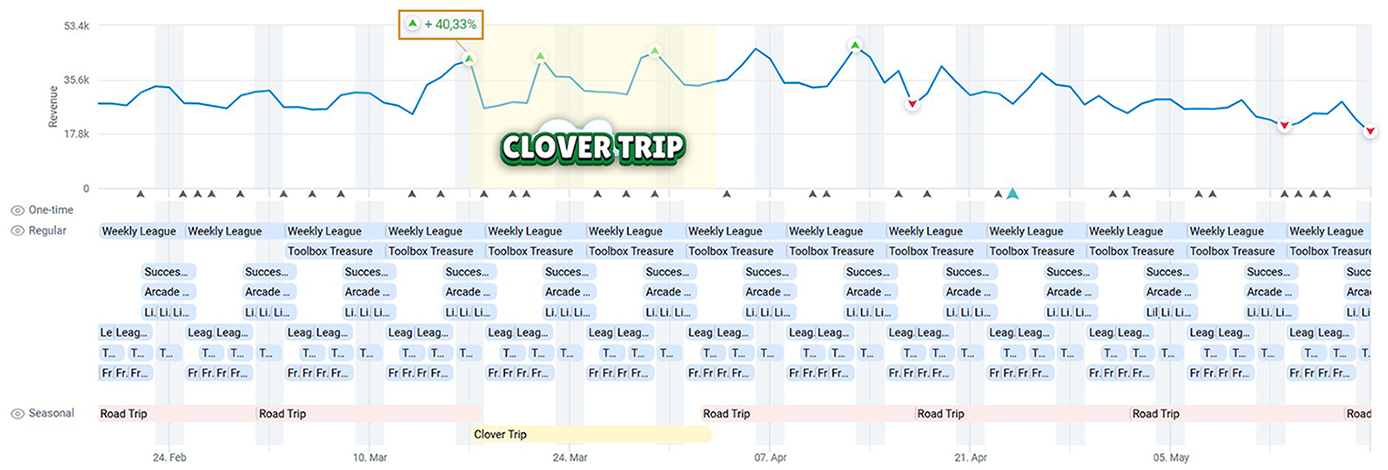 Screw Jam LiveOps & Updates Calendar
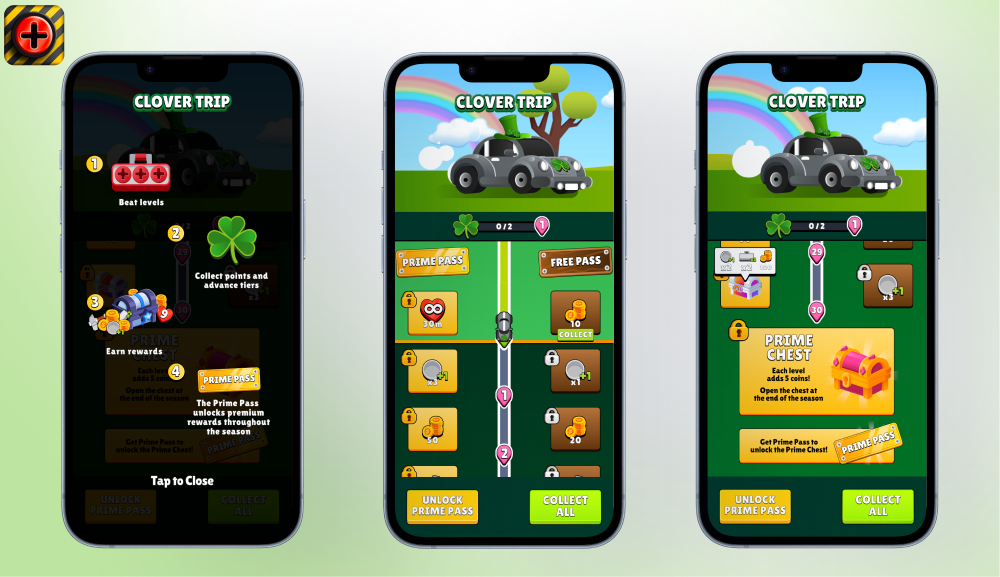
A prominent example is the Clover Trip—a holiday-themed spin on their seasonal Road Trip event—which drove a 40.33% revenue spike the first day it started and contributed to two more spikes over the two weeks it lasted. By offering both free and paid tiers, this classic paid pass event appeals to players across the spending spectrum and sets long-term goals.
Another effective tool the game uses is leaderboards, which add an extra layer of motivation for competitive players. Looking ahead, Screw Jam intends to expand its social features by introducing teams—as indicated by a new tab that recently appeared in the game. If cooperative competitions are eventually added through this feature, they may further boost daily playtime and overall engagement.
Despite the Hypercasual nature of Wool Sort, the developers still pay attention to its LiveOps. The game’s current events, such as Spring Outings, reward players with unique character skins for completing harder levels.
However, the lack of time-limited urgency and monetization layers tied to these events limits their impact on revenue and the DAU metrics. So far, Wool Sort offers only one event type, missing out on the opportunities that varied LiveOps formats can provide.
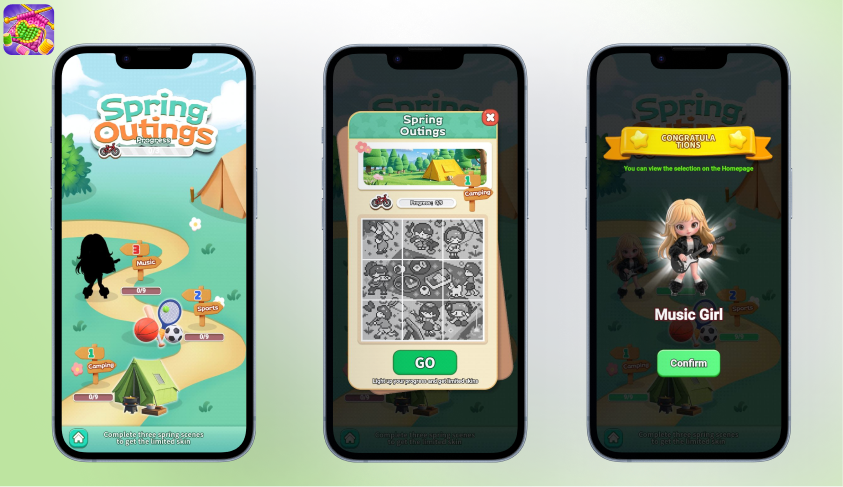
Wool Sort is clearly laying the groundwork for long-term engagement. Upcoming plans to introduce leaderboards, also highlighted by a new tab in the game, will cater to more competitive players, providing them with tangible goals and encouraging deeper involvement. It’s a small but strategic move that could help the game compete with more socially dynamic titles.
Monetization Comparison
Screw Jam features a more mature monetization model, including passes and chained purchase offers, wrapped neatly into visual progress bars and teasing rewards just out of reach. Although rewarded ads are still part of the mix, the focus clearly lies in maximizing ARPPU rather than simply driving installs.
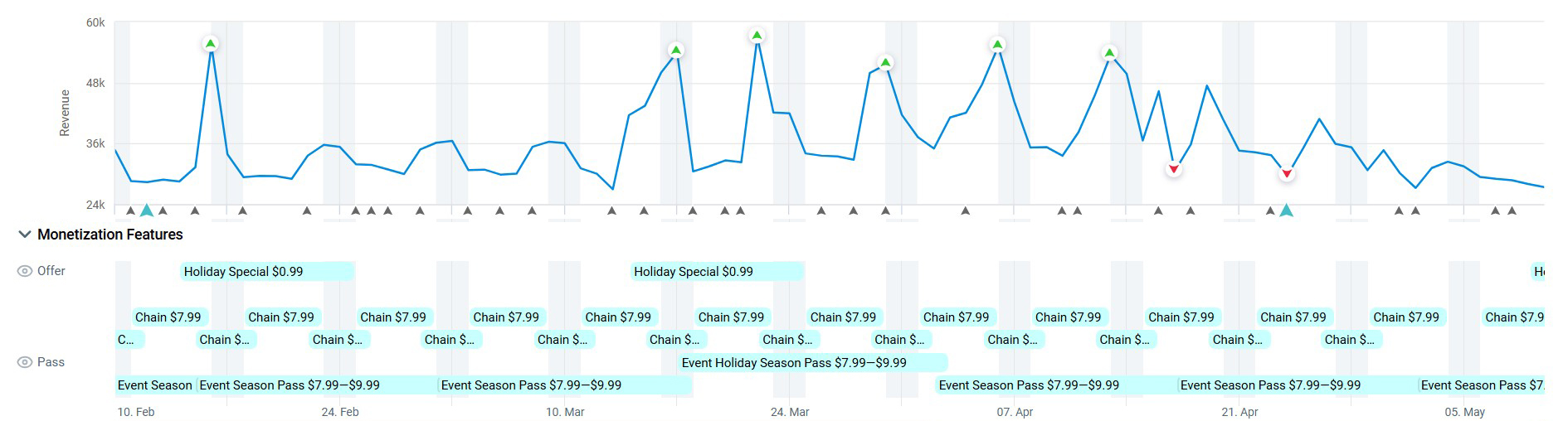 Screw Jam’s Monetization Features in LiveOps & Updates Calendar
 Screw Jam’s offers from Monetization Intelligence
As mentioned above, *Wool Sort*’s monetization remains heavily ad-based. The game offers special packs with boosters and soft currency, but all the boosters are always available through rewarded ads. With no life limits in place, players can easily replay levels, which supports *Wool Sort*’s Hypercasual nature.
That said, recent additions of features like the *piggy bank*—a feature widely adopted across many genres—may hint at a shift toward IAP integration. These adjustments show that the developers are aware of the gap and keep exploring deeper ways to monetize the game.

Can Wool Sort Become a New Trend Setter?
Screw Puzzles have recently emerged as one of the fastest-growing Hybridcasual genres, generating over $27M in Q1 2025—nearly 4x YoY. This surge opened the door to fresh experimentation, leading to the creation of *Wool Sort*—a new sub-trend that swaps screws for thread spools and has already inspired over a dozen similar games within just two months. But the big question remains: will this trend stick?
For wool puzzles to establish themselves as a trend, we see two possible scenarios: 1. *Wool Sort* doubles down on monetization and LiveOps: This can help compete with titles like Screw Jam and Screwdom. If it manages to go beyond downloads charts and secure a place among the IAP leaders, this can bring the formula to the next level. 2. Bigger companies take the formula and build on it: Major players like iKame Games (9 Screw Puzzles in their portfolio!) or Rollic can make the difference. More resources, UA firepower, and LiveOps expertise could result in a breakout hit that drives revenue on par with the top Screw Puzzle titles.
Either way, the genre is proving to be fertile ground for innovation, and *Wool Sort*’s undeniable success is the latest evidence of that. Whether it leads the trend or hands it off to a bigger player, we will be excited to see how the game continues to shape—and be shaped by—this fast-moving space.